A garage is more than just a place to park your car – it’s also a storage space, a workspace, and a place for hobbies and hobbies. However, over time, garage floors can accumulate stains from oil leaks, paint spills, and other substances, leaving the space dirty and uninviting. In this article, we’ll discuss some tips and tricks for cleaning garage floor stains and restoring your garage to its former glory.
Identify the Type of Stain
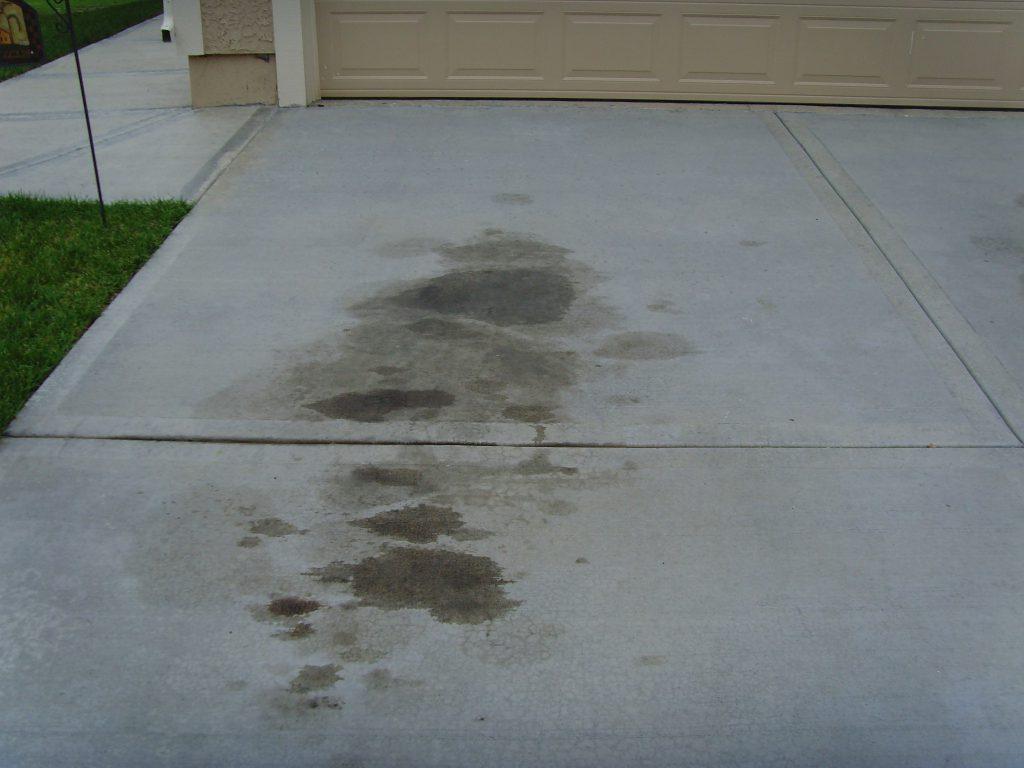
The first step in cleaning garage floor stains is to identify the type of stain. Different stains require different cleaning methods, so it’s important to know what you’re dealing with. For example, oil stains can be removed with a degreaser, while rust stains require a specific rust remover.
Remove Loose Debris
Before you start cleaning, removing any loose debris from the floor is important. Sweep the garage floor thoroughly, or use a leaf blower to remove loose dirt and debris. This will make the cleaning process much easier and more effective.
Apply the Cleaning Solution
Once you’ve identified the type of stain and removed any loose debris, it’s time to apply the cleaning solution. There are various types of cleaning solutions available, including commercial garage floor cleaners, homemade solutions, and DIY solutions. Choose a cleaning solution appropriate for the type of stain and follow the manufacturer’s instructions.
Scrub the Stain
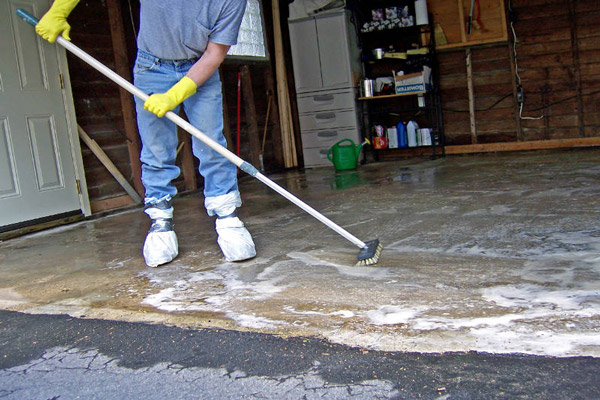
After applying the cleaning solution, use a stiff-bristled brush to scrub the stain. Scrub in a circular motion, applying firm pressure to loosen the stain. For tougher stains, you may need to repeat the process several times. If the stain is particularly stubborn, you may need to use a specialized stain remover or hire a professional cleaner.
Rinse the Floor
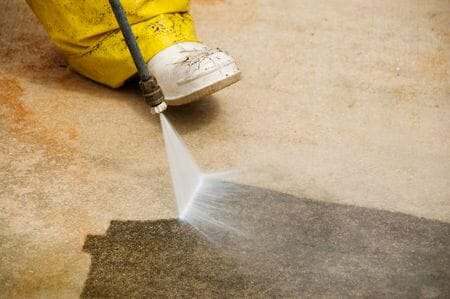
Once you’ve scrubbed the stain, rinse the garage floor thoroughly with clean water. Use a hose or a pressure washer to rinse away any residue and ensure that the floor is clean and spotless.
Prevent Future Stains
The best way to keep your garage floor clean and spotless is to prevent stains from occurring in the first place. Here are some tips to help you prevent future stains:
Use drip pans or absorbent mats under your car to catch oil and other fluids.
Wipe up spills immediately to prevent them from seeping into the floor.
Seal the garage floor with a protective coating to prevent stains from penetrating the surface.
Use a garage floor mat to protect the floor from heavy foot traffic and spills.
Cleaning garage floor stains don’t have to be a daunting task. With the right tools and techniques, you can restore your garage floor to its former glory and keep it looking clean and spotless for years. Remember to identify the type of stain, remove loose debris, apply the cleaning solution, scrub the stain, rinse the floor, and take steps to prevent future stains. With these tips and tricks, you’ll be able to enjoy a clean and inviting garage space that you’ll be proud to show off to friends and family.
How to Clean Garage Floors – Simple Green
How to Clean Concrete Garage Floors – From Oil Stains to Rust
How to Clean Your Garage Floor – Danleyu0027s Garages
Guide To Cleaning Garage Floors
How to Clean Garage Floors – Simple Green
How to Clean a Garage Floor – YouTube
How To Remove Grease and Oil Stains From Your Garage Floor
How to Clean Concrete – This Old House
Guide To Cleaning Garage Floors Clean garage floor, Clean garage
Get the Stains off your Garage Floor! ASE Mechanics u0026 Quality auto
How to clean the oil from your concrete garage floor!
Choose the Correct Pressure Washer for Cleaning a Garage Floor
Introduction
We all know that a clean and well-maintained garage is essential in order to keep a home looking neat and organized. But, when it comes to actually keeping your garage floor clean and free of dirt and stains, it can be a challenge. From oil spills to tire marks and everything in between, garage floors can quickly become a mess. In this article, we’ll cover some simple tips for cleaning and removing various types of stains from your garage floor.
Removing Oil Stains
Oil stains are one of the most common types of stains found on garage floors. To remove oil stains, you’ll need an oil-based degreaser and a stiff brush. First, apply the degreaser to the stain, let it sit for several minutes, then scrub the stain with the brush. If the stain persists, you may need to repeat the process several times before the stain is completely removed.
Removing Tire Marks
Tire marks can also be a common problem in garages. To remove tire marks, you’ll need a good quality all-purpose cleaner and a scrub brush. Start by spraying the tire marks with the cleaner, then use the brush to scrub the area until the marks have been removed. For stubborn tire marks, you may need to repeat this process several times.
Removing Rust Stains
Rust stains are another common problem in garages and can be difficult to remove. To remove rust stains, you’ll need a rust remover (available at most hardware stores) and an old rag or sponge. First, apply the rust remover to the stained area and let it sit for 10-15 minutes. Then, use the rag or sponge to scrub away any remaining rust stains.
FAQs
Q: How do I prevent future stains from forming?
A: The best way to prevent future stains from forming is to regularly clean your garage floor using an all-purpose cleaner or degreaser and a stiff brush. Regularly sweeping or vacuuming your garage floor can also help prevent dirt and debris from collecting in hard-to-reach places where dirt and stains can form.
Q: Can I use bleach to remove stains?
A: Bleach should not be used on garage floors as it can damage concrete surfaces and may not effectively remove certain types of stains. Instead, use a degreaser or rust remover as mentioned above for best results.
Conclusion
Cleaning garage floors can be a daunting task but with the right tools and knowledge it doesn’t have to be! With these simple tips for removing various types of stains from your garage floor, you can keep your space looking neat and tidy in no time!
We use cookies on our website to give you the most relevant experience by remembering your preferences and repeat visits. By clicking “Accept All”, you consent to the use of ALL the cookies. However, you may visit "Cookie Settings" to provide a controlled consent.
This website uses cookies to improve your experience while you navigate through the website. Out of these, the cookies that are categorized as necessary are stored on your browser as they are essential for the working of basic functionalities of the website. We also use third-party cookies that help us analyze and understand how you use this website. These cookies will be stored in your browser only with your consent. You also have the option to opt-out of these cookies. But opting out of some of these cookies may affect your browsing experience.
Necessary cookies are absolutely essential for the website to function properly. These cookies ensure basic functionalities and security features of the website, anonymously.
Cookie
Duration
Description
cookielawinfo-checkbox-analytics
11 months
This cookie is set by GDPR Cookie Consent plugin. The cookie is used to store the user consent for the cookies in the category "Analytics".
cookielawinfo-checkbox-functional
11 months
The cookie is set by GDPR cookie consent to record the user consent for the cookies in the category "Functional".
cookielawinfo-checkbox-necessary
11 months
This cookie is set by GDPR Cookie Consent plugin. The cookies is used to store the user consent for the cookies in the category "Necessary".
cookielawinfo-checkbox-others
11 months
This cookie is set by GDPR Cookie Consent plugin. The cookie is used to store the user consent for the cookies in the category "Other.
cookielawinfo-checkbox-performance
11 months
This cookie is set by GDPR Cookie Consent plugin. The cookie is used to store the user consent for the cookies in the category "Performance".
viewed_cookie_policy
11 months
The cookie is set by the GDPR Cookie Consent plugin and is used to store whether or not user has consented to the use of cookies. It does not store any personal data.
Functional cookies help to perform certain functionalities like sharing the content of the website on social media platforms, collect feedbacks, and other third-party features.
Performance cookies are used to understand and analyze the key performance indexes of the website which helps in delivering a better user experience for the visitors.
Analytical cookies are used to understand how visitors interact with the website. These cookies help provide information on metrics the number of visitors, bounce rate, traffic source, etc.
Advertisement cookies are used to provide visitors with relevant ads and marketing campaigns. These cookies track visitors across websites and collect information to provide customized ads.



/cdn.vox-cdn.com/uploads/chorus_image/image/68856354/iStock_466976682_.0.jpg)


 Related Posts:
Introduction
We all know that a clean and well-maintained garage is essential in order to keep a home looking neat and organized. But, when it comes to actually keeping your garage floor clean and free of dirt and stains, it can be a challenge. From oil spills to tire marks and everything in between, garage floors can quickly become a mess. In this article, we’ll cover some simple tips for cleaning and removing various types of stains from your garage floor.
Removing Oil Stains
Oil stains are one of the most common types of stains found on garage floors. To remove oil stains, you’ll need an oil-based degreaser and a stiff brush. First, apply the degreaser to the stain, let it sit for several minutes, then scrub the stain with the brush. If the stain persists, you may need to repeat the process several times before the stain is completely removed.
Removing Tire Marks
Tire marks can also be a common problem in garages. To remove tire marks, you’ll need a good quality all-purpose cleaner and a scrub brush. Start by spraying the tire marks with the cleaner, then use the brush to scrub the area until the marks have been removed. For stubborn tire marks, you may need to repeat this process several times.
Removing Rust Stains
Rust stains are another common problem in garages and can be difficult to remove. To remove rust stains, you’ll need a rust remover (available at most hardware stores) and an old rag or sponge. First, apply the rust remover to the stained area and let it sit for 10-15 minutes. Then, use the rag or sponge to scrub away any remaining rust stains.
FAQs
Q: How do I prevent future stains from forming?
A: The best way to prevent future stains from forming is to regularly clean your garage floor using an all-purpose cleaner or degreaser and a stiff brush. Regularly sweeping or vacuuming your garage floor can also help prevent dirt and debris from collecting in hard-to-reach places where dirt and stains can form.
Q: Can I use bleach to remove stains?
A: Bleach should not be used on garage floors as it can damage concrete surfaces and may not effectively remove certain types of stains. Instead, use a degreaser or rust remover as mentioned above for best results.
Conclusion
Cleaning garage floors can be a daunting task but with the right tools and knowledge it doesn’t have to be! With these simple tips for removing various types of stains from your garage floor, you can keep your space looking neat and tidy in no time!
Related Posts:
Introduction
We all know that a clean and well-maintained garage is essential in order to keep a home looking neat and organized. But, when it comes to actually keeping your garage floor clean and free of dirt and stains, it can be a challenge. From oil spills to tire marks and everything in between, garage floors can quickly become a mess. In this article, we’ll cover some simple tips for cleaning and removing various types of stains from your garage floor.
Removing Oil Stains
Oil stains are one of the most common types of stains found on garage floors. To remove oil stains, you’ll need an oil-based degreaser and a stiff brush. First, apply the degreaser to the stain, let it sit for several minutes, then scrub the stain with the brush. If the stain persists, you may need to repeat the process several times before the stain is completely removed.
Removing Tire Marks
Tire marks can also be a common problem in garages. To remove tire marks, you’ll need a good quality all-purpose cleaner and a scrub brush. Start by spraying the tire marks with the cleaner, then use the brush to scrub the area until the marks have been removed. For stubborn tire marks, you may need to repeat this process several times.
Removing Rust Stains
Rust stains are another common problem in garages and can be difficult to remove. To remove rust stains, you’ll need a rust remover (available at most hardware stores) and an old rag or sponge. First, apply the rust remover to the stained area and let it sit for 10-15 minutes. Then, use the rag or sponge to scrub away any remaining rust stains.
FAQs
Q: How do I prevent future stains from forming?
A: The best way to prevent future stains from forming is to regularly clean your garage floor using an all-purpose cleaner or degreaser and a stiff brush. Regularly sweeping or vacuuming your garage floor can also help prevent dirt and debris from collecting in hard-to-reach places where dirt and stains can form.
Q: Can I use bleach to remove stains?
A: Bleach should not be used on garage floors as it can damage concrete surfaces and may not effectively remove certain types of stains. Instead, use a degreaser or rust remover as mentioned above for best results.
Conclusion
Cleaning garage floors can be a daunting task but with the right tools and knowledge it doesn’t have to be! With these simple tips for removing various types of stains from your garage floor, you can keep your space looking neat and tidy in no time!