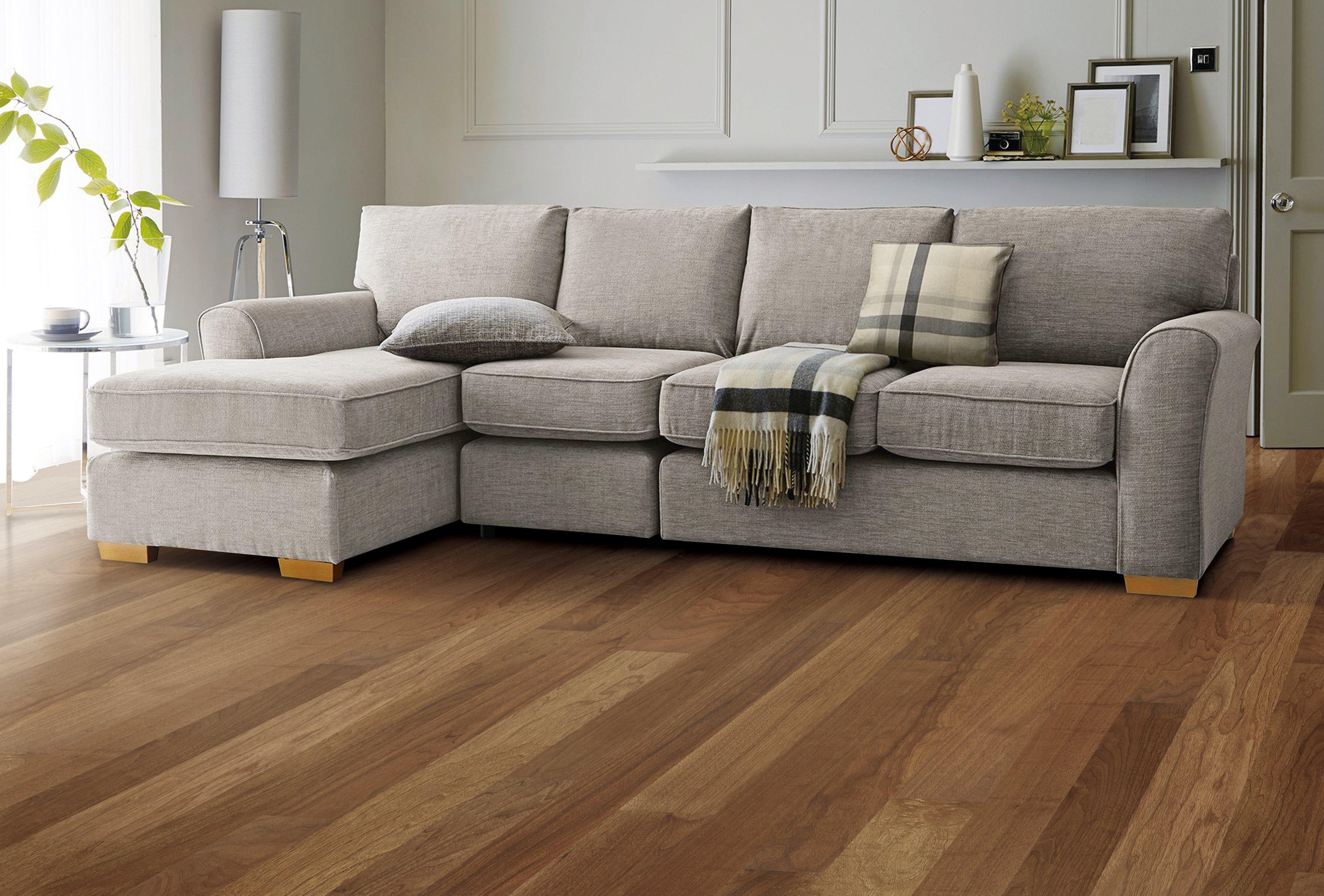
I’ll tell you exactly when I fell in love with walnut solid wood flooring. I was visiting a friend’s newly renovated home and walked into her living room, and the floor just stopped me. It was rich and dark with this swirling, chocolate grain that looked like something out of a design magazine.
When she told me it was solid walnut, I went home and started researching immediately. It took me another year to save up for it and finally install it in my own living room, and every single day I walk across it I feel like I made the right call. Here’s everything I learned along the way.
The Rich Beauty and Natural Character of Walnut Wood
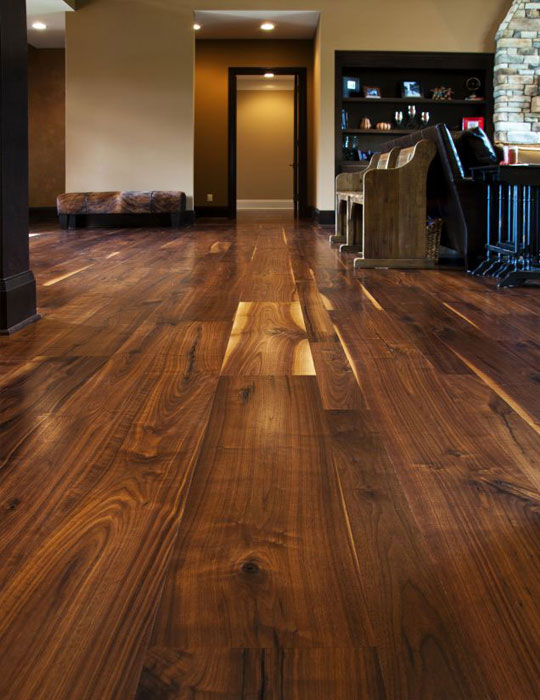
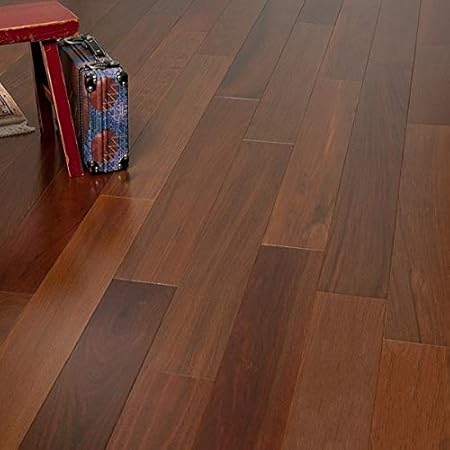
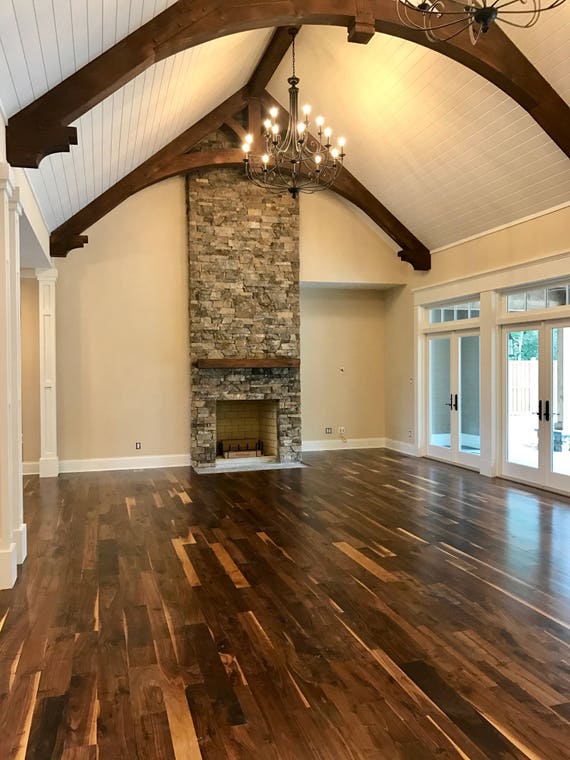
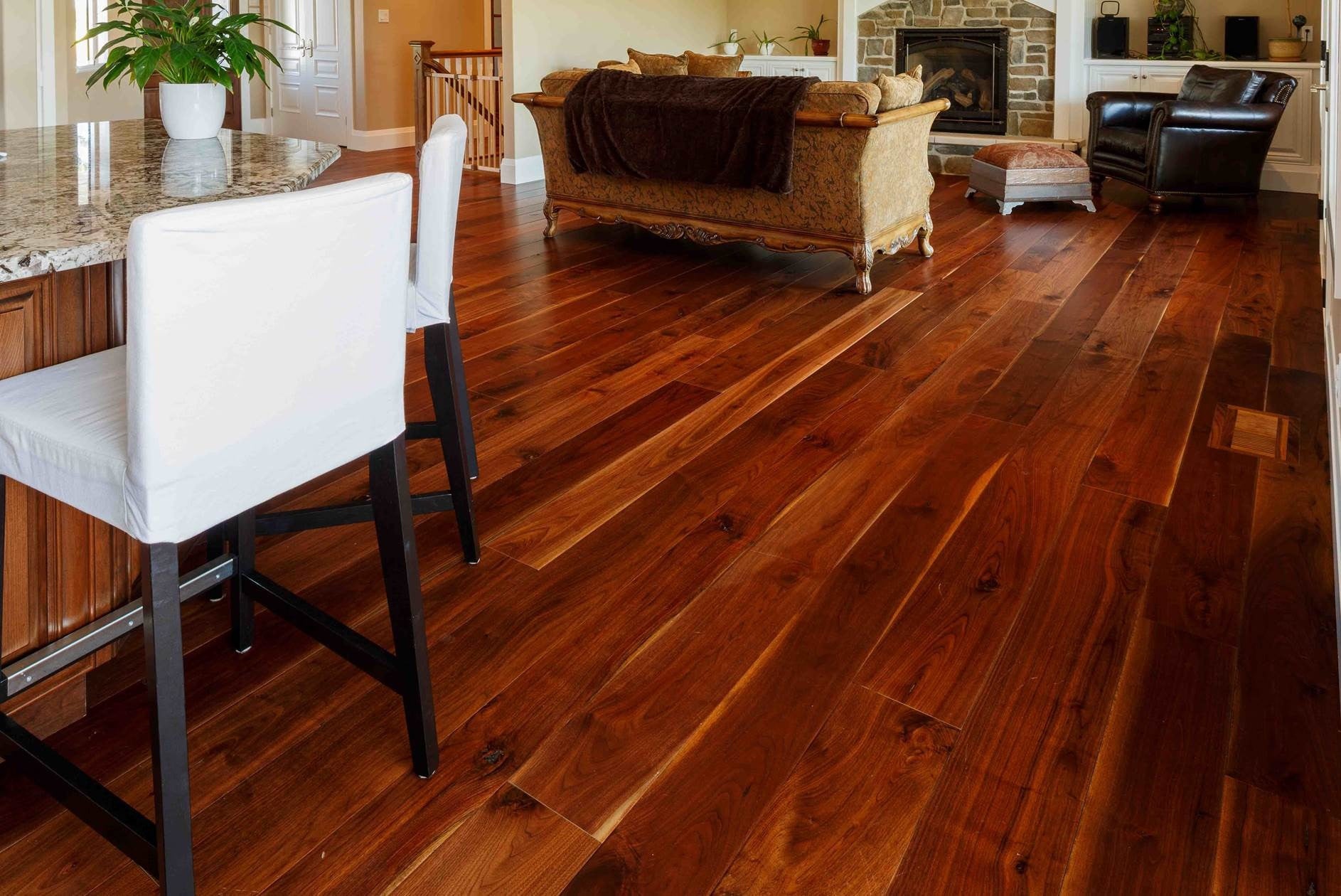
Walnut has a depth of color and grain variation that I haven’t seen matched by any other domestic hardwood. The tones range from a pale grayish-brown in the sapwood to a deep, warm chocolate in the heartwood, and when those variations appear in the same floor the result is visually stunning. My living room floor has that natural mix, and rather than looking inconsistent it looks intentional and organic in the best possible way.
The grain patterns in walnut are also uniquely beautiful. You get straight grain in some planks and wavy or figured grain in others, with occasional curly or crotch-figure pieces that look almost like artwork underfoot.
This natural variation means no two walnut floors are ever identical. That individuality is something I genuinely treasure about it, knowing my floor is unlike anyone else’s.
One thing to be aware of is that walnut can lighten slightly over time when exposed to sunlight, while most other hardwoods darken with age. This is called photosensitivity, and it means areas covered by rugs may look slightly different than exposed areas when you move furniture around.
It’s a minor consideration and the color shift is gradual, but knowing it upfront helps you plan your furniture arrangement and rug placement thoughtfully from the start.

Understanding Walnut’s Hardness and Real-Life Durability
Before I installed walnut, several people warned me it was too soft for a busy household. Walnut scores around 1010 on the Janka hardness scale, which is softer than oak, maple, and hickory. I want to give you an honest take on this because I think the softness concern gets overstated for most real-world living situations.
In my living room, which sees daily foot traffic, a medium-sized dog, and kids who are not gentle with floors, the walnut has held up with minimal visible wear after two years. The key is accepting that walnut will develop a patina over time. Small dings and micro-scratches become part of the floor’s character rather than damage to be upset about. If you embrace that living quality, walnut ages beautifully. If you need a floor that looks showroom-perfect forever, walnut may not be your best match.
Where I’d genuinely caution against walnut is in entryways or mudrooms where grit and heavy foot traffic concentrate. Those areas put more stress on softer hardwoods. I used a harder species in my entry hall and reserved the walnut for the living room where conditions are gentler. Matching the wood species to the demands of the specific space is the smartest approach when you’re working with a premium material like walnut.
Choosing Between Different Walnut Grades and Cuts
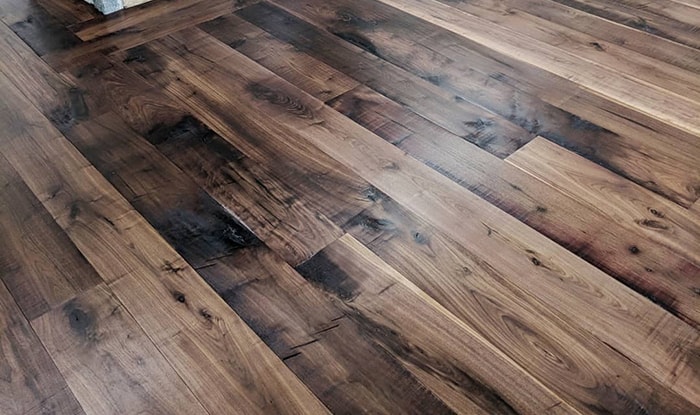
When I started shopping for walnut flooring, I quickly discovered that grading and cutting methods have a huge impact on both the appearance and the price. Select grade walnut has minimal color variation and few knots, giving you a cleaner, more uniform look. Character grade embraces the natural color swings, knots, and mineral streaks that make each plank unique. I went with character grade and loved the result.
The cut of the plank also matters significantly. Plain-sawn walnut shows the classic cathedral grain pattern with wide arches running along the plank. Quarter-sawn walnut has a straighter, more linear grain pattern and is dimensionally more stable since the growth rings run more perpendicular to the face. Rift-sawn produces the most uniform and linear grain of all three. Each looks distinctly different and suits different interior aesthetics.
For my living room, I chose wide-plank plain-sawn character grade walnut and could not be happier with how it looks. The wide planks, at five inches across, let the grain patterns show fully without being chopped up by too many seams. In a larger room especially, wider planks create a more expansive, luxurious feeling. Narrower planks work better in small or narrow spaces where wide planks can feel overwhelming proportionally.
The Cost of Walnut Solid Wood Flooring and Is It Worth It
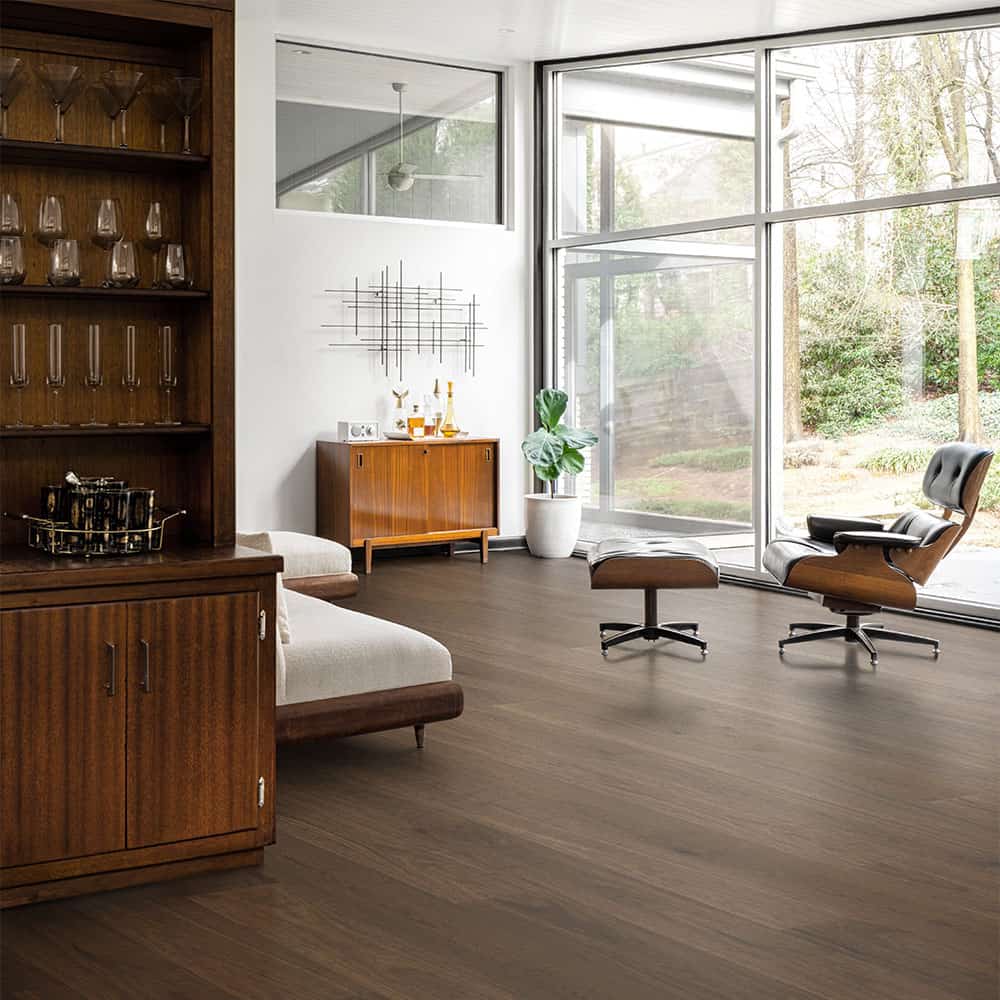
I’ll be upfront about something: walnut is expensive. When I bought mine, the material cost ran between eight and fourteen dollars per square foot depending on grade and width. Professional installation added another four to six dollars per square foot on top of that. For my roughly three hundred square foot living room, the total investment was significant, and I had to save specifically for it over about a year.
But here is how I think about the cost, and why I still feel it was absolutely worth it. Solid walnut flooring, properly maintained, can last one hundred years or more and be refinished multiple times during that lifespan. When I divide the cost by the number of years I expect this floor to serve my home, the annual cost is remarkably low. I’m not buying a floor for this decade. I’m buying a floor that could outlast me in this house.
There’s also the impact on home value to consider. Real estate agents consistently tell homeowners that genuine hardwood flooring, and especially premium species like walnut, adds meaningful value at resale. I’ve spoken with several agents since my installation and they confirmed that buyers respond very positively to walnut floors. Whether that fully offsets the premium cost depends on your market, but it’s a real factor worth including in your thinking.
Installing Solid Walnut Flooring the Right Way
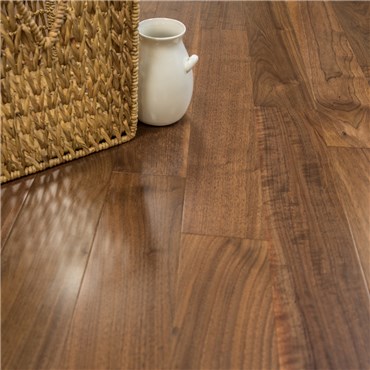
Solid walnut flooring installation is not a beginner DIY project, and I want to be direct about that. I hired experienced hardwood flooring installers for my project, and watching them work made me very glad I did. The precision required for cutting, fitting, and nailing down solid hardwood planks cleanly is a skill that takes years to develop. If you have experience with hardwood installation, walnut is manageable. If you don’t, hire professionals for this one.
Acclimation is non-negotiable with solid walnut. I left the boxes of flooring stacked open in my living room for a full week before installation. Walnut is particularly sensitive to moisture content changes, and proper acclimation ensures the wood reaches equilibrium with your home’s environment before it’s fastened down. Rushing this step risks the boards expanding or contracting significantly after installation, creating gaps or buckling.
Solid walnut should be nailed or stapled to a wood subfloor using a pneumatic flooring nailer. It cannot be floated like laminate or glued to concrete without specific engineered products designed for that purpose. Your subfloor needs to be clean, flat, and dry, with moisture content tested before installation begins. My installers tested the subfloor moisture and the wood moisture before starting, and that due diligence is what separates a floor that performs beautifully for decades from one that causes problems within a year.
Caring for Solid Walnut Floors to Preserve Their Beauty
Regular care for my walnut floor is simple but consistent. I dry mop or vacuum with a soft brush attachment several times a week to remove grit before it can scratch the surface. Fine particles underfoot act like sandpaper against any wood finish, and walnut’s relative softness makes it more susceptible than harder species. Staying on top of that routine sweeping is genuinely the most important maintenance habit you can build.
For routine wet cleaning, I use a pH-neutral hardwood cleaner with a barely damp microfiber mop. I spray the cleaner onto the mop head rather than directly onto the floor to control the amount of moisture. Walnut and standing water are not a good combination. I wipe up any spills immediately, and I mean within a minute or two, not eventually. That discipline has kept my floor looking pristine through two years of family life.
The long-term care plan for solid walnut is periodic refinishing, roughly every ten to fifteen years depending on wear and traffic levels. When the finish starts to look dull or scratched, a professional can sand down the surface and apply a fresh coat of finish, completely restoring the floor’s original beauty. I’ve already mentally budgeted for that future project and consider it part of owning a premium solid floor. It’s not a maintenance burden, it’s a renewal that makes the floor look brand new again.
Is walnut solid wood flooring too soft for everyday family life?
In most living spaces walnut holds up very well, in my experience. It’s softer than oak or maple, so it will develop small dings and patina over time, but I find that character adds warmth. I’d avoid walnut in high-traffic entryways or mudrooms where grit concentrates. For living rooms, bedrooms, and dining rooms with reasonable care, it performs beautifully and ages in a way that only makes it look better with time.
How much does walnut solid wood flooring typically cost?
Walnut runs roughly eight to fourteen dollars per square foot for materials, depending on grade, width, and supplier. Professional installation adds another four to six dollars per square foot. It’s a premium investment compared to oak or maple, but solid walnut can last over a hundred years and be refinished many times. When you consider the lifespan and potential home value impact, the cost per year of use becomes very reasonable for a long-term homeowner.
Can walnut flooring be refinished when it shows wear?
Yes, and this is one of the greatest advantages of solid hardwood over engineered or laminate options. Solid walnut can be sanded and refinished multiple times over its lifetime, completely restoring its appearance. The number of refinishes depends on plank thickness, typically three-quarter inch solid planks can be refinished four to six times. Each refinish brings the floor back to looking essentially new, which dramatically extends its functional and visual life.
Does walnut flooring work with radiant heat systems?
Solid walnut and radiant heat are a challenging combination because solid wood is sensitive to the drying effect of consistent heat from below. If you have radiant heat, engineered walnut flooring is a much better choice since its layered construction handles the temperature and humidity fluctuations more reliably. If you’re committed to solid walnut over radiant heat, consult with your flooring supplier and maintain very stable indoor humidity levels throughout the year.
How do I protect walnut floors from sun fading?
Walnut is photosensitive and can lighten in areas with strong direct sunlight over time. Use window treatments like blinds or UV-filtering films on windows that receive intense afternoon sun. Rotate rugs periodically so the floor beneath them gets some light exposure too, preventing sharp contrast lines when you eventually move furniture. The color shift is gradual and even, but managing sun exposure proactively keeps the floor looking more consistent across the whole room.
Is walnut flooring a good choice for increasing home resale value?
From conversations with real estate professionals and my own research, solid walnut flooring is consistently viewed as a premium feature by buyers and appraisers. It photographs beautifully and creates a strong first impression in listing photos. Whether it fully recoups its installation cost depends on your local market and the overall condition and style of your home. In most mid-to-upper markets, quality solid hardwood flooring is considered a desirable feature that supports stronger sale prices.
Related Posts:
- Dark Wood Floor Pattern
- Wood Floor White Stain
- Dark Wood Floors Master Bedroom
- Grey Faux Wood Flooring
- Walnut Solid Wood Flooring
- Extra Wide Wood Flooring
- Cherry Wood Floor Bedroom
- White Oak Wood Tile Flooring
- Oak Solid Wood Flooring
- Dark Wood Floor Dining Room