When I started planning my kitchen renovation two years ago, I was obsessed with Mediterranean design. After a trip to Greece and southern Italy, I wanted to capture that sun-drenched, coastal aesthetic in my own home. The challenge was finding flooring that could deliver authentic Mediterranean character while handling the practical demands of a busy kitchen. Luxury vinyl tile turned out to be my perfect solution. I found stunning patterns mimicking weathered terracotta, ancient stone, and hand-painted ceramics, all with the durability and water resistance vinyl provides. The transformation has been incredible, turning my ordinary kitchen into a space that feels like a villa overlooking the Aegean Sea.
Choosing Authentic Mediterranean Tile Patterns in Vinyl
Terracotta-look vinyl became the foundation of my Mediterranean kitchen design. I selected luxury vinyl tiles that perfectly replicate the warm, earthy tones of aged terracotta clay tiles common throughout Spain and Italy. The pattern features natural color variation from soft peach to deep rust, with subtle surface texture mimicking hand-formed clay. This authentic variation was crucial, uniform tiles would have looked artificial and mass-produced rather than artisanal.
I spent weeks comparing different terracotta patterns before finding one with the right level of weathering. Some options looked too pristine and new, lacking the character that makes Mediterranean floors so appealing. The pattern I chose includes slight edge chipping, color fading, and surface wear that suggests centuries of use. This aged patina creates the illusion that my kitchen has been part of a coastal village for generations rather than a modern suburban home.
The scale of the tiles mattered tremendously for achieving authentic Mediterranean style. I chose 12×12 inch tiles rather than smaller formats, matching the generous proportions of traditional terracotta pavers. Larger tiles create a more relaxed, less busy visual field appropriate for Mediterranean design. The grout lines I created during installation add to the handcrafted appearance, with slight irregularities that enhance rather than detract from the overall aesthetic.
Incorporating Hand-Painted Ceramic Look Tiles
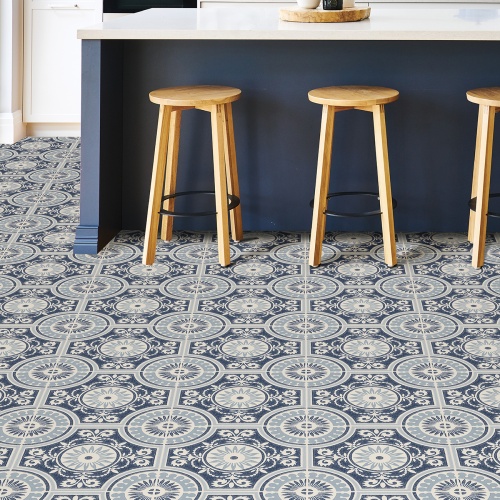
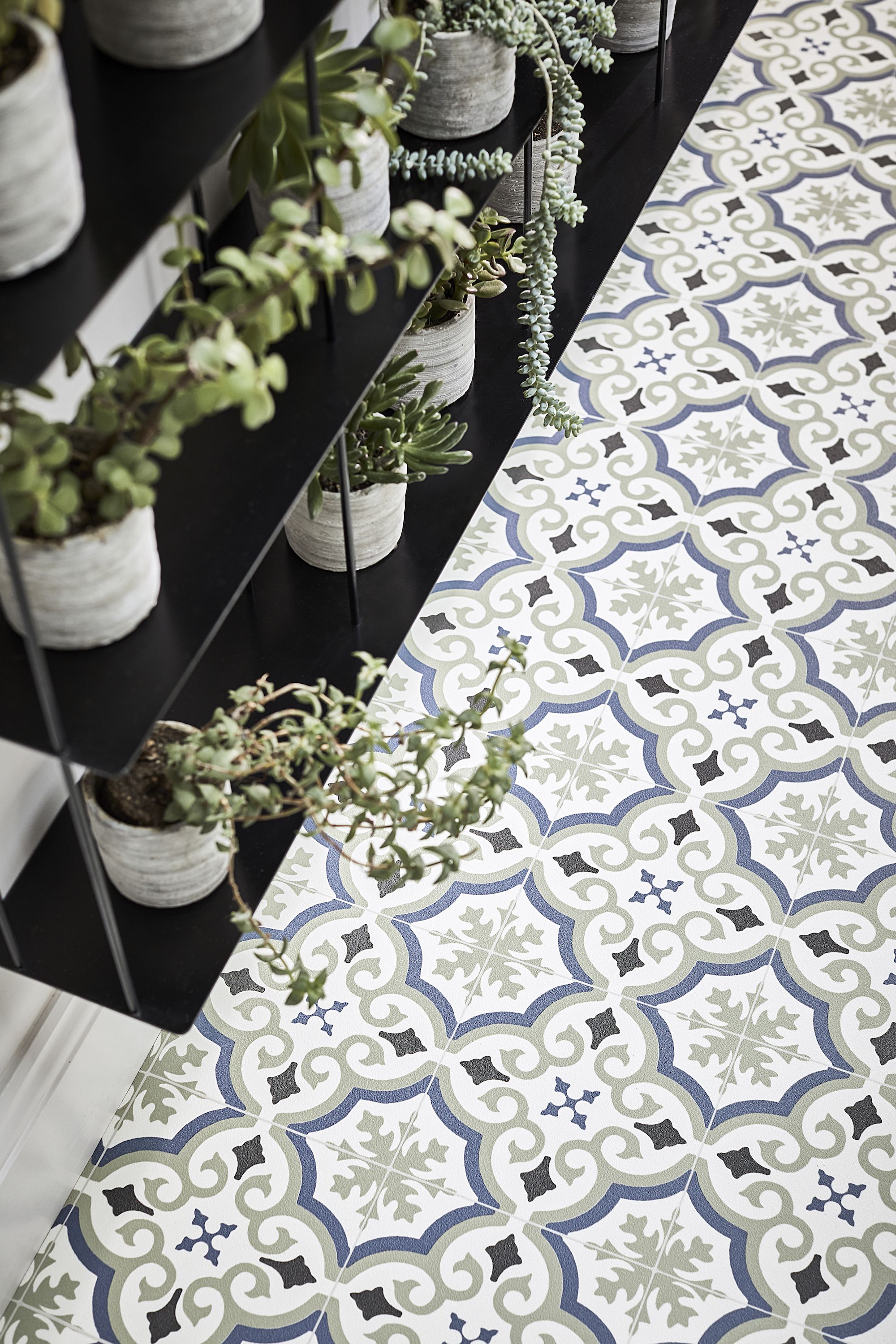
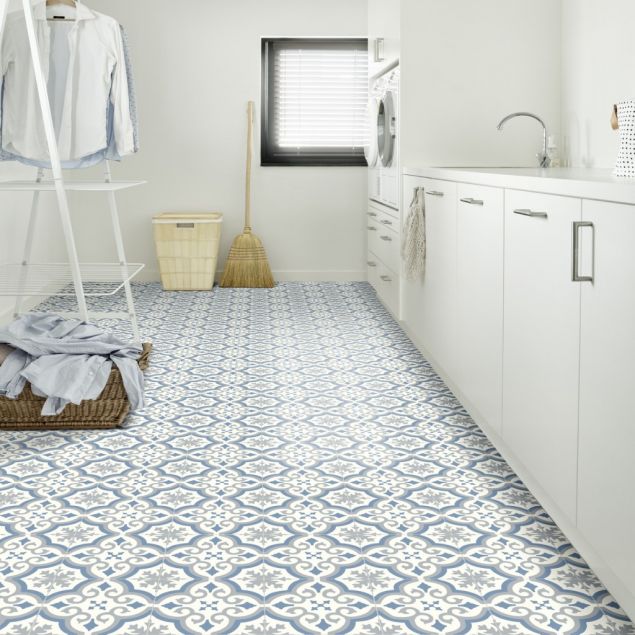
My kitchen backsplash area features vinyl tiles mimicking traditional Portuguese azulejos, the hand-painted ceramic tiles beloved throughout the Mediterranean. These decorative tiles showcase intricate blue and white patterns inspired by Moorish design. The vinyl reproduction captures every brushstroke detail and slight color variation that characterizes authentic hand-painted ceramics. Guests consistently ask where I found such beautiful imported tiles before I reveal they’re actually vinyl.
I created a decorative border using these patterned tiles to define my cooking area. Against the terracotta-look field tiles, the blue and white pattern provides striking visual contrast while staying true to Mediterranean tradition. This combination of plain and decorative tiles is classic in Mediterranean design, creating visual interest without overwhelming the space. The vinyl format made mixing patterns affordable and practical where genuine hand-painted ceramics would have been prohibitively expensive.
The waterproof nature of vinyl was essential for these decorative tiles near my sink and stove. Traditional hand-painted ceramics can stain and require careful sealing and maintenance. My vinyl tiles handle splashes, spills, and steam without any special treatment. I clean them with the same products as the rest of my floor, and they’ve maintained their vibrant colors perfectly. This blend of beauty and practicality exemplifies why vinyl works so well for Mediterranean-inspired designs.

Selecting Natural Stone Look Vinyl for Mediterranean Elegance
I used limestone-look luxury vinyl planks in my dining area to create a seamless flow from the kitchen. The soft cream and beige tones with subtle fossil impressions perfectly capture the look of natural stone quarried from Mediterranean coastlines. This neutral palette provides a calming foundation that lets colorful decor and textiles shine. The stone appearance adds sophistication while maintaining the relaxed, informal vibe Mediterranean design celebrates.
The texture on these stone-look planks impressed me immediately. The surface has slight irregularities and variation that mimic natural limestone’s hand-hewn edges and weathered surface. Running my hand across them, I feel subtle texture rather than perfectly smooth plastic. This attention to tactile detail separates premium vinyl from cheaper options. The realistic texture ensures the floor looks and feels authentic from every angle and distance.
I chose a matte finish rather than glossy for these stone-look planks. Mediterranean stone naturally has a soft, slightly porous appearance rather than high shine. The matte surface also provides better traction, important in areas where water or cooking oils might splash. This practical consideration aligned perfectly with aesthetic goals, proving that Mediterranean design succeeds because form and function work together harmoniously.
Creating Authentic Mediterranean Color Palettes
My color palette centers on warm earth tones that dominate Mediterranean architecture. The terracotta base provides rich rust and ochre tones, while cream limestone accents add brightness. I incorporated sage green and ocean blue through accessories and textiles, colors pulled directly from Mediterranean landscapes. The vinyl flooring’s warm neutrals anchor this palette, allowing me to change accent colors seasonally while maintaining cohesive design.
I avoided stark white or cool gray tones that feel too modern and Nordic for Mediterranean style. Even my grout is a warm sand color rather than bright white, maintaining the sun-baked aesthetic throughout. This commitment to warm tones creates the inviting, cozy atmosphere that makes Mediterranean spaces so appealing. The vinyl flooring options I found offered perfect color matches, something harder to achieve with natural materials.
Layering different tones of terracotta and stone created depth and visual interest without using multiple materials. Some vinyl tiles lean more orange, others more brown, and this variation mimics how natural materials age differently based on sun exposure and wear patterns. I intentionally mixed these slight color variations during installation, creating an organic, collected-over-time appearance that’s central to authentic Mediterranean design.
Installing Mediterranean Style Patterns and Layouts
I used a traditional running bond pattern for my terracotta vinyl tiles, the same layout seen in Mediterranean courtyards for centuries. This offset pattern with one-third stagger creates movement and interest while maintaining classic simplicity. The installation was straightforward with vinyl’s click-lock system, but I took time to ensure each row maintained proper alignment. The precision creates the crafted appearance that makes the vinyl look like real installed tile.
My decorative border required more planning and careful cutting. I created a frame of patterned azulejo-style tiles around my cooking zone, requiring precise measurements and cuts to fit the space perfectly. The vinyl cut cleanly with a utility knife and straight edge, making these custom cuts manageable. I dry-laid the entire border pattern before installation to ensure proportions and spacing looked right. This extra planning prevented costly mistakes.
Diagonal installation in my small dining nook made the space feel larger while adding Mediterranean flair. The angled layout creates visual interest and draws the eye across the room rather than emphasizing the compact dimensions. Installing vinyl diagonally requires more cutting and creates more waste, but the dramatic effect justified the extra material cost. This design choice transformed a forgettable corner into a charming breakfast spot.
Accessorizing and Completing the Mediterranean Look
My Mediterranean vinyl floors became the foundation for layered, textural design. I added woven jute area rugs that introduce natural fiber texture while protecting high-traffic zones. These neutral rugs complement rather than compete with the decorative floor patterns. The layering of materials, hard vinyl with soft natural fibers, creates the collected, comfortable aesthetic Mediterranean design requires.
Furniture placement emphasized the floor’s beauty rather than hiding it. I chose an open dining table with slender iron legs that don’t cover too much floor surface. In the kitchen, I selected bar stools with minimal footprints, keeping sight lines to the terracotta vinyl clear. This intentional furniture selection treats the floor as a design feature rather than just a background element, appropriate given its central role in the Mediterranean aesthetic.
I continued Mediterranean materials and colors throughout the space to create cohesion. Terra cotta pots filled with herbs, blue and white ceramics, and wrought iron accents all reference the floor’s Mediterranean inspiration. Warm wood cutting boards and rustic bread baskets add organic textures that complement the vinyl’s earthy tones. These careful accessory choices create an immersive Mediterranean experience where every element supports the overall design vision.

Is vinyl flooring appropriate for authentic Mediterranean design?
Absolutely. Modern luxury vinyl perfectly replicates traditional Mediterranean materials like terracotta, stone, and hand-painted ceramics. The quality has improved so dramatically that vinyl captures authentic texture, color variation, and aged character. It’s actually more practical than genuine materials for modern living while delivering the same aesthetic impact. My Mediterranean-inspired kitchen proves vinyl works beautifully for this style.
How do you maintain Mediterranean-style vinyl flooring?
Maintenance is simple, which is one of vinyl’s advantages over authentic materials. I sweep daily to remove grit and mop weekly with vinyl floor cleaner. The sealed surface resists staining from olive oil, tomato sauce, and wine, common in Mediterranean cooking. Unlike porous terracotta or stone, vinyl needs no special sealing or treatment. This easy care lets me enjoy the look without traditional materials’ high maintenance.
Can Mediterranean vinyl work in modern homes?
Yes, and that’s exactly my situation. My home is a 1990s suburban build, not a Tuscan villa. Mediterranean vinyl flooring creates authentic character in any architectural style. The key is committing to the aesthetic throughout the space with coordinating colors, textures, and accessories. The flooring establishes the foundation that other Mediterranean elements build upon, transforming even modern spaces convincingly.
What’s the best vinyl format for Mediterranean style?
I prefer luxury vinyl tile (LVT) in 12×12 or larger squares for terracotta and ceramic looks, and luxury vinyl plank (LVP) for stone appearances. Sheet vinyl lacks the individual tile definition that’s essential for authentic Mediterranean character. Rigid core vinyl provides the most realistic embossed textures and dimensional stability. Invest in premium vinyl with registered embossing for best results.

Does Mediterranean vinyl flooring feel cold?
It’s cooler than carpet but not as cold as genuine stone or ceramic tile. The vinyl has slight insulation properties that authentic materials lack. In my kitchen, it feels comfortable year-round, especially with area rugs in sitting areas. Mediterranean climates are warm, so cooler flooring is actually desirable and authentic to the style. I find the temperature perfect.
How expensive is Mediterranean-style vinyl compared to real tile?
Much more affordable. My entire kitchen in premium luxury vinyl cost about one-third what authentic hand-painted ceramics and terracotta would have. Installation was also cheaper since vinyl is easier to work with than heavy ceramic tiles. The durability and water resistance mean fewer long-term costs too. Mediterranean style becomes accessible at moderate budgets with vinyl.

Related Posts: