When I helped a close friend outfit her first retail boutique a few years ago, flooring was one of the decisions we agonized over the most. We needed something that could handle heavy foot traffic, look polished enough for a retail environment, stay within a tight budget, and be practical to maintain without a dedicated cleaning crew.
Commercial vinyl flooring kept coming up in every conversation we had with contractors and suppliers, and after researching it thoroughly and living with the results across three separate commercial projects since then, I have a lot of genuine opinions about it worth sharing.
What Makes Commercial Vinyl Different From Residential Vinyl
The first thing I had to wrap my head around was that commercial vinyl flooring and the vinyl planks sold at home improvement stores for residential use are not the same product, even if they look similar on the surface. Commercial vinyl is engineered specifically to handle the punishment of high foot traffic, heavy equipment, rolling loads, and the kind of daily cleaning routines that would destroy a typical residential floor within a year or two.
The wear layer is the most significant difference. Residential luxury vinyl plank typically has a wear layer between 6 and 20 mils thick, which is perfectly adequate for a family home. Commercial vinyl products often start at 20 mils and go up to 40 mils or beyond for the most demanding environments.
That extra thickness translates directly into resistance against scratches, scuffs, indentation from furniture legs, and the general abuse a commercial space experiences every single day.
Commercial vinyl also tends to be constructed with a denser, more dimensionally stable core that resists the temperature swings, subfloor imperfections, and moisture fluctuations common in commercial buildings.
Many commercial spaces have concrete subfloors that haven’t been perfectly maintained, and commercial vinyl handles those imperfections with more grace than thinner residential products would. That resilience was something I came to appreciate deeply on my second project, where the subfloor in an older building gave us more challenges than expected.
The Main Types of Commercial Vinyl Flooring Available
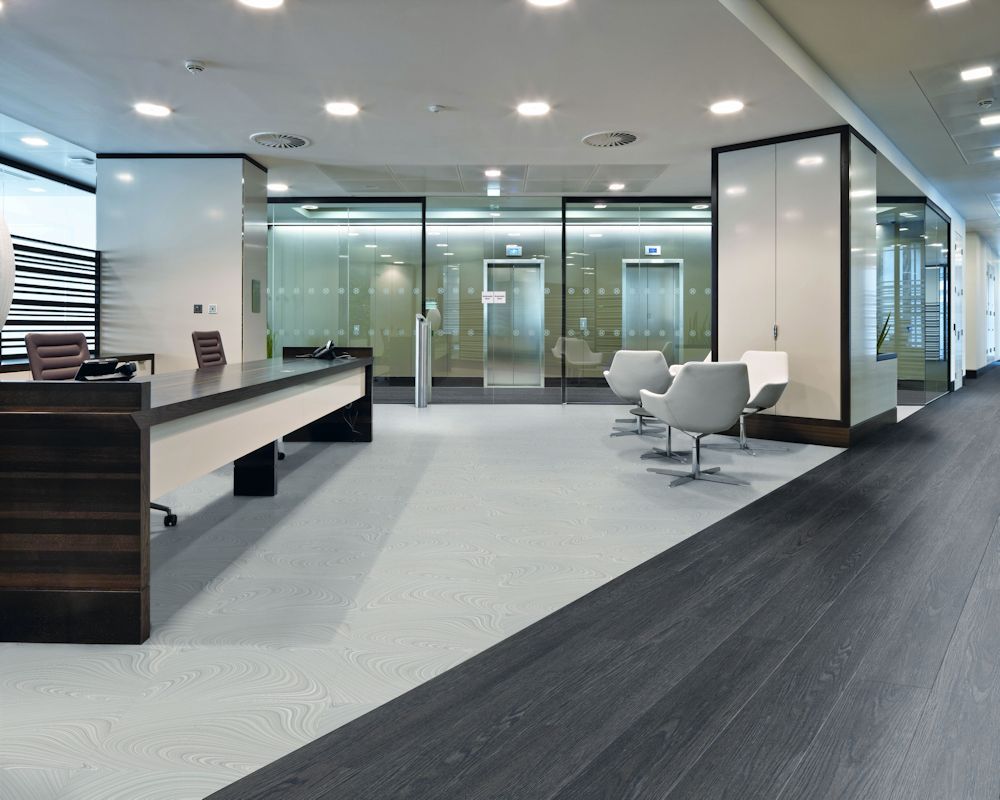
Sheet vinyl was the product I encountered most frequently when visiting commercial spaces before starting my own projects. It comes in large rolls and is glued down to create a seamless surface that’s nearly impervious to water infiltration between seams. In healthcare settings, food service areas, and commercial kitchens, that seamless quality is not just aesthetically preferable but hygienically important. I saw it used beautifully in a medical office renovation and was impressed by how clean and professional it looked.
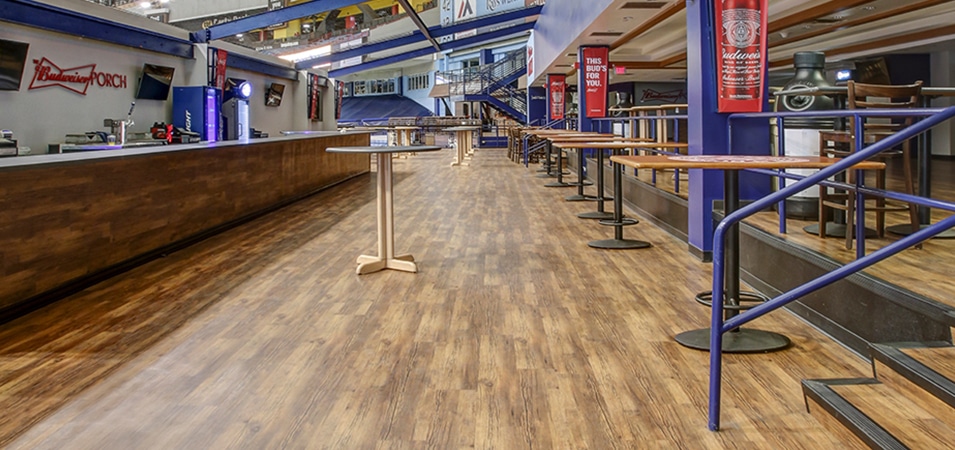
Luxury vinyl tile and luxury vinyl plank in commercial grades offer the visual flexibility that sheet vinyl sometimes lacks. These products come in individual tiles or planks that can be arranged in creative patterns and replaced individually if a section gets damaged beyond repair. For my friend’s boutique, we chose a commercial-grade LVP in a warm wood-look finish that gave the space a welcoming, boutique-hotel feeling without the cost or maintenance demands of actual hardwood.
Vinyl composition tile, commonly called VCT, is the classic commercial vinyl product you’ve probably walked across in countless schools, hospitals, and retail stores without realizing it. It’s extremely durable and affordable, but it requires regular stripping and waxing to maintain its appearance, which adds ongoing maintenance costs. I steered my clients away from VCT in favor of commercial LVP for most projects because the lower maintenance requirements of LVP make more practical sense for small business owners without dedicated janitorial staff.

Durability and Performance in High-Traffic Environments
On my first commercial flooring project, I chose a 20-mil commercial LVP that I thought would be more than adequate for a small retail environment. Within 18 months, the areas directly in front of the checkout counter and near the entrance showed noticeable wear that I hadn’t anticipated. That experience taught me that traffic volume estimates in retail are almost always lower than reality, and going up one tier in wear layer thickness is almost always worth the added cost.
Commercial vinyl’s resistance to indentation is something I now test carefully before committing to any product. Heavy display fixtures, rolling carts, and office chair casters all concentrate significant weight on very small surface areas, and softer vinyl products can show permanent dents within weeks. I now look specifically for products with indentation resistance ratings and, where possible, choose a product with a fiberglass or rigid core that distributes point loads more effectively across the floor.
The performance of commercial vinyl in moisture-prone areas like entryways, break rooms, and restrooms is one of its strongest practical advantages over other commercial flooring types. I specified commercial vinyl sheet flooring for the restroom in one project and commercial LVP everywhere else, and both surfaces have handled years of mopping, spills, and tracked-in weather without showing any signs of deterioration. That moisture resilience alone justifies choosing vinyl over carpet, hardwood, or laminate in most commercial contexts.
Design Options That Make Commercial Vinyl Look Far Less Institutional
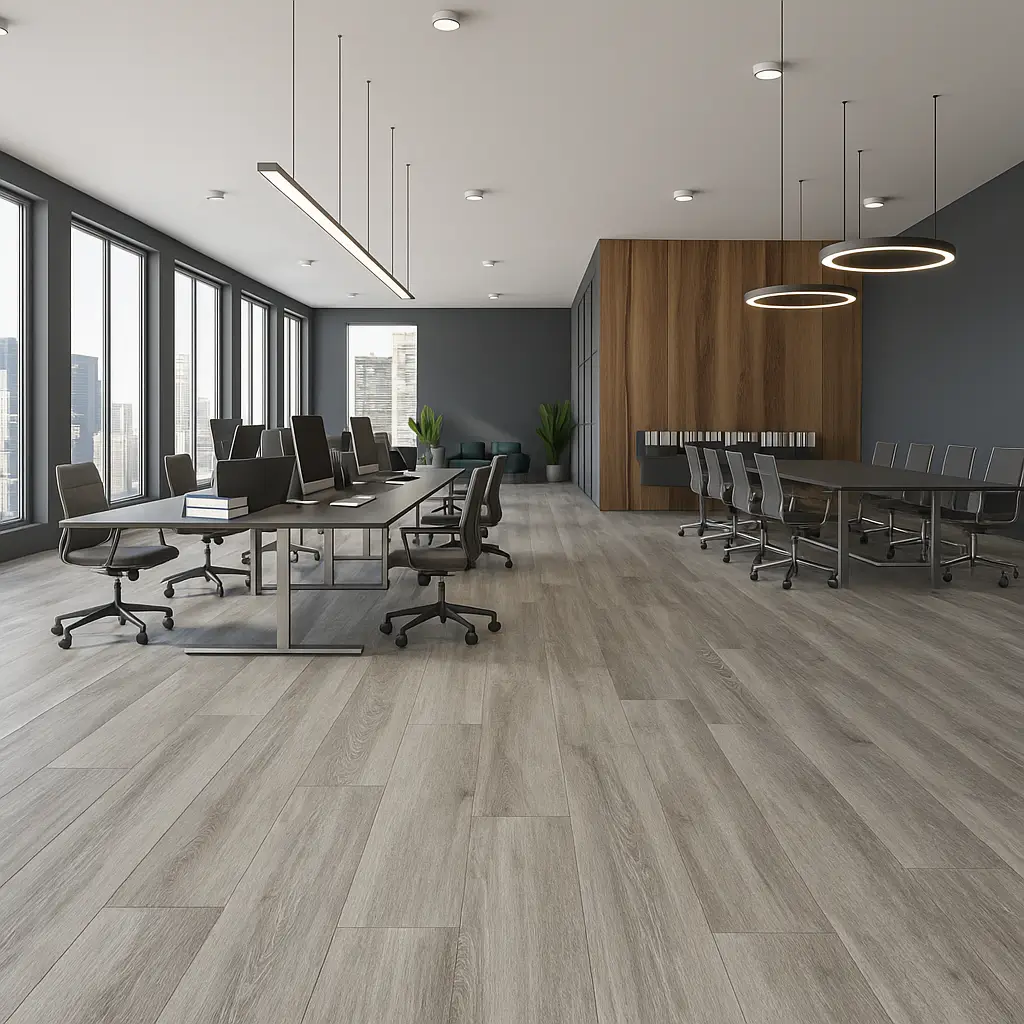
One of the most common misconceptions I had to overcome when presenting commercial vinyl to clients was the assumption that it would make their space look like a school cafeteria. Modern commercial vinyl has come so far from that institutional aesthetic that the comparison barely holds anymore. The design options available today span realistic wood looks, stone and concrete visuals, geometric patterns, and custom colorways that can be specified for larger projects.
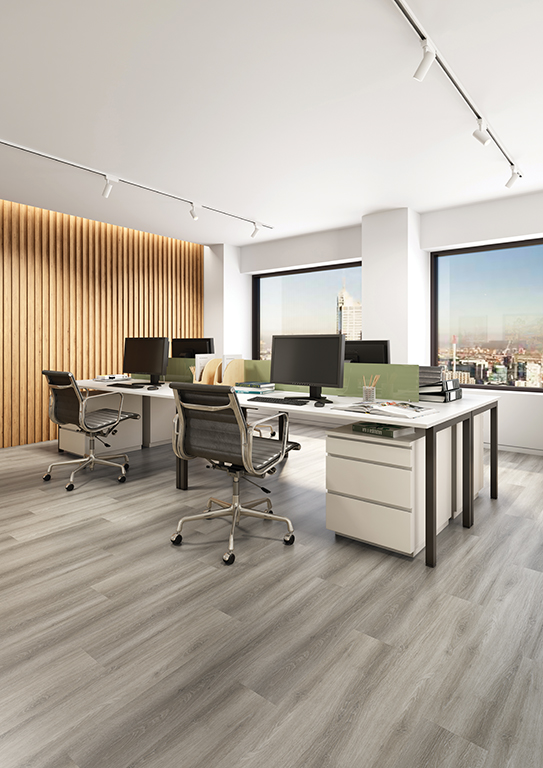
On one office renovation I consulted on, we used a commercial LVP in a concrete-look finish that looked indistinguishable from polished concrete at first glance but offered dramatically better acoustic performance and comfort underfoot. The client’s team spent long hours on their feet, and the cushioned quality of the vinyl made a real difference in how people felt at the end of the day. That combination of aesthetic sophistication and ergonomic benefit is something polished concrete simply cannot offer.
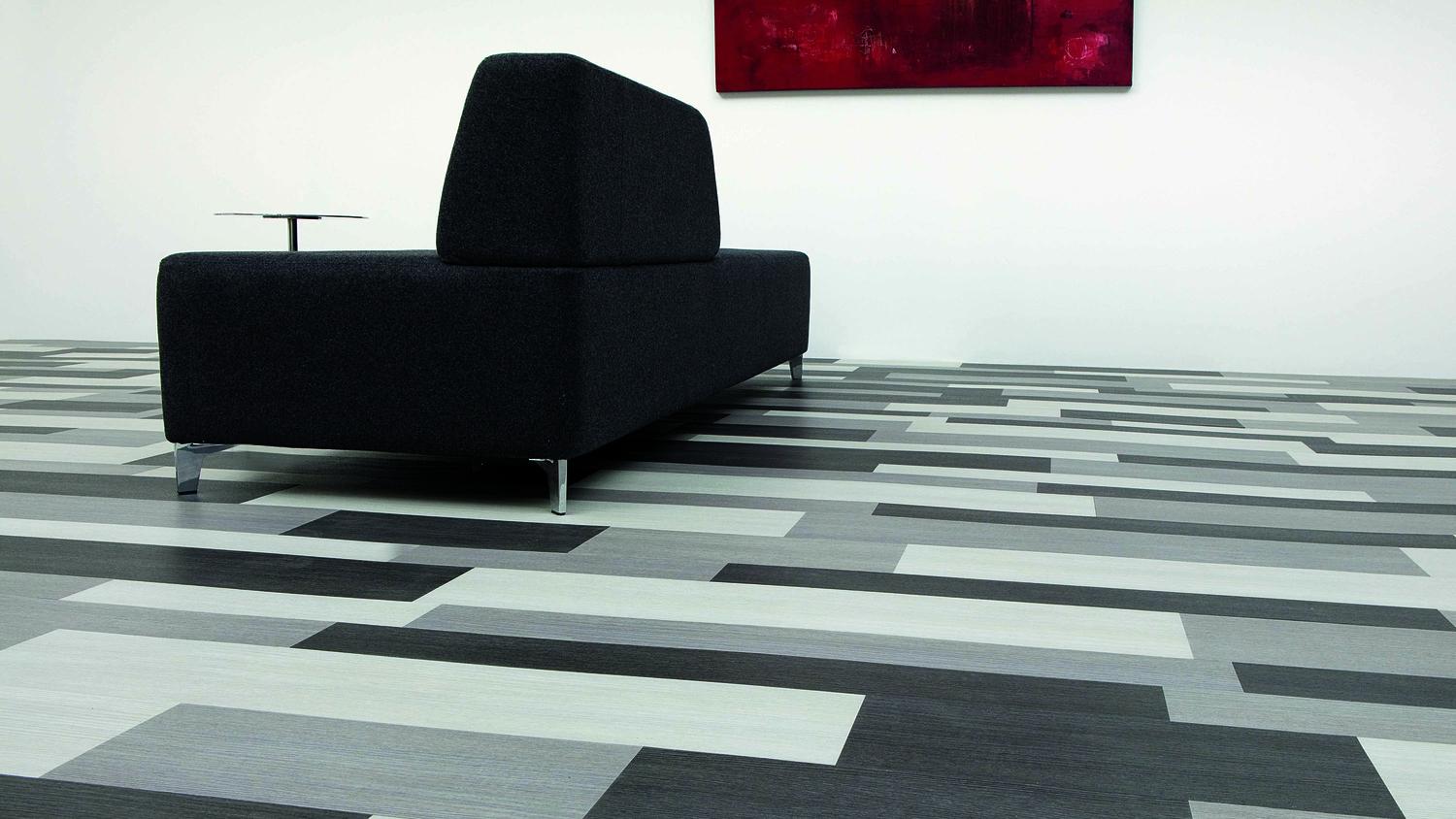
For a restaurant client, we used commercial sheet vinyl in a large-format tile pattern with contrasting grout line colors that created a bold, graphic floor with zero grout lines to trap bacteria or food debris. The kitchen got a commercial slip-resistant sheet vinyl, and the dining room got a more decorative option from the same product family. Coordinating the two zones while keeping them visually distinct gave the whole space a designed, intentional quality that impressed everyone who came through the door.
Installation Considerations for Commercial Projects
Commercial vinyl installation is almost always a job for professional flooring contractors rather than a DIY project, and I say that as someone who has done plenty of my own residential flooring work. The subfloor preparation required in commercial settings is far more rigorous than what most homeowners encounter. Concrete must be clean, flat, and free of moisture issues before any commercial vinyl goes down, and achieving that standard often requires grinding, patching, and moisture testing that demands professional equipment and expertise.
Moisture vapor emission from concrete subfloors is one of the most common causes of commercial flooring failure, and it’s something I now test for on every project before committing to a product or installation method. If the moisture vapor emission rate exceeds the flooring manufacturer’s specified limits, a moisture mitigation system must be installed first. Skipping this step to save time or money is one of the most expensive mistakes a commercial flooring project can make, because remediation after installation is far costlier than prevention before it.
Adhesive selection matters more in commercial applications than most people realize. The wrong adhesive for a given product, subfloor condition, or expected traffic load can cause premature delamination, edge lifting, or movement underfoot. My go-to contractors always use the adhesive specified by the flooring manufacturer rather than substituting a cheaper or more convenient alternative. That commitment to using the right products throughout the installation process is a big part of why the floors I’ve been involved with have held up as well as they have.
Maintenance Practices That Protect Your Commercial Vinyl Investment
Setting up the right maintenance routine from the very first day your commercial vinyl floor is in service makes an enormous difference in how it looks after five years. I learned this on my second project, where the client was committed to daily cleaning and periodic professional maintenance. Three years in, that floor looks almost identical to installation day, which consistently surprises visitors who don’t realize how much foot traffic it handles weekly.
Daily sweeping or dust mopping removes the abrasive grit that is actually responsible for most wear on commercial vinyl surfaces. Dirt and sand act like sandpaper underfoot, slowly grinding down the wear layer every time someone walks across the floor. A high-quality walk-off mat at every entrance captures an enormous amount of that debris before it reaches the floor surface, and investing in good entrance matting is one of the highest-return maintenance decisions any commercial space owner can make.
Wet cleaning commercial vinyl should be done with a pH-neutral cleaner diluted according to manufacturer recommendations rather than with whatever general-purpose cleaner happens to be on hand. I’ve seen well-intentioned cleaning staff use strong degreasers or bleach solutions that stripped the finish off commercial LVP within months of installation. Establishing a written cleaning protocol for whoever maintains the space, and making sure they actually follow it, protects an investment that might represent tens of thousands of dollars in material and installation costs.
How long does commercial vinyl flooring typically last?
With proper installation and consistent maintenance, quality commercial vinyl flooring can last 15 to 25 years in moderate to high-traffic environments. Wear layer thickness is the primary factor, with 28-mil and above products lasting longest under heavy use. I’ve seen well-maintained commercial sheet vinyl in retail spaces that looked presentable after 20 years, which says a lot about the category’s longevity when treated properly from day one.
Is commercial vinyl flooring waterproof?
Commercial vinyl is highly water-resistant and in many cases effectively waterproof at the surface level. Sheet vinyl with heat-welded seams is the most water-secure option since there are no joints for moisture to penetrate. Commercial LVP handles spills and wet mopping very well. The vulnerability with any vinyl product is moisture coming up through the subfloor rather than down from above, which is why moisture testing before installation is so important in commercial settings.

Can commercial vinyl flooring be installed over existing flooring?
Sometimes, but it depends on the existing surface condition and height constraints. I’ve seen commercial vinyl installed successfully over existing sheet vinyl in good condition, which saved significant demolition time and cost. However, any existing flooring that’s loose, damaged, or adding too much height to the subfloor should be removed first. The subfloor must meet flatness tolerances specified by the manufacturer regardless of what’s being installed over it.
How does commercial vinyl compare to polished concrete for retail spaces?
Both are popular in retail environments, but they serve different priorities. Polished concrete is extremely durable and visually striking but is hard underfoot, cold in winter, and offers no acoustic softening. Commercial vinyl is warmer underfoot, quieter, easier on employees who stand all day, and more forgiving of subfloor imperfections. For retail spaces with long staffed hours, I almost always recommend commercial vinyl over polished concrete for the comfort and acoustic benefits alone.
What’s the typical cost of commercial vinyl flooring installation?
Materials for commercial-grade LVP typically run $3 to $8 per square foot depending on wear layer thickness and design quality. Commercial sheet vinyl is often $2 to $5 per square foot for materials. Professional installation adds $3 to $6 per square foot in most markets, and subfloor preparation can add significant additional cost depending on existing conditions. Budget $6 to $14 per square foot all-in for a complete commercial vinyl installation, and don’t cut corners on subfloor prep.
Is commercial vinyl flooring a good choice for restaurants and food service?
It’s one of the best choices available for food service environments. Commercial sheet vinyl with heat-welded seams creates a hygienic, seamless surface that resists bacteria accumulation and handles aggressive cleaning routines without deteriorating. Slip-resistant surface textures are available for kitchen areas where water and grease are constant concerns. I specified commercial vinyl for a restaurant kitchen and dining room on one project, and the owner has been consistently pleased with how easy it is to keep clean and sanitary.

Related Posts: