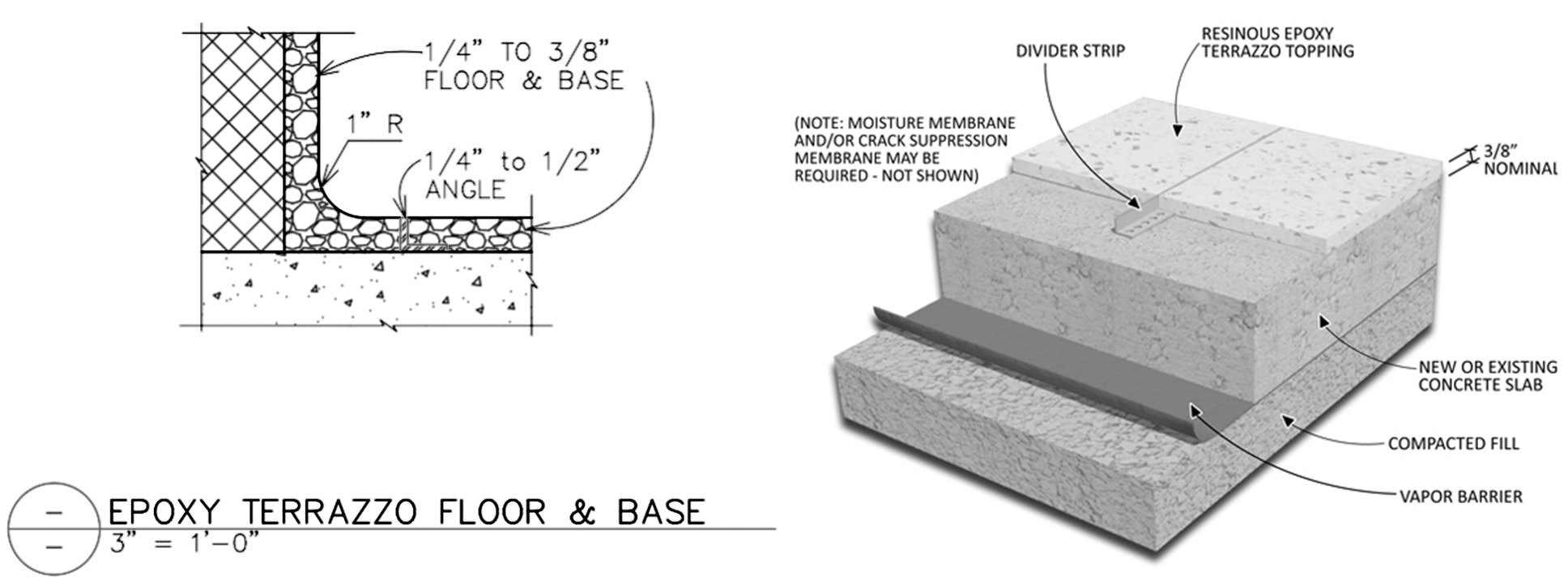
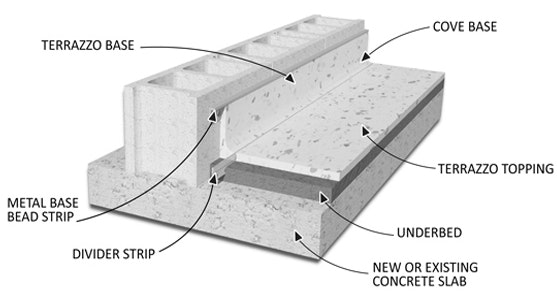
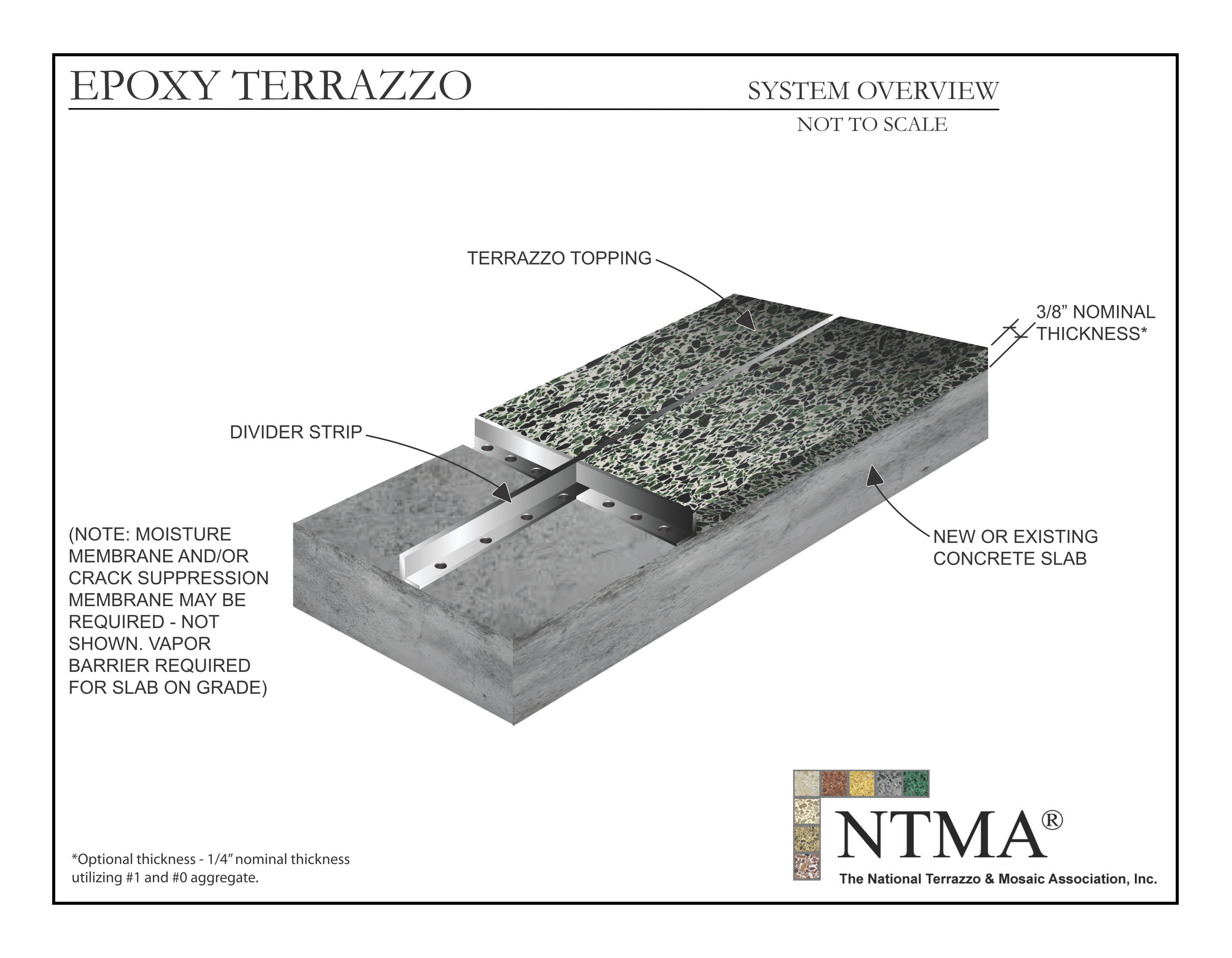
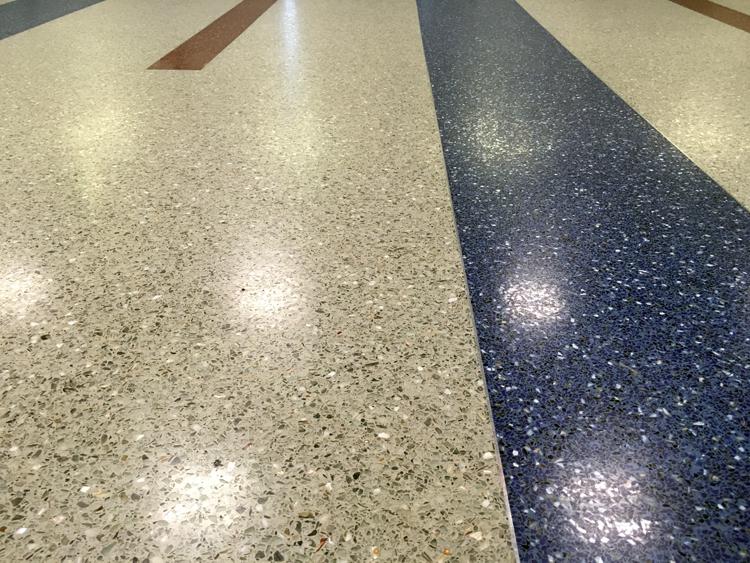
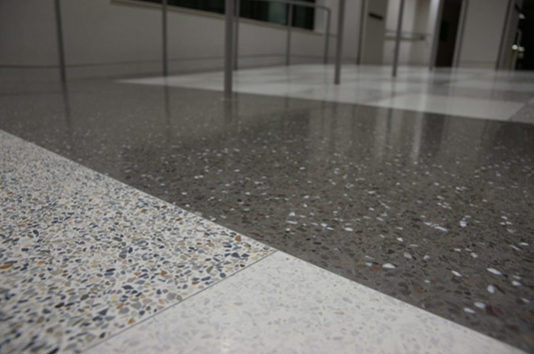
Epoxy terrazzo flooring is a stunning and durable flooring option that combines the classic beauty of traditional terrazzo with the modern advantages of epoxy resin. Terrazzo, historically composed of marble or granite chips set in a matrix of cement, has evolved with the introduction of epoxy resins, resulting in a more versatile and resilient flooring material. One of the key details of epoxy terrazzo is its composition, typically consisting of a blend of marble, glass, or other decorative aggregates combined with epoxy resin. This composition enhances the flooring’s durability, as epoxy is known for its high resistance to abrasion, chemicals, and stains. The result is a seamless, glossy surface that can withstand heavy foot traffic and is suitable for various commercial, institutional, and residential applications.
Images about Epoxy Terrazzo Flooring Details
Epoxy Terrazzo Flooring Details
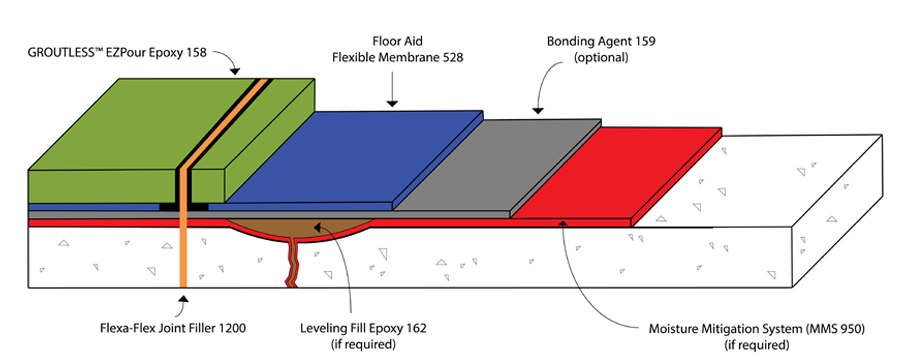
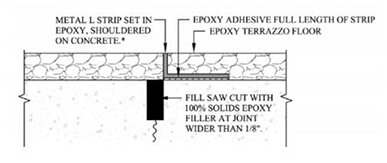
The installation process of epoxy terrazzo is intricate and requires skilled craftsmanship. The first step involves preparing the substrate and applying a layer of epoxy primer. Once the primer cures, a mixture of epoxy resin and decorative aggregates is spread evenly across the surface. Skilled installers then use grinding and polishing techniques to expose the aggregates and achieve the desired level of smoothness and sheen. The final step involves applying a clear epoxy sealer to protect the terrazzo surface and enhance its longevity. The customization options for epoxy terrazzo are extensive, allowing for the creation of intricate patterns, logos, or even incorporating vibrant colors. This flexibility in design makes epoxy terrazzo a sought-after choice for architects and designers looking to add a touch of luxury and uniqueness to their projects.
How to Detail Concrete-Inspired, Poured-in-Place Terrazzo Flooring
Maintenance is another crucial detail when it comes to epoxy terrazzo flooring. The seamless nature of the surface minimizes the accumulation of dirt and bacteria, making it easy to clean and maintain. Regular sweeping and damp mopping are usually sufficient for routine maintenance. Additionally, periodic resealing can help preserve the glossy finish and protect the terrazzo from wear over time. Epoxy terrazzo is also a sustainable flooring option, as it can be installed over existing surfaces, reducing the need for demolition and contributing to a more eco-friendly building process. In summary, epoxy terrazzo flooring details encompass its durable and customizable composition, intricate installation process, and easy maintenance, making it a versatile and attractive choice for a wide range of architectural and design projects.
Epoxy Terrazzo Flooring: The Ultimate Guide
Epoxy terrazzo flooring is one of the most popular flooring types today. It is a combination of epoxy resin, marble chips, and glass chips, which are then sealed with a clear topcoat. This type of flooring has many advantages, such as being easy to install and maintain, as well as being resistant to scratches, stains, and moisture. Epoxy terrazzo flooring is also very durable and can last for many years. In this guide, we will discuss all the details related to epoxy terrazzo flooring.
What Is Epoxy Terrazzo Flooring?
Epoxy terrazzo flooring is a type of flooring that is made from a combination of epoxy resins, marble chips, and glass chips. This mixture is poured into a concrete substrate and then sealed with a clear topcoat. The result is a hard and durable surface that is very resistant to scratches, stains, and moisture. The epoxy terrazzo flooring also has a distinctive look that can add style and charm to any room in your home or office.
Advantages of Epoxy Terrazzo Flooring
Epoxy terrazzo flooring has many advantages over other types of flooring. It is very easy to install and maintain, as it does not require any special tools or skills. It is also resistant to scratches, stains, and moisture. Additionally, it is long-lasting and very durable, so it can easily stand up to heavy foot traffic without showing wear or tear. Finally, epoxy terrazzo flooring has a unique look that can add style and charm to any room in your home or office.
Disadvantages of Epoxy Terrazzo Flooring
The main disadvantage of epoxy terrazzo flooring is that it can be quite expensive. It can cost anywhere from $4 to $6 per square foot for materials alone. Additionally, installation costs can be quite high depending on the size of the area and the complexity of the job. Finally, epoxy terrazzo flooring must be regularly maintained in order to keep it looking its best.
How To Install Epoxy Terrazzo Flooring
Installing epoxy terrazzo flooring is not a particularly difficult job, but it does require some skill and patience. First of all, you need to prepare the surface by removing any existing floor covering and making sure that it is dry and level. Then you will need to mix the epoxy resin with the marble chips and glass chips according to the instructions on the package. Once the mixture is ready, you can spread it over the substrate using a trowel or squeegee. The mixture should be left to cure for at least 24 hours before applying the clear topcoat. Finally, you should apply several coats of sealer in order to protect the surface from wear and tear.
FAQs
Q1: Is epoxy terrazzo flooring durable?
A1: Yes, epoxy terrazzo flooring is very durable and can easily stand up to heavy foot traffic without showing wear or tear. Additionally, it is resistant to scratches, stains, and moisture so it will last for many years with proper maintenance.
Q2: How much does epoxy terrazzo flooring cost?
A2: The cost of epoxy terrazzo flooring varies depending on the size of the area and complexity of the job. Generally speaking, materials alone will cost anywhere from $4 to $6 per square foot. Installation costs will vary depending on the size of the area and complexity of the job but can be quite high in some cases.
Q3: How often should I maintain my epoxy terrazzo floor?
A3: You should clean your epoxy terrazzo floor regularly in order to keep it looking its best. You can use a mop or vacuum cleaner to remove dirt and dust from the surface. Additionally, you should use a mild detergent or cleaner occasionally in order to remove any stubborn stains or dirt buildup.
We use cookies on our website to give you the most relevant experience by remembering your preferences and repeat visits. By clicking “Accept All”, you consent to the use of ALL the cookies. However, you may visit "Cookie Settings" to provide a controlled consent.
This website uses cookies to improve your experience while you navigate through the website. Out of these, the cookies that are categorized as necessary are stored on your browser as they are essential for the working of basic functionalities of the website. We also use third-party cookies that help us analyze and understand how you use this website. These cookies will be stored in your browser only with your consent. You also have the option to opt-out of these cookies. But opting out of some of these cookies may affect your browsing experience.
Necessary cookies are absolutely essential for the website to function properly. These cookies ensure basic functionalities and security features of the website, anonymously.
Cookie
Duration
Description
cookielawinfo-checkbox-analytics
11 months
This cookie is set by GDPR Cookie Consent plugin. The cookie is used to store the user consent for the cookies in the category "Analytics".
cookielawinfo-checkbox-functional
11 months
The cookie is set by GDPR cookie consent to record the user consent for the cookies in the category "Functional".
cookielawinfo-checkbox-necessary
11 months
This cookie is set by GDPR Cookie Consent plugin. The cookies is used to store the user consent for the cookies in the category "Necessary".
cookielawinfo-checkbox-others
11 months
This cookie is set by GDPR Cookie Consent plugin. The cookie is used to store the user consent for the cookies in the category "Other.
cookielawinfo-checkbox-performance
11 months
This cookie is set by GDPR Cookie Consent plugin. The cookie is used to store the user consent for the cookies in the category "Performance".
viewed_cookie_policy
11 months
The cookie is set by the GDPR Cookie Consent plugin and is used to store whether or not user has consented to the use of cookies. It does not store any personal data.
Functional cookies help to perform certain functionalities like sharing the content of the website on social media platforms, collect feedbacks, and other third-party features.
Performance cookies are used to understand and analyze the key performance indexes of the website which helps in delivering a better user experience for the visitors.
Analytical cookies are used to understand how visitors interact with the website. These cookies help provide information on metrics the number of visitors, bounce rate, traffic source, etc.
Advertisement cookies are used to provide visitors with relevant ads and marketing campaigns. These cookies track visitors across websites and collect information to provide customized ads.
 The installation process of epoxy terrazzo is intricate and requires skilled craftsmanship. The first step involves preparing the substrate and applying a layer of epoxy primer. Once the primer cures, a mixture of epoxy resin and decorative aggregates is spread evenly across the surface. Skilled installers then use grinding and polishing techniques to expose the aggregates and achieve the desired level of smoothness and sheen. The final step involves applying a clear epoxy sealer to protect the terrazzo surface and enhance its longevity. The customization options for epoxy terrazzo are extensive, allowing for the creation of intricate patterns, logos, or even incorporating vibrant colors. This flexibility in design makes epoxy terrazzo a sought-after choice for architects and designers looking to add a touch of luxury and uniqueness to their projects.
 Maintenance is another crucial detail when it comes to epoxy terrazzo flooring. The seamless nature of the surface minimizes the accumulation of dirt and bacteria, making it easy to clean and maintain. Regular sweeping and damp mopping are usually sufficient for routine maintenance. Additionally, periodic resealing can help preserve the glossy finish and protect the terrazzo from wear over time. Epoxy terrazzo is also a sustainable flooring option, as it can be installed over existing surfaces, reducing the need for demolition and contributing to a more eco-friendly building process. In summary, epoxy terrazzo flooring details encompass its durable and customizable composition, intricate installation process, and easy maintenance, making it a versatile and attractive choice for a wide range of architectural and design projects.





 Related Posts:
Epoxy Terrazzo Flooring: The Ultimate Guide
Epoxy terrazzo flooring is one of the most popular flooring types today. It is a combination of epoxy resin, marble chips, and glass chips, which are then sealed with a clear topcoat. This type of flooring has many advantages, such as being easy to install and maintain, as well as being resistant to scratches, stains, and moisture. Epoxy terrazzo flooring is also very durable and can last for many years. In this guide, we will discuss all the details related to epoxy terrazzo flooring.
What Is Epoxy Terrazzo Flooring?
Epoxy terrazzo flooring is a type of flooring that is made from a combination of epoxy resins, marble chips, and glass chips. This mixture is poured into a concrete substrate and then sealed with a clear topcoat. The result is a hard and durable surface that is very resistant to scratches, stains, and moisture. The epoxy terrazzo flooring also has a distinctive look that can add style and charm to any room in your home or office.
Advantages of Epoxy Terrazzo Flooring
Epoxy terrazzo flooring has many advantages over other types of flooring. It is very easy to install and maintain, as it does not require any special tools or skills. It is also resistant to scratches, stains, and moisture. Additionally, it is long-lasting and very durable, so it can easily stand up to heavy foot traffic without showing wear or tear. Finally, epoxy terrazzo flooring has a unique look that can add style and charm to any room in your home or office.
Disadvantages of Epoxy Terrazzo Flooring
The main disadvantage of epoxy terrazzo flooring is that it can be quite expensive. It can cost anywhere from $4 to $6 per square foot for materials alone. Additionally, installation costs can be quite high depending on the size of the area and the complexity of the job. Finally, epoxy terrazzo flooring must be regularly maintained in order to keep it looking its best.
How To Install Epoxy Terrazzo Flooring
Installing epoxy terrazzo flooring is not a particularly difficult job, but it does require some skill and patience. First of all, you need to prepare the surface by removing any existing floor covering and making sure that it is dry and level. Then you will need to mix the epoxy resin with the marble chips and glass chips according to the instructions on the package. Once the mixture is ready, you can spread it over the substrate using a trowel or squeegee. The mixture should be left to cure for at least 24 hours before applying the clear topcoat. Finally, you should apply several coats of sealer in order to protect the surface from wear and tear.
FAQs
Q1: Is epoxy terrazzo flooring durable?
A1: Yes, epoxy terrazzo flooring is very durable and can easily stand up to heavy foot traffic without showing wear or tear. Additionally, it is resistant to scratches, stains, and moisture so it will last for many years with proper maintenance.
Q2: How much does epoxy terrazzo flooring cost?
A2: The cost of epoxy terrazzo flooring varies depending on the size of the area and complexity of the job. Generally speaking, materials alone will cost anywhere from $4 to $6 per square foot. Installation costs will vary depending on the size of the area and complexity of the job but can be quite high in some cases.
Q3: How often should I maintain my epoxy terrazzo floor?
A3: You should clean your epoxy terrazzo floor regularly in order to keep it looking its best. You can use a mop or vacuum cleaner to remove dirt and dust from the surface. Additionally, you should use a mild detergent or cleaner occasionally in order to remove any stubborn stains or dirt buildup.
Related Posts:
Epoxy Terrazzo Flooring: The Ultimate Guide
Epoxy terrazzo flooring is one of the most popular flooring types today. It is a combination of epoxy resin, marble chips, and glass chips, which are then sealed with a clear topcoat. This type of flooring has many advantages, such as being easy to install and maintain, as well as being resistant to scratches, stains, and moisture. Epoxy terrazzo flooring is also very durable and can last for many years. In this guide, we will discuss all the details related to epoxy terrazzo flooring.
What Is Epoxy Terrazzo Flooring?
Epoxy terrazzo flooring is a type of flooring that is made from a combination of epoxy resins, marble chips, and glass chips. This mixture is poured into a concrete substrate and then sealed with a clear topcoat. The result is a hard and durable surface that is very resistant to scratches, stains, and moisture. The epoxy terrazzo flooring also has a distinctive look that can add style and charm to any room in your home or office.
Advantages of Epoxy Terrazzo Flooring
Epoxy terrazzo flooring has many advantages over other types of flooring. It is very easy to install and maintain, as it does not require any special tools or skills. It is also resistant to scratches, stains, and moisture. Additionally, it is long-lasting and very durable, so it can easily stand up to heavy foot traffic without showing wear or tear. Finally, epoxy terrazzo flooring has a unique look that can add style and charm to any room in your home or office.
Disadvantages of Epoxy Terrazzo Flooring
The main disadvantage of epoxy terrazzo flooring is that it can be quite expensive. It can cost anywhere from $4 to $6 per square foot for materials alone. Additionally, installation costs can be quite high depending on the size of the area and the complexity of the job. Finally, epoxy terrazzo flooring must be regularly maintained in order to keep it looking its best.
How To Install Epoxy Terrazzo Flooring
Installing epoxy terrazzo flooring is not a particularly difficult job, but it does require some skill and patience. First of all, you need to prepare the surface by removing any existing floor covering and making sure that it is dry and level. Then you will need to mix the epoxy resin with the marble chips and glass chips according to the instructions on the package. Once the mixture is ready, you can spread it over the substrate using a trowel or squeegee. The mixture should be left to cure for at least 24 hours before applying the clear topcoat. Finally, you should apply several coats of sealer in order to protect the surface from wear and tear.
FAQs
Q1: Is epoxy terrazzo flooring durable?
A1: Yes, epoxy terrazzo flooring is very durable and can easily stand up to heavy foot traffic without showing wear or tear. Additionally, it is resistant to scratches, stains, and moisture so it will last for many years with proper maintenance.
Q2: How much does epoxy terrazzo flooring cost?
A2: The cost of epoxy terrazzo flooring varies depending on the size of the area and complexity of the job. Generally speaking, materials alone will cost anywhere from $4 to $6 per square foot. Installation costs will vary depending on the size of the area and complexity of the job but can be quite high in some cases.
Q3: How often should I maintain my epoxy terrazzo floor?
A3: You should clean your epoxy terrazzo floor regularly in order to keep it looking its best. You can use a mop or vacuum cleaner to remove dirt and dust from the surface. Additionally, you should use a mild detergent or cleaner occasionally in order to remove any stubborn stains or dirt buildup.