Installing bamboo flooring in my bedroom last year was one of the best home improvement decisions I’ve made. I’d been living with worn carpet that harbored dust and allergens, and I desperately wanted something clean, beautiful, and sustainable. After researching various options, bamboo flooring checked all my boxes, offering durability, eco-friendliness, and a warm aesthetic that makes my bedroom feel like a peaceful retreat.
The installation process was smoother than I expected, and waking up each morning to see those beautiful natural grain patterns brings me genuine joy. Let me walk you through everything I learned about choosing and installing bamboo flooring specifically for bedroom spaces.
Why Bamboo Flooring Works Perfectly for Bedrooms
Bedrooms have unique requirements that make bamboo an ideal choice. Unlike high-traffic areas or moisture-prone bathrooms, bedrooms experience gentler use, which means bamboo’s natural properties shine without facing extreme challenges.
I loved that bamboo provided the warmth and comfort of hardwood without the environmental impact of cutting down old-growth forests. The material feels pleasant underfoot, especially important for a bedroom where I’m often barefoot first thing in the morning.
The acoustic properties of bamboo flooring surprised me in the best way. My bedroom is quieter now than with carpet because quality bamboo with proper underlayment absorbs sound effectively. I no longer hear every footstep echoing through the room, and the flooring dampens outside noise too.
This creates a more peaceful sleep environment, which was one of my main goals. The slight natural give in bamboo also makes it more comfortable for extended standing compared to tile or stone.
Air quality improvement was an unexpected benefit I noticed within weeks of installation. My old carpet had accumulated years of dust, pet dander, and allergens that vacuuming couldn’t fully remove. Bamboo’s smooth, sealed surface doesn’t trap these particles, making my bedroom noticeably fresher.
I suffer from seasonal allergies, and I’ve genuinely noticed easier breathing and better sleep since making the switch. For anyone with respiratory sensitivities, this alone makes bamboo flooring worth considering.

Selecting the Right Bamboo Style and Color for Your Bedroom
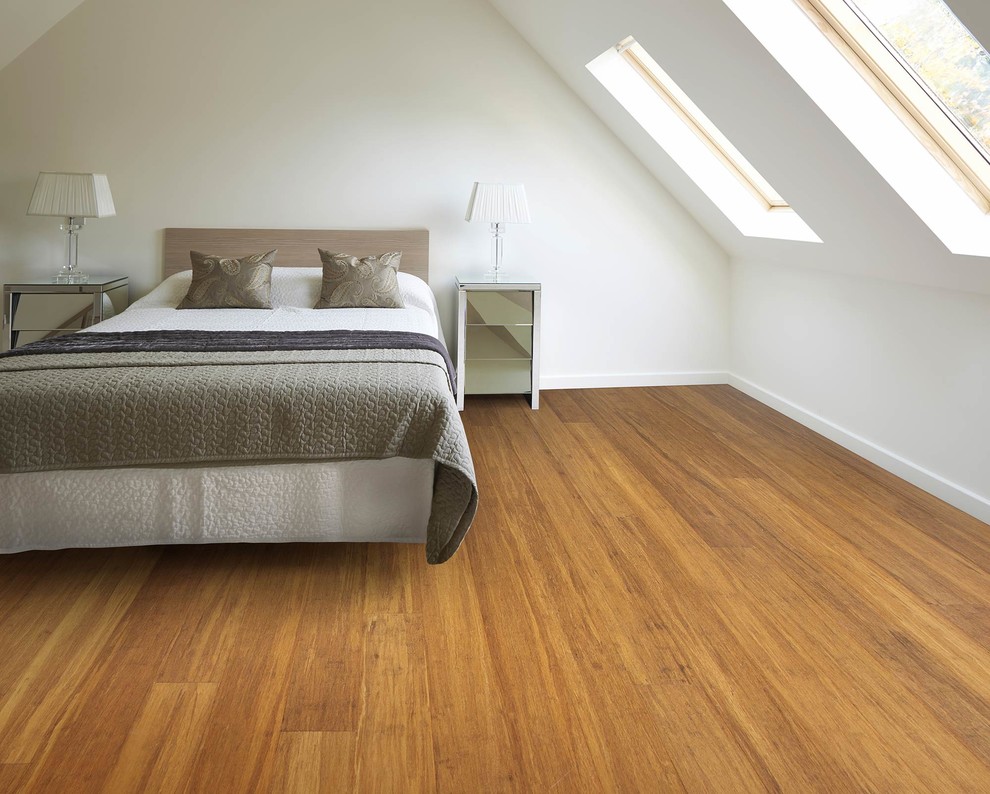
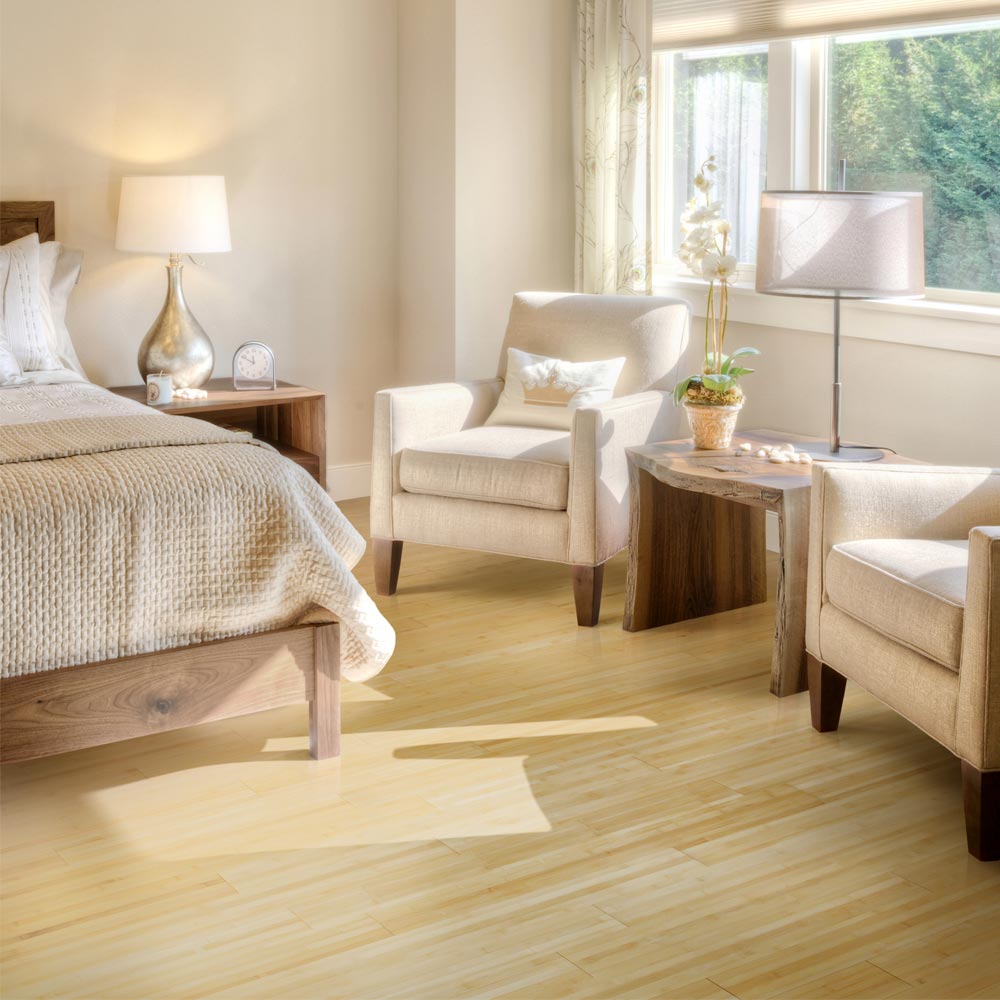
Choosing the color tone for my bedroom bamboo flooring required careful consideration of my overall design vision. I selected a natural blonde bamboo finish because I wanted to keep the room light and airy. The pale honey tones complement my white bedding and soft gray walls beautifully. Natural bamboo showcases the material’s authentic grain patterns and creates a spa-like, serene atmosphere that helps me unwind after long days.
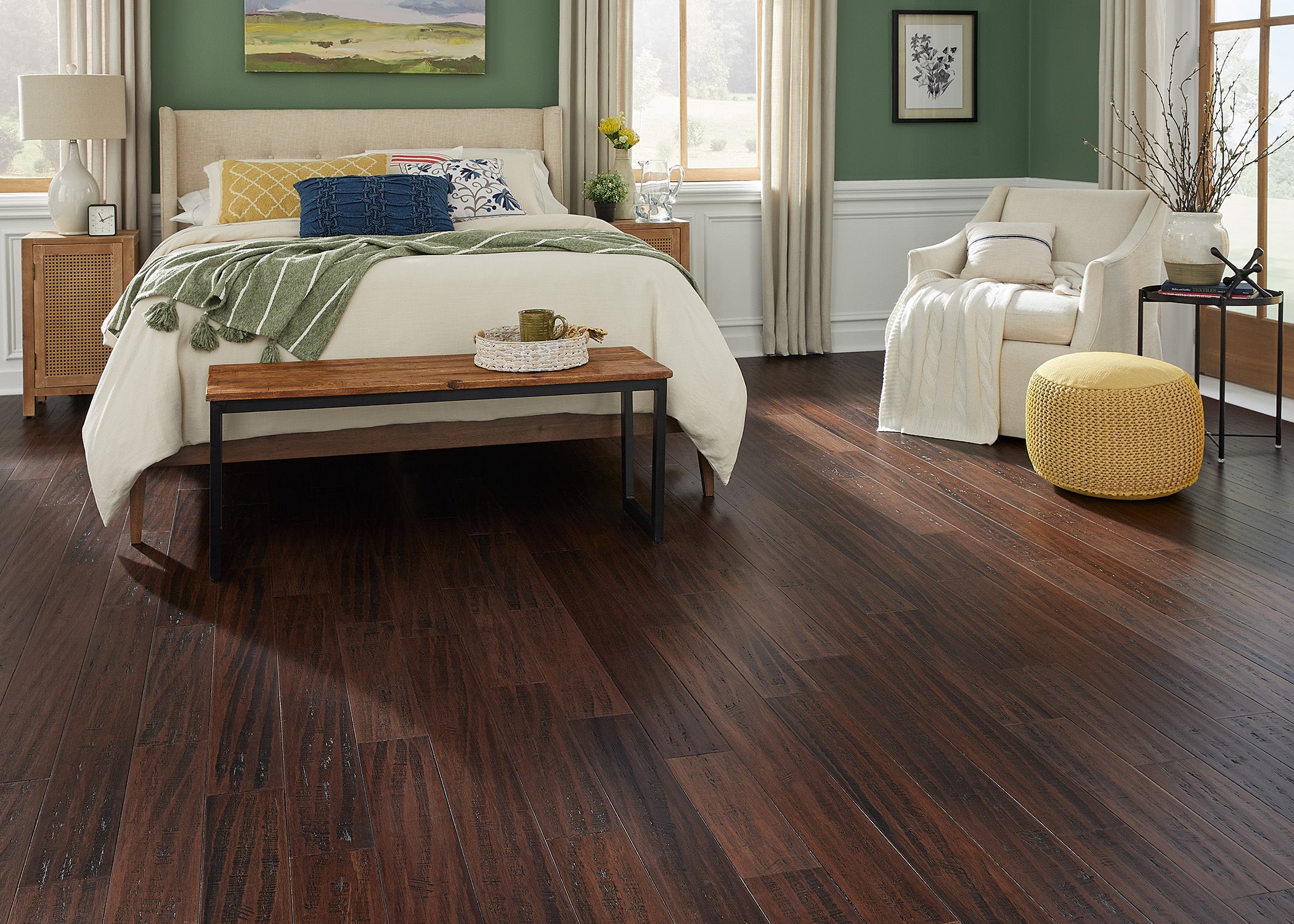
I also seriously considered carbonized bamboo, which has rich caramel and brown tones created through a specialized heating process. This option works wonderfully for bedrooms with darker furniture or those seeking a cozier, more intimate feeling. The darker color can make large bedrooms feel more inviting and works particularly well with traditional or rustic decor styles. However, I ultimately felt the lighter natural finish better suited my modern minimalist aesthetic.
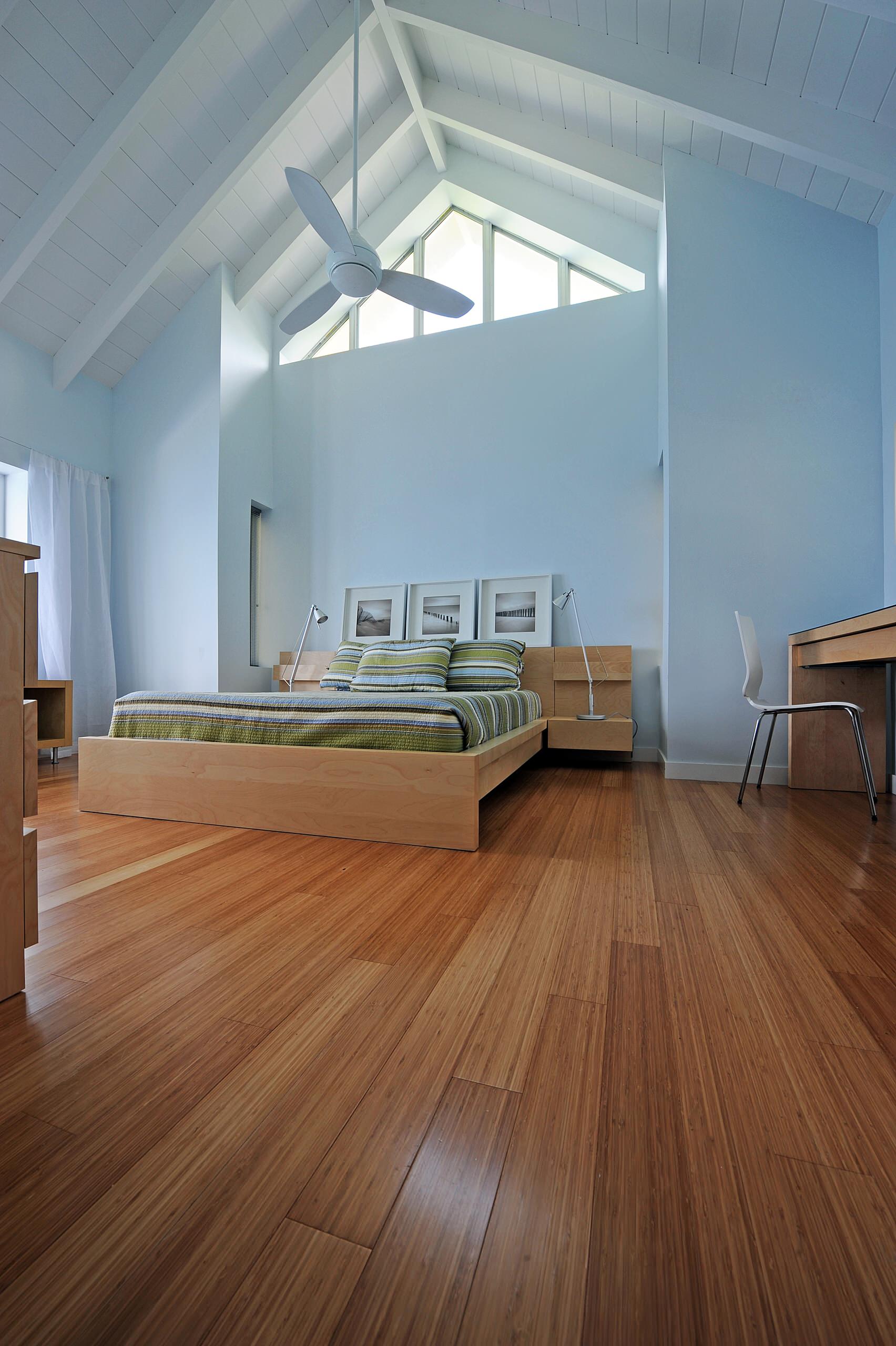
The plank width and pattern significantly impact a bedroom’s visual proportions. I chose wider planks, about five inches across, which make my medium-sized bedroom feel more spacious and less busy. Narrow planks can create a more traditional hardwood look but might make smaller bedrooms feel cluttered. I went with horizontal bamboo construction, which shows the characteristic bamboo nodes and grain, adding organic interest without overwhelming the peaceful bedroom atmosphere I wanted to create.

Preparing Your Bedroom for Bamboo Installation
Before installation could begin, I had to remove my old carpet and padding, which took an entire weekend. I rented a carpet removal tool that made pulling up staples much easier, though it was still tedious work. Underneath, I discovered the original hardwood subfloor in decent condition, which was a pleasant surprise. I thoroughly cleaned every inch, removing all debris, staples, and adhesive residue that could interfere with the bamboo installation.
Checking subfloor levelness was crucial, and I’m glad my installer insisted on this step. We used a long straightedge and level to identify high and low spots. Several areas needed attention, so we applied self-leveling compound to create a perfectly flat surface. Bamboo flooring is less forgiving than carpet about subfloor imperfections, and any bumps or dips would telegraph through, causing squeaks, gaps, or premature wear over time.
I cleared everything from my bedroom and stored furniture in the garage for the week-long project. This included removing baseboards, which I carefully labeled and saved for reinstallation. We also removed the closet doors temporarily to allow continuous flooring into the closet space, creating a seamless, unified look. I planned to sleep in the guest room during installation, though the process went faster than expected and I was back in my bedroom after just four nights.

Managing Climate Control and Acclimation
Bamboo acclimation was something I initially didn’t understand but now recognize as absolutely essential. My flooring arrived in sealed boxes and needed to sit in my bedroom for a full week before installation. This allows the bamboo to adjust to the room’s specific temperature and humidity levels, preventing future problems like warping, cupping, or gapping. I maintained the room temperature between 60-80 degrees Fahrenheit during this period.
I invested in a hygrometer to monitor bedroom humidity levels, discovering my room ran drier than ideal in winter. Bamboo performs best when indoor humidity stays between 35-55%, so I added a small humidifier to my bedroom during heating season. This protects my investment and prevents the flooring from shrinking and creating gaps between planks. In humid summer months, I use my whole-home air conditioning to prevent excessive moisture that could cause expansion.
The climate control strategy has become part of my bedroom routine, but it’s simpler than it sounds. I check the hygrometer weekly and adjust my humidifier settings as needed. Modern smart humidifiers can maintain target humidity levels automatically, which I wish I’d known before buying a basic model. This ongoing attention to climate ensures my bamboo flooring maintains its beautiful appearance and structural integrity year-round, making it a worthwhile habit for long-term floor protection.

Installation Process and Timeline
My bamboo installation used the floating floor method, where planks lock together without being glued or nailed to the subfloor. This technique works beautifully for bedrooms and allows for natural expansion and contraction. The installer first laid down foam underlayment, which provides cushioning, sound dampening, and a moisture barrier. I chose a slightly thicker underlayment than minimum specifications because I wanted maximum comfort and acoustic benefits in my bedroom.
The actual plank installation began along my bedroom’s longest, straightest wall. My installer used spacers to maintain a half-inch expansion gap around all perimeters, essential for preventing buckling when bamboo expands with humidity changes. Watching the floor come together was fascinating, each plank clicking into the previous one with satisfying precision. The installer staggered seams randomly for a natural appearance and structural strength, avoiding any repetitive patterns.
Cutting planks to fit around my bedroom’s unique features required skill and patience. The installer carefully measured and cut around heating vents, closet openings, and doorways. He undercut door frames with a jamb saw so bamboo could slide underneath for a clean, professional finish. The entire installation for my 250-square-foot bedroom took two full days. After installation, we waited 24 hours before moving furniture back, allowing the flooring to settle and the expansion gaps to establish properly.
Furnishing and Decorating Over Bamboo Floors
Once my bamboo flooring was installed, I had to rethink furniture placement and protection strategies. I immediately attached felt pads to every piece of furniture leg touching the floor. These inexpensive pads prevent scratches when moving chairs, nightstands, and my dresser for cleaning. I replace them every few months when they compress or fall off, a small maintenance task that protects my beautiful new floors.
My bed frame presented a unique challenge because it’s quite heavy and has wheels for easy repositioning. I purchased furniture coasters, wider than standard felt pads, which distribute the bed’s weight more evenly and prevent indentations in the bamboo. I also added a large area rug under and partially around my bed, which serves multiple purposes: protecting high-traffic areas, adding warmth and texture to the room, and creating a soft landing for my feet each morning.
I chose bedroom decor that complements the bamboo’s natural warmth. My neutral color palette of whites, soft grays, and natural linens harmonizes beautifully with the blonde bamboo tones. I added plants, which look stunning against the organic flooring and enhance the bedroom’s peaceful, nature-inspired atmosphere. The bamboo’s subtle grain pattern provides visual interest without competing with my decor choices, creating a balanced, restful space that feels both sophisticated and welcoming.
Is bamboo flooring comfortable enough for bedroom use where I’ll be barefoot?
Absolutely! I walk barefoot on my bamboo floors daily and find them quite comfortable. They’re warmer underfoot than tile or stone and have a slight natural give that’s pleasant. The smooth surface feels nice, and unlike carpet, it doesn’t collect dust or allergens. In winter, I use area rugs beside my bed for extra warmth. Overall, bamboo strikes a perfect balance between the comfort of wood and easy maintenance.
How does bamboo flooring affect bedroom noise levels?
My bedroom is actually quieter with bamboo than with carpet when I used quality underlayment beneath it. The underlayment absorbs footstep sounds effectively, and bamboo doesn’t create hollow echoes like some laminates. If you’re concerned about noise transmission between floors, choose thicker underlayment with good acoustic ratings. My second-floor bedroom doesn’t disturb anyone downstairs, and I notice less street noise filtering in too.
Can I install bamboo flooring over my existing bedroom floor?
It depends on what you currently have. I installed over a wooden subfloor after removing carpet. You cannot install bamboo over existing carpet, but installation over vinyl, linoleum, or tile is sometimes possible if the surface is level, stable, and dry. However, I’d recommend removing old flooring to ensure proper installation and avoid height issues at doorways. Consult with an installer about your specific situation.
How do I protect bamboo flooring from furniture scratches in my bedroom?
I use felt pads under all furniture legs and replace them when they compress or detach. For my bed and heavy dresser, I use larger furniture coasters that distribute weight better. Area rugs protect high-traffic zones. I lift furniture rather than dragging it when rearranging. These simple habits have kept my floors pristine despite regular furniture moving. Touch-up kits are available if scratches occur.

What’s the best way to clean bamboo flooring in a bedroom?
I vacuum weekly using a soft brush attachment or sweep with a microfiber dust mop to remove dust and debris. Monthly, I damp mop using bamboo floor cleaner diluted per instructions, ensuring the mop is nearly dry. I never use excess water, steam mops, or harsh chemicals. For spot cleaning, I wipe immediately with a slightly damp cloth. This routine keeps my floors beautiful with minimal effort.
How long will bamboo flooring last in a bedroom setting?
With proper care, bamboo flooring can last 25-50 years, even longer in low-traffic spaces like bedrooms. My installer said bedrooms are ideal for bamboo because they experience gentler use than living areas or hallways. The key is maintaining proper humidity levels, protecting against scratches, and cleaning appropriately. Quality strand-woven bamboo is incredibly durable. Some bamboo floors can even be refinished once or twice if needed decades from now.

Bamboo Floor Bedroom Ideas

Solid Natural Horizontal Bamboo Flooring 2.21m²
How to Install Bamboo Flooring In Bedroom
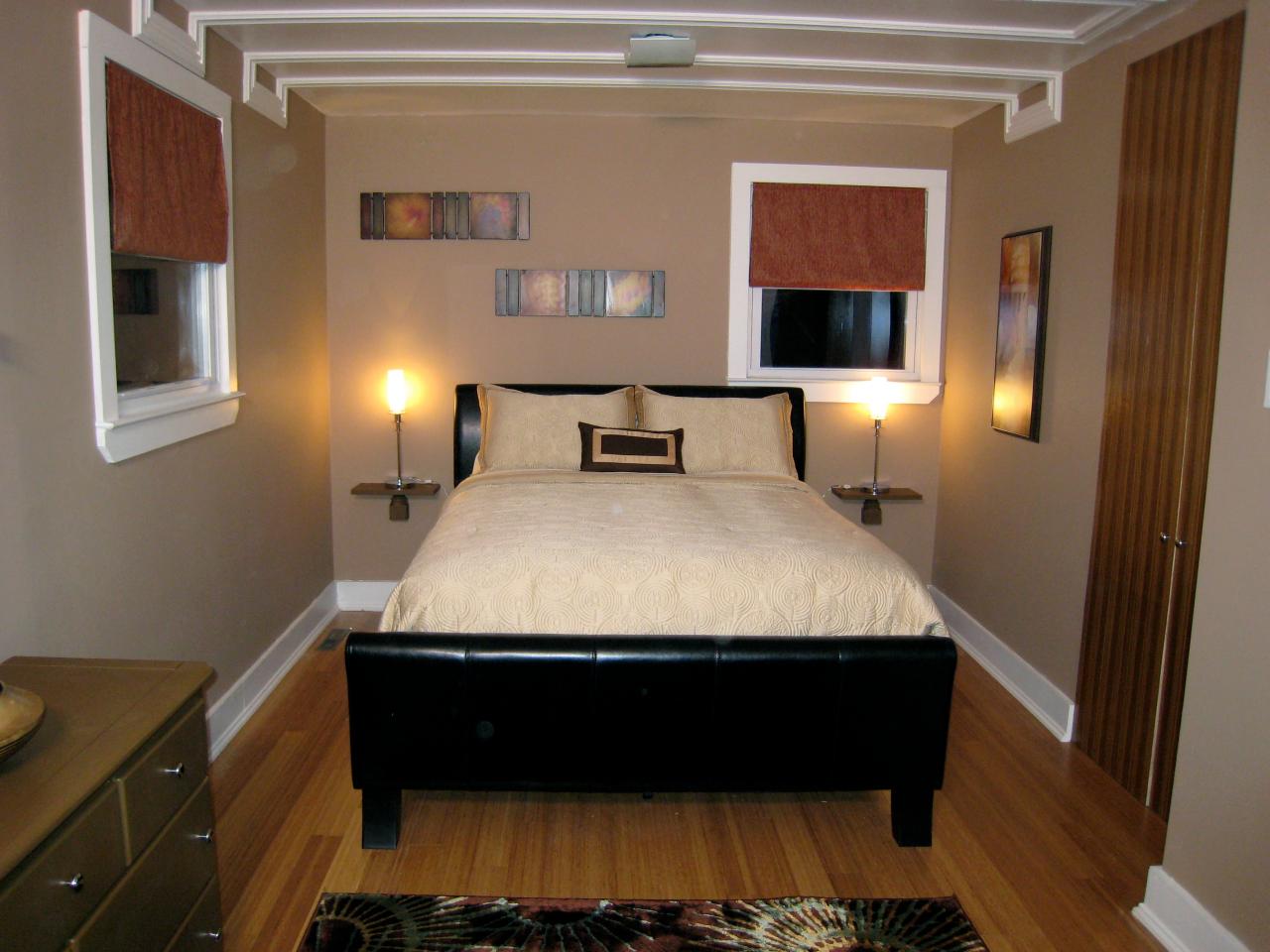
Learning More About Bamboo Flooring

Flooring bedroom, Bamboo flooring
 Related Posts:
- Dark Bamboo Solid Wood Flooring
- Light Gray Bamboo Flooring
- Black Bamboo Flooring
- Bamboo Flooring Basement
- Dark Bamboo Wood Flooring
- Light Colored Bamboo Flooring
- Vertical Bamboo Flooring
- How To Refinish Bamboo Floors
- Bamboo Flooring Grey
- How to Deep Clean Bamboo Floors
Bamboo Flooring Bedroom: A Stylish and Eco-Friendly Option
Bamboo flooring is a popular choice for homes and businesses and has become increasingly popular in bedrooms. Bamboo flooring offers a stylish, eco-friendly option that can add elegance and warmth to any space. It is also an affordable choice, making it a great option for homeowners looking to upgrade their current bedroom décor.
Benefits of Bamboo Flooring in the Bedroom
Bamboo flooring is a great choice for bedrooms due to its durability, low maintenance, and attractive look. It is naturally resistant to moisture and humidity, making it perfect for bedrooms with high humidity levels. It is also fire-resistant and very easy to clean, making it ideal for busy households with children or pets.
Bamboo flooring also provides an eco-friendly option as it is a renewable resource. Bamboo is also one of the fastest growing plants in the world, meaning that it can be replenished and harvested relatively quickly. As bamboo flooring grows in popularity, it has become more widely available, making it easier to find the perfect match for any bedroom décor.
Choosing the Right Bamboo Flooring for Your Bedroom
When selecting bamboo flooring for your bedroom, consider the room’s size, color scheme, and other elements that could affect how the floor looks. You should also think about how much foot traffic your bedroom gets as this will help you determine the best type of bamboo flooring for your needs. Additionally, consider whether you want your bamboo floors to be stained or left natural so that you can get the perfect look for your bedroom.
Installing Bamboo Flooring in Your Bedroom
Once you have selected the right type of bamboo flooring for your bedroom, you can begin the installation process. Installing bamboo floors is relatively easy, but there are still certain steps that should be taken to ensure it is installed correctly. Start by measuring the area you want to install your bamboo floors in and make sure to leave enough room around the edges for expansion. Then, when laying down your bamboo planks, make sure to properly align them with each other and use a quality adhesive to secure them in place. You should also use a foam underlayment to help reduce noise and prevent any damage from occurring. Finally, make sure to seal your bamboo planks after they have been installed using a sealant or finish of your choice.
Why choose bamboo flooring for bedrooms?
Bamboo flooring offers many benefits for bedrooms including its durability, low maintenance, attractive look, fire-resistance, and eco-friendly qualities. Additionally, it is affordable and easy to find a design that will work with any bedroom décor.
How do I install bamboo flooring in my bedroom?
Installing bamboo flooring in your bedroom is relatively easy but should still be done carefully. Begin by measuring the area you want to install your bamboo floors in and leave enough room around the edges for expansion. When laying down your bamboo planks, make sure they are properly aligned with each other and use a quality adhesive to secure them in place. Finish by sealing your bamboo planks after they have been installed using a sealant or finish of your choice.
Is bamboo flooring durable?
Yes, bamboo flooring is an incredibly durable option due its resistance to moisture and humidity which makes it perfect for bedrooms with high humidity levels. It is also fire-resistant which makes it ideal for busy households with children or pets.