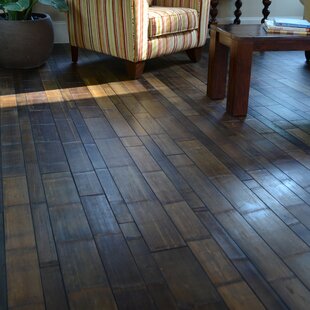
I’ll be honest with you, choosing black bamboo flooring for my home office felt like a risk. Dark floors show dust, they can make a small room feel smaller, and everyone I talked to kept steering me toward safer, lighter options. But I had seen black bamboo in a design magazine and couldn’t get it out of my head. That deep, almost ebony tone with the subtle grain of bamboo running through it looked unlike anything else I had considered. I went for it, and two years later it remains one of the most striking and satisfying design decisions I’ve made in any room of my house.
What Black Bamboo Flooring Actually Is
Before I bought anything, I needed to understand exactly what I was looking at. Black bamboo flooring isn’t made from a naturally black species of bamboo. The color comes from a process called carbonization, where bamboo strands are exposed to heat and steam under pressure, which caramelizes the natural sugars in the bamboo and darkens the material to rich brown and near-black tones. The deeper the carbonization, the darker the result.
The most dramatic black tones typically come from strand-woven bamboo that has been heavily carbonized. Strand-woven bamboo is made by shredding bamboo fibers and compressing them under extreme pressure with an adhesive binder, creating a material that is denser and harder than traditional laminated bamboo. That density is part of what makes heavily carbonized strand-woven bamboo perform so well as a flooring material despite the deep staining process.
One thing worth knowing upfront is that carbonization slightly reduces the natural hardness of bamboo compared to natural-tone strand-woven products. The heat process that creates that gorgeous dark color does affect the fiber structure marginally. In practice, heavily carbonized strand-woven bamboo is still very hard, harder than most domestic hardwoods, so it’s a theoretical consideration more than a practical problem in everyday residential use.
The Design Impact of Black Bamboo in a Room
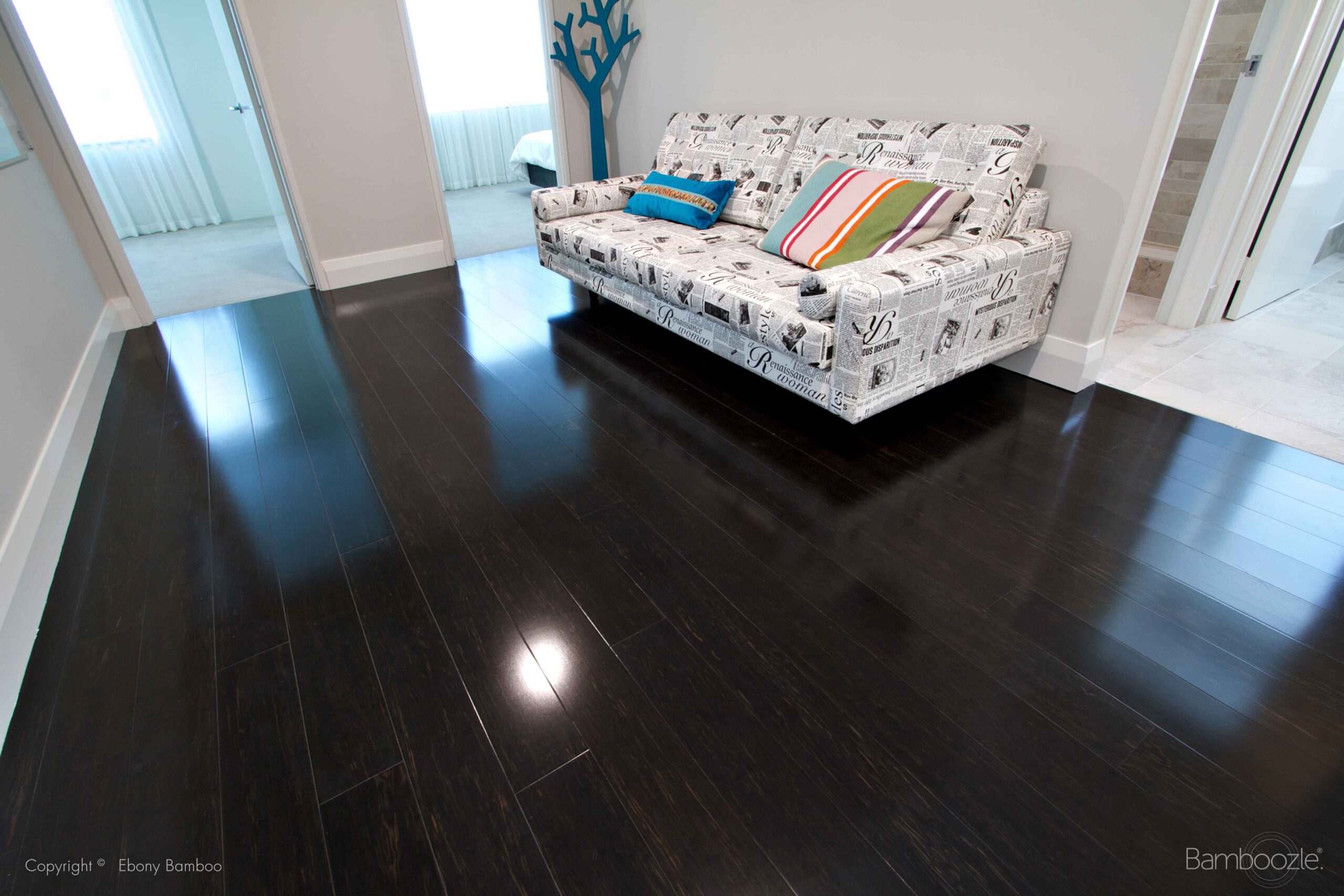
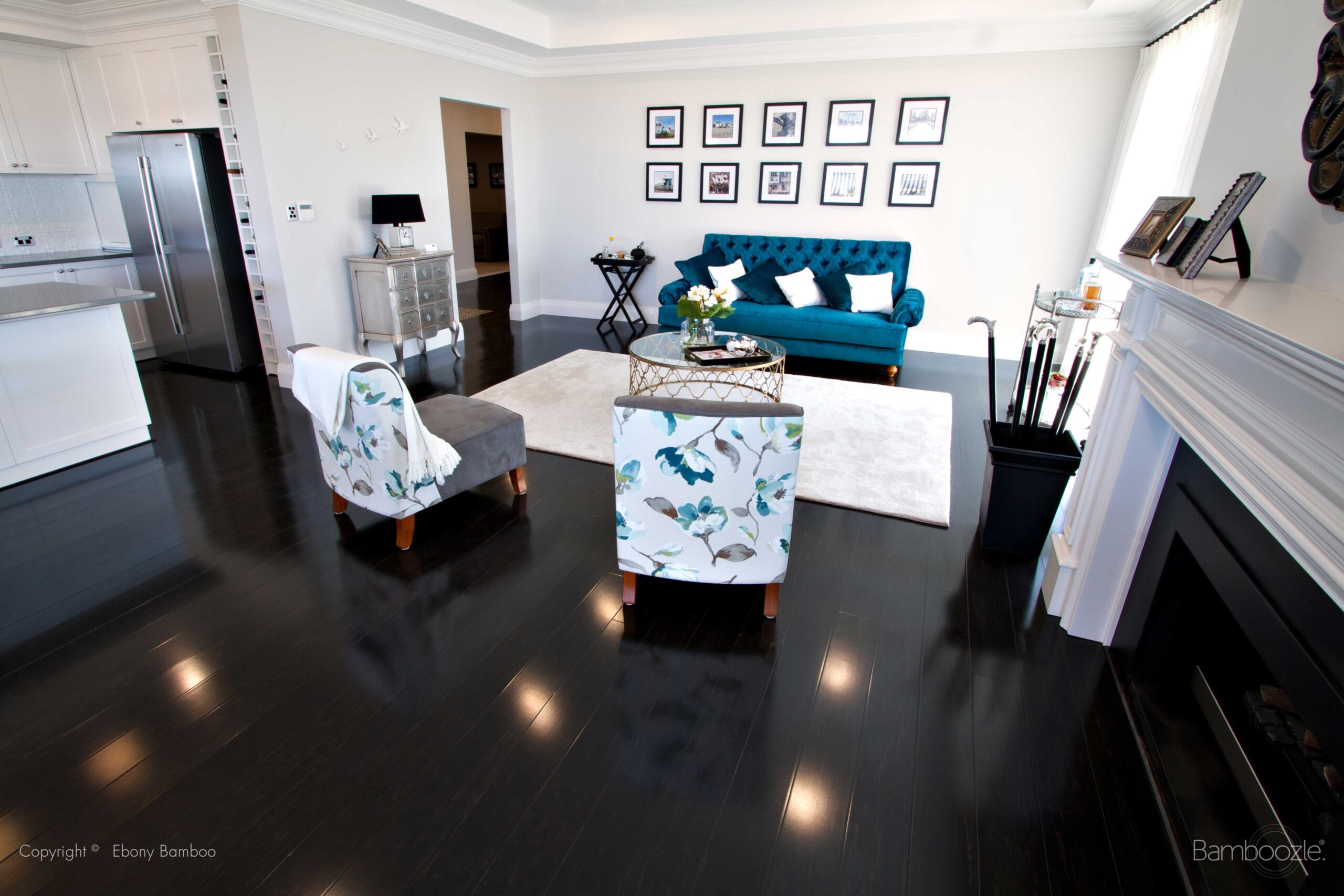
When my black bamboo floor went in, the room transformed in a way that photographs genuinely can’t capture fully. The depth of the color creates a grounding effect that makes furniture and lighter-colored walls pop with contrast. My cream-colored walls looked more intentional and sophisticated than they ever had over the previous oak floor. It’s the kind of change that makes a room feel designed rather than just decorated.
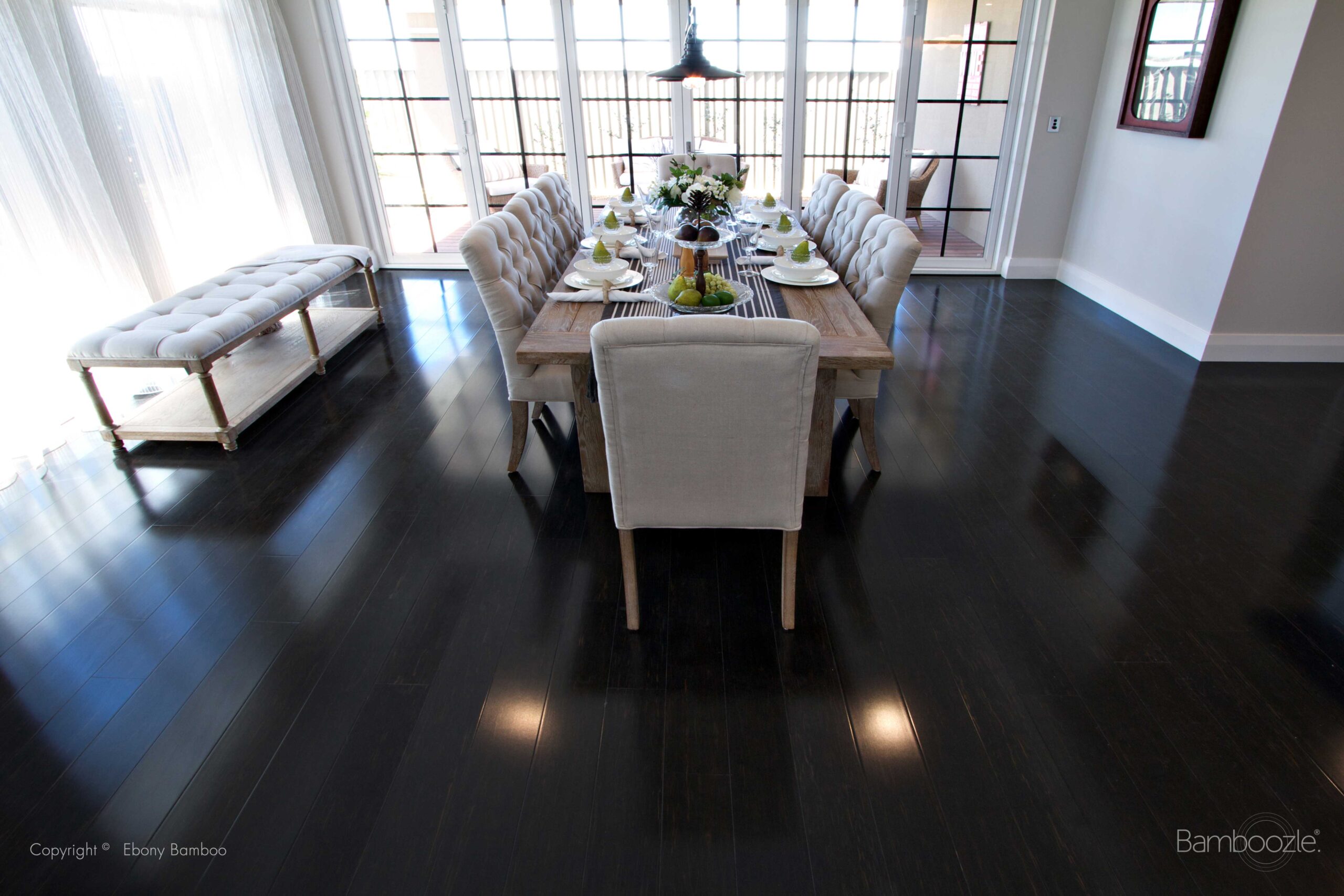
Dark floors work best when you lean into the contrast rather than fighting it. I brought in a light area rug, kept my furniture legs visible rather than skirted, and chose light linen curtains that let natural light bounce off the walls. That approach of layering light elements over a dark floor is what makes the whole room feel balanced and inviting rather than heavy or cave-like, which is the risk people most often warn you about with dark flooring.
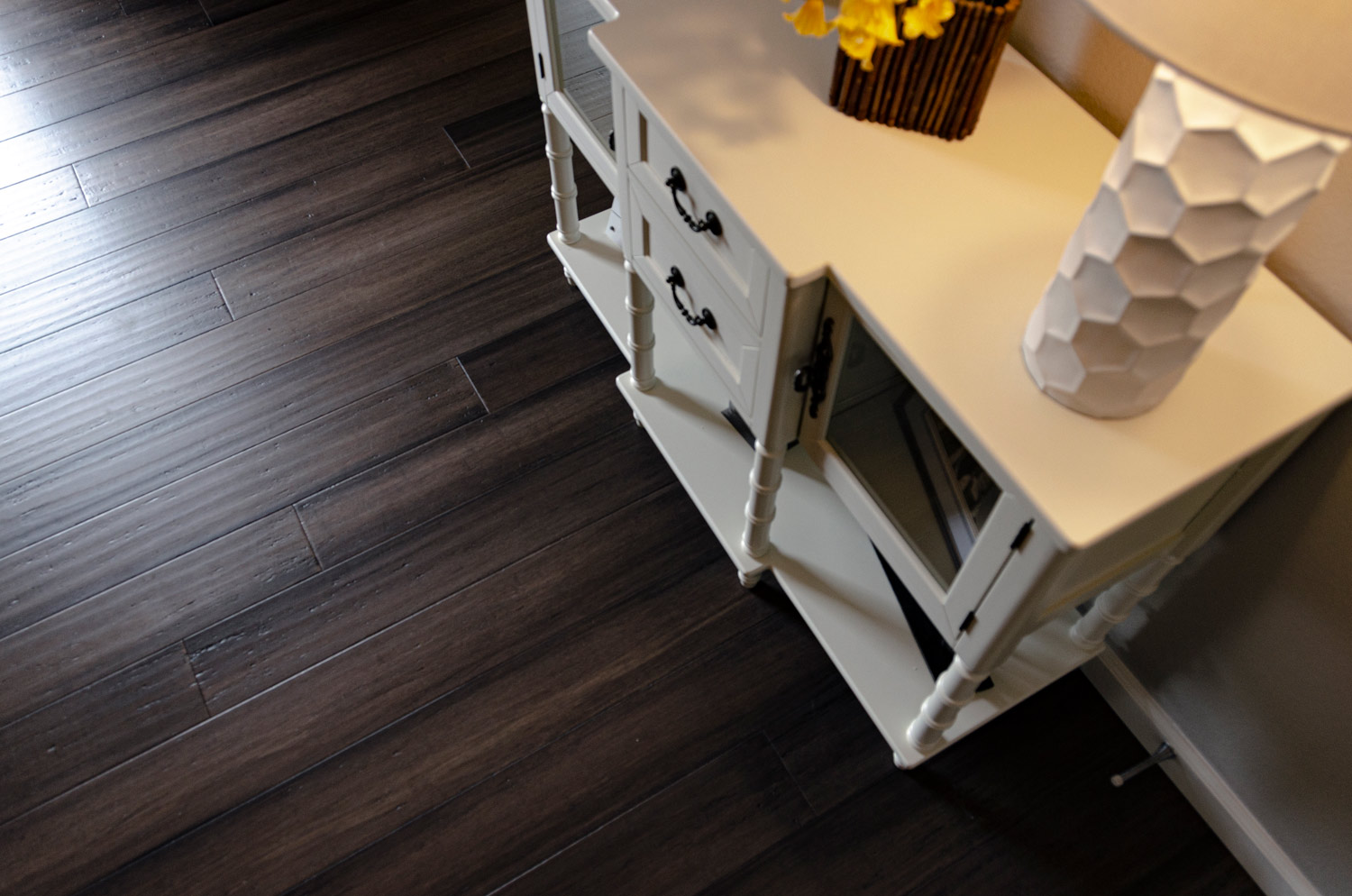
The grain pattern of bamboo, even when darkened to near-black, remains visible and adds tremendous visual interest to the surface. Unlike a painted or stained wood floor where the grain is obscured by pigment, carbonized bamboo retains its natural bamboo fiber pattern, which you can see most clearly in raking light or when the floor is freshly cleaned. That texture prevents the floor from looking flat or lifeless even in its darkest tones.
Durability and Performance of Black Bamboo
Durability was a major concern for me before choosing black bamboo, specifically because of what I’d read about carbonization reducing hardness. I did a lot of research and spoke with a flooring supplier who reassured me that quality strand-woven carbonized bamboo still outperforms most domestic hardwoods on the Janka hardness scale. My floor has been in place for two years under regular office use and holds up very well.
The finish on black bamboo deserves attention when you’re shopping. The topcoat is what actually encounters daily wear, and a thicker aluminum oxide finish provides significantly better scratch and abrasion resistance than thinner standard finishes. I specifically asked about finish thickness and UV cure quality before purchasing and chose a product with a premium finish. That decision has paid off in how the floor has maintained its appearance over time.
One honest consideration with very dark floors is that scratches and scuffs can be more visible than on medium or light-toned floors. The contrast between a light scratch and a near-black surface is greater than the same scratch on a honey-toned floor. I’ve had a few minor scuffs from moving furniture that are visible up close. Keeping furniture pads in place and being deliberate about moving heavy items across the floor prevents most of that. For the visual payoff, I consider it a reasonable trade.
Where Black Bamboo Flooring Works Best
In my experience and research, black bamboo flooring performs best in rooms where you can design around its boldness rather than trying to minimize it. Home offices, primary bedrooms, dining rooms, and living rooms with good natural or artificial lighting are ideal candidates. The dark tone creates a sophisticated anchor for a room’s design that lighter floors simply can’t replicate in the same way.
Rooms with strong natural light are particularly well-suited to black bamboo. My home office faces east and gets beautiful morning light, and the way that light moves across the dark floor throughout the day creates a living quality to the space that I genuinely love. In a dark basement room or a north-facing space with minimal windows, the same floor might feel oppressive rather than dramatic. Know your room’s light quality before committing to any very dark floor.
I’d be cautious about using black bamboo in spaces with very high moisture exposure for the same reasons I’d caution against any bamboo in those areas. Kitchens can work with attentive spill management, but bathrooms and laundry rooms introduce more moisture risk than bamboo handles gracefully. For the right room with the right design approach, black bamboo creates an impact that is genuinely hard to achieve with any other material at a comparable price point.

Installing Black Bamboo Flooring in Your Home
Installation for click-lock strand-woven black bamboo follows the same process as other floating floor systems, but there are a few details worth knowing specifically for this material. Strand-woven bamboo is extremely dense, which means cutting it requires a sharp carbide-tipped blade. I dulled two blades on my installation before switching to a fresh blade designed specifically for hard materials. Using the right blade makes every cut cleaner and faster.
Acclimation is particularly important with bamboo flooring and I gave my black bamboo a full seventy-two hours in the room before installation with the boxes open and stacked. Bamboo responds to humidity changes, and allowing it to reach equilibrium with your home environment before installation prevents post-installation movement. I also measured the room humidity during acclimation and made sure it fell within the manufacturer’s recommended range before starting work.
Leave your expansion gaps at the perimeter, a minimum of three-eighths inch against all walls and vertical surfaces. This is standard practice for any floating floor, but bamboo’s response to seasonal humidity changes makes those gaps genuinely important rather than just a technical formality. My gaps are covered by baseboard trim and completely invisible in the finished room, but they give the floor the movement it needs to stay flat and stable through seasonal changes without any stress on the click joints.

Caring for Black Bamboo Floors to Keep Them Looking Their Best
The biggest practical reality of owning a black floor is that dust and pet hair show readily against the dark surface. I vacuum or dry mop my black bamboo floor more frequently than I did my previous lighter floor, typically every two to three days rather than once a week. A good microfiber dry mop picks up fine dust and hair efficiently without scratching the finish, and staying on top of that routine keeps the floor looking consistently polished rather than perpetually dusty.
For wet cleaning, I use a pH-neutral bamboo and hardwood floor cleaner with a barely damp microfiber mop. The key word is barely. Excess moisture on any bamboo floor is problematic, and on a dark floor the water marks left by an overly wet mop are highly visible against the dark surface. Spray the cleaner onto the mop head rather than onto the floor directly, and work in sections to keep everything under control and streak-free.
One thing I’ve found particularly helpful for maintaining the appearance of my black bamboo floor is using a dry buffing pad occasionally after cleaning to restore the sheen. The friction of the buffing pad brings out the natural luster of the finish and makes the floor look freshly installed. It takes about ten minutes for my office and the visual result is noticeable. Combined with regular maintenance and prompt spill cleanup, that simple extra step keeps a demanding dark floor looking as dramatic and beautiful as the day it was installed.
Does black bamboo flooring show scratches more than lighter floors?
Yes, scratches are more visible on dark floors because of the contrast between the light scratch and the dark surface. I manage this by keeping furniture pads under all legs, using a soft-bristle vacuum attachment, and being careful when moving heavy items. Minor surface scuffs can sometimes be buffed out with a recommended floor polish. For the visual impact black bamboo delivers, the extra care is worth it for most people who choose it deliberately.
Is black bamboo flooring as durable as natural bamboo?
Strand-woven carbonized bamboo is still harder than most domestic hardwoods despite the slight hardness reduction from the carbonization process. In everyday residential use the difference is not practically significant. Quality matters more than color, so choose a reputable brand with a thick aluminum oxide finish. I’ve had mine for two years under regular use and it holds up very well. Focus on finish quality and proper installation for the best long-term durability.

How much does black bamboo flooring typically cost?
Black bamboo flooring runs roughly three to eight dollars per square foot for materials, depending on brand, quality, and whether it’s engineered or solid strand-woven. That’s comparable to mid-range hardwood and significantly less than premium hardwood species. Professional installation adds another two to four dollars per square foot. For a DIY floating floor installation, the material cost is your primary expense and represents solid value for the dramatic visual result you get.
Will black bamboo flooring fade over time with sun exposure?
Carbonized bamboo can lighten in areas with strong direct sunlight, which is more noticeable on very dark floors than on lighter ones. Use window treatments or UV-filtering window film to reduce direct sun exposure on the floor. Rotate area rugs periodically so floor areas beneath them get some light too, preventing sharp contrast lines when you move them. The fading is gradual over years, not months, and UV-resistant finishes on quality products slow the process significantly.
Is black bamboo flooring good for homes with pets?
It works reasonably well with pets if you stay on top of nail care and cleaning. Keep pet nails trimmed to reduce surface scratching, which shows more against dark floors. Dark bamboo does show pet hair visibly, so more frequent dry mopping is necessary compared to lighter floors. Clean pet accidents immediately since any liquid sitting on bamboo is problematic. The hard, dense surface of strand-woven bamboo resists pet nail damage better than softer wood species would.
Can black bamboo flooring be refinished when it shows wear?
Solid strand-woven black bamboo can sometimes be lightly sanded and recoated, but this is trickier than refinishing traditional hardwood because the carbonized color runs through the material rather than being a surface stain. Light scuff sanding and a fresh topcoat works well for refreshing a worn finish without affecting color. Deep sanding risks removing enough material to lighten the tone unevenly. For most wear scenarios, a professional recoat of the finish layer is the right approach rather than a full sand-down.
Related Posts: