I’ll admit that for the first several months after installing my bamboo floors, I was winging the cleaning routine and getting away with it mostly because the floors were new enough to still look good despite my inconsistent approach. It wasn’t until I noticed a section near my kitchen starting to look dull and slightly grimy despite regular sweeping that I realized I needed to actually learn how to deep clean bamboo properly rather than just guessing.
What I discovered through research and a fair amount of trial and error is that bamboo has specific needs that differ meaningfully from hardwood, laminate, and other wood-look floors, and cleaning it the wrong way does real damage over time. Here’s the full process I now follow, and the mistakes I learned to stop making along the way.
Understanding What Makes Bamboo Different to Clean
Before I figured out the right approach, I needed to understand why bamboo behaves differently from the hardwood floors I’d had in a previous home. Bamboo is a grass compressed into a flooring material, and while it looks and functions similarly to hardwood, its cellular structure and typical finish types interact with cleaning products and moisture in ways that can catch you off guard if you assume it works exactly the same way.
Most bamboo floors come finished with either a polyurethane coating or a hard-wax oil treatment, and the cleaning approach that works best differs between the two.
Polyurethane-finished bamboo has a sealed surface film that’s more resistant to moisture but can cloud or streak with the wrong cleaning product. Hard-wax oil finished bamboo is more natural-feeling but more sensitive to water and detergents that strip the protective oil out of the wood fibers over time.
Knowing which finish your bamboo floor has is the essential first step before you buy any cleaning product or start any deep cleaning process. If you’re not sure, check the documentation that came with your flooring or contact the manufacturer. A simple water bead test can give you a clue as well.
If water beads on the surface, you likely have a sealed polyurethane finish. If it absorbs slightly, you probably have a penetrating oil finish, and your cleaning approach needs to be gentler and more carefully controlled as a result.
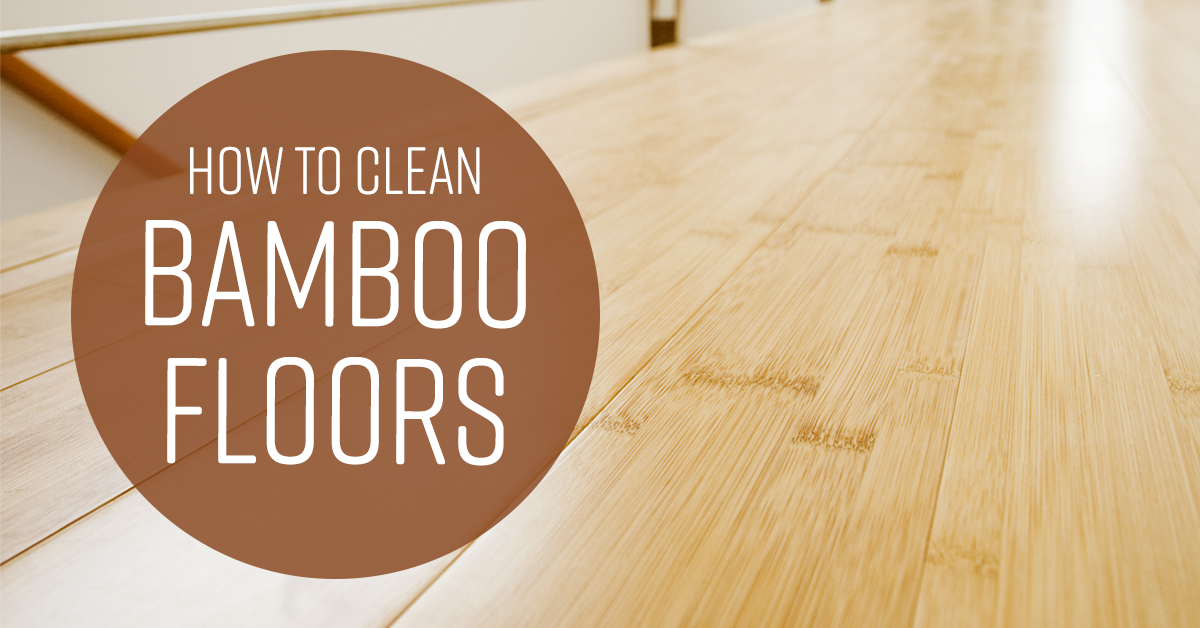
Gathering the Right Tools and Products Before You Start
One of the most impactful changes I made to my cleaning routine was getting the right tools rather than grabbing whatever was convenient. For deep cleaning bamboo, the tools matter almost as much as the products, because using the wrong applicator can scratch the surface, over-wet the floor, or leave residue that builds up and creates the very dullness you’re trying to remove in the first place.
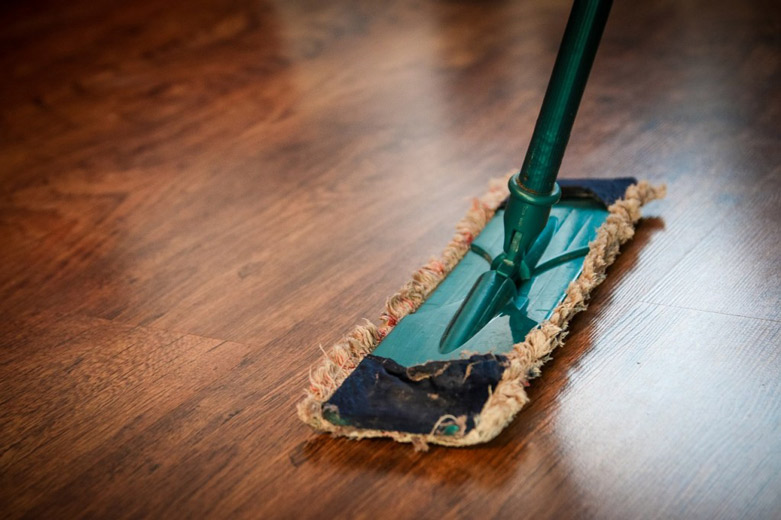
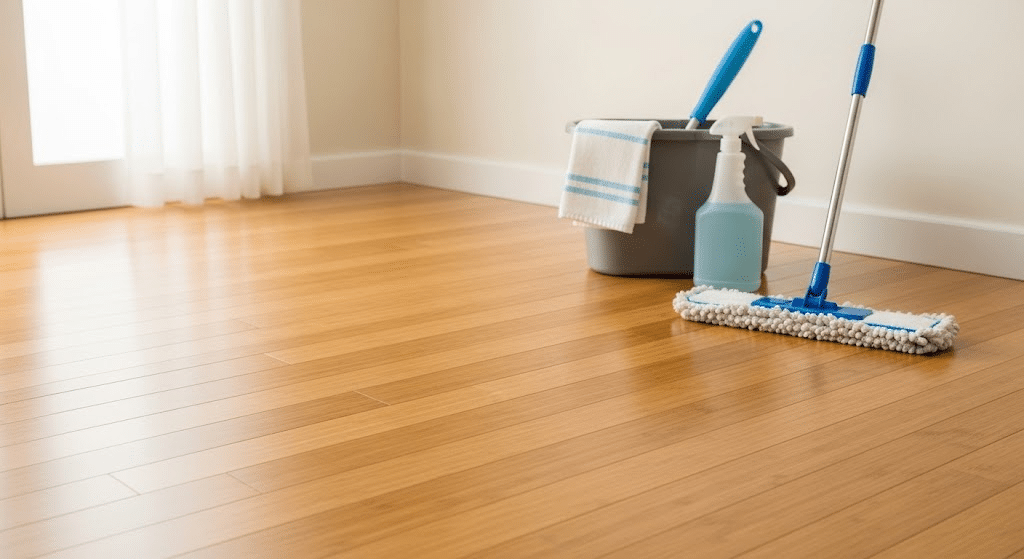
A flat microfiber mop is the best tool for cleaning bamboo floors, and it’s worth investing in a good one rather than using a traditional string mop or sponge mop. Microfiber picks up dirt, dust, and cleaning product residue efficiently without requiring excessive moisture, and its soft fibers won’t scratch the surface finish during the cleaning process. I use a spray mop that lets me control exactly how much liquid goes onto the floor rather than relying on a bucket and wringer, which gives me much better moisture control overall.
For cleaning solution, I use a product specifically formulated for bamboo or hardwood floors rather than anything marketed as a general floor cleaner. Many multi-surface cleaners contain additives, surfactants, or pH levels that are perfectly fine on tile or vinyl but gradually break down a bamboo finish with repeated use. I also keep a supply of clean microfiber cloths for spot treating stubborn areas, a soft-bristle brush for working product into textured or hand-scraped surface areas, and a dry microfiber cloth for buffing the floor after cleaning to remove any remaining moisture.
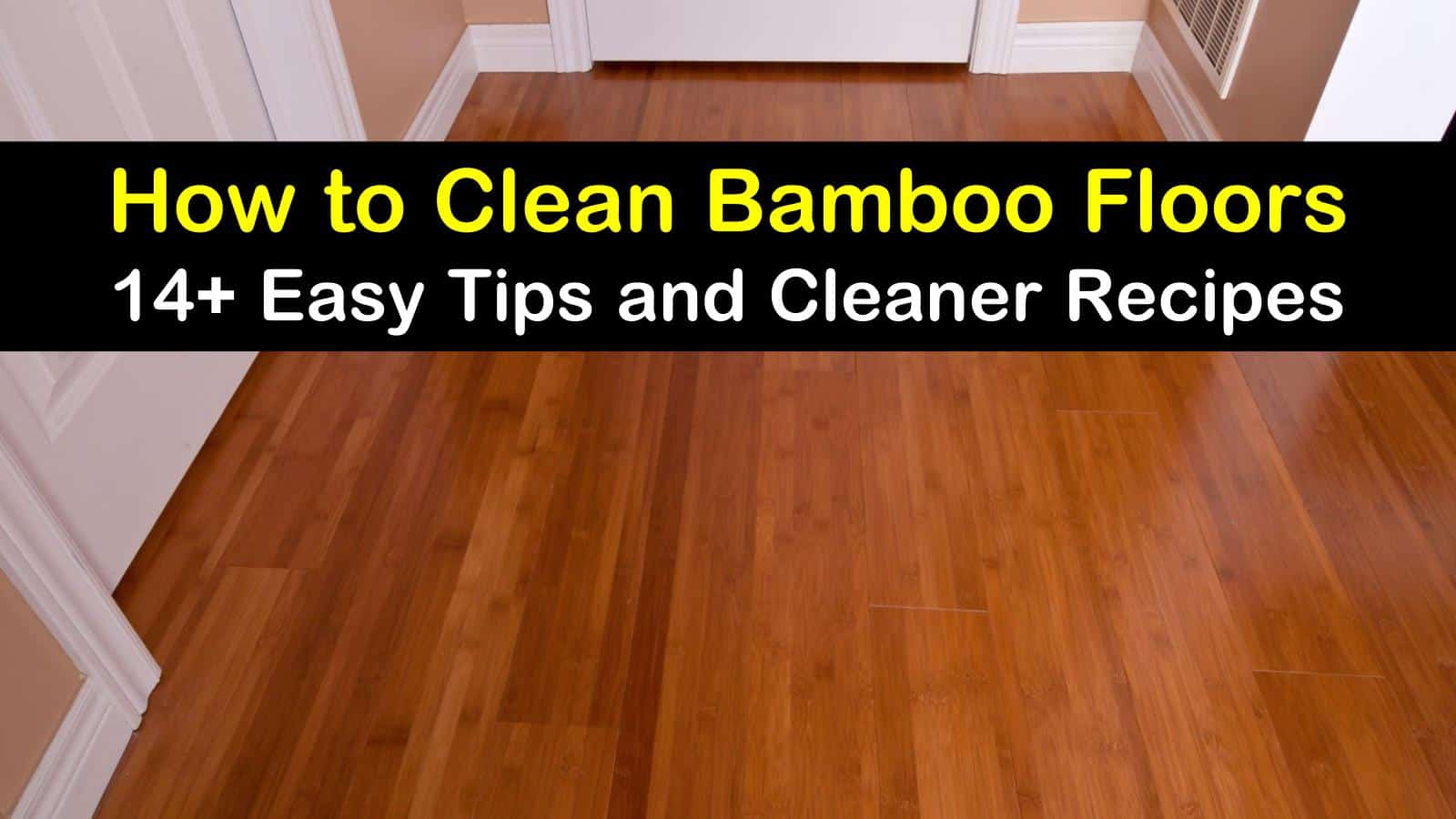
The Pre-Clean Step That Most People Skip
Every time I deep clean my bamboo floors, I spend meaningful time on the pre-cleaning phase before any liquid touches the surface, and this step makes the actual deep cleaning significantly more effective and less likely to cause problems. Applying any wet cleaning solution over a floor that still has loose dirt, fine grit, or debris on it is counterproductive because you end up dragging that material across the surface and potentially scratching it rather than lifting it away cleanly.
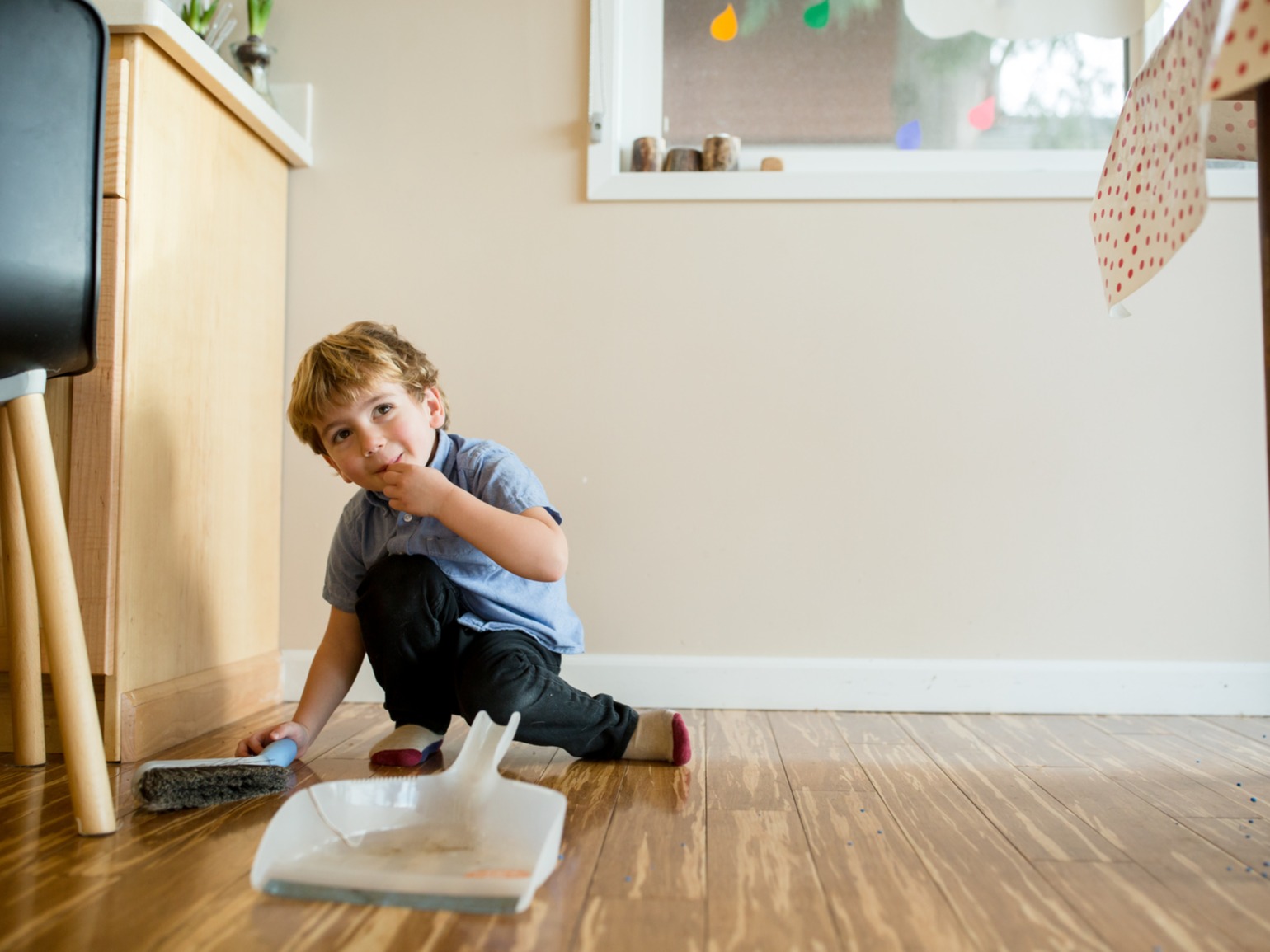
I start with a thorough sweep using a soft-bristle broom to remove larger debris from the entire floor. Then I follow up with a microfiber dust mop to capture fine particles and pet hair that a broom tends to scatter rather than collect. In rooms with a lot of traffic or in my kitchen where food debris accumulates in corners and along baseboards, this step takes longer than it does in lower-traffic areas, and I don’t rush it because leaving grit on the floor before wet cleaning is exactly how surface micro-scratches develop over time.
For deep cleaning sessions specifically, I also move furniture rather than cleaning around it, which is something I skip in my regular weekly routine but always do when I’m committing to a proper deep clean. Cleaning under and around furniture legs reveals the accumulation that builds up in those protected areas over months, and getting it properly before it becomes compacted and harder to remove is one of the things that keeps the whole floor looking consistently maintained rather than having obvious zones of differential cleanliness.
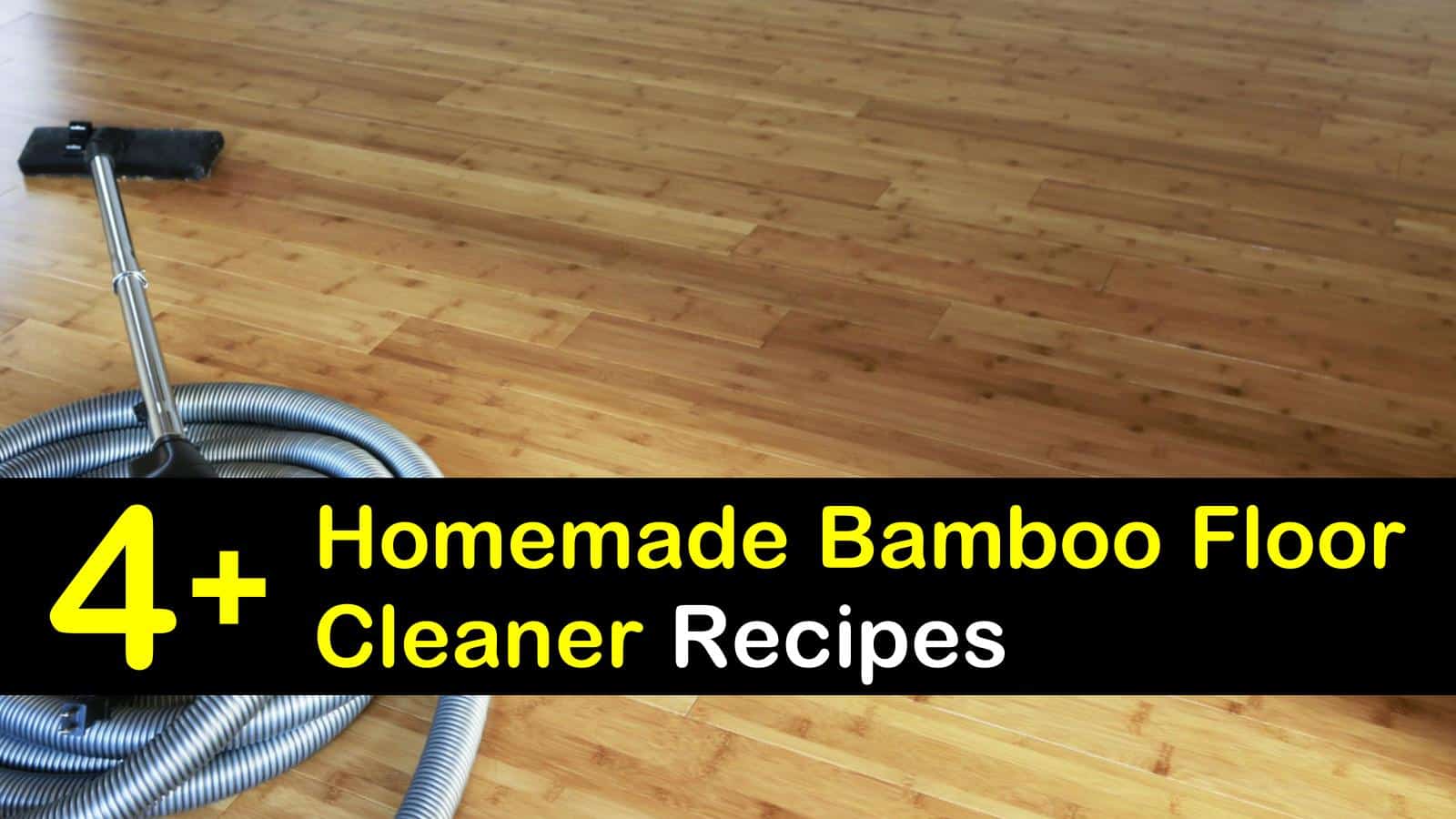
The Deep Cleaning Process Step by Step
Once the floor is thoroughly pre-cleaned and dry, the deep cleaning itself can begin, and the key principle throughout the entire process is controlled moisture. Bamboo, regardless of its finish type, does not like excess water sitting on its surface or working its way into the joints between planks. Every application of cleaning solution should be just damp enough to clean effectively, never wet enough to leave standing liquid that takes time to evaporate.
I work in sections of roughly 50 to 80 square feet, applying my bamboo floor cleaner through my spray mop at a fine mist setting and immediately working it across the surface with the microfiber pad using overlapping strokes that follow the direction of the grain. Following the grain direction when mopping is something I initially thought was unnecessary fussiness, but I noticed a real difference in how thoroughly the product got into the textured grain lines and how clean the floor looked afterward when I started doing it consistently.
For areas with visible buildup, scuff marks, or spots where the regular cleaning routine hasn’t fully kept up, I apply a small amount of cleaner directly to a microfiber cloth and work it into the affected area with gentle circular pressure before going back over it with the mop following the grain direction. This targeted approach handles most of what the light surface application misses without requiring aggressive scrubbing that could damage the finish. After completing each section, I do a final pass with the dry side of the mop to remove any remaining moisture before moving on.
Tackling Stubborn Stains and Problem Areas
Even with a good regular routine, there are always a few spots on bamboo floors that require extra attention during a deep clean, and knowing the right approach for different types of stains saves a lot of frustration and prevents the instinct to scrub harder when what’s actually needed is a different method entirely.
For sticky residue from food, tape, or product spills that have dried and hardened on the surface, I apply a small amount of undiluted bamboo floor cleaner directly to a cloth and hold it against the residue for thirty seconds to a minute before gently working it away. The extended contact time softens the residue and lets it release from the surface without the need for mechanical scrubbing that risks scratching the finish. Patience here genuinely replaces effort, and the results are consistently better than attacking the spot aggressively from the start.
For scuff marks from shoes or furniture, I’ve had good results with a clean tennis ball or a white rubber eraser applied with light pressure directly to the mark. The friction lifts the surface scuff without introducing any chemicals or moisture to the area, which is particularly useful on hard-wax oil finished bamboo where you want to avoid anything that might disturb the finish. For more stubborn scuffs that don’t respond to this approach, a tiny amount of mineral spirits on a cloth applied sparingly and buffed dry immediately afterward usually resolves the problem without damaging the surrounding finish.

Finishing and Restoring the Surface After Deep Cleaning
The final stage of a proper deep clean is what separates a floor that looks merely clean from one that looks genuinely restored, and it’s the step I found most satisfying once I added it to my routine. After the cleaning product has done its work and the floor is dry, there’s an opportunity to address the finish itself and bring back the visual depth and protection that daily use gradually diminishes.
For polyurethane-finished bamboo, I apply a bamboo or hardwood floor refresher product after deep cleaning, which is a thin liquid applied with a microfiber mop that fills in micro-scratches and restores sheen to areas that have gone dull with wear. These products are different from wax, which can build up and create problems, and from full refinishing products, which require sanding. A refresher sits right in the middle and delivers a noticeable improvement in how the floor looks without any of the complexity of a full refinishing project.
For hard-wax oil finished bamboo, the equivalent step is applying a maintenance oil in a very thin coat after deep cleaning, which nourishes the wood fibers and restores the protective layer that normal use wears away gradually. I apply it sparingly with a cloth, buff it into the surface following the grain, and then buff off any excess with a clean dry cloth before it has a chance to sit and create a tacky surface. The difference in how the floor looks and feels after this step is immediately noticeable, and the protection it adds means my next deep cleaning session is easier because the surface stays cleaner between cleans with a refreshed finish to repel dirt effectively.

How often should I deep clean my bamboo floors?
I deep clean mine every two to three months, with regular weekly maintenance mopping in between. High-traffic areas like kitchens or hallways may benefit from more frequent deep cleaning, while bedrooms and low-traffic rooms can go longer between sessions. The signal I watch for is when regular mopping stops making the floor look visibly cleaner or when areas start to look dull despite consistent maintenance sweeping and mopping.
Can I use a steam mop to deep clean bamboo floors?
No, and I’d say this is the single most important thing to avoid with bamboo floors. Steam forces hot moisture into the surface and joints at a level that damages the finish and causes the bamboo to swell, warp, and separate over time. It might seem effective because it loosens dirt quickly, but the damage it causes accumulates with every use. A well-wrung damp microfiber mop with a proper bamboo floor cleaner cleans just as effectively without any of the damage risk.
What cleaning products should I never use on bamboo floors?
Avoid anything containing ammonia, bleach, vinegar, or wax-based ingredients. Ammonia and bleach degrade the finish over time. Vinegar is acidic enough to dull and eventually damage a bamboo surface despite being recommended in many general floor cleaning guides. Wax builds up in the grain and creates a cloudy film that’s difficult to remove. Also avoid oil soaps, which leave a residue that attracts dirt rather than repelling it.
Why does my bamboo floor look dull even after cleaning?
Dullness after cleaning usually means either product residue has built up on the surface from using the wrong cleaner, or the finish itself has worn thin in high-traffic areas and needs refreshing. Try cleaning a small section with plain water on a damp cloth and see if it looks different when dry. If it does, you likely have product buildup that a proper bamboo floor cleaner will resolve over a couple of cleaning sessions. If not, a floor refresher or maintenance oil treatment is probably what’s needed.
Is it safe to use a regular mop and bucket to deep clean bamboo?
It’s risky because traditional string mops and sponge mops hold a lot of water and tend to apply more moisture than bamboo floors can safely handle. If you use a bucket method, wring the mop as thoroughly as possible before it touches the floor and work in small sections, drying each one before moving on. A spray mop gives you much better moisture control and is a worthwhile investment if you have bamboo or hardwood throughout your home.
How do I know when my bamboo floor needs professional refinishing rather than just deep cleaning?
If deep cleaning and a refresher treatment don’t restore the floor’s appearance, or if you can see through the finish to bare bamboo in worn areas, or if there are scratches that catch your fingernail rather than just sitting on the surface finish, refinishing is probably needed. Physical damage like deep scratches, gouges, or areas where the finish has peeled away entirely are also signs that cleaning alone won’t solve the problem and a professional refinish or board replacement is the next step.
Related Posts: