Transforming your concrete floors with a protective coating can enhance both appearance and durability without professional help. DIY concrete coatings provide an affordable way to upgrade garages, basements, patios, or even interior living spaces. With proper preparation and application techniques, homeowners can achieve professional-looking results that withstand heavy use. Let’s examine crucial aspects of successful DIY concrete floor coating projects.
Understanding Different Coating Types
Epoxy coatings remain the most popular choice for DIYers, offering exceptional durability and chemical resistance. These two-part systems combine resin with hardener to create a tough, glossy surface. Water-based epoxies simplify cleanup and reduce fumes but may require more coats than solvent-based versions. Metallic epoxy creates unique decorative effects with swirling color patterns that hide imperfections well.
Polyurethane coatings provide excellent UV resistance for outdoor concrete surfaces. They maintain flexibility to accommodate temperature changes without cracking. Acrylic sealers represent the simplest DIY option, offering basic protection with minimal preparation. While less durable than epoxy, they work well for low-traffic areas and can be reapplied easily.
Concrete stains penetrate the surface to create permanent color without forming a top layer. Acid stains produce natural, variegated tones by chemically reacting with the concrete. Water-based stains offer more color consistency and easier application. For maximum protection, stains typically require a clear topcoat of epoxy or polyurethane.
Essential Surface Preparation Steps
Proper preparation determines coating success more than any other factor. Begin by thoroughly cleaning the concrete to remove all dirt, oil, and previous coatings. Degreasers and concrete cleaners help eliminate stubborn stains. For oily areas, use a trisodium phosphate (TSP) solution or a specialized concrete degreaser. Pressure washing effectively removes surface contaminants but requires complete drying before coating.
Repair all cracks and spalls with hydraulic cement or polymer-modified patching compounds. Larger defects may need a vinyl concrete patcher for permanent repairs. Grind down any uneven areas or old coating remnants using a diamond grinder or abrasive discs. Etching the surface with muriatic acid or mechanical abrasion creates the profile needed for coating adhesion.
Moisture testing prevents future coating failures. Tape a plastic square to the floor and check for condensation after 24 hours. High moisture levels may require a moisture-blocking primer or a different coating system. Proper preparation typically takes longer than the actual coating application but ensures long-lasting results.

Application Techniques for Best Results
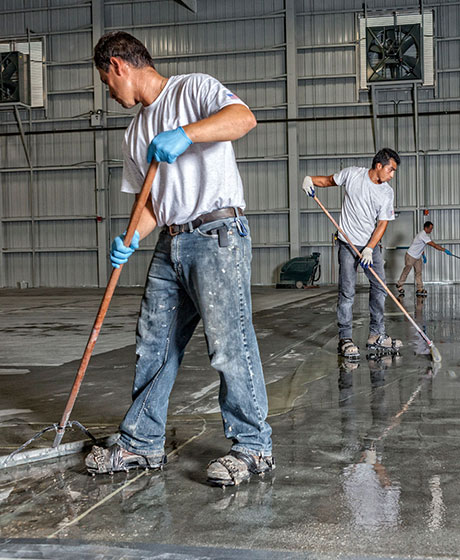
Divide the floor into manageable sections, especially for large areas or fast-drying coatings. Work from the farthest corner toward the exit to avoid walking on wet surfaces. Use quality brushes for edges and a roller with the proper nap length for the coating type. Epoxy typically requires a 1/4″ or 3/8″ nap roller for even application.
Maintain a wet edge to prevent lap marks and uneven appearance. Have a helper mix new batches while you apply to ensure a continuous workflow. Most coatings require multiple thin coats rather than one thick application. Follow the manufacturer’s instructions for recoat times precisely – applying too soon or too late can cause bonding issues.
Temperature and humidity dramatically affect coating performance. Ideal conditions range between 50-90°F with humidity below 85%. Avoid applying in direct sunlight or on extremely hot concrete. Proper ventilation is crucial when working with solvent-based products. Wear appropriate respirators, gloves, and eye protection throughout the process.

Decorative Options and Customization
Color flakes broadcast into wet epoxy create attractive, slip-resistant surfaces while hiding minor imperfections. These vinyl chips come in various sizes and color blends to match any decor. For a more subtle effect, use micro-toppings with integrated color that can be troweled smooth or textured.
Stenciling allows intricate patterns on coated floors. Apply base coat, then use adhesive stencils before adding accent colors. Remove stencils carefully and finish with a protective clear coat. Metallic pigments mixed into epoxy create stunning pearlescent or iridescent effects when manipulated with special tools.
Scoring or engraving patterns into the concrete before coating produces defined geometric designs. Combine techniques by staining different sections, then coating with clear epoxy. These decorative approaches transform plain concrete into custom-designed flooring with professional appeal.

Maintenance and Long-Term Care
Newly coated floors need proper curing time before subjecting to normal use – typically 24-72 hours for foot traffic and up to 7 days for heavy items. Use furniture pads under all heavy objects to prevent indentations in softer coatings. Place walk-off mats at entrances to reduce abrasive dirt being tracked across the surface.
Clean coated floors regularly with pH-neutral cleaners and soft mops or brooms. Avoid harsh chemicals or abrasive tools that could damage the coating. Reapply wax or sacrificial coatings annually for high-traffic areas to maintain shine and protection. Immediately wipe up oil, chemicals, or other potentially damaging spills.
Inspect the coating periodically for wear spots or damage. Small areas can be spot-repaired by lightly sanding and recoating. More extensive damage may require complete resurfacing. Proper maintenance extends coating life significantly, often lasting 5-10 years or more before needing replacement.
Troubleshooting Common Issues
Bubbling or peeling often results from moisture vapor transmission or inadequate surface preparation. These issues typically require complete removal and restarting the process. If caught early, small areas can sometimes be repaired by scraping, drying, and patching with fresh coating.
Uneven gloss or color variation usually stems from improper mixing or inconsistent application. Some variations disappear as the coating fully cures. For permanent unevenness, a additional topcoat often evens out the appearance. Follow mixing instructions precisely and work in consistent lighting conditions.
White haze or cloudiness may indicate moisture trapped under the coating or improper curing conditions. In mild cases, polishing with fine abrasives can restore clarity. Severe cases need complete removal and reapplication with better moisture testing. Always ensure proper ventilation and temperature ranges during application and curing.

DIY concrete floor coatings offer an economical way to transform drab concrete into attractive, high-performance surfaces. By selecting the appropriate coating type, preparing the surface thoroughly, and applying with care, homeowners can achieve professional-quality results. Decorative techniques allow for personalized designs that complement any space’s style. While requiring some physical effort and attention to detail, the process remains within reach of most DIYers with proper research and preparation. Well-maintained coated floors provide years of durable service while completely changing a room’s character. The investment of time and effort pays dividends in both aesthetic appeal and long-term protection of your concrete surfaces.

Related Posts: