Marble tile has always been my go-to choice when I want to create a bathroom that feels both luxurious and timeless. Every time I step onto a marble floor, I’m reminded of classic hotels and elegant spas. The subtle veining, cool touch, and natural beauty of marble bring a sense of calm and sophistication to any bathroom. Over the years, I’ve explored countless marble tile bathroom floor ideas, and I’m excited to share my favorites and the lessons I’ve learned along the way.
Embracing Classic Elegance with White Marble
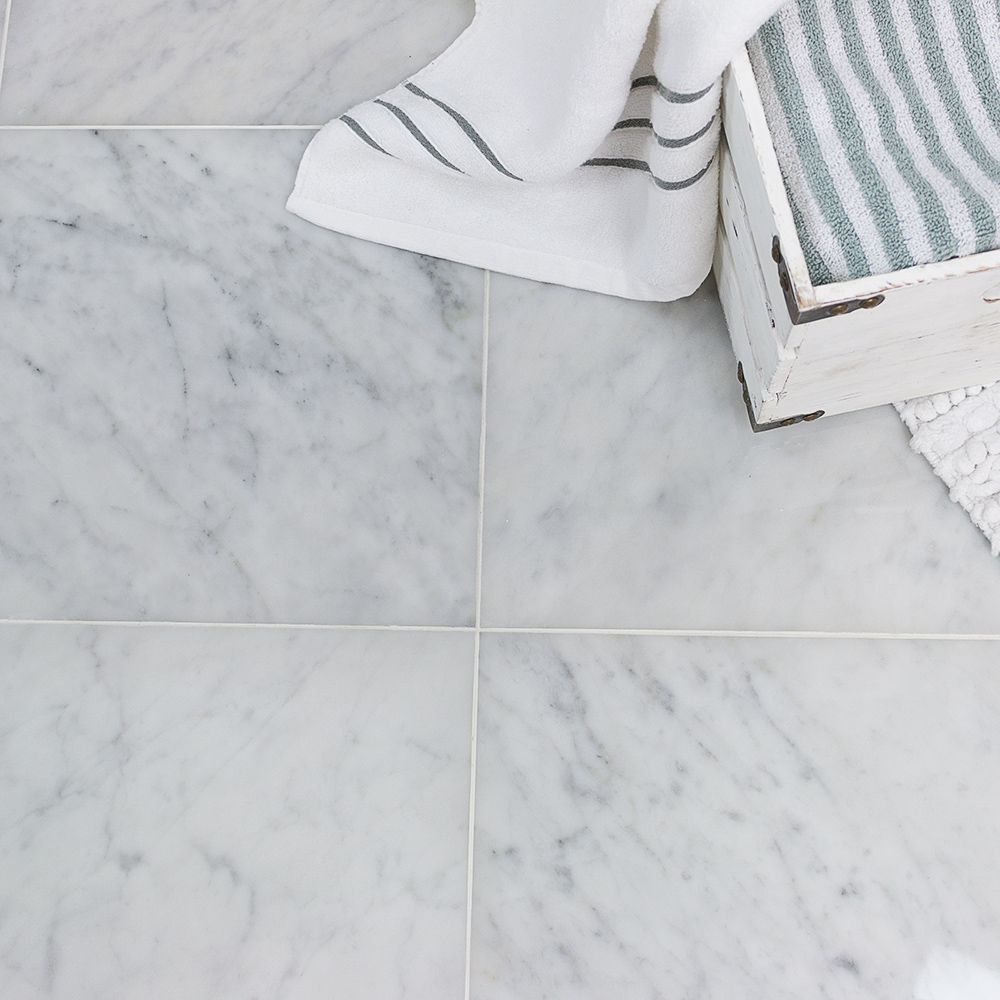
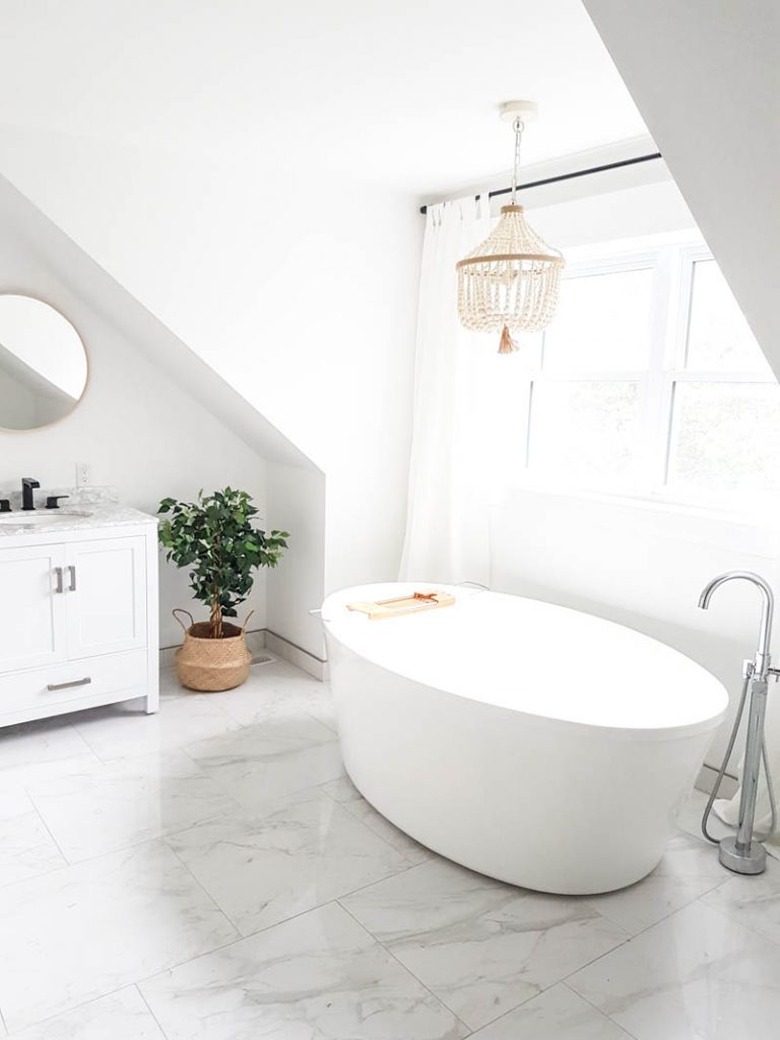
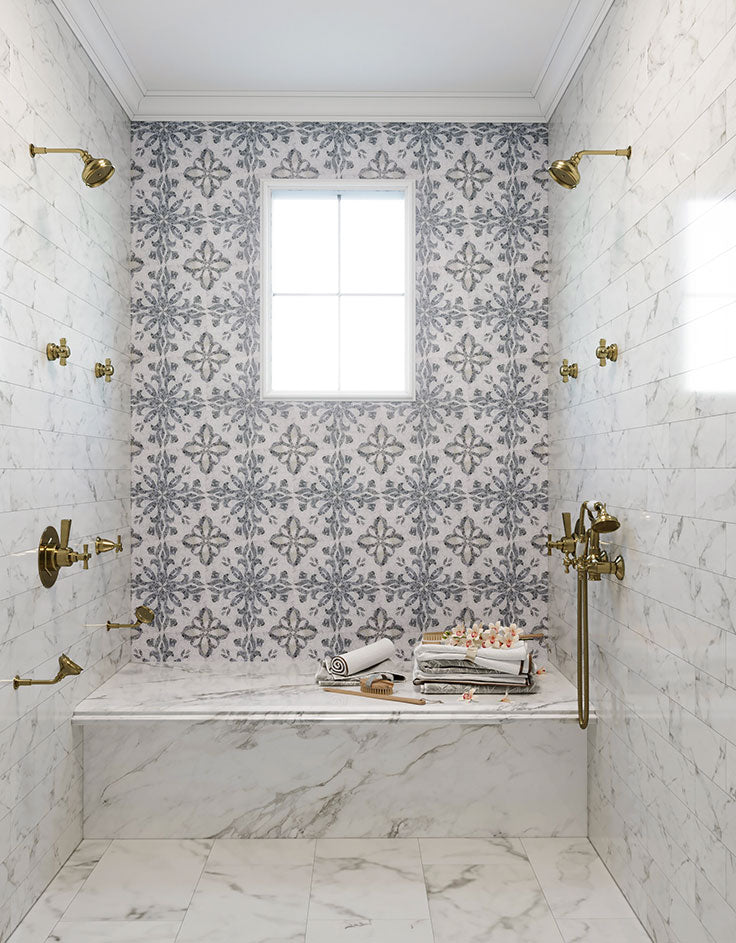
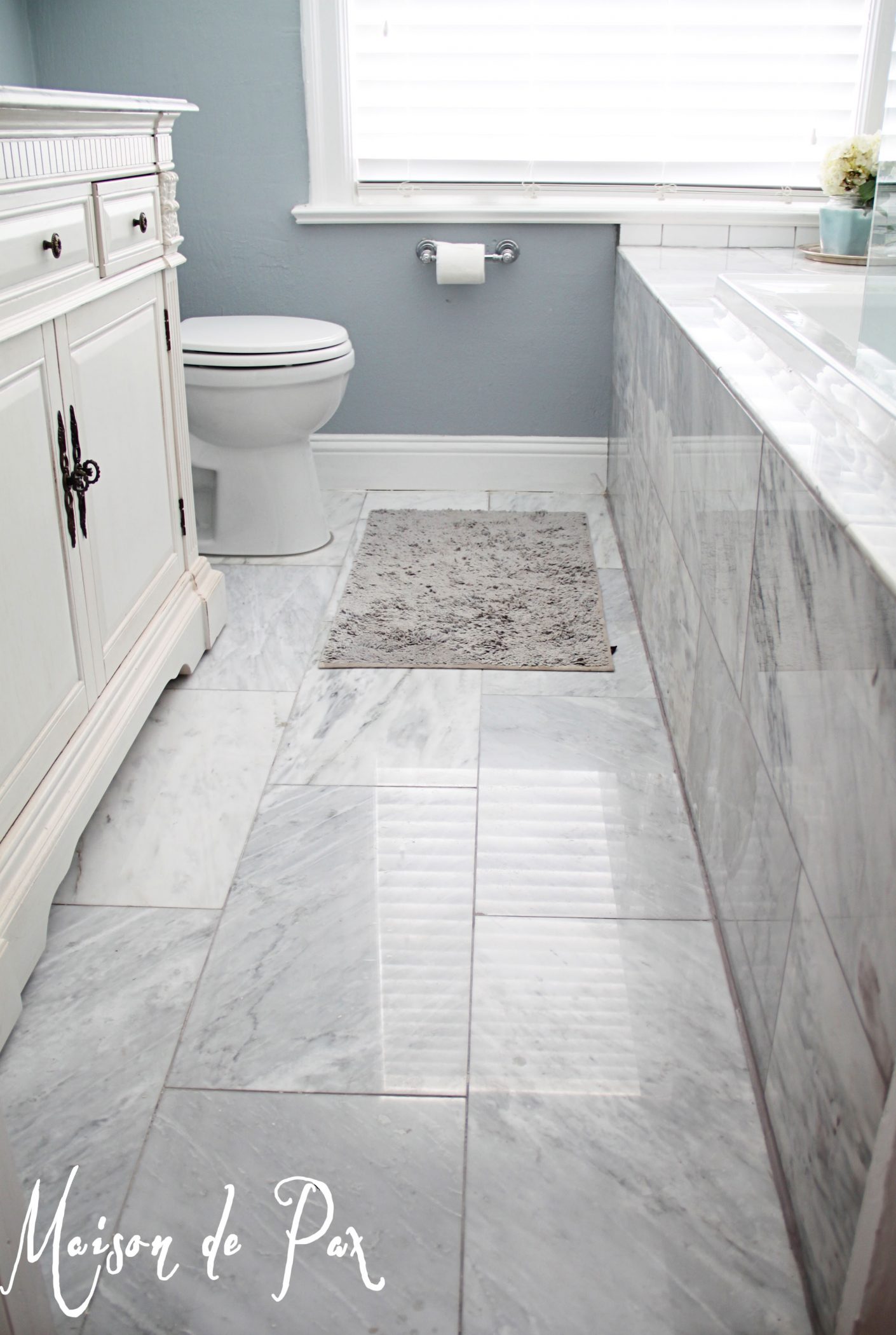
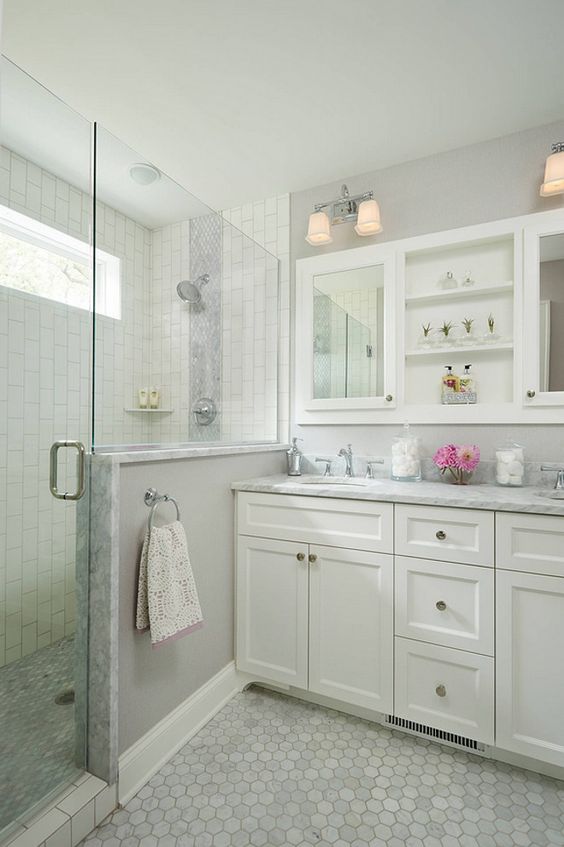
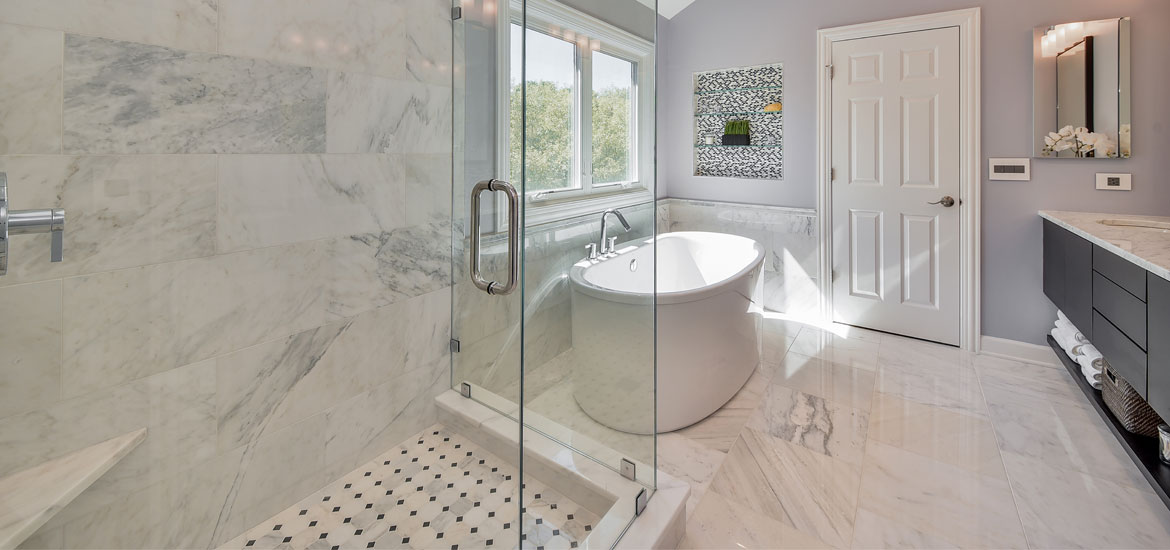
White marble floors are the epitome of timeless elegance. I love how they instantly brighten up a bathroom, making even small spaces feel open and airy. The gentle gray veining adds visual interest without overwhelming the room. I often pair white marble with white walls and light cabinetry for a serene, spa-like atmosphere. It’s a look that never goes out of style and works beautifully in both traditional and modern bathrooms.
Another advantage of white marble is its versatility. It pairs effortlessly with almost any color palette, allowing for endless design possibilities. I’ve used it as a foundation for both bold accent colors and soft, neutral tones. Whether you choose classic Carrara or a more dramatic Calacatta, white marble always delivers a sense of understated luxury.
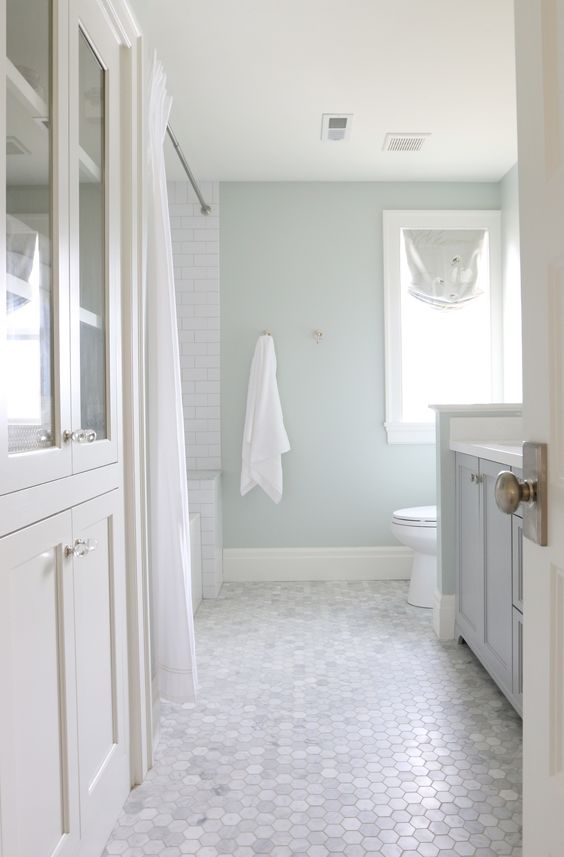
To add a bit of personality, I sometimes opt for unique shapes like hexagons or herringbone patterns. These layouts give the floor extra dimension and make the space feel custom-designed. Even a simple basketweave pattern can elevate the look, adding texture while keeping the palette clean and sophisticated.
Playing with Patterns and Shapes
One of my favorite ways to make a marble floor stand out is by experimenting with tile shapes and patterns. Hexagon tiles, for example, bring a modern twist to classic marble. Their honeycomb design adds depth and visual interest, especially when paired with contrasting grout. I find that hexagons work well in both small powder rooms and expansive master baths.
Herringbone and chevron patterns are another go-to for me. The zigzag layout creates movement and elegance, making the floor a true focal point. I’ve used these patterns with both large and small marble tiles, and the result is always eye-catching. Basketweave designs, with their woven appearance, offer a vintage charm that feels both cozy and refined.
For a bold statement, I sometimes choose diamond or arabesque tiles. These shapes introduce a sense of artistry and luxury. Mixing shapes or combining marble with other materials, like glass or metal accents, can also produce a one-of-a-kind look that reflects your style.
Exploring Color and Veining
While white marble is a classic, I’ve grown to appreciate the beauty of colored marble tiles. Gray marble, for instance, brings a contemporary edge to the bathroom. Light gray tiles with subtle veining create a soft, calming effect, while darker shades add drama and sophistication. I love how gray marble complements modern fixtures and minimalist design.
Black and white marble combinations are perfect for creating a striking contrast. A checkerboard layout or bold border can add a touch of vintage glamour. Cream and neutral-toned marble tiles, on the other hand, impart warmth and elegance. These softer hues work well in traditional spaces and help create a tranquil retreat.
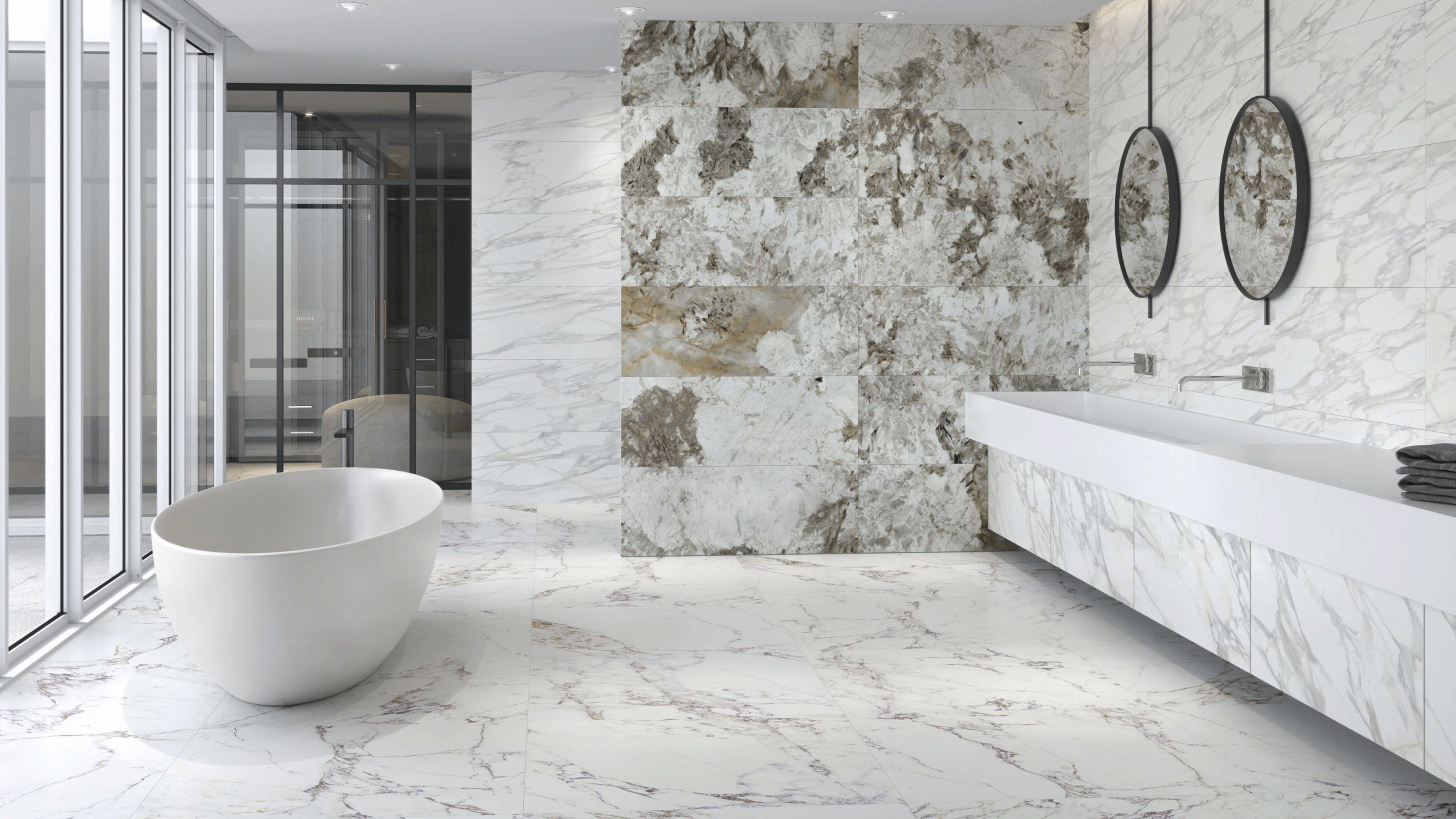
The natural veining in marble is what makes each tile unique. I always take time to select tiles with veining patterns that flow harmoniously across the floor. This attention to detail ensures the finished space feels cohesive and thoughtfully designed, rather than busy or chaotic.
Practical Considerations: Safety and Maintenance
As beautiful as marble is, I’ve learned that practicality matters just as much as aesthetics. Marble’s polished surface can be slippery when wet, so I often recommend a honed or matte finish for bathroom floors. This provides a better grip and reduces the risk of slips, especially in households with kids or elderly family members.
Maintenance is another important factor. Marble is porous and can stain if not properly sealed. I make it a habit to seal marble floors regularly and use only pH-neutral cleaners. Harsh chemicals, vinegar, or bleach can damage the stone, so gentle cleaning is key. I also place mats or rugs in high-traffic areas to protect the floor from wear and moisture.
Despite the extra care required, I find that the beauty and longevity of marble are well worth the effort. With proper maintenance, marble floors can look stunning for decades, aging gracefully and gaining character over time.
Mixing Marble with Other Materials
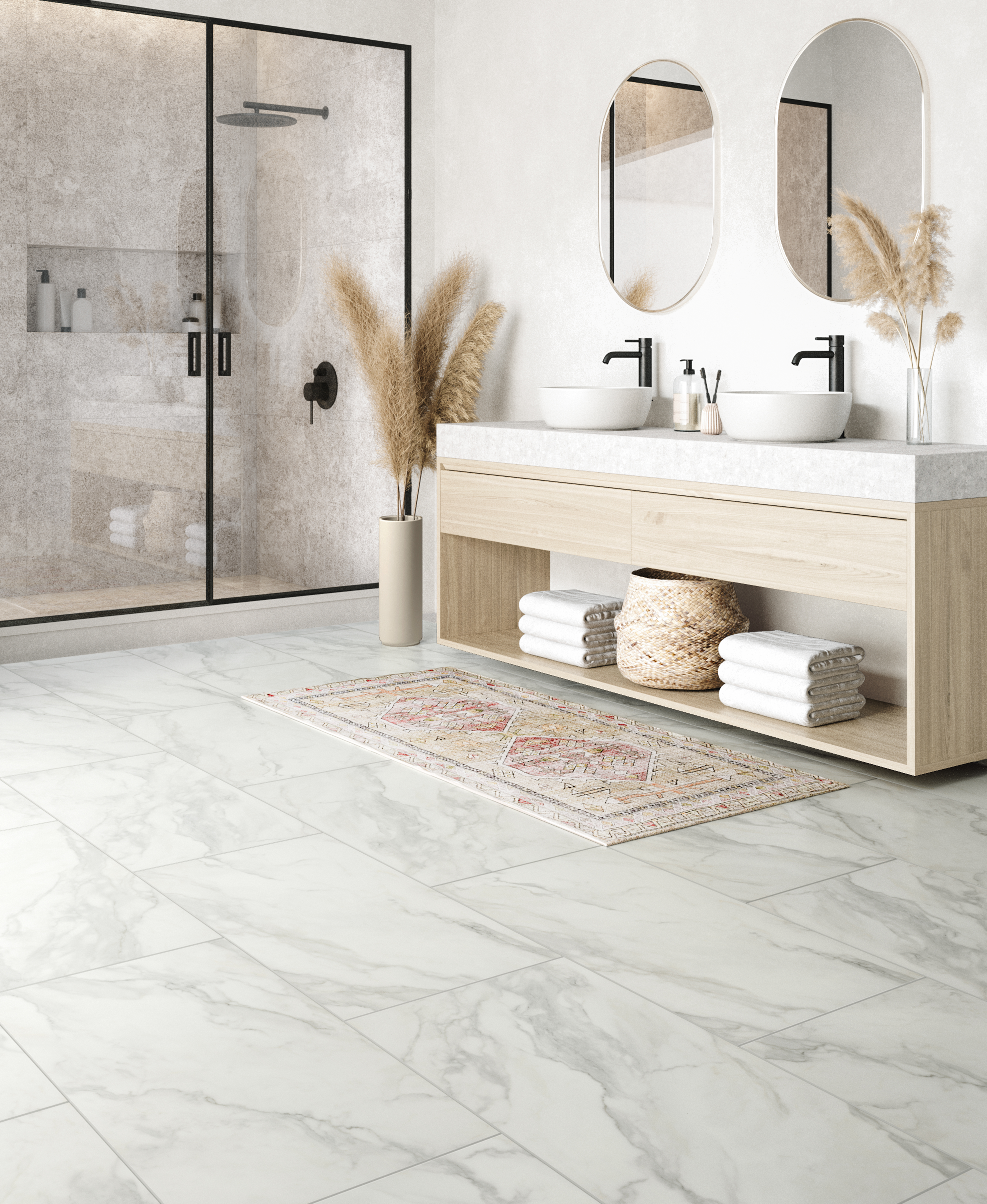
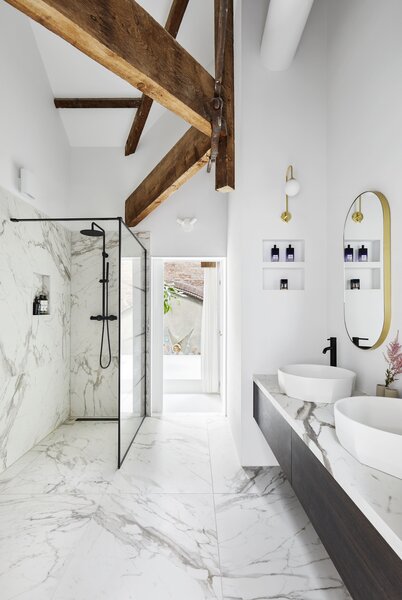
I enjoy mixing marble with other materials to create a layered and interesting look. Pairing marble floors with wood accents, for example, brings warmth and contrast to the space. Wood vanities or shelving soften the coolness of marble, creating a balanced and inviting atmosphere.
Metal fixtures, like brass or matte black faucets, add a touch of modernity and sophistication. I sometimes use glass tiles as borders or inlays to break up large expanses of marble and add a bit of sparkle. Even incorporating porcelain tiles that mimic marble can be a smart way to achieve the look on a budget or in areas where durability is a concern.
The key is to maintain harmony in the overall design. I choose complementary colors and finishes so that each material enhances the beauty of the marble without competing for attention.
Creating a Spa-Like Retreat
For me, a marble tile bathroom floor is the foundation of a true spa retreat at home. I like to keep the palette soft and neutral, using plenty of white, gray, or cream marble. Underfloor heating is a wonderful addition, making the stone warm and comfortable underfoot. I add plush towels, natural wood accessories, and greenery to complete the calming vibe.
Lighting also plays a crucial role. I opt for layered lighting, combining recessed ceiling lights with wall sconces or a statement chandelier. This highlights the marble’s natural beauty and creates a soothing ambiance. The result is a bathroom that feels like a luxurious escape, perfect for unwinding at the end of the day.
Ultimately, marble tile floors have transformed my bathrooms into spaces I truly love. With thoughtful design and a little extra care, marble can bring both beauty and function to any bathroom.
What are the best marble tile shapes for bathroom floors?
I’ve found that hexagon, herringbone, basketweave, and classic rectangles are among the best shapes for marble bathroom floors. Hexagons add a modern yet vintage touch, while herringbone and chevron patterns create movement and elegance. Basketweave tiles offer a textured, timeless look. Mixing shapes or using larger format tiles can also make small bathrooms feel more spacious and unique.
How do I keep marble bathroom floors from being slippery?
To reduce slipperiness, I always choose a honed or matte finish for marble tiles instead of a polished one. This finish provides better traction underfoot. Adding bath mats or rugs in wet areas, like near the tub or shower, helps prevent slips. I also recommend drying your feet before stepping onto the marble and avoiding walking on it with socks, which can make the surface slick.
Is marble a practical choice for busy bathrooms?
Marble can work in busy bathrooms if you’re willing to commit to regular maintenance. It’s durable but porous, so sealing it every year and cleaning up spills quickly is essential. Using rugs in high-traffic zones and choosing a honed finish for extra grip makes marble a practical option. Despite the extra care, I think the beauty and longevity of marble make it worth the effort.
What colors of marble work best for bathroom floors?
White marble is a timeless favorite, but I also love using gray, black, and cream tones. Gray marble adds a modern feel, while black and white combinations create striking contrasts. Cream and neutral shades bring warmth and a sense of calm. I select tiles with veining that complements the overall design, ensuring the floor feels cohesive and elegant.

How should I clean and maintain marble tile floors?
I use a soft broom or vacuum to remove dust, then mop with a damp microfiber cloth and a pH-neutral cleaner. I avoid harsh chemicals, vinegar, or bleach, as they can damage the marble. Sealing the floor every year helps protect against stains. For tough spots, I use a cleaner specifically made for natural stone. Regular care keeps the marble looking beautiful for years.
Can I use underfloor heating with marble tiles?
Yes, marble tiles are excellent with underfloor heating. Their natural thermal conductivity means they distribute heat evenly, making the bathroom floor warm and comfortable. I always check that the heating system is properly insulated before installation to prevent cracks. This combination adds a touch of luxury and makes the bathroom experience even more enjoyable.
Marble Bathroom Ideas – Luxury Stone Interiors

Bathroom Marble Walls Design Photos and Ideas
Cool Bathroom Floor Tiles Ideas You Should Try
Elegant Carrara Marble Tile Ideas & Marble Tile Types
Related Posts: