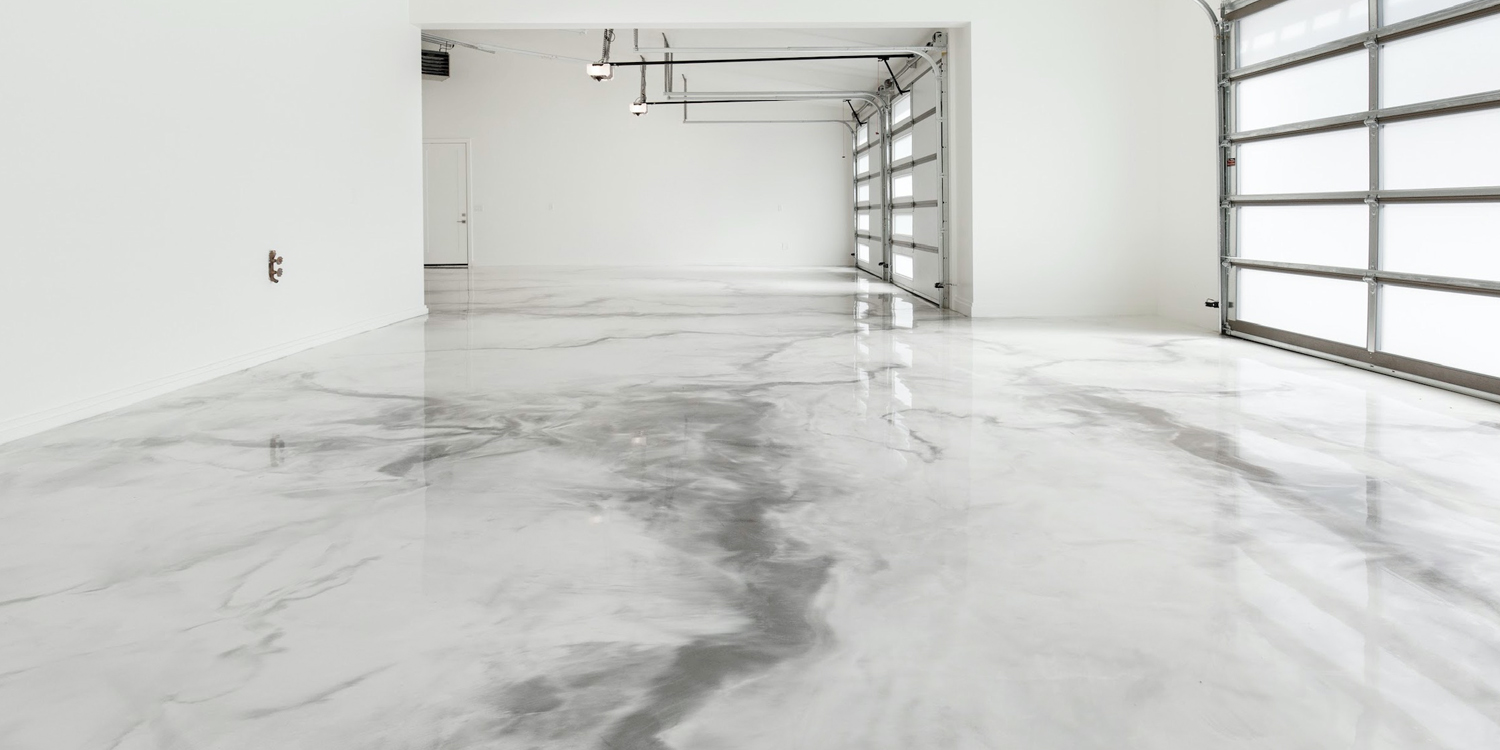
I discovered white metallic epoxy flooring three years ago when a client requested something extraordinary for their luxury garage, and it completely changed my perspective on what floors could achieve in interior design. The mesmerizing shimmer, cloud-like patterns, and mirror-bright finish created such a dramatic transformation that word spread quickly among my clientele. Through dozens of installations in garages, basements, showrooms, and even residential living spaces, I’ve mastered the art of creating these breathtaking surfaces while learning the critical techniques that separate spectacular results from disappointing failures.
Understanding White Metallic Epoxy Systems
I always begin by explaining the unique composition of metallic epoxy systems to clients because understanding the materials helps set proper expectations. White metallic epoxy combines high-performance epoxy resins with specialized mica powder pigments that create the signature shimmer and depth. The metallic particles are suspended throughout the coating, reflecting light from multiple angles to produce stunning visual effects.
Base coat selection dramatically affects the final appearance, in my experience with various white metallic formulations. Pure white bases create bright, clean looks that maximize light reflection, while off-white or cream bases add warmth and reduce the stark appearance that some clients find overwhelming. I always prepare sample boards to demonstrate these subtle but important differences.
Metallic powder ratios require careful calculation to achieve desired effects without compromising durability or creating application problems. Too little powder produces weak shimmer effects, while excessive amounts can interfere with proper curing and adhesion. I’ve developed precise mixing formulas through experimentation that consistently deliver spectacular results while maintaining structural integrity.
Surface Preparation for Flawless Installation
Concrete preparation takes on critical importance with metallic epoxy because imperfections become magnified under the reflective surface. I begin every project with diamond grinding to create the proper surface profile while removing any existing coatings, stains, or contaminants. This mechanical preparation ensures optimal adhesion while creating the smooth foundation that metallic finishes require.
Moisture testing becomes essential because trapped moisture can cause catastrophic failures in epoxy systems, creating bubbles, delamination, and cloudy appearances that ruin the entire installation. I use calibrated moisture meters and calcium chloride tests to verify concrete readiness before proceeding. Any moisture issues must be resolved through proper ventilation, dehumidification, or moisture barriers.
Crack repair and surface leveling must be completed meticulously because metallic epoxy highlights every imperfection rather than hiding them like solid colors. I use specialized concrete fillers and self-leveling compounds that bond chemically with epoxy systems. The extra preparation time pays dividends through flawless finished surfaces that showcase the metallic effects beautifully.

Application Techniques for Professional Results
Temperature and humidity control during application determine success or failure in metallic epoxy installations. I monitor environmental conditions carefully and postpone work when temperatures fall outside optimal ranges or humidity levels threaten proper curing. Controlled environments produce consistent results while preventing the defects that occur when conditions are ignored.
Mixing procedures require precision and timing that I’ve perfected through years of experience with various metallic systems. I use calibrated scales for accurate ratios and mix components thoroughly while avoiding excessive air entrainment. Working time becomes critical because metallic effects develop as the coating begins to gel, requiring skilled timing and technique.
Application tools affect pattern development significantly in my metallic installations. I use specialized squeegees, brushes, and manipulation tools to create unique effects ranging from subtle shimmer to dramatic swirls. Each project requires different techniques based on desired outcomes, space configuration, and client preferences for pattern intensity and direction.

Creating Stunning Visual Effects and Patterns
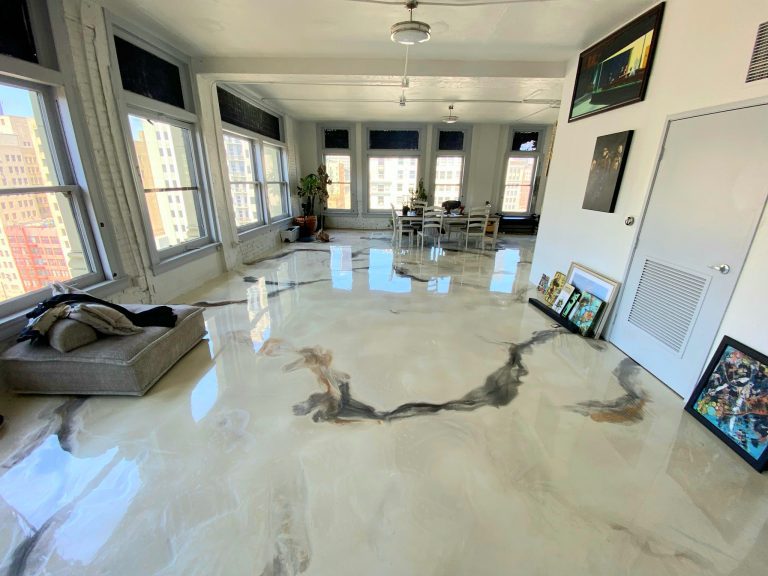
Swirl patterns have become my signature technique for creating dramatic movement and depth in white metallic floors. I achieve these effects through careful manipulation during the coating’s working time, using brushes and squeegees to guide metallic particles into flowing formations. The key involves working systematically while maintaining wet edges to prevent lap marks.
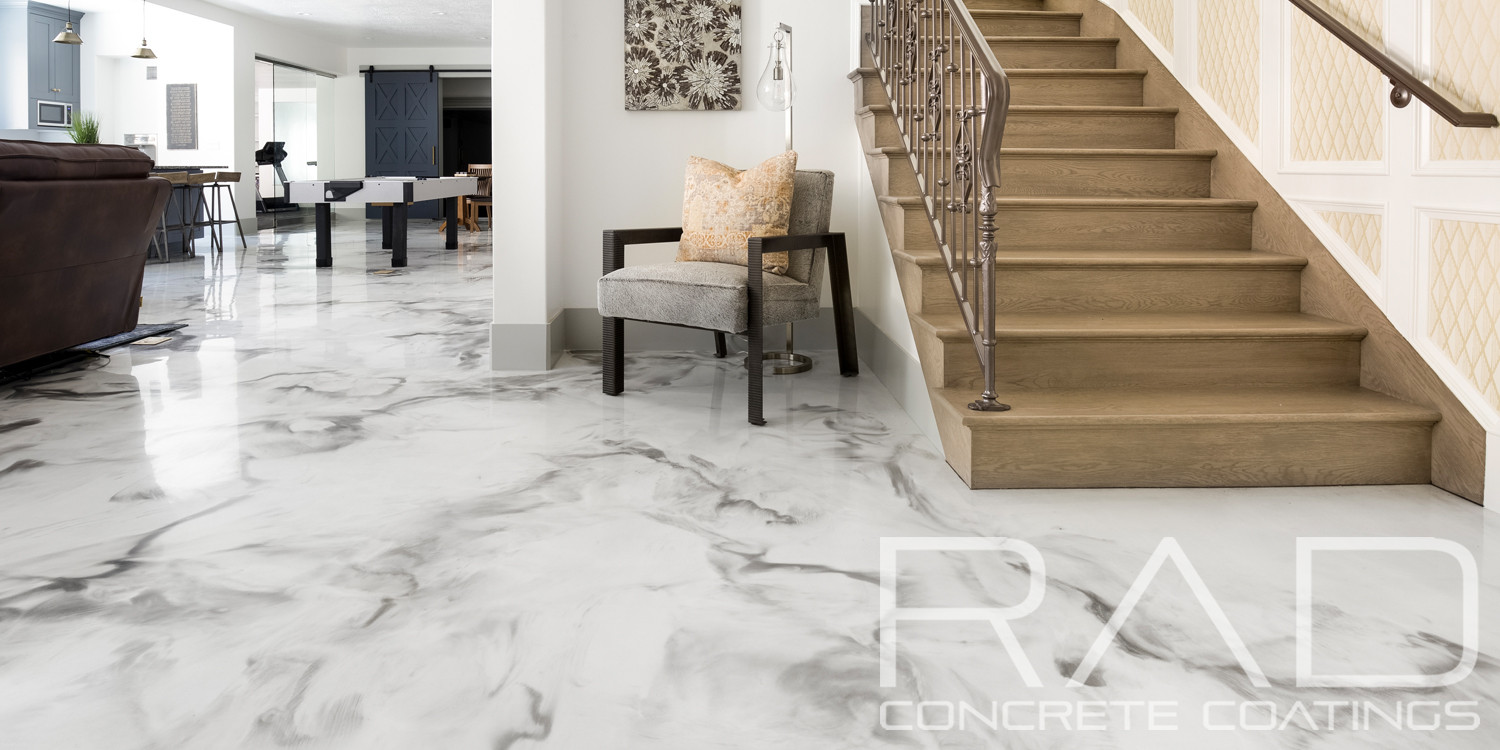
Cloud effects produce ethereal, organic patterns that many clients prefer for their subtle beauty and natural appearance. I create these formations by allowing the metallic particles to settle naturally while using minimal manipulation techniques. The resulting patterns resemble marble veining or cloud formations, adding sophistication without overwhelming spaces.
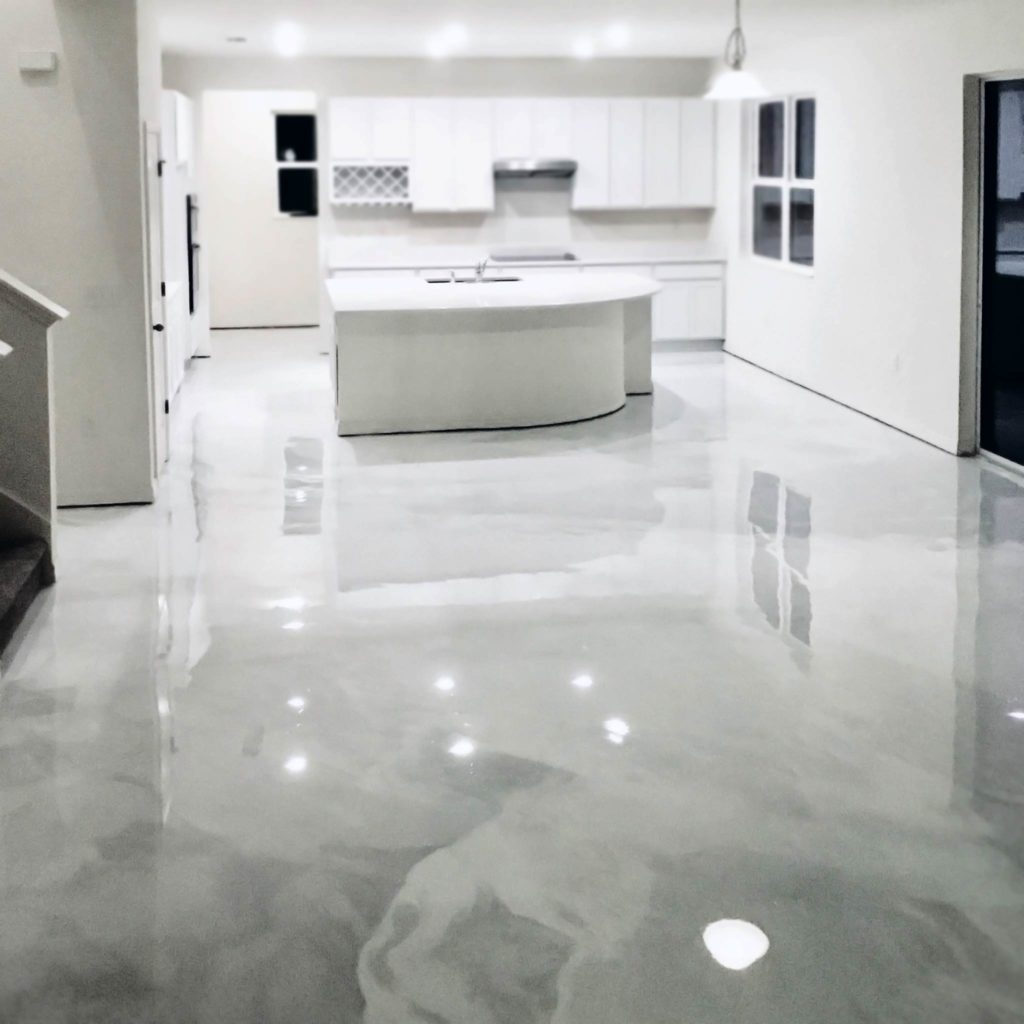
Gradient techniques allow me to create seamless color transitions from pure white centers to darker edges or accent areas. These effects require careful planning and skillful execution as multiple colors blend while the coating remains workable. The gradual transitions create stunning focal points that draw attention while maintaining overall design harmony.

Maintenance and Long-term Care Strategies
Daily maintenance routines focus on preserving the brilliant shine that makes white metallic epoxy so spectacular. I recommend microfiber dust mops for regular cleaning because they capture particles without scratching the surface. The reflective finish shows every speck of dust and debris, making consistent cleaning essential for maintaining optimal appearance.
Chemical resistance varies among different metallic epoxy formulations, and I educate clients about appropriate cleaning products and procedures. pH-neutral cleaners work best for routine maintenance, while harsh chemicals can damage the metallic effects or cause discoloration. I provide specific product recommendations and detailed care instructions with every installation.
Recoating schedules help maintain the pristine appearance that clients expect from their investment in metallic epoxy floors. High-traffic areas may require fresh topcoats every 3-5 years to restore optimal gloss and protection. I monitor wear patterns during annual inspections and recommend maintenance before significant degradation occurs.

Cost Considerations and Value Analysis
Material costs for white metallic epoxy systems significantly exceed standard epoxy coatings due to specialized resins and metallic additives. I explain these premium costs upfront while demonstrating the unique value proposition that metallic finishes provide. The investment reflects the sophisticated chemistry and stunning visual impact that these systems deliver.
Labor requirements increase substantially compared to solid color epoxy because metallic systems demand specialized skills and extended working time. I factor these considerations into pricing while ensuring clients understand the craftsmanship involved in creating these artistic surfaces. The additional investment produces results that justify the premium pricing through exceptional beauty.
Long-term value analysis favors metallic epoxy when considering durability, maintenance costs, and aesthetic impact over time. These systems typically last 15-20 years with proper care while maintaining their stunning appearance throughout their service life. The combination of beauty, durability, and low maintenance makes metallic epoxy an excellent investment for discerning property owners.
How long does white metallic epoxy take to cure completely?
White metallic epoxy requires 24-48 hours for foot traffic and 7-14 days for complete cure in my experience. Temperature and humidity significantly affect curing times, with cooler conditions extending the process. I recommend avoiding heavy loads and chemical exposure during the initial cure period to prevent damage. Full chemical resistance develops gradually over the complete curing cycle.
Can white metallic epoxy be applied over existing concrete coatings?
Existing coatings must be completely removed before metallic epoxy application to ensure proper adhesion and prevent delamination. I use mechanical grinding and chemical strippers to achieve clean, sound concrete surfaces. Previous coatings can interfere with bonding and create failures that require complete removal and reinstallation, making proper preparation essential for success.
Will the metallic effect fade or change color over time?
Quality metallic epoxy systems maintain their shimmer and color indefinitely when properly installed and maintained. I use UV-stable resins and high-grade metallic powders that resist fading and discoloration. However, surface wear in high-traffic areas can diminish shine, requiring periodic recoating to restore optimal appearance and protect the underlying metallic effects.
How do I repair scratches or damage in white metallic epoxy?
Minor scratches often polish out using fine abrasives and compounds, while deeper damage requires professional repair involving selective coating removal and reapplication. I keep detailed records of mixing ratios and techniques for each installation to ensure accurate color matching during repairs. Extensive damage may require complete section replacement to maintain pattern continuity.

Is white metallic epoxy suitable for outdoor applications?
I don’t recommend white metallic epoxy for direct outdoor exposure because UV radiation and temperature extremes can cause premature failure and appearance degradation. However, covered outdoor areas like enclosed patios or garages with open doors perform well with proper ventilation. Indoor applications provide the controlled environment that maximizes metallic epoxy performance and longevity.
What’s the best way to enhance the metallic shimmer effect?
Proper lighting design dramatically enhances metallic shimmer effects in my installations. I recommend multiple light sources at different angles to maximize reflection and visual impact. LED spotlights and track lighting work exceptionally well, while natural light from windows adds dynamic effects that change throughout the day. Strategic lighting transforms good metallic floors into spectacular showpieces.
Metallic Epoxy Flooring Package
What Is The Best Epoxy For A Metallic Floor – Glossy Floors

Metallic Epoxy Coatings Bakersfield Cisneros

Related Posts: