When I moved into my home and discovered original hardwood floors hiding under decades of carpet, I felt like I had won the lottery. But that excitement quickly turned into anxiety when I realized I had no idea how to care for them properly. Over the years, through trial and error, some costly mistakes, and advice from flooring professionals, I’ve built a routine that keeps my hardwood looking stunning. If you’re figuring out hardwood floor care for the first time, or just want to do better by your floors, let me share what I wish someone had told me from the start.
Daily Habits That Make the Biggest Difference
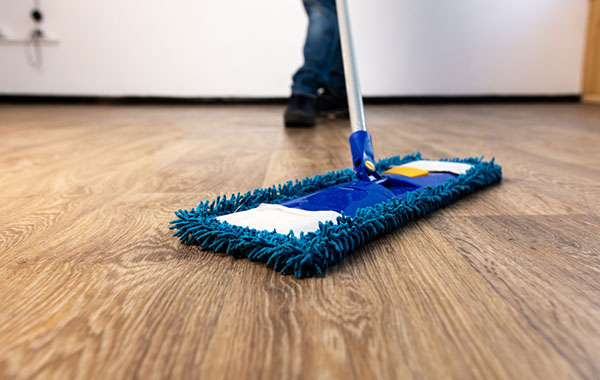
The single most impactful thing I do for my hardwood floors costs almost nothing: I dust mop every day. It sounds like overkill, but grit and fine debris act like sandpaper underfoot, and over time they dull and scratch the finish in ways that are hard to reverse. A microfiber dust mop takes me about five minutes and keeps that daily abrasion from building up.
I also made a no-shoes policy inside my home, which felt awkward to enforce at first but has made a visible difference. Shoes track in grit, moisture, and chemicals from outside that quietly damage hardwood finishes over time. I put a small bench and basket near the front door, and most guests appreciate the setup once they understand why it’s there.
Spills are another daily concern, and my rule is simple: wipe them up immediately, every single time. I keep a small stack of microfiber cloths in the kitchen and dining area specifically for this purpose. Hardwood and standing liquid are a bad combination, and even a few minutes of exposure can cause swelling, staining, or finish damage that takes real effort to fix.
The Right Way to Mop Hardwood Floors
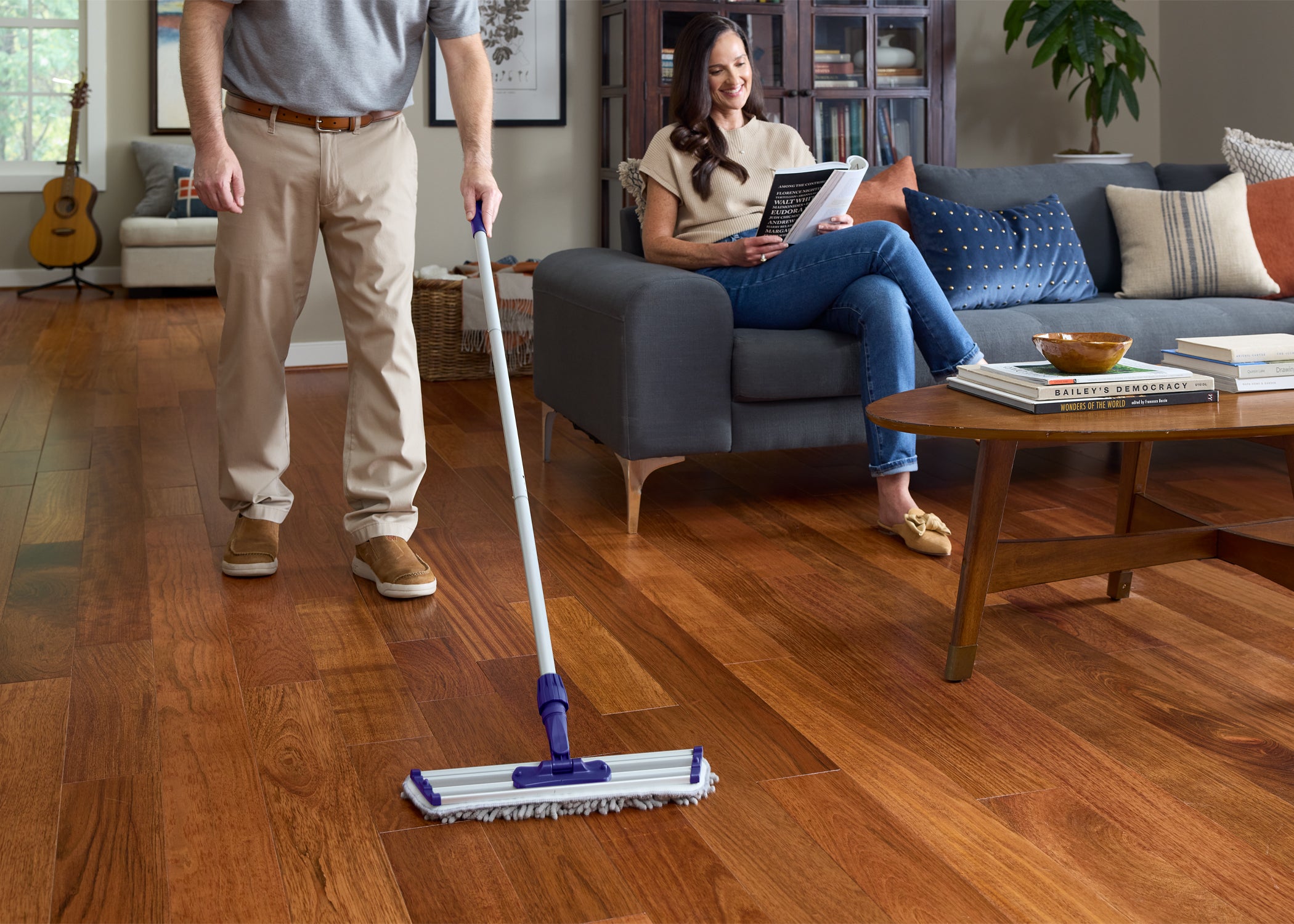
For years I mopped my hardwood floors the same way I mopped tile, with a wet mop and a bucket of soapy water. This was wrong, and I’m lucky it didn’t cause more damage than it did. Hardwood needs to be cleaned damp, not wet. Excess water soaks into the wood and leads to warping, cupping, and finish deterioration over time.
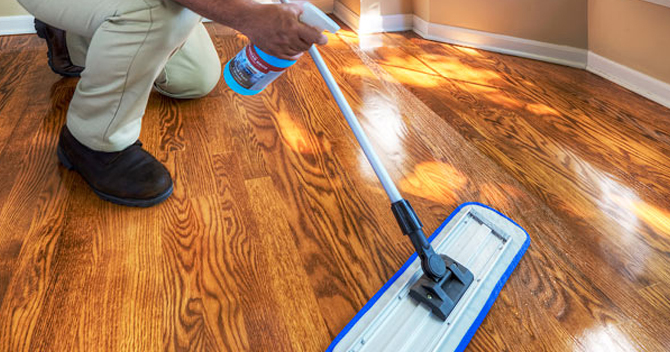
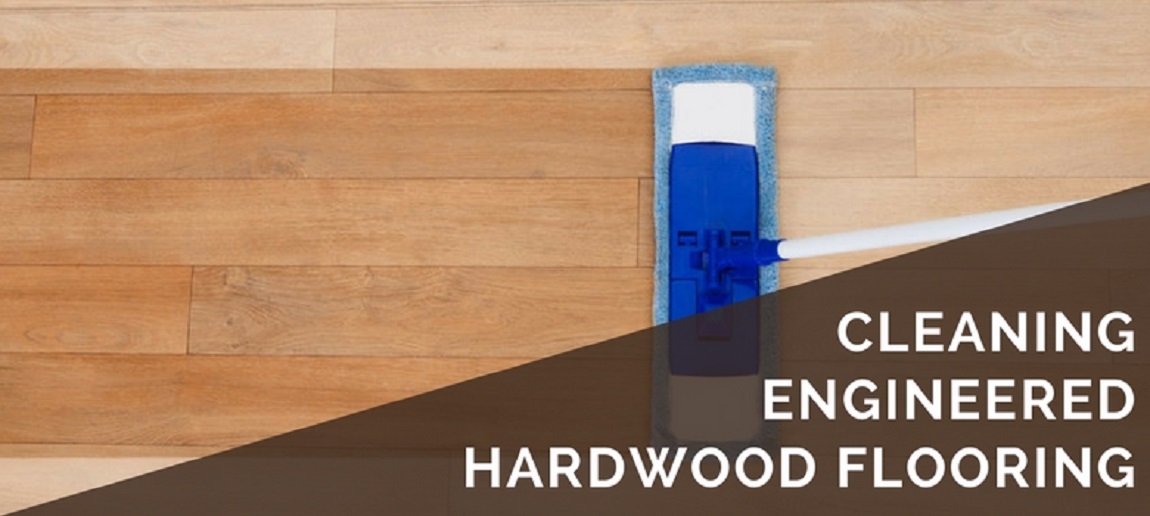
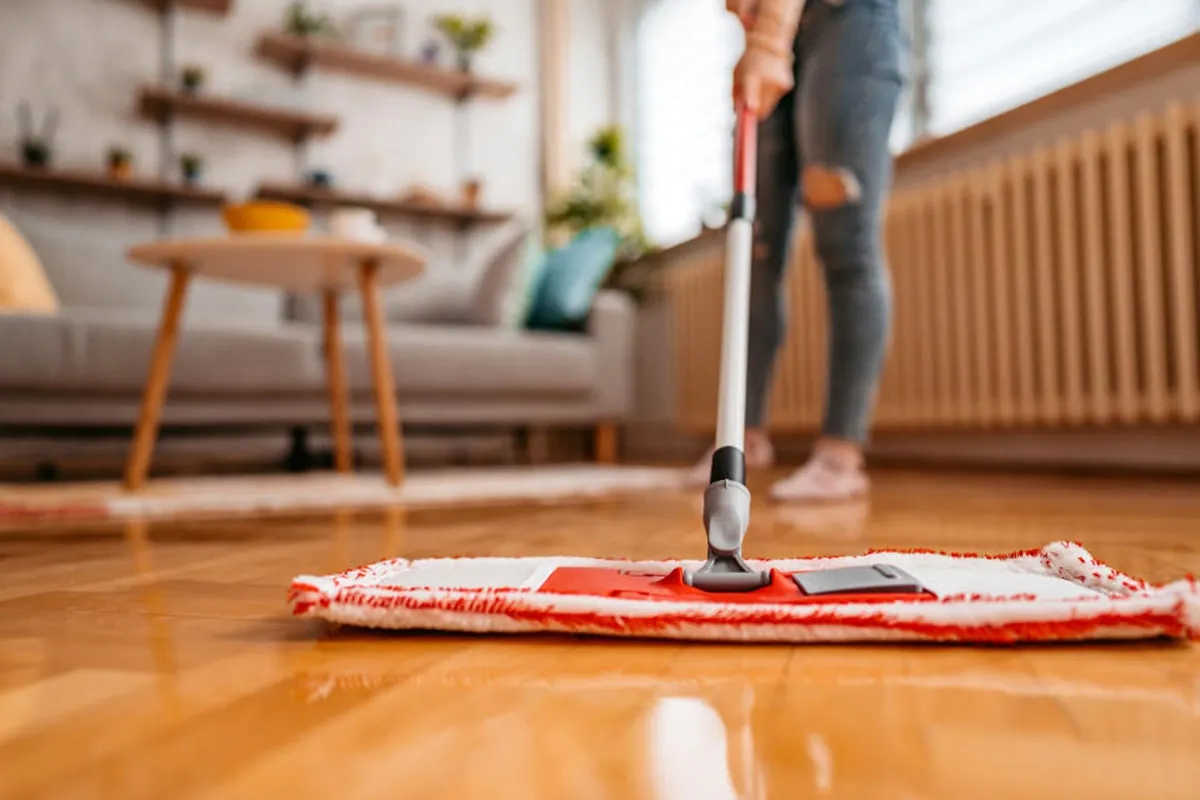
I switched to a spray mop with a microfiber pad and a hardwood-specific cleaner, and the results were immediately better. You control exactly how much moisture hits the floor, and the microfiber picks up dirt without pushing it around. I spray a small section, mop it, and move on quickly so no area stays damp for long. This method gives me a genuinely clean floor without any of the risk.
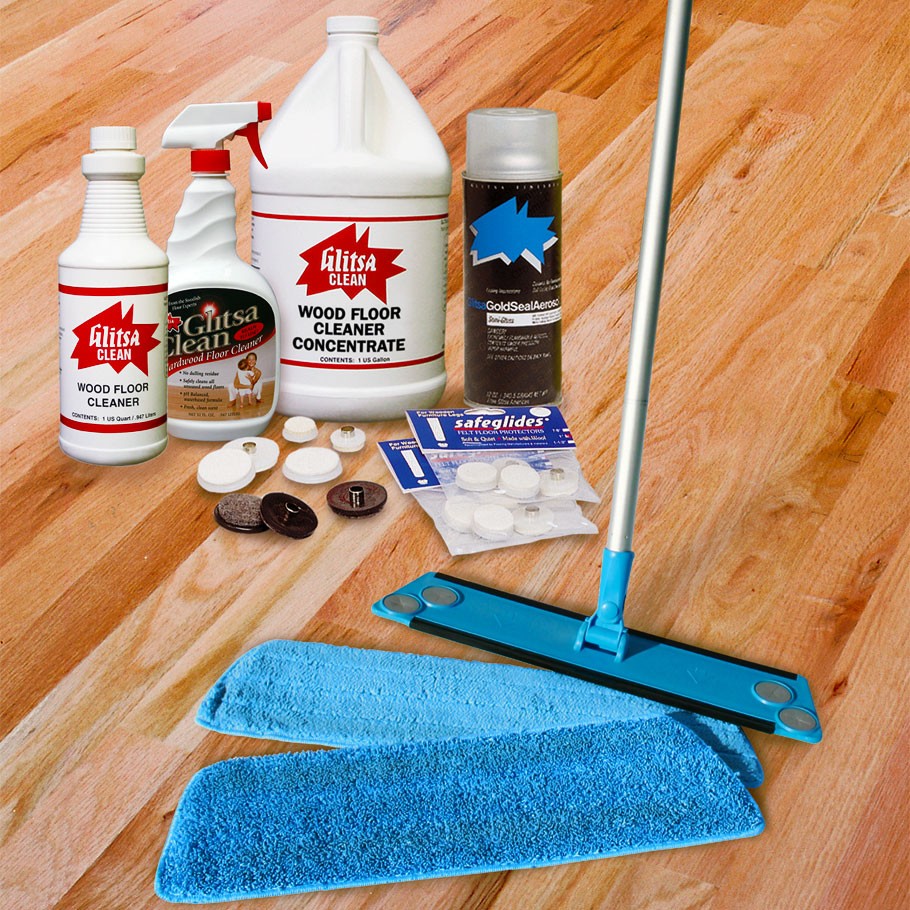
The cleaner you choose matters a lot. I use a pH-neutral product formulated specifically for hardwood, and I avoid anything with wax additives, vinegar, or oil soaps. These might seem like natural, gentle choices, but they leave residue or break down the finish over time. A good hardwood cleaner lifts dirt without leaving anything behind and keeps the finish intact for years longer.
Protecting Hardwood From Furniture and Foot Traffic
One of the easiest wins I ever made for my hardwood floors was buying felt pads in bulk. I put them on every piece of furniture in my home, from dining chairs to the sofa legs to the legs of side tables. Furniture without pads can scratch and gouge hardwood with even small movements, and I’ve seen what dragged chairs can do to an unprotected floor. It’s not pretty.
Area rugs are another layer of protection I rely on heavily, especially in high-traffic zones like the hallway, living room, and kitchen entry. They catch the bulk of grit and wear before it reaches the wood. The important thing is to use rugs with a breathable backing rather than rubber or vinyl, which can trap moisture and actually discolor the finish underneath over time.
Rolling chairs are worth calling out specifically. I have a desk in my home office with a rolling chair, and within months of moving in I noticed real wear marks developing on the floor underneath it. A hard plastic chair mat solved the problem immediately. If you work from home or have kids with rolling chairs, this is a non-negotiable step that protects a concentrated area from serious daily damage.
Dealing With Scratches, Dents, and Surface Damage
Scratches happen, and I’ve made peace with that. My dog alone has contributed more than a few. For light surface scratches that haven’t gone through the finish, I’ve had good luck with a hardwood floor touch-up marker in a matching stain color. It blends the scratch into the surrounding wood grain surprisingly well and takes about thirty seconds to apply.
Deeper scratches that cut into the wood itself need a bit more attention. I use a wood filler product matched to my floor color, applied with a putty knife and sanded smooth once dry. The results aren’t always perfect, but they’re far less noticeable than the original damage. For large or numerous deep scratches, professional sanding and refinishing is the real fix, but that’s a bigger project.
Dents from dropped objects are trickier to address. For small dents in unfinished areas, placing a damp cloth over the dent and applying a warm iron can sometimes draw the wood fibers back up, a trick my flooring installer taught me. It doesn’t work every time, but when it does, it’s almost like magic. For finished surfaces, you’re usually better off consulting a professional rather than risking damage to the surrounding finish.

Managing Humidity and Seasonal Changes
This is the aspect of hardwood care I underestimated the most when I started out. Wood is a living material that expands and contracts with changes in humidity, and if those swings are too dramatic, the floor can crack, cup, or develop gaps. Maintaining consistent indoor humidity is genuinely one of the most important things you can do for hardwood.
I keep a hygrometer in my living room to monitor humidity levels year-round. The ideal range for hardwood floors is generally between 35 and 55 percent relative humidity. During dry winters, I run a humidifier to keep levels from dropping too low. In humid summers, the air conditioning usually handles the other direction, but I keep an eye on it.
When I first moved in, I noticed seasonal gaps opening between boards in winter and closing again in spring. My flooring installer assured me this was normal within reason, but keeping humidity stable has reduced how much movement I see. If you’re installing new hardwood, acclimating the boards to your home’s humidity levels for several days before installation also makes a significant difference in long-term stability.
When to Refinish and How to Know It’s Time
Refinishing hardwood floors is a bigger undertaking, but it’s also what gives them their legendary longevity. I had my floors refinished once since moving in, and the transformation was dramatic. Years of dulling, light scratches, and worn areas disappeared completely, and the floors looked brand new. Knowing when to refinish is part of good long-term care.
The water test is my go-to diagnostic. I drop a small amount of water on the floor in a few spots. If it beads up, the finish is still intact and doing its job. If the water soaks in or darkens the wood quickly, the finish is worn through and the wood is exposed. At that point, refinishing becomes necessary rather than optional to prevent moisture damage.
Most hardwood floors can be sanded and refinished multiple times over their lifespan, which is what makes solid hardwood such a valuable long-term investment. Engineered hardwood has a thinner wear layer and can typically only be refinished once or twice. Knowing which type you have helps you plan appropriately. I keep records of my floor’s history so I can track how many times it’s been refinished and what products have been used on it.
How often should I clean hardwood floors?
I dust mop daily or every other day to manage grit and debris. A damp mop with a hardwood cleaner happens about once a week in high-traffic areas and every two weeks elsewhere. The frequency really depends on your household. Pets and kids mean more frequent cleaning, but always keep moisture minimal regardless of how often you clean.
Can I use a steam mop on hardwood floors?
I’d strongly advise against it. Steam forces heat and moisture deep into wood and can cause warping, swelling, and finish damage over time. I made this mistake once on a small section and noticed the finish starting to bubble. Stick to a lightly dampened microfiber mop and a proper hardwood cleaner. It’s safer and just as effective for everyday cleaning needs.
How do I prevent my dog’s nails from scratching the floors?
Keeping nails trimmed is the most effective step I’ve taken. I also use area rugs in the spots where my dog runs and plays most. A harder wood species or a more scratch-resistant finish helps too if you’re choosing floors from scratch. No solution is perfect, but a combination of nail maintenance and rugs keeps damage manageable and mostly cosmetic.
What humidity level is best for hardwood floors?
I keep mine between 35 and 55 percent relative humidity year-round. Dropping below that range causes boards to shrink and crack, while too much humidity leads to swelling and cupping. A basic hygrometer costs under twenty dollars and is one of the best investments I’ve made for my floors. A humidifier in winter and air conditioning in summer usually handle the rest.
Is it worth refinishing old hardwood floors instead of replacing them?
Almost always yes, in my opinion. Refinishing costs a fraction of replacement and can make floors look completely new. My floors were in rough shape before refinishing and came out beautifully. As long as the boards themselves are structurally sound and haven’t been refinished too many times already, sanding and recoating is the smarter, more sustainable choice.
What cleaning products should I avoid on hardwood?
I steer clear of vinegar, oil soaps, wax-based cleaners, and anything not specifically formulated for hardwood. Vinegar is acidic and dulls the finish over time despite its natural reputation. Oil soaps leave a residue that builds up and clouds the surface. Even some “floor cleaners” contain ingredients that aren’t safe for hardwood. When in doubt, check with your flooring manufacturer for approved products.
Related Posts: