When I first saw white hardwood floors in a friend’s home, I was completely smitten. There was something so clean, airy, and timeless about them that I knew I had to have them in my own space. After installing white hardwood throughout my living room and hallway, I’ve learned a lot, the good, the surprising, and the things I wish someone had told me upfront. So here’s my real, lived-in experience with white hardwood flooring, shared like a conversation over coffee.
Choosing the Right Wood Species for White Floors
When I started shopping, I didn’t realize how much the wood species matters for white flooring. Some woods take white stain beautifully, while others fight it the whole way. Oak became my top choice because its open grain absorbs white tones evenly and naturally.
Maple is another option I considered, but its tight grain can make white finishes look a little plastic or unnatural. If you want that soft, organic feel, oak or ash are your best bets. I went with white oak and never looked back, it just has this warmth even in lighter tones.
Pine is more affordable and can look charming with a whitewash finish, but it’s softer and dents more easily. Since I have a dog and two kids, durability was a big factor for me. I learned pretty quickly that the species you choose sets the foundation for everything else.
Understanding White Stain vs. Whitewash vs. Bleached Finishes
I’ll be honest, I thought “white floor” just meant white floor. I had no idea there were so many ways to get there. White stain adds color while still letting the grain show through, which gives a natural, lived-in look I absolutely love.
Whitewashing is a technique where a diluted white paint or stain is applied and then partially wiped off. It creates a more rustic, vintage feel. When I toured a farmhouse-style home with whitewashed pine floors, I was charmed, but I knew it wasn’t quite right for my more modern space.
Bleaching actually removes the wood’s natural color using chemicals, resulting in a very pale, almost platinum tone. It’s stunning but requires more maintenance and professional application. I stuck with a white stain for a balance of beauty and practicality, and it’s held up really well over three years.

How White Floors Affect Light and Space in a Room
One of the biggest reasons I wanted white hardwood was to open up my smaller living room. And honestly, it worked beyond my expectations. The floors reflect natural light in a way that makes the whole space feel bigger and brighter without any renovation tricks.
I’ve noticed that on cloudy days, my room still feels airy because the floors bounce around whatever light comes through the windows. My neighbor has dark walnut floors and her similarly sized room feels much more closed in, not in a bad way, but the contrast is striking when you compare.
If you have a north-facing room that doesn’t get much sun, white hardwood can be a genuine game-changer. I’d recommend pairing it with light or neutral walls to maximize that open, breezy effect. It’s one of those choices that sounds simple but really transforms how a space feels day to day.

Maintenance and Keeping White Floors Looking Clean
Let me be upfront: white floors require more attention than darker ones. Every crumb, muddy paw print, and dust bunny shows up. When I first moved in, I swept almost every day and it felt like a part-time job.
Over time, I found my rhythm. A dry microfiber mop every couple of days and a damp mop with a pH-neutral cleaner once a week keeps things looking fresh. I also put down area rugs in high-traffic zones, which was the single best decision I made for reducing daily cleanup.
Scuffs and scratches can be more visible on lighter floors depending on the finish. I use a matte finish which hides small imperfections much better than glossy. If you’re expecting a floor that forgives neglect, white hardwood isn’t it, but if you’re willing to maintain it, it stays absolutely beautiful.

The Cost of White Hardwood Flooring and What to Expect
When I got my first quote, I’ll admit I had a small panic attack. Solid white oak hardwood, installed, ran me around $10 to $14 per square foot in my area. For my 400-square-foot space, that added up fast.
If budget is a concern, engineered white hardwood is a solid alternative. It has a real wood veneer on top but a layered core underneath, making it more stable and often less expensive. I’ve seen engineered options starting around $5 per square foot, and some of them look nearly identical to solid hardwood.
Don’t forget to factor in finishing, underlayment, and labor costs. I made the mistake of only budgeting for the wood itself. Getting at least three quotes from local contractors helped me understand the true cost range. In the end, I viewed it as a long-term investment rather than just a purchase.

Long-Term Durability and When to Refinish White Hardwood
One thing I love about real hardwood is that it can be refinished multiple times over its lifetime. When my floors started showing wear around the high-traffic areas after about five years, I had them lightly sanded and recoated rather than replaced. It was a fraction of the original cost.
White floors can show wear differently than darker ones. Yellowing is one concern, especially with certain polyurethane finishes that amber over time. I specifically asked my installer for a water-based finish, which stays clearer and doesn’t shift the white tone over the years.
Pets are worth mentioning here because my dog has definitely left some marks. Keeping nails trimmed and using felt pads under furniture legs has minimized the damage significantly. Overall, my white hardwood floors have aged gracefully, and with proper care, I fully expect them to last decades.

Are white hardwood floors hard to keep clean?
Yes, they do show dirt and dust more than darker floors. But with a consistent routine, it’s manageable. I sweep or dry mop every few days and do a damp mop weekly. Area rugs in busy spots help a lot. Once you find your rhythm, it becomes second nature and the beauty makes it worth the effort.
Do white hardwood floors work well with pets and kids?
They can, but you need a durable finish and a harder wood species. I have both kids and a dog, and my white oak floors have held up well. I recommend a matte or satin finish to hide small scratches. Keep pet nails trimmed and use rugs in play areas to reduce daily wear and visible marks.

Will white floors yellow over time?
Some finishes do amber or yellow, especially oil-based polyurethane. I specifically used a water-based finish to avoid this. It stays clearer and preserves the white tone much longer. Ask your installer about finish options before committing. The right finish makes a huge difference in how your floors age and look over time.
How much does white hardwood flooring typically cost?
Solid hardwood runs roughly $8 to $15 per square foot installed, depending on your area and wood species. Engineered white hardwood can start around $5 per square foot. Always budget for extras like underlayment and finishing. I’d suggest getting three contractor quotes so you can compare and avoid any surprise costs later.
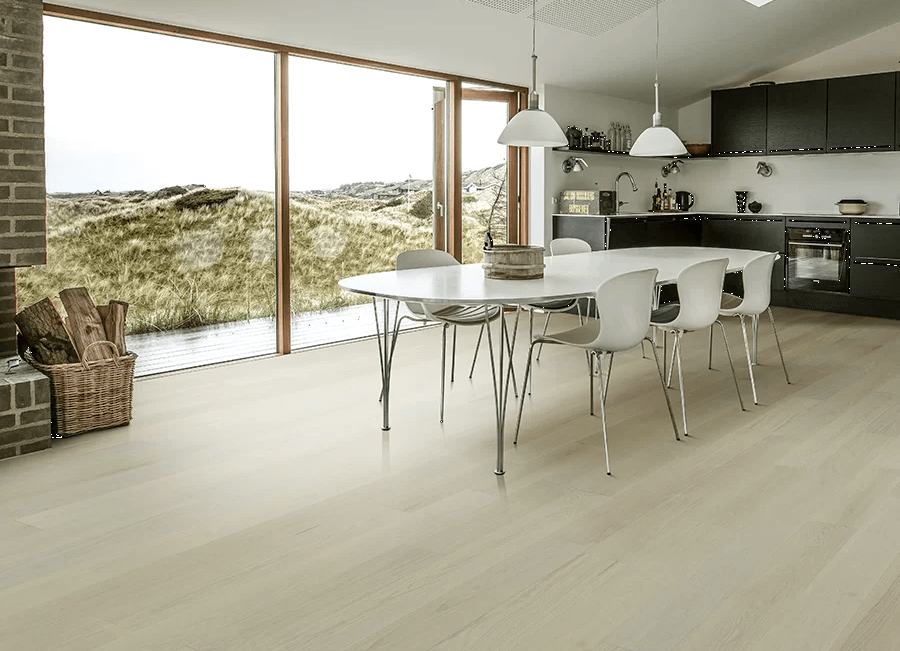
Can white hardwood floors be used in kitchens or bathrooms?
Solid hardwood and moisture don’t mix well, so I wouldn’t recommend it for bathrooms. In kitchens, engineered white hardwood is a safer bet since it handles humidity fluctuations better. Wipe up spills immediately and avoid wet mopping. I have engineered hardwood in my kitchen and it’s held up fine with reasonable care over two years.
How often do white hardwood floors need to be refinished?
It depends on traffic and wear, but generally every 7 to 10 years for high-traffic areas. I had mine recoated after five years in the hallway, which sees the most foot traffic. Refinishing is much cheaper than replacing. The ability to sand and refinish is honestly one of the biggest advantages of choosing real hardwood over other flooring types.
Related Posts: