When I first installed bamboo flooring in my home five years ago, I had no idea how different the maintenance would be compared to traditional hardwood. After countless experiments, professional consultations, and a few costly mistakes, I’ve discovered the secrets to keeping bamboo floors gleaming like new. The key lies in understanding bamboo’s unique structure and using specific techniques that work with its natural properties rather than against them.
Understanding Your Bamboo Floor’s Unique Needs
Bamboo floors require special attention because they’re technically grass, not wood. This fundamental difference affects how they respond to cleaning products and maintenance routines. I learned this the hard way when I used regular hardwood cleaner and ended up with cloudy, streaky surfaces that took weeks to restore properly.
The natural fibers in bamboo are more porous than traditional hardwood, which means they absorb moisture and cleaning solutions differently. When I first started caring for my floors, I noticed that standard mopping techniques left water marks and dull spots. Understanding this porosity helped me adjust my approach completely.
Most importantly, bamboo floors have a protective coating that can be easily damaged by harsh chemicals or abrasive tools. I discovered that maintaining this protective layer is crucial for long-term shine and durability. Once I figured out the right balance, my floors began to maintain their lustrous appearance consistently.
Choosing the Right Cleaning Products
After testing dozens of products, I found that pH-neutral cleaners specifically designed for bamboo work best. Regular household cleaners, even those labeled for hardwood, often contain ingredients that can strip bamboo’s protective finish. I now exclusively use cleaners with a pH between 6 and 8 for optimal results.
Vinegar-based solutions, while natural, proved too acidic for my bamboo floors. I noticed a gradual dulling after several months of use. Instead, I switched to commercial bamboo cleaners or created my mild solution using a few drops of dish soap in warm water. This gentler approach restored the natural shine.
Oil-based products gave me mixed results initially. While some bamboo-specific oils enhanced the shine temporarily, they also attracted dust and dirt more quickly. I learned that water-based polishes provide longer-lasting results without the sticky residue that plagued my early attempts at floor maintenance.
Mastering the Perfect Cleaning Technique
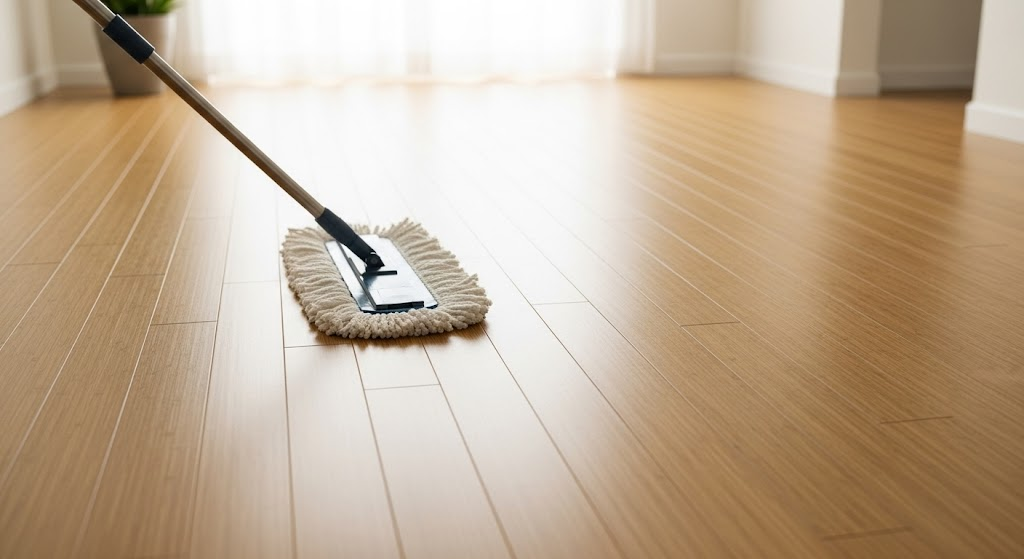
The secret to shiny bamboo floors lies in the cleaning motion and moisture control. I use a microfiber mop dampened with my cleaning solution, wringing it until it’s barely moist. Excess water is bamboo’s enemy, causing warping and permanent damage that I witnessed in my guest bedroom before perfecting this technique.
I clean in the direction of the bamboo grain, using long, smooth strokes rather than circular motions. This approach prevents streaking and ensures even distribution of the cleaning solution. When I started following the grain pattern, my floors began achieving that mirror-like finish I had been seeking for months.
The drying process is equally important. I immediately follow wet cleaning with a dry microfiber cloth, buffing in the same grain direction. This final step removes any remaining moisture and enhances the natural shine. Skipping this buffing stage always left my floors looking dull and lifeless.

Professional-Grade Polishing Methods
Every three months, I perform a deeper polishing routine using specialized bamboo polish. I apply the product sparingly with a microfiber applicator, working in small sections to ensure even coverage. Too much product creates a hazy film that reduces shine rather than enhancing it.
The application technique requires patience and precision. I spread the polish in thin, even coats, allowing each section to penetrate for exactly the recommended time before buffing. Rushing this process or applying too thickly resulted in uneven shine patterns that took considerable effort to correct later.
For stubborn areas or high traffic zones, I use a slightly different approach. I apply two thin coats instead of one thick application, allowing complete drying between applications. This method has consistently given me the most durable and attractive results in areas like my kitchen and entryway.

Preventing Common Shine-Dulling Mistakes
The biggest mistake I made initially was using too much water during regular cleaning. Bamboo floors should never be soaked or left wet for extended periods. I learned to clean small sections at a time, immediately drying each area before moving to the next. This prevents water damage and maintains a consistent shine.
Furniture pads became my best investment after discovering scratch marks were dulling my floors’ appearance. I placed felt pads under all furniture legs and replace them every six months. Even small scratches can catch light differently, creating dull spots that break up the uniform shine I work so hard to maintain.
Temperature and humidity control significantly impact bamboo floor appearance. I maintain indoor humidity between 30-50% using a humidifier in winter and a dehumidifier in summer. Extreme humidity changes cause bamboo to expand and contract, creating gaps and surface irregularities that affect overall shine quality.

Long-Term Maintenance for Lasting Brilliance
Establishing a consistent cleaning schedule has been crucial for maintaining shine. I sweep daily with a microfiber dust mop, perform weekly damp cleaning, and monthly deep polishing. This routine prevents dirt buildup that can permanently embed in bamboo’s porous surface and create irreversible dullness.
I refinish my bamboo floors every 3-4 years, depending on traffic patterns. This process involves light sanding and applying a new protective coating. While initially intimidating, I learned to do this myself using rental equipment. Professional refinishing costs significantly more but achieves identical results.
Seasonal adjustments to my maintenance routine have proven essential. During winter, I increase cleaning frequency due to salt and moisture from boots. Summer requires more attention to humidity control and UV protection using window treatments. These seasonal adaptations keep my floors looking pristine year-round.
How often should I polish my bamboo floors to maintain optimal shine?
I recommend polishing bamboo floors every 2-3 months for optimal shine, though this can vary based on foot traffic and household conditions. High traffic areas like entryways and kitchens may need monthly attention, while bedrooms can go longer between treatments. I’ve found that consistent light polishing produces better results than infrequent heavy applications. Over-polishing can create buildup that dulls the surface, so I always err on the side of less frequent but thorough applications.
Can I use steam mops on bamboo floors without damaging the finish?
I strongly advise against using steam mops on bamboo floors based on my personal experience and professional recommendations. The intense heat and moisture can penetrate bamboo’s porous surface, causing warping, splitting, and permanent finish damage. I made this mistake early on and had to replace several planks. Instead, I use a damp microfiber mop with an appropriate cleaning solution, which achieves excellent results without risking damage to the floor’s integrity or protective coating.

What should I do if my bamboo floors develop a cloudy or hazy appearance?
Cloudiness usually results from product buildup or using inappropriate cleaning solutions. I’ve successfully removed haziness by cleaning with a solution of one cup of white vinegar in one gallon of warm water, followed immediately by thorough rinsing with clean water and complete drying. For stubborn buildup, I use a commercial bamboo floor cleaner specifically designed to remove residue. The key is working in small sections and ensuring complete moisture removal to prevent further damage during the restoration process.
Are there specific humidity levels I need to maintain for bamboo floor shine?
Yes, maintaining proper humidity is crucial for bamboo floor appearance and longevity. I keep my home between 30-50% relative humidity year-round using humidifiers in winter and dehumidifiers in summer. Low humidity causes bamboo to shrink, creating gaps and surface irregularities that affect shine. High humidity leads to expansion and potential cupping. I monitor levels with a digital hygrometer and adjust accordingly. Consistent humidity not only preserves shine but also prevents costly structural damage to the flooring system.

How do I remove scuff marks without damaging the bamboo floor’s shine?
For light scuff marks, I use a tennis ball or pencil eraser, rubbing gently in the direction of the grain. For stubborn marks, I apply a small amount of baking soda paste, let it sit for a few minutes, then gently buff with a soft cloth. I never use abrasive cleaners or steel wool, which permanently damage the protective finish. After removing scuffs, I clean the area with my regular bamboo floor cleaner and apply a thin coat of polish to restore uniform shine and protect the newly exposed surface.
What’s the best way to restore shine to old or neglected bamboo floors?
Restoring neglected bamboo floors requires a systematic approach I’ve perfected through experience. First, I deep clean with an appropriate bamboo floor cleaner to remove all dirt and buildup. Next, I lightly sand any rough spots with fine-grit sandpaper, always following the grain direction. Then I apply bamboo floor polish in thin, even coats, allowing proper drying time between applications. For severely damaged floors, I consider professional refinishing, which involves sanding and applying a new protective coating. Patience is essential; this process can take several days, but results in dramatically restored shine and protection.
How To Clean Bamboo Floors: Tips And Hints
Ways to Make Bamboo Floors Shine

How to Clean Bamboo Flooring

Easy-to-Make Bamboo Floor Cleaner Recipes

Related Posts: