I never thought I’d be the person obsessing over flooring, but here I am, three years after installing dark wood laminate throughout my main living areas, still genuinely happy with the decision. Dark laminate has this rich, dramatic look that I always associated with expensive hardwood, but at a fraction of the cost. If you’re considering it for your home, I want to share everything I wish someone had told me before I started, the good stuff and the honest challenges too.
Why I Chose Dark Wood Laminate Over Real Hardwood
The price was honestly the first thing that pulled me toward laminate. Real dark hardwood like walnut or wenge can run $10 to $15 per square foot installed. My laminate cost me around $4 per square foot, and I genuinely couldn’t tell the difference from a standing position.
Beyond cost, I was drawn to the durability laminate offers. It has a hard wear layer on top that resists scratches and dents better than many real wood species. With a busy household, I needed something that could take a beating and still look presentable for guests.
I also appreciated the consistency laminate provides. Real wood has natural variations that some people love, but I wanted a uniform, polished look throughout my open floor plan. Dark laminate gave me exactly that, a sleek, cohesive appearance that tied all my rooms together beautifully.
Picking the Right Shade of Dark Laminate for Your Space
Not all dark laminates are the same, and I learned this the hard way after bringing home three different samples. Some lean more toward cool, ashy tones while others have warm, reddish-brown undertones. Lighting in your room will dramatically affect how the color reads on the floor.
I have a south-facing living room with lots of natural light, which meant I could go quite dark without the space feeling cave-like. If your room is smaller or gets limited light, I’d suggest a dark laminate with warmer undertones rather than very cool or near-black tones, which can make a room feel heavy.
Always, always order samples before committing. I taped mine to the floor and lived with them for a few days at different times of day. The one I thought I loved in the store looked completely different under my evening lighting. Taking that extra time saved me from a very expensive mistake.

Understanding Laminate Thickness and Why It Matters
When I first started shopping, I skimmed past the thickness specs because I didn’t think they mattered much. I was wrong. Laminate comes in thicknesses ranging from about 6mm to 12mm, and the difference underfoot is significant.
Thinner laminate, around 6 to 8mm, tends to feel hollow and can be louder when you walk on it. I tested some at the store and the clicking sound drove me crazy. I ended up going with 12mm thick planks, and they feel much more solid and quiet underfoot, closer to the feel of real wood.
Thicker laminate also handles minor subfloor imperfections better. My subfloor had a few uneven spots, and the thicker planks bridged those small dips more gracefully. If you’re going dark, you want the overall experience to feel premium, and thickness plays a bigger role in that than I initially expected.

Installing Dark Laminate Yourself vs. Hiring a Pro
I’m fairly handy, so I seriously considered doing the installation myself. Dark laminate with a click-lock system is genuinely DIY-friendly, and plenty of tutorials make it look manageable. I watched hours of videos before deciding to hire a professional anyway.
My hesitation came down to the transitions and doorways. Getting those details right is where amateurs often struggle, and with dark flooring, any gaps or uneven edges are much more visible than they would be on lighter floors. A pro finished my 600-square-foot space in one day, cleanly and perfectly.
That said, if your space is a straightforward rectangle without too many doorways or obstacles, DIY installation is very doable. You’d save on labor costs, which in my area ran about $2 per square foot. Just rent the right tools, follow the acclimation instructions for the planks, and take your time with the first few rows.

How Dark Laminate Shows Dust, Scratches, and Wear
Here’s the thing nobody tells you upfront: dark floors show everything. Dust, pet hair, footprints, and water spots are all highly visible on dark laminate. I sweep or use a dry microfiber mop almost every day now, and that’s just my reality.
Scratches are less of an issue than I feared, thanks to the tough wear layer. But when they do appear, they can be more noticeable on very dark surfaces. I keep a laminate repair kit in my cabinet for small touch-ups, and it works well for minor surface marks from everyday life.
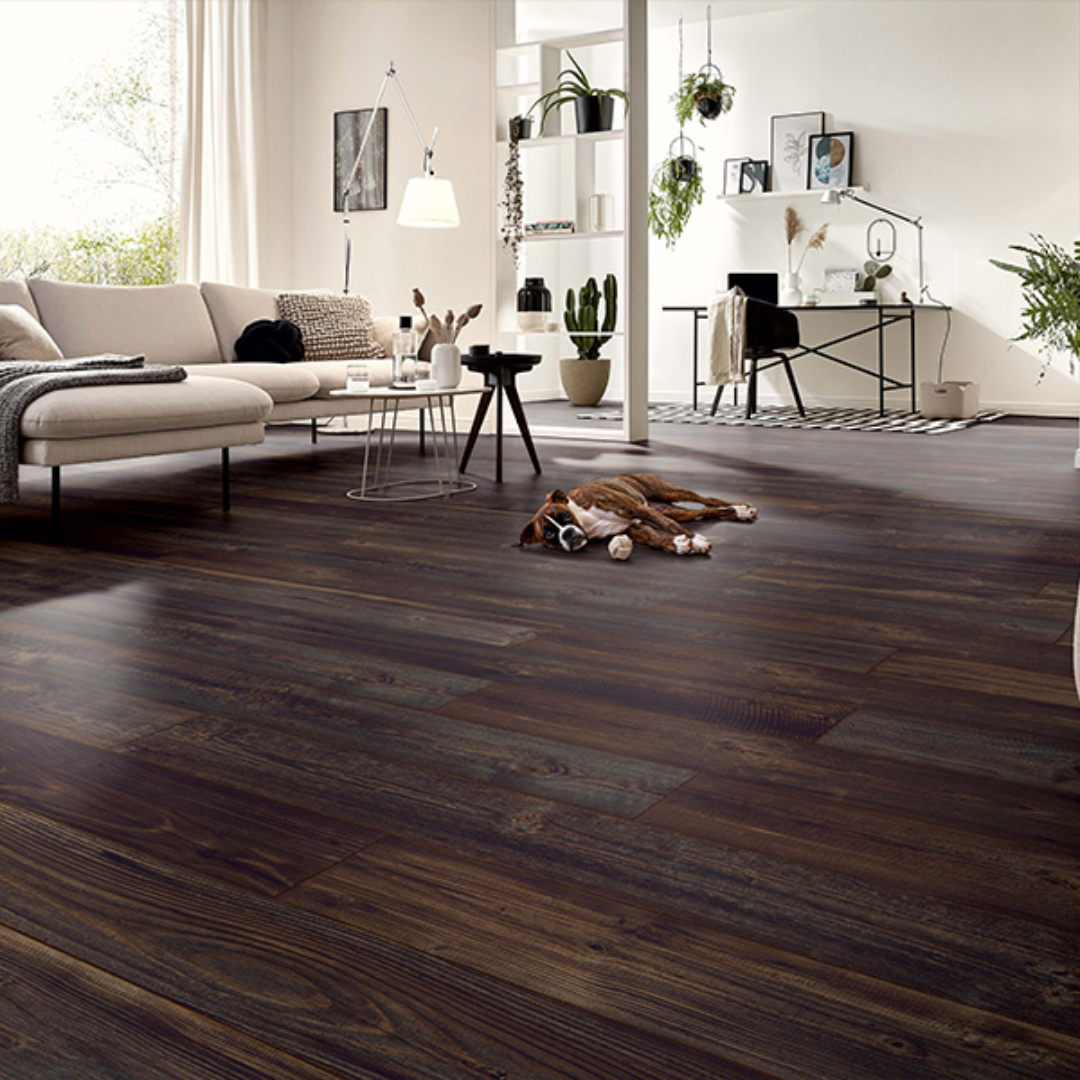
The best thing I did was put down a large area rug in my living room and a runner in the hallway. Not only did they add warmth and style, but they dramatically reduced how often I needed to clean. If you’re going dark, plan for rugs and a good daily cleaning routine from the start.
Moisture, Pets, and Long-Term Care for Dark Laminate
Moisture is laminate’s biggest enemy, and I treat it seriously. I clean up spills immediately and never use a soaking wet mop. I use a spray bottle with a laminate-safe cleaner and a barely damp microfiber pad, which keeps the floors looking great without risking water damage to the core.
My dog has been harder on the floors than I expected. His nails left some light surface scuffs over time, though nothing that’s visible from a normal standing height. Keeping his nails trimmed regularly and placing rugs in his favorite spots has helped protect the finish considerably.
For long-term care, avoid steam mops entirely. I made that mistake once and the plank edges swelled slightly in one corner. Fortunately it was in a low-visibility spot, but it was a good lesson. Stick to dry or barely damp cleaning methods, and your dark laminate will stay looking sharp for many years to come.

Does dark laminate make a room look smaller?
It can, especially in rooms with limited natural light. In my experience, the key is balancing dark floors with lighter walls and plenty of lighting. I kept my walls a warm off-white and added floor lamps, which made a big difference. Dark floors add drama and richness without shrinking a space if you style around them thoughtfully.
Is dark laminate flooring good for homes with pets?
Yes, it holds up reasonably well. The wear layer resists scratches better than real hardwood. My dog has left some light marks over time, but nothing dramatic. I recommend keeping pet nails trimmed and using rugs in high-activity areas. Wipe up any accidents immediately since moisture is laminate’s biggest vulnerability with pets around.

How long does dark laminate flooring last?
Good quality laminate can last 15 to 25 years with proper care. Mine is three years in and still looks great. The key is avoiding excess moisture, using the right cleaning products, and protecting high-traffic areas with rugs. Unlike real hardwood, laminate cannot be refinished, so surface care from day one really does matter.
Is dark laminate flooring hard to keep clean?
Honestly, yes, it requires more frequent attention than lighter floors. Dust, hair, and footprints are very visible. I do a quick dry mop every couple of days and a damp clean weekly. It sounds like a lot, but it becomes routine fast. Area rugs help enormously by reducing how much debris lands on the open floor surface daily.

Can I install dark laminate in a kitchen or bathroom?
Standard laminate is not ideal for bathrooms due to moisture risk. In kitchens, it can work if you’re careful about spills and use a water-resistant or waterproof laminate product. I have it in my kitchen and it’s been fine, but I wipe spills immediately. For bathrooms, I’d suggest luxury vinyl plank instead since it handles moisture much more reliably.
How much does dark wood laminate flooring cost overall?
Budget around $3 to $6 per square foot for quality dark laminate, plus $1.50 to $3 per square foot for professional installation. Don’t forget underlayment, transition strips, and baseboards in your estimate. I spent around $2,800 total for 600 square feet installed, which felt very reasonable compared to real hardwood quotes I received for the same space.
Related Posts: