When I decided to upgrade my dining room two years ago, I wanted flooring that felt special enough for dinner parties but durable enough for daily family meals. After months of research and living with my choice, I can confidently say that bamboo flooring was the perfect decision. The warm tones and natural elegance transformed my dining room from a forgotten space into the heart of our home where we actually want to spend time. Let me walk you through everything I learned.
Choosing the Right Bamboo Style for Formal Dining
I initially gravitated toward horizontal bamboo because I loved seeing the natural node patterns and grass grain. However, my installer convinced me that strand-woven bamboo would better handle the heavy table and chairs I’d be dragging around. Strand-woven is created by compressing bamboo fibers under extreme pressure, making it significantly harder than traditional oak. This was crucial for a dining room where furniture gets moved constantly.
The color selection process took weeks because I wanted something that would complement both my existing cherry table and the lighter modern chairs I planned to buy. I ultimately chose a carbonized bamboo in a medium amber tone that bridges traditional and contemporary styles beautifully. Carbonization is a heat treatment process that darkens bamboo naturally without stains, creating rich caramel hues that add warmth without overwhelming the space.
I also had to decide between smooth and hand-scraped finishes. The hand-scraped option adds texture and character while hiding minor scratches from chair legs, which seemed practical for a dining room. But I went with a smooth finish because I wanted the elegance of a polished surface that reflects light from my chandelier. The smooth bamboo creates a more formal atmosphere that suits the room’s purpose perfectly.
Installation Considerations for Dining Spaces
My dining room had old oak flooring that we removed completely before installing the bamboo. This gave us the opportunity to level the subfloor properly, which my contractor emphasized was essential. Bamboo can be sensitive to uneven surfaces, and with a heavy dining table sitting in one spot, any imperfections would eventually telegraph through. We spent an extra day on prep work that has paid off with a perfectly flat, stable floor.
I chose floating bamboo planks with a click-lock system rather than glue-down or nail-down installation. This method allows the floor to expand and contract naturally with seasonal humidity changes, which is important in a formal dining room where you want to avoid gaps appearing between boards. The floating installation also meant we finished the project in just one weekend, minimizing disruption to our household.
Acclimation was more important than I realized. We brought the bamboo planks into the dining room a full week before installation and stacked them with spacers between each box. This allowed the bamboo to adjust to the room’s temperature and humidity levels. My installer used a moisture meter to verify the bamboo had reached equilibrium with the space. Skipping this step can lead to buckling or gaps later, so patience here was crucial.

How Bamboo Handles Dining Room Challenges
I worried about scratches from chair legs, especially since we use our dining room daily, not just for special occasions. After two years, I can report that the strand-woven bamboo has held up remarkably well. I did add felt pads to all chair and table legs immediately after installation, which has been my best defense against scratches. The few minor marks that have appeared blend into the natural grain pattern beautifully.
Spills happen constantly in a dining room, from knocked-over wine glasses to serving dish drips. The factory-applied aluminum oxide finish on my bamboo has proven highly resistant to moisture and staining. I keep a microfiber cloth handy and wipe up spills as they happen. Even when red wine sat for 20 minutes during a dinner party mishap, it cleaned up completely without leaving a mark or causing any swelling.
Temperature and sunlight were concerns since my dining room has large west-facing windows. I installed UV-filtering window treatments that I close during peak afternoon sun to prevent fading. After two years, I’ve noticed only the slightest color variation in the most exposed areas. The bamboo’s natural color variations help disguise any subtle fading that has occurred. A friend with engineered hardwood in her dining room has experienced much more noticeable sun damage.
Creating the Right Ambiance with Bamboo
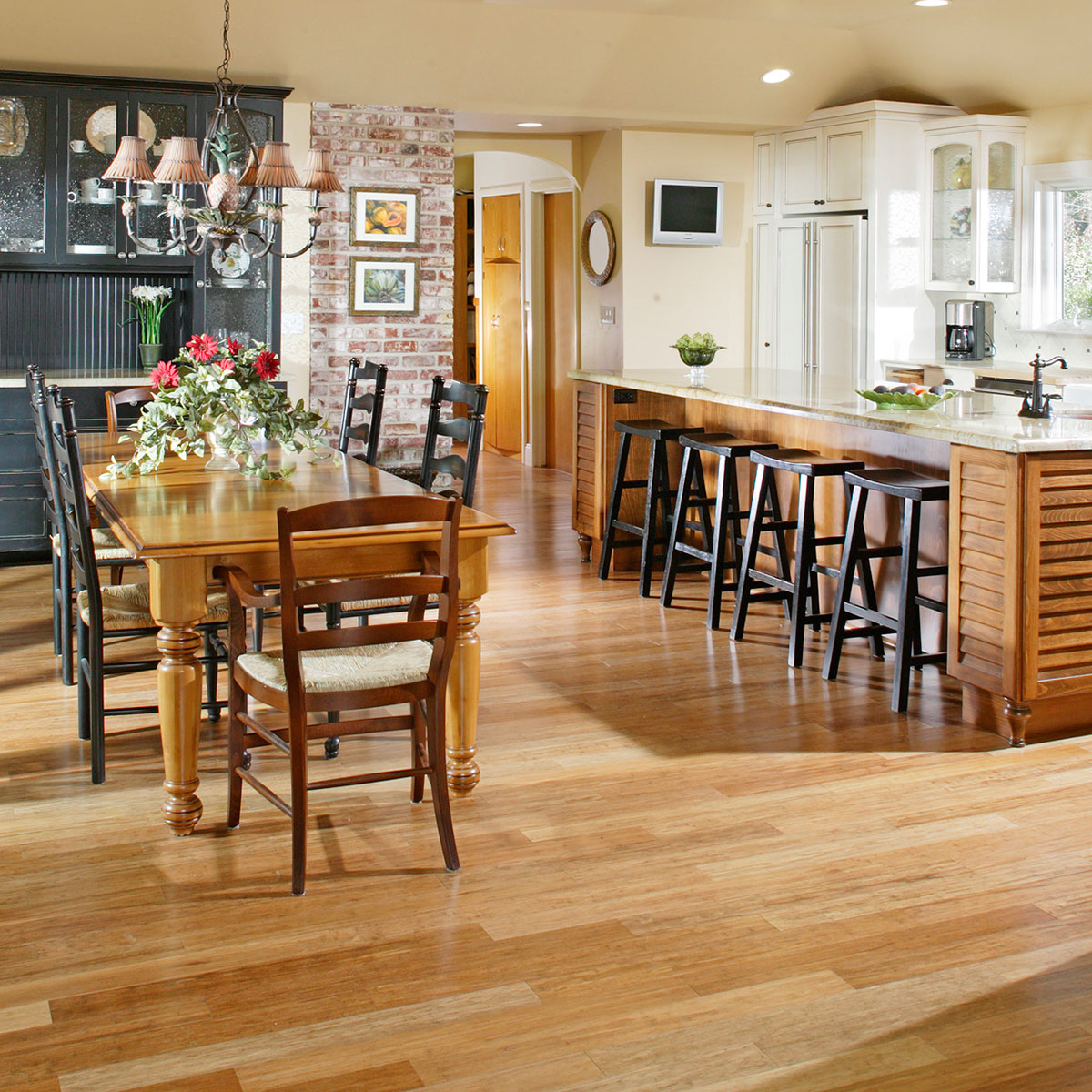
The natural warmth of bamboo completely changed the feel of my dining room. My previous oak floor was beautiful but felt heavy and traditional. The bamboo has a lighter, more contemporary energy while still maintaining elegance suitable for formal dinners. The honey tones catch candlelight and chandelier reflections in a way that makes evening meals feel special and intimate.
I paired the medium-toned bamboo with gray-blue walls, creating a sophisticated contrast that guests always comment on. The warm floor grounds the cooler wall color, preventing the room from feeling cold or sterile. I’ve also layered a large wool area rug under the dining table, which adds another textural element while protecting the high-traffic zone where chairs slide in and out most frequently.
The grain patterns in bamboo create subtle visual interest without being busy or distracting. Each plank has slightly different striations and occasional darker accent lines that make the floor look organic and alive. This natural variation means the floor doesn’t look manufactured or monotonous. During dinner parties, the bamboo provides a beautiful backdrop that enhances the overall atmosphere without competing for attention with table settings or decor.
Maintenance in a High-Traffic Social Space
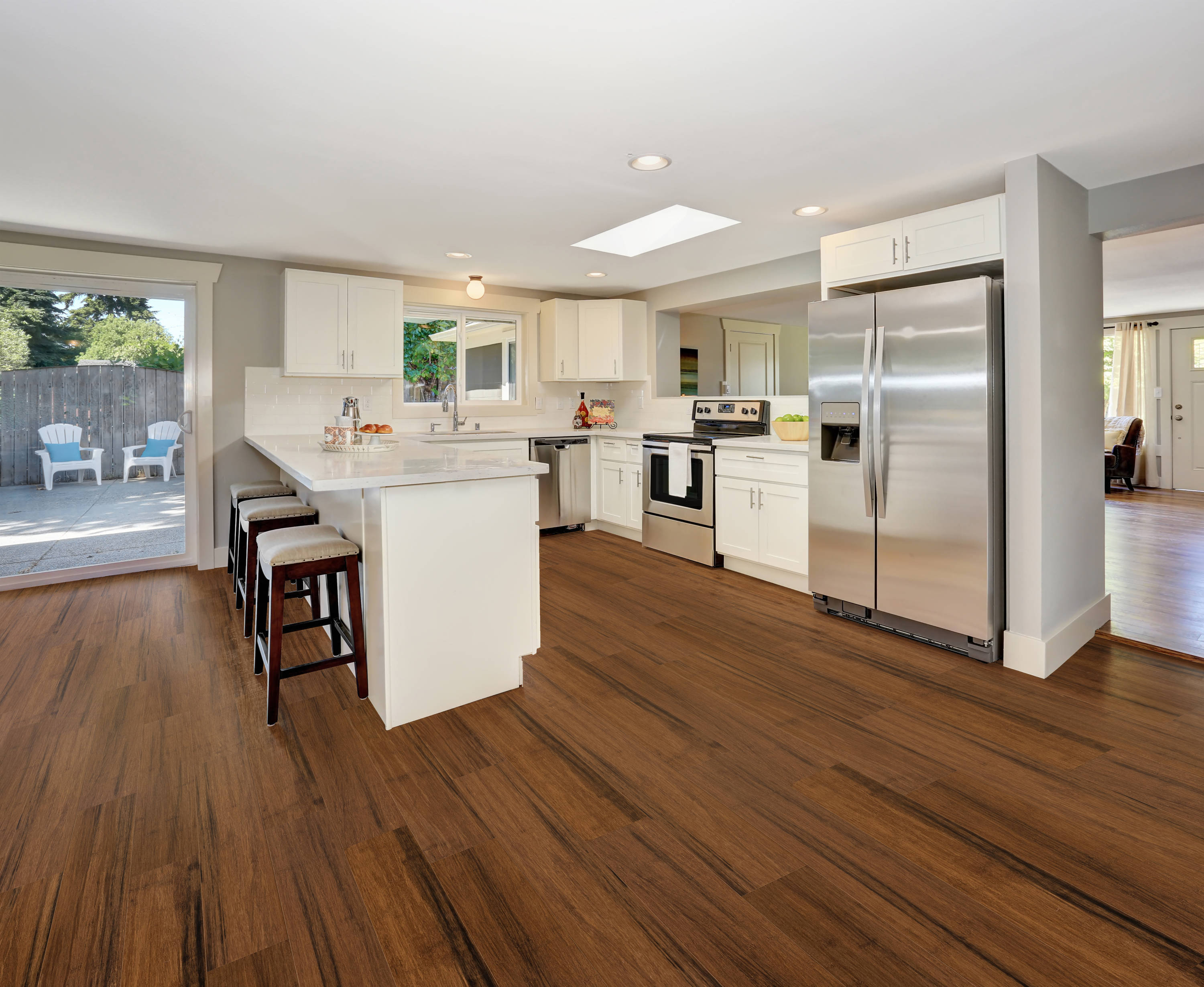
My daily maintenance routine is incredibly simple. I sweep or vacuum after meals to remove crumbs and dirt before they get ground into the finish. This takes maybe five minutes but prevents the abrasive action of particles acting like sandpaper under chair legs. For deeper cleaning, I use a barely damp microfiber mop with a pH-neutral bamboo floor cleaner once a week.
I learned the hard way not to use all-purpose cleaners on bamboo. After a dinner party, my helpful mother-in-law mopped with her favorite multipurpose spray, which left a hazy film on the floor. I had to use a specialized bamboo floor cleaner to remove the residue. Now I keep only approved cleaning products in the dining room and politely but firmly guard my floors from well-meaning helpers.
Every six months, I apply a bamboo floor refresher that restores shine and adds a thin protective layer. This product is different from heavy wax or polyurethane, just a light treatment that takes about 30 minutes to apply with a microfiber mop. Between this and the annual furniture pad replacement, my maintenance costs have been minimal. The bamboo still looks as good as installation day, which feels like a great return on my initial investment.

Design Flexibility and Future Updates
One aspect I appreciated was how the bamboo installation allowed for easy transitions to adjacent rooms. We have the bamboo extending from the dining room into the hallway, creating a cohesive flow. The transitions to carpet in the living room and tile in the kitchen are handled with slim metal reducers that look intentional and polished rather than awkward. This continuity makes the whole main floor feel more spacious.
I chose a horizontal plank installation pattern that runs parallel to the longest wall, which makes the dining room appear larger. The linear flow draws the eye through the space in a way that a perpendicular or diagonal pattern wouldn’t have achieved. The plank width I selected, 5 inches, strikes a balance between traditional and contemporary aesthetics, working with both my existing furniture and future updates I might make.
Knowing I can refinish the bamboo gives me confidence for the long term. While I don’t expect to need refinishing for at least another decade, it’s reassuring that the option exists. If I ever want to change the color or update the finish, I can sand and restain just like traditional hardwood. This longevity and adaptability mean the bamboo can evolve with my changing design preferences over the years.
Is bamboo flooring durable enough for heavy dining furniture?
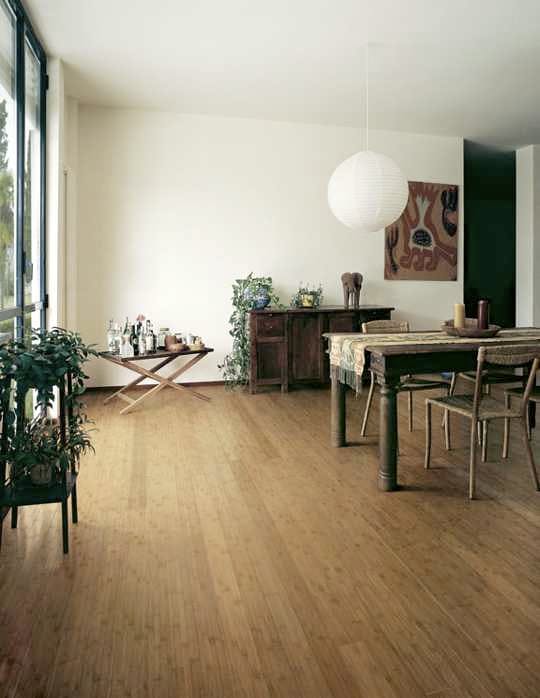
Yes, especially strand-woven bamboo. Mine has supported a solid cherry table and eight chairs for two years without any denting or permanent impressions. The Janka hardness rating of strand-woven bamboo exceeds red oak at over 3,000, making it extremely durable. Using furniture pads prevents any marks from forming during movement and rearrangement.
How does bamboo compare to hardwood for formal dining rooms?
Bamboo offers similar elegance at a lower price point. I paid about 40% less than comparable oak would have cost. The appearance is just as sophisticated, and guests often assume it’s exotic hardwood. Bamboo’s sustainability was also important to me, as it matures in 3-5 years versus decades for traditional hardwoods.

Will bamboo flooring warp from humidity in a dining room?
Properly installed bamboo handles normal humidity well. I live in a humid climate and haven’t experienced any warping. The key is maintaining indoor humidity between 30-50% and ensuring proper acclimation before installation. Engineered bamboo is even more stable than solid if humidity fluctuations concern you in your specific climate.
Can I use area rugs over bamboo in the dining room?
Absolutely. I have a large wool rug under my dining table that protects the bamboo and adds visual warmth. I use a non-slip rug pad designed for hardwood to prevent the rug from sliding and to allow air circulation underneath. Just avoid rubber-backed rugs that can trap moisture or leave marks on the finish.
How do I prevent chair scratches on bamboo floors?
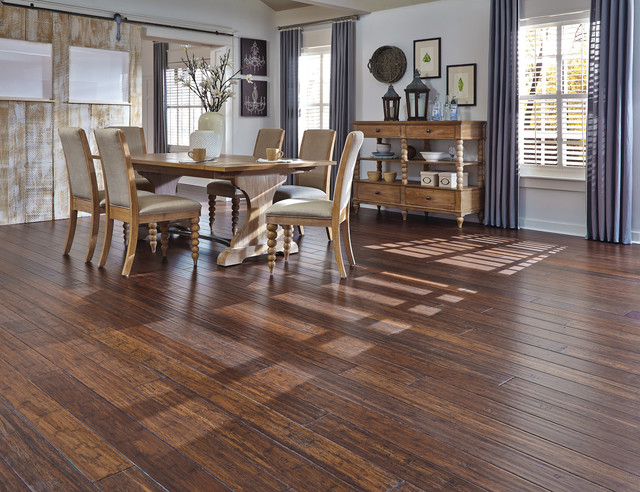
Felt pads on all furniture legs are essential and cheap insurance. I replace mine twice a year as they wear down or collect debris. For dining chairs that move constantly, I use the thicker felt pads designed specifically for high-traffic furniture. This simple step has kept my bamboo virtually scratch-free despite daily use.
Does bamboo flooring work with both modern and traditional dining furniture?
Yes, bamboo is remarkably versatile. My traditional cherry table looks elegant on the warm bamboo tones, while my modern chairs create an interesting style mix. The natural material bridges design aesthetics beautifully. Choosing the right bamboo color and finish is key, darker carbonized bamboo reads more traditional while natural blonde feels contemporary.

Related Posts: