When I renovated my laundry room last year, everyone told me to stick with vinyl or ceramic tile for moisture resistance. But I was tired of cold, hard floors in a space where I spend hours each week doing laundry. After researching moisture-resistant bamboo options and taking careful precautions, I installed engineered bamboo flooring in my laundry room. Eighteen months later, it’s still performing beautifully, and the warm, comfortable surface has transformed my least favorite chore into a more pleasant experience.
Choosing the Right Bamboo for Moisture-Prone Spaces
I learned immediately that not all bamboo is suitable for laundry rooms. Solid bamboo would be risky in this environment, so I chose engineered bamboo with a waterproof core specifically rated for moisture-prone areas. The construction features a bamboo veneer over a waterproof HDF or WPC core that won’t swell if water seeps through. This engineered approach provides the beauty of bamboo with significantly better moisture stability.
The bamboo type matters tremendously for durability. I selected strand-woven bamboo because it’s the hardest option available, with a Janka rating over 3,000. Laundry rooms see heavy appliances, dropped detergent bottles, and constant foot traffic, so I needed maximum durability. Traditional horizontal or vertical bamboo would be too soft for this application. The compressed strand-woven construction has handled everything I’ve thrown at it without denting or scratching.
Color choice was strategic for hiding inevitable wear. I went with a medium carbonized bamboo in warm honey tones rather than light natural or very dark options. This mid-tone color disguises water spots, detergent drips, and lint better than extremes would. The carbonization process also adds character with natural color variations that make the floor more forgiving of imperfections. This practical consideration has made daily maintenance much easier than lighter floors would require.
Installation Precautions for High-Moisture Areas
My contractor insisted on waterproof underlayment beneath the bamboo, and I’m glad I listened. We used a premium underlayment with a moisture barrier specifically designed for wet areas. This layer protects the bamboo from any moisture that might come through the concrete slab below. In laundry rooms where leaks can happen, this extra protection provides crucial insurance against water damage from underneath.
We used the floating floor installation method with click-lock planks rather than glue-down. This allows the floor to expand and contract naturally with humidity changes, which are significant in laundry rooms. The perimeter expansion gaps we left around all walls, covered by baseboards and quarter-round, give the floor room to move without buckling. My contractor explained that rigid glue-down installation could cause problems when bamboo responds to moisture fluctuations.
Sealing around appliances and plumbing penetrations was critical. We used flexible caulk designed for wet areas everywhere the floor meets walls, around the washer and dryer connections, and especially around the utility sink. These sealed transitions prevent water from seeping under the bamboo during the inevitable spills and overflows that happen in laundry rooms. Taking time with these details during installation has prevented moisture problems over the past 18 months.
Managing Moisture and Preventing Water Damage
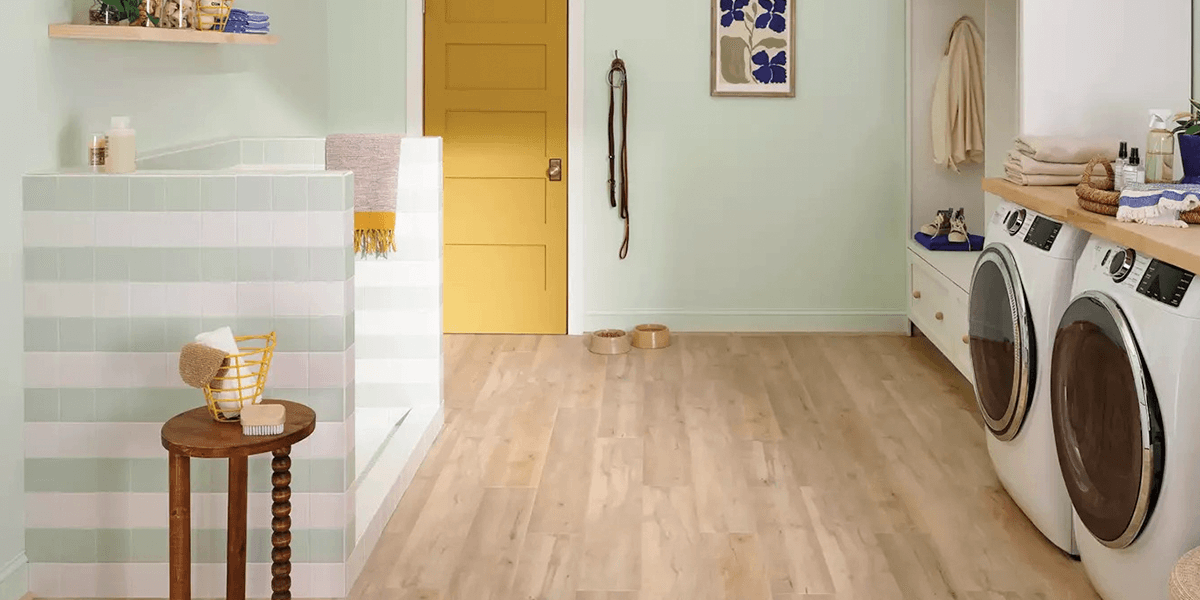
My biggest concern before installation was water damage, so I developed strict moisture management habits. I keep absorbent mats in front of the washer and sink where water exposure is most likely. These mats catch drips and splashes before they reach the bamboo. I shake them out daily and wash them weekly, preventing moisture from sitting against the floor surface for extended periods.
I had a small washer overflow incident six months after installation that really tested the bamboo’s moisture resistance. About two gallons of water spread across the floor before I caught it. I immediately used towels to soak up the water and ran a fan in the room for 24 hours. The engineered bamboo showed absolutely no swelling, warping, or discoloration. This real-world test proved that quality moisture-resistant bamboo can handle laundry room accidents when addressed promptly.
Humidity control is ongoing in my laundry room. I always run the exhaust fan when using the dryer and leave the door open afterward to let moisture dissipate. I installed a hygrometer to monitor humidity levels, keeping them between 35-55% year-round with a dehumidifier in summer. This climate control protects not just the bamboo but also prevents musty odors and extends appliance life. The effort is minimal but makes a real difference in floor longevity.

Comfort and Practical Benefits
The comfort difference between bamboo and my old vinyl is dramatic. Standing on the cushioned bamboo surface while folding laundry or treating stains is far easier on my feet and back than hard tile would be. The slight give in the bamboo reduces fatigue during the long stretches I spend doing laundry. This ergonomic benefit alone justifies choosing bamboo over traditional laundry room flooring options.
Temperature is another huge factor. Bamboo stays warm underfoot even in winter, unlike ceramic tile that feels like ice. My laundry room is on an exterior wall, and the old vinyl was always cold. The bamboo’s natural insulation properties keep the floor comfortable year-round. I now often walk barefoot in the laundry room, something I never did before. This thermal comfort makes the utilitarian space feel more welcoming.
The acoustic properties have been surprisingly beneficial. Bamboo dampens sound better than hard surfaces, so the washer and dryer vibrations don’t echo through the house as much. The floor also absorbs the sound of my footsteps and items being dropped, creating a quieter environment. Since my laundry room is near living spaces, this noise reduction improves the whole house’s atmosphere when I’m doing laundry.

Maintenance Routines That Protect Investment
Daily maintenance in my laundry room focuses on preventing moisture accumulation. After each laundry session, I wipe up any water splashes immediately with a microfiber cloth. This takes maybe 30 seconds but prevents water from sitting on the bamboo surface. I also sweep or vacuum after folding laundry to remove lint and debris that could scratch the finish when walked on.
Weekly cleaning involves a barely damp mop with pH-neutral bamboo floor cleaner. I emphasize “barely damp” because excess water is the enemy in any moisture-prone area. I wring my mop out thoroughly, almost to the point of being dry, then clean the entire floor quickly. The whole process takes less than five minutes for my 8×10 laundry room. I follow with a dry microfiber mop to absorb any residual moisture.
Every six months, I apply a bamboo floor refresher that adds a protective layer and restores shine. This is more frequent than I treat bamboo in other rooms because the laundry room sees more moisture exposure. The refresher product I use is specifically formulated to work on pre-finished bamboo, adding protection without building up a thick coating. This maintenance routine has kept my floor looking nearly new despite constant use in challenging conditions.
Design Impact on a Functional Space
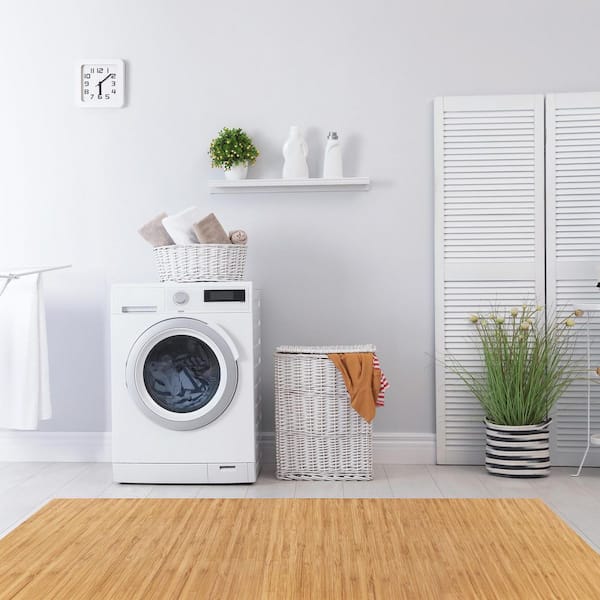
Installing beautiful bamboo flooring transformed my laundry room from a purely functional space into one I actually enjoy being in. The warm honey tones create a pleasant atmosphere that makes doing laundry less of a chore. I paired the bamboo with white cabinets and sage green walls, creating a fresh, spa-like environment. This elevation of the laundry room’s aesthetics has genuinely improved my attitude toward household chores.
The bamboo allowed me to extend my home’s design aesthetic into the laundry room rather than treating it as separate. My main living areas have warm wood tones, and continuing that theme into the laundry room creates visual flow and cohesion. When the laundry room door is open, which is most of the time, the bamboo floor reads as part of the home’s overall design rather than a jarring departure.
I added personal touches that the beautiful floor inspired. I hung artwork, installed decorative storage baskets, and even added a small plant on the counter. With the old vinyl, I never bothered making the space attractive because the floor was so utilitarian. The bamboo gave me a foundation worthy of these extra efforts, turning a neglected room into a space I’m proud to show visitors when giving home tours.

Is bamboo really durable enough for laundry room conditions?
Engineered strand-woven bamboo definitely is. Mine has handled 18 months of heavy use including appliance weight, dropped items, and moisture exposure without problems. The key is choosing waterproof engineered bamboo rated for wet areas with a Janka hardness over 3,000. Solid bamboo or lower-quality products wouldn’t hold up, but premium moisture-resistant bamboo works beautifully.
What happens if the washing machine leaks on bamboo flooring?
I had a minor overflow and cleaned it up immediately with no damage. Quality waterproof bamboo can handle water exposure if you act quickly, within a few hours. The waterproof core prevents swelling that would ruin solid bamboo. Major flooding sitting for days would be problematic, but normal laundry room accidents are manageable with prompt response.
How does bamboo compare cost-wise to vinyl for laundry rooms?
I paid about $4-5 per square foot for quality engineered bamboo versus $2-3 for decent vinyl. For my small 80 square foot laundry room, the difference was roughly $200. The comfort and aesthetic benefits justified the extra cost for me. If budget is extremely tight, vinyl makes sense, but bamboo is worth it if you can afford it.
Will detergent and bleach damage bamboo flooring?
Not if cleaned up promptly. I’ve spilled both without staining issues. The protective finish on pre-finished bamboo resists chemical damage from normal laundry products. I don’t deliberately test it, but accidental spills wiped up within an hour haven’t caused problems. Avoid leaving harsh chemicals sitting on the surface for extended periods.
Can I install bamboo flooring myself in a laundry room?
Possibly, if you’re handy. The click-lock system is DIY-friendly. However, the waterproofing details around appliances and plumbing require precision. I hired a professional specifically for those critical sealing steps. If you have DIY experience and pay careful attention to moisture barriers and caulking, it’s doable. Otherwise, professional installation provides important peace of mind.
Does bamboo make sense in laundry rooms with concrete floors?
Yes, that’s exactly my situation. The bamboo floats over the concrete with waterproof underlayment between. You need a moisture barrier to prevent concrete dampness from affecting the bamboo. My contractor tested the slab’s moisture levels before installation to ensure it was dry enough. Properly installed, bamboo works beautifully over concrete in laundry rooms.

Related Posts: