My basement used to be the room nobody wanted to spend time in. Cold concrete floors, low light, and a general feeling of neglect made it feel more like storage than living space. When I decided to finally do something about it, laminate flooring was the option that kept coming up as the practical choice for below-grade spaces, but I had real concerns about moisture and durability.
After researching thoroughly and going through the entire installation process myself, I now have a basement my family actually chooses to hang out in. Here’s everything that guided my decisions and what I’d tell anyone starting this project today.
Why Laminate Can Work in a Basement When You Choose Carefully
My first instinct was to rule laminate out for the basement entirely because of moisture concerns. Basements are notorious for humidity fluctuations and occasional water intrusion, and traditional laminate with a wood-fiber core can swell and buckle when moisture gets underneath it. But modern laminate technology has changed considerably, and waterproof core options now exist specifically for challenging environments like basements.
The key distinction I learned early is the difference between water-resistant and waterproof laminate. Water-resistant products can handle surface spills if cleaned up quickly, but they’re still vulnerable to prolonged moisture exposure and high humidity.
Waterproof laminate uses a solid plastic or composite core rather than a wood-fiber HDF core, making it genuinely impervious to moisture damage from below or above.
I tested my basement for active moisture intrusion before choosing any flooring material. I taped plastic sheets to several spots on the concrete floor, sealed the edges, and checked them after 48 hours.
Finding no significant condensation under the plastic gave me confidence that my basement was dry enough for a quality waterproof laminate installation with proper preparation and underlayment.
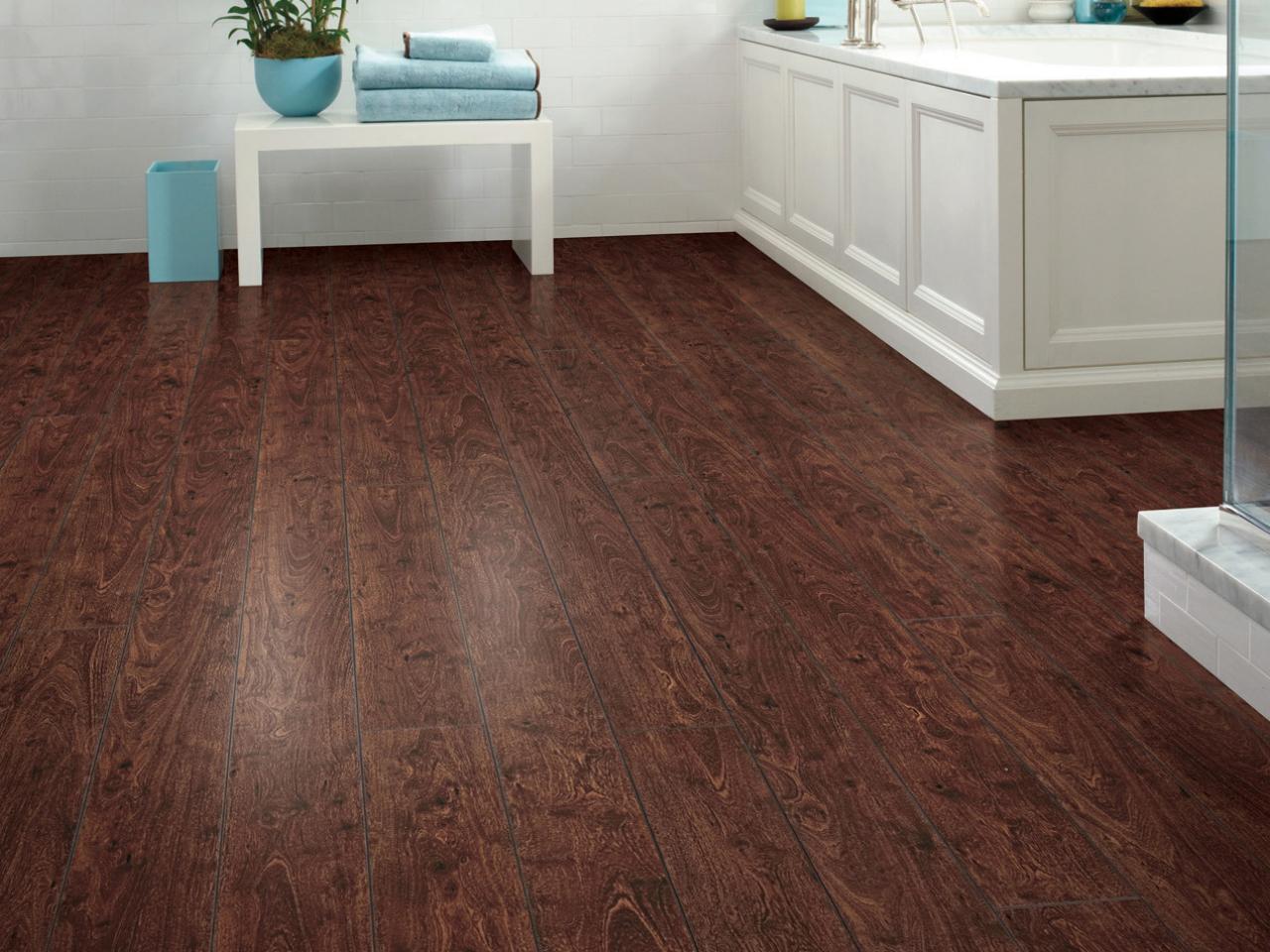
Light-Toned Laminate Ideas for Brightening a Dark Basement
Basements typically receive limited natural light, and flooring color plays a meaningful role in how bright or cave-like the finished space feels. When I was choosing my laminate, I deliberately steered toward lighter tones after testing samples under my basement’s artificial lighting and seeing how dramatically different each option looked compared to a showroom setting.
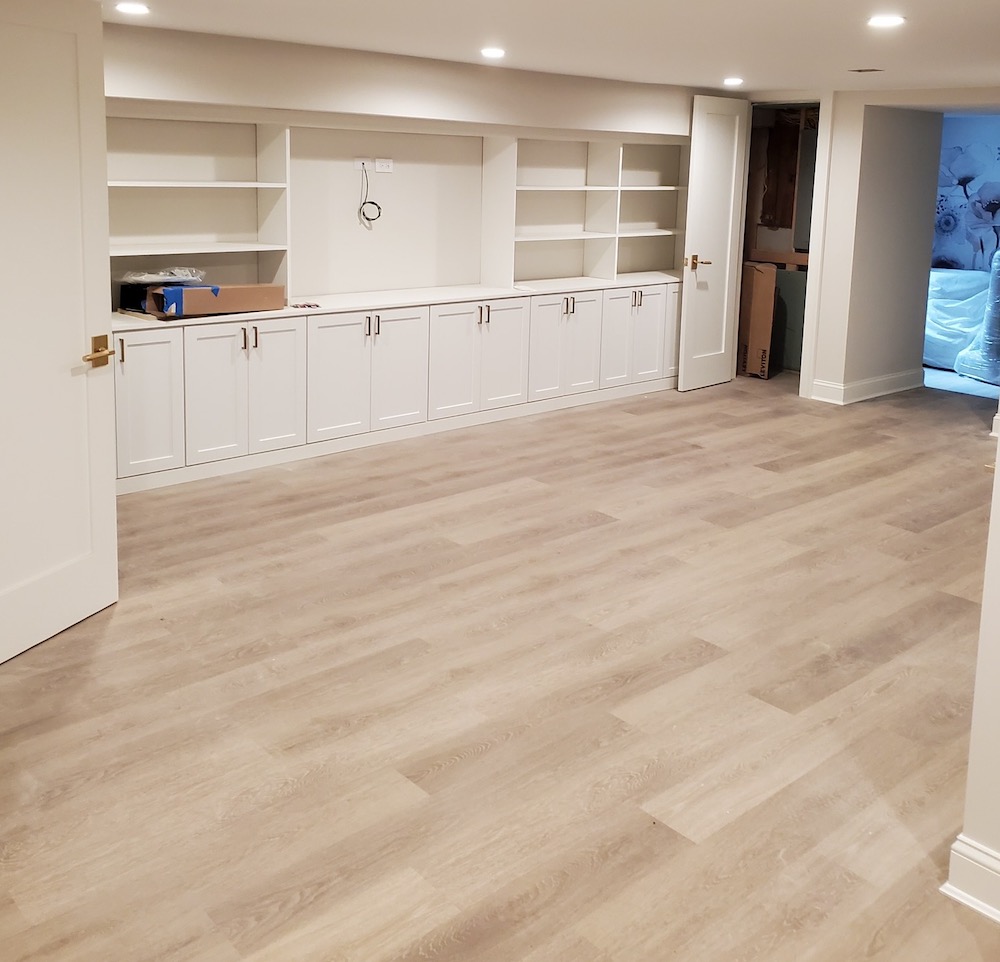
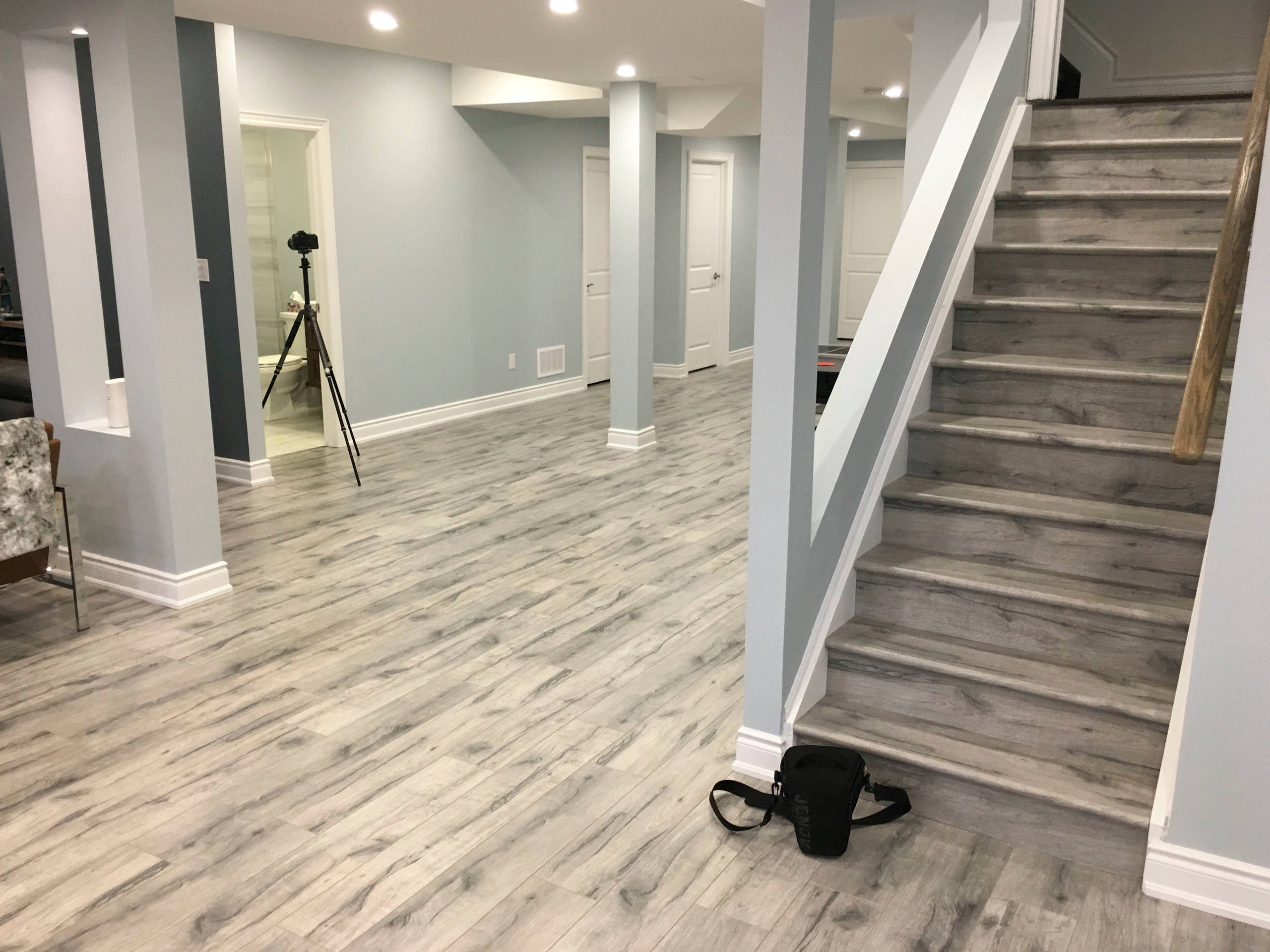
I ultimately went with a pale ash-toned laminate with subtle gray undertones that reflected light beautifully under my recessed ceiling lights. The floor made an immediate and noticeable difference in how open and inviting the basement felt, even before I added furniture or decor. Several friends who visited after the renovation commented that it didn’t feel like a basement anymore, which was exactly what I had been hoping to hear.
Light wide-plank options in natural oak or blonde maple tones are particularly effective in low-light basement spaces. The wider the plank, the fewer seam lines interrupt the floor surface, which creates a more expansive, open visual effect. If your basement doubles as a home office, gym, or playroom where you spend significant time, investing in a lighter tone pays dividends in how energizing and comfortable the space feels daily.
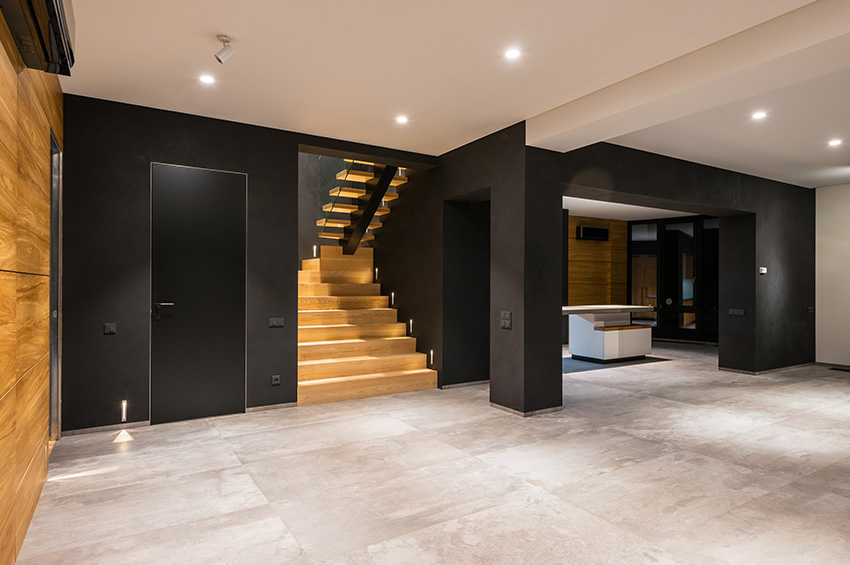
Darker, Moodier Laminate Ideas for Basement Entertainment Rooms
Not everyone wants their basement to feel bright and airy. If your basement is a dedicated home theater, bar area, or entertainment space, a darker laminate can create exactly the rich, immersive atmosphere you’re after. I considered this direction seriously for my basement before deciding the multi-use nature of my space called for something lighter.
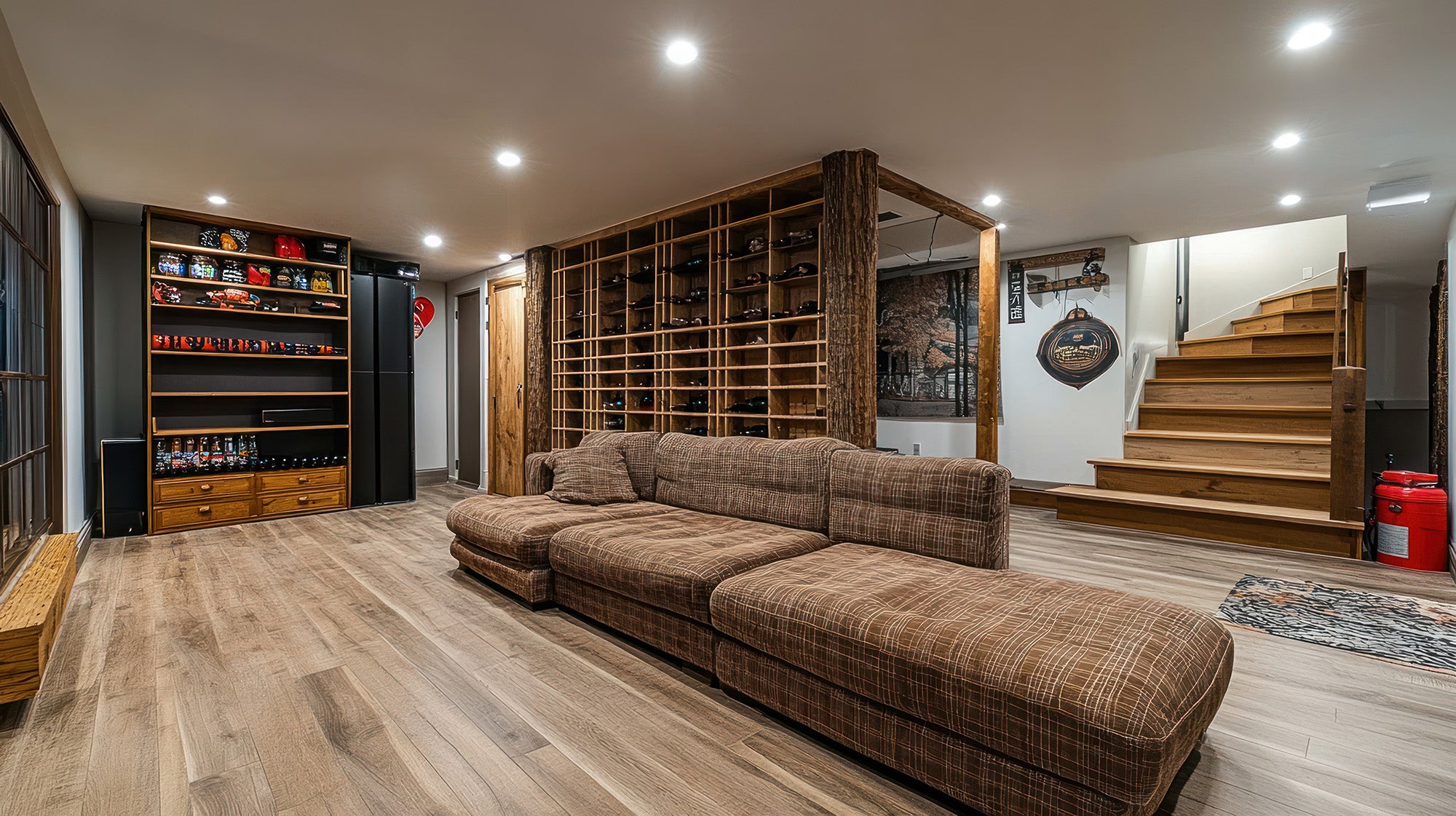
Deep walnut tones, dark espresso finishes, and rich chocolate brown laminates all work beautifully in basement entertainment spaces where ambient lighting is controlled and the goal is creating a cocooning, cinematic feel. Paired with darker walls, leather seating, and warm accent lighting, a dark laminate floor becomes an intentional design choice rather than just a background element.
The practical consideration with dark laminate in a basement is the same as anywhere else: it shows dust, pet hair, and footprints more readily than lighter options. In an entertainment-focused space where you’re not tracking in as much outdoor debris, this is more manageable. A quick dry mop before guests arrive keeps things looking polished. Just plan your cleaning routine around the reality of what a dark floor requires before committing to the color.
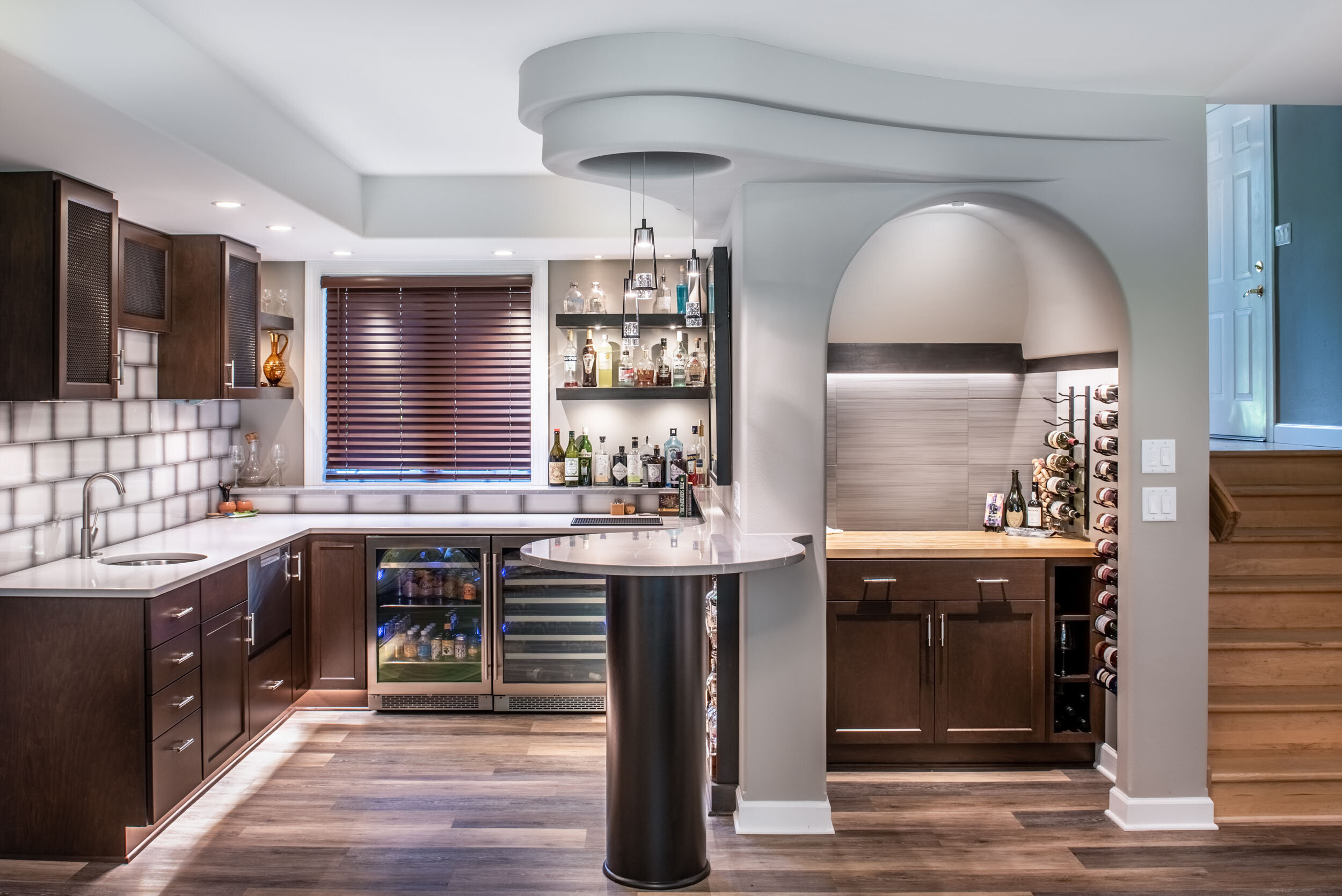
Waterproof Laminate Options That Handle Basement Conditions
Shopping specifically for waterproof laminate rather than just any laminate was a decision I’m glad I made early. The waterproof category has expanded significantly in recent years, and products now exist that combine genuine moisture protection with the realistic wood-look aesthetics that make laminate appealing in the first place.
Products with a WPC (wood plastic composite) or SPC (stone plastic composite) core are the ones to look for when basement moisture is a concern. SPC cores are denser and more dimensionally stable under temperature and humidity fluctuations, making them particularly well-suited to basements where conditions can shift seasonally. I chose an SPC-core product and have been through two full seasonal cycles without any movement, gapping, or buckling.
The attached underlayment that comes pre-adhered to many waterproof laminate products is another feature worth prioritizing. A quality underlayment provides a moisture barrier between the concrete and the laminate, adds cushioning that makes the floor feel warmer and more comfortable underfoot, and helps with sound dampening. In a basement where concrete is the subfloor, these benefits are all meaningful improvements to the daily experience of using the space.
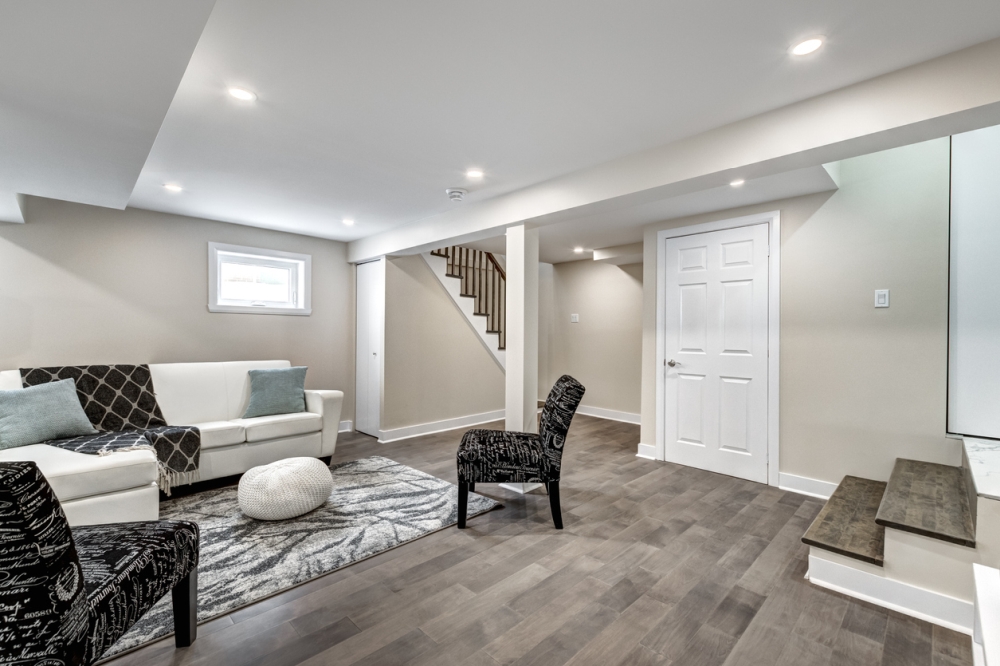
DIY Installation Tips for Basement Laminate That Actually Help
I installed my basement laminate myself over a long weekend, and the experience taught me a lot about what matters and what doesn’t when working below grade. The most important thing I did before touching a single plank was check my concrete subfloor carefully for level. Basements often have sloped or uneven concrete, and laminate installed over significant dips or high spots will flex, squeak, and show problems quickly.
I used a long straightedge across multiple directions of the floor to identify low spots, then filled them with a self-leveling concrete compound. This step added half a day to my project and required waiting overnight for the compound to cure before I could lay flooring. It was the right call. The finished floor feels completely solid without any soft spots or movement anywhere across the entire space.
Leaving an expansion gap around the perimeter of the room is a step that beginners sometimes underestimate. Laminate needs room to expand and contract with temperature and humidity changes, and this matters even more in a basement where seasonal conditions shift. I used plastic spacers to maintain a consistent 3/8 inch gap along all walls, which the baseboards cover completely once installed. Skipping this gap is one of the most common reasons laminate floors buckle near walls.
Finishing Touches That Complete the Basement Laminate Look
The flooring itself is only part of what makes a basement feel finished and intentional. The transitions, trim, and accessories you add around the laminate are what separate a polished result from a project that looks almost done. I learned this on my first room renovation years ago and applied it carefully in my basement from the start.
Matching transition strips at doorways and stair nosings are the details that visitors might not consciously notice but would definitely notice if they were missing or mismatched. I ordered transition strips and stair nosing in the same finish as my laminate from the same manufacturer, which guaranteed a cohesive look throughout. Generic metal transitions in mismatched colors are one of the most common ways a flooring project loses its finished quality.
Large area rugs layered over the laminate served two important purposes in my basement. They added warmth and softness underfoot in the seating area, which laminate over concrete can lack without extra cushioning, and they defined separate zones within the open space. I used one large rug under the seating arrangement and a runner near the bar area, which gave the open basement plan a sense of organization and intentionality that the flooring alone couldn’t provide.
Is laminate flooring a good idea for basements?
It can be, with the right product choice. Standard laminate with a wood-fiber core is risky in basements due to moisture concerns. Waterproof laminate with an SPC or WPC core is specifically designed to handle below-grade conditions. I’ve had waterproof laminate in my basement for over two years without any issues. Test your basement for active moisture before installing any flooring, and always use a quality moisture-barrier underlayment for added protection.
What is the best laminate thickness for a basement floor?
I recommend at least 10mm to 12mm for basement installations. Thicker laminate bridges minor subfloor imperfections better, feels more solid underfoot, and provides better insulation from the cold concrete below. Thinner laminate can feel hollow and cold in a basement environment. The extra cost for thicker planks is genuinely worth it for the improved comfort and performance you get from a floor that will be used as actual living space.

How do I prepare my concrete basement floor before installing laminate?
Check for moisture first using the plastic sheet test. Then inspect the floor for cracks, fill them with concrete patching compound, and address any low spots with self-leveling compound. The floor needs to be clean, dry, and level within 3/16 inch over a 10-foot span for best results. I also recommend sweeping and vacuuming thoroughly before laying underlayment. Good prep work is the single biggest factor in how well laminate performs and lasts in a basement.
Can basement laminate flooring be installed over radiant heating?
Some laminate products are compatible with radiant heating systems, but not all of them. Always check the manufacturer’s specifications before purchasing. Waterproof SPC-core laminates tend to handle the temperature fluctuations of radiant heat better than standard laminate products. Keep floor surface temperatures below 85 degrees Fahrenheit to protect the material. If radiant heat is a priority for your basement, confirm compatibility upfront rather than discovering the issue after the flooring is already installed.
How much does basement laminate flooring typically cost?
Quality waterproof laminate for basements runs roughly $2.50 to $6 per square foot for material. Add $1.50 to $3 per square foot for professional installation, or save that cost with DIY. Don’t forget underlayment, transition strips, and any subfloor leveling materials in your budget. My full basement project came in around $4.50 per square foot all-in for a DIY installation. Compared to carpet or tile, waterproof laminate delivers excellent value for a complete below-grade living space.
How long will laminate flooring last in a basement?
With proper installation and moisture management, quality waterproof laminate can last 15 to 20 years in a basement. The key variables are controlling indoor humidity, cleaning up any spills or water intrusion promptly, and avoiding dragging heavy furniture that can damage the surface. Unlike carpet, laminate won’t trap allergens or odors over time. Individual planks can be replaced if damaged without redoing the entire floor, which makes it a forgiving long-term investment for below-grade living spaces.
Related Posts: