When I decided to finish my basement, I promised myself I wasn’t going to treat it like a second-class space. Too many finished basements feel like an afterthought, with low-grade carpet and bare walls that scream “utility room with a couch.”
I wanted mine to feel like a genuine extension of the rest of my home, and I knew the flooring would set the tone for everything else. After months of research, a few showroom visits, and one very expensive lesson about moisture testing, I found the luxury flooring solutions that transformed my basement into the most-used room in my house.
Why Luxury Flooring in a Basement Is Worth the Investment
The first thing people told me when I mentioned luxury basement flooring was that I was overthinking it. Why spend good money on a space below grade? My answer then is the same as it is now: because I use it every single day. My basement is a family room, a home gym corner, and an occasional guest suite, and treating the flooring as an afterthought would have undermined every other upgrade I made to the space.
Luxury flooring materials also tend to perform better in basement conditions because higher-end products come with better moisture resistance, thicker wear layers, and more advanced locking systems.
Cheap flooring in a basement often means early replacement when moisture or temperature fluctuations take their toll. Spending more upfront on quality usually means not having to redo the project in five years, which is a lesson I’ve learned in other parts of my home the hard way.
There’s also a pure quality-of-life argument that I find compelling. Walking barefoot on a warm, beautifully finished floor feels completely different from walking on cold concrete or thin carpet.
When your basement feels luxurious and comfortable, you actually want to spend time there. For me, that was the whole point of finishing it in the first place, and the flooring was the foundation that made everything else possible.
Luxury Vinyl Plank: The Smartest High-End Choice for Most Basements
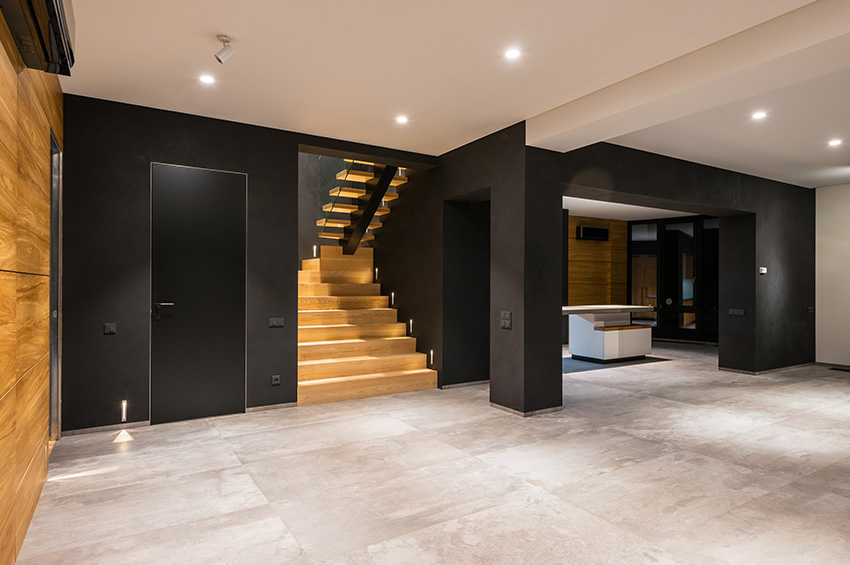
If I had to recommend one luxury flooring option for basements to almost anyone, it would be high-end luxury vinyl plank. I know vinyl doesn’t sound luxurious, but the quality available at the upper end of the market today is genuinely impressive. The wood visuals are convincing, the surface textures are detailed, and the performance in below-grade conditions is unmatched by any other material.
What separates luxury vinyl plank from budget vinyl is immediately apparent in person. Premium products have thicker cores, typically 6mm to 8mm, with attached underlayment for cushioning and sound dampening. The wear layers are thicker, often 20 mils or more, which translates to real durability under heavy daily use. The embossed textures align with the printed grain patterns in a way that budget products don’t bother achieving, and that detail is what makes the material read as authentic.
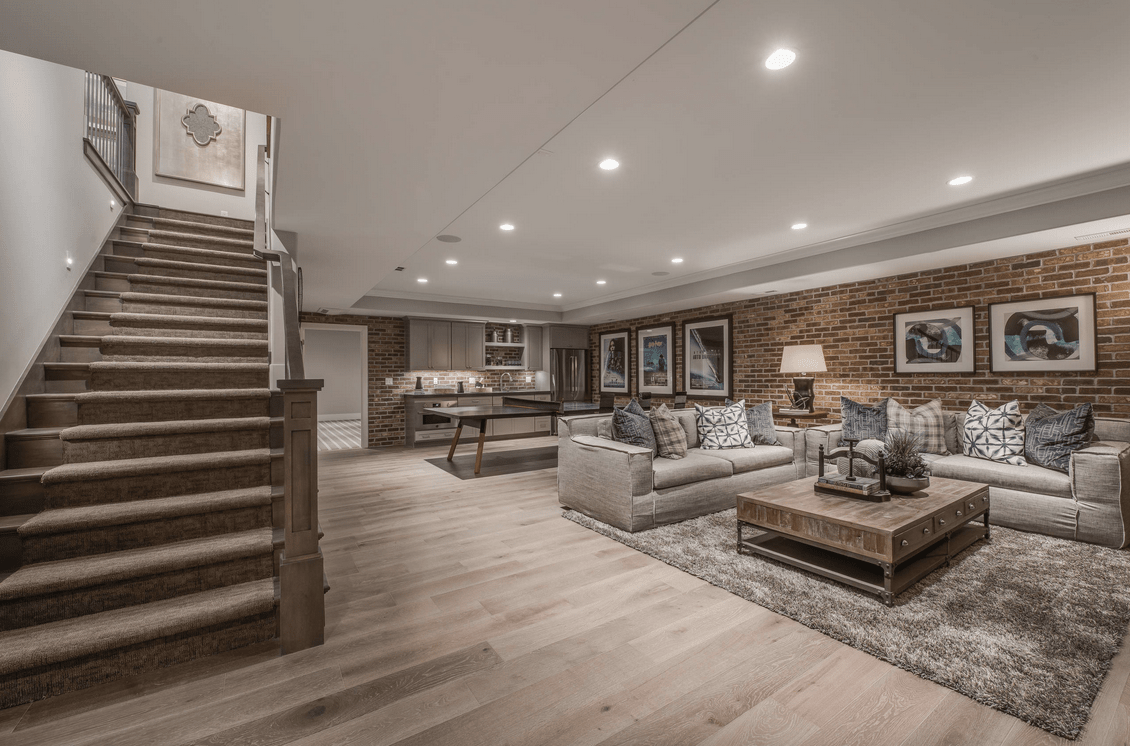
I installed a wide-plank luxury vinyl in a warm walnut tone throughout my basement, and the response from every person who sees it is the same: they assume it’s real wood. The planks are 9 inches wide and the variation in color and grain across the floor creates exactly the kind of richness I was hoping for. Combined with good lighting and quality furniture, the floor makes the entire space feel finished and intentional in a way I’m genuinely proud of.
Porcelain Tile: The Ultimate Luxury Statement in the Right Basement
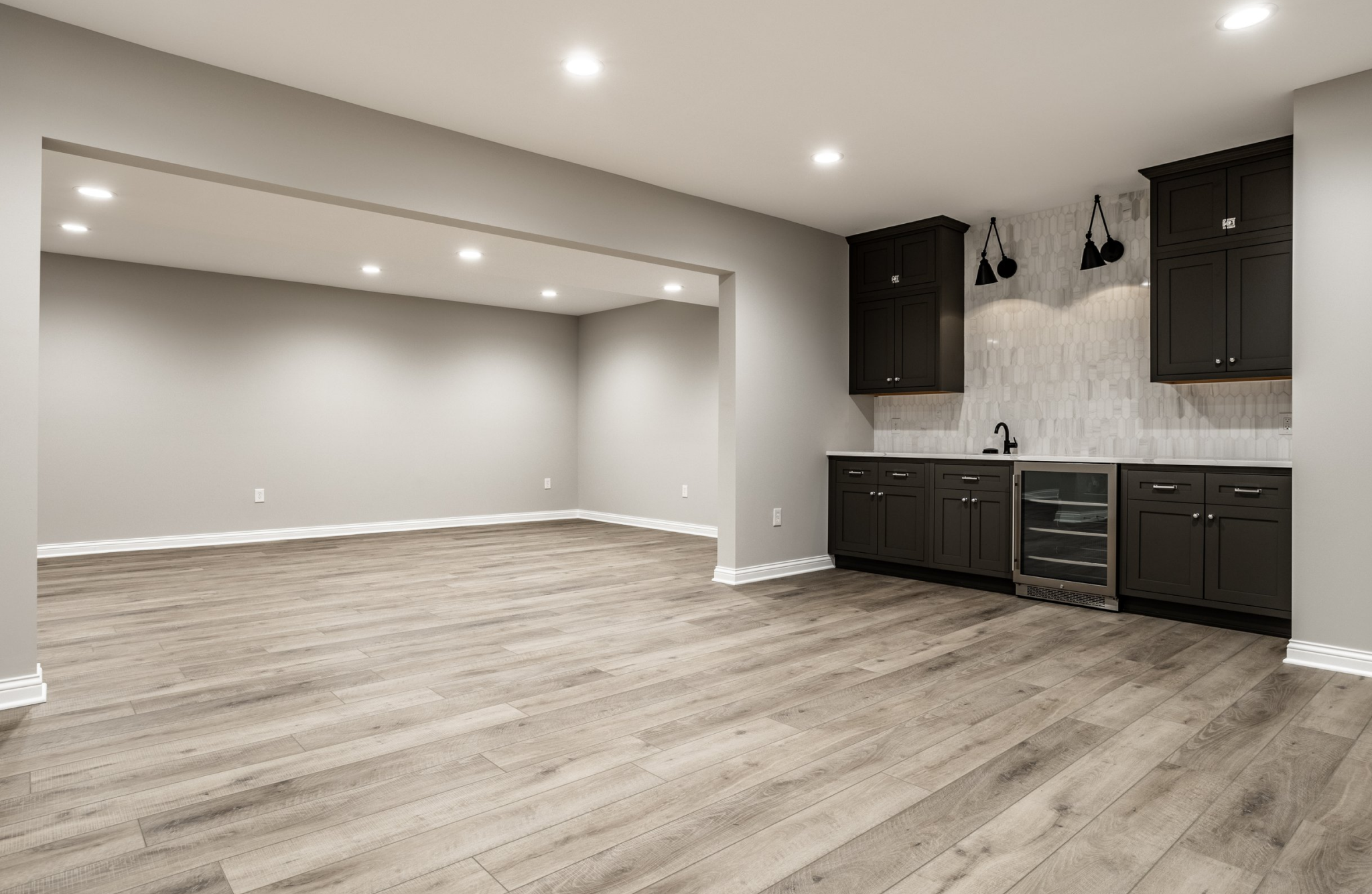
For certain basement spaces, particularly home bars, wine cellars, or modern media rooms, large-format porcelain tile creates a level of luxury that nothing else quite matches. I used large-format porcelain in my basement bar area, and the contrast between the stone-look tile in that zone and the vinyl plank in the adjoining family room creates a beautiful visual distinction between the two spaces.
Modern porcelain tile has evolved dramatically in terms of aesthetics. Large-format options in marble, slate, and concrete looks are available at price points that make them accessible for ambitious basement projects. My bar area features a 24-by-48-inch porcelain tile in a soft grey marble pattern, and it looks genuinely high-end in a way that actual marble never could in a below-grade space with any moisture risk.
The practical consideration with porcelain in a basement is that it can feel cold underfoot, which is already a challenge in below-grade spaces. I addressed this by installing electric radiant heating mats beneath the tile in the bar area, which added warmth and comfort without significant added cost. The tile itself is completely impervious to moisture, making it one of the most durable long-term choices you can make for the right basement application.
Engineered Hardwood: When You Want Authentic Wood Below Grade
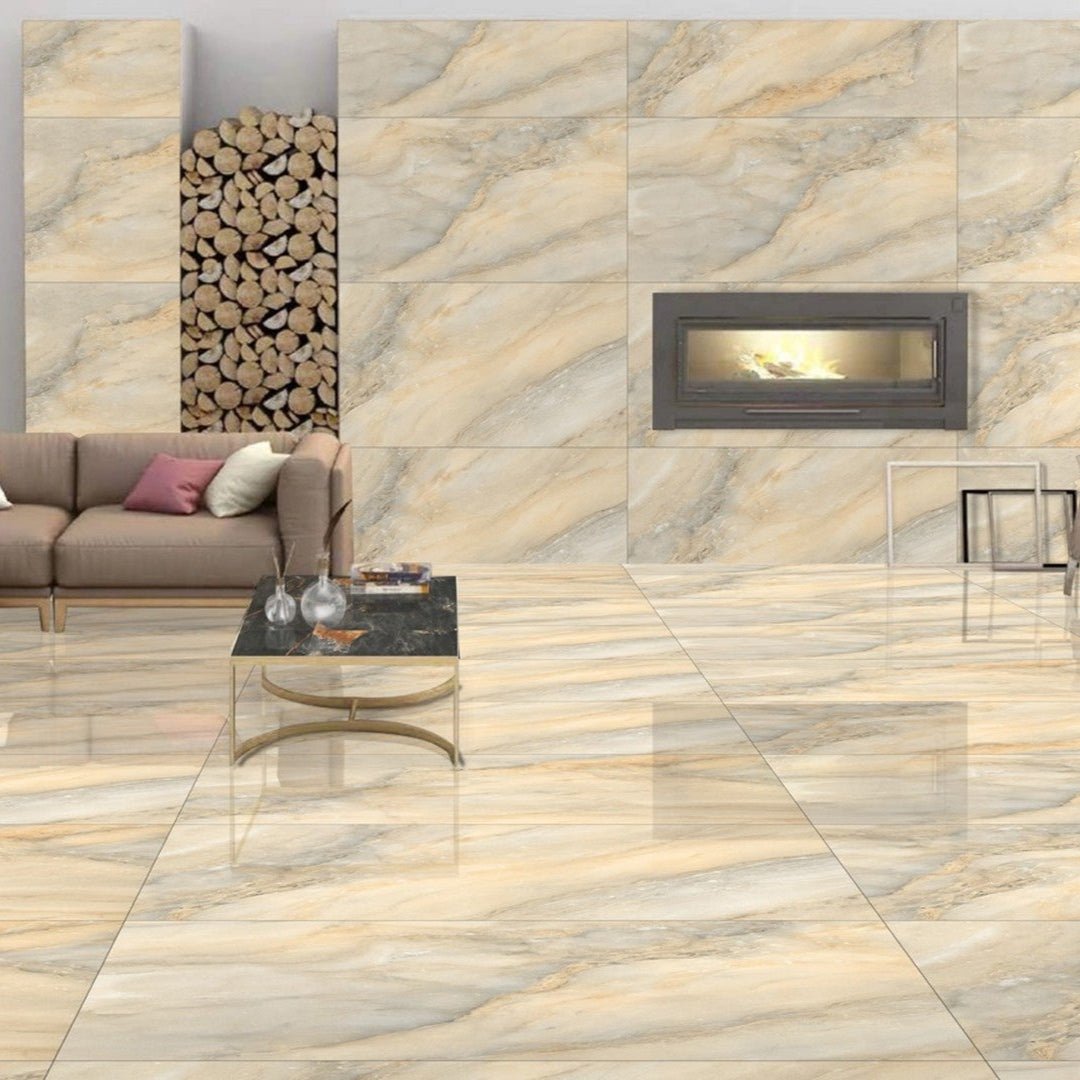
I’ll be upfront about something: engineered hardwood in a basement requires careful thought and the right conditions. I considered it seriously before choosing luxury vinyl plank, and I came close to going with a premium engineered hardwood. In the right basement with well-controlled humidity and no history of moisture intrusion, quality engineered hardwood can look absolutely stunning and feel more authentic than any manufactured alternative.
The key difference between engineered and solid hardwood is the construction. Engineered hardwood has a real wood veneer on top, typically 2mm to 6mm thick, bonded to a multi-layer plywood core that handles humidity fluctuations far better than solid wood. For a basement with stable conditions, this makes engineered hardwood a viable luxury option that delivers genuine wood character and warmth.
If you go this route, choose a product with a thicker wear layer so it can be refinished at least once during its lifespan. Also make sure your basement passes a moisture test before installation, and maintain indoor humidity between 35 and 55 percent year-round. I ultimately chose luxury vinyl plank because my basement had borderline moisture readings, but for a dry basement with good climate control, premium engineered hardwood is a genuinely beautiful luxury choice.
Carpet Tile: A Surprising Luxury Option for Comfort-First Spaces
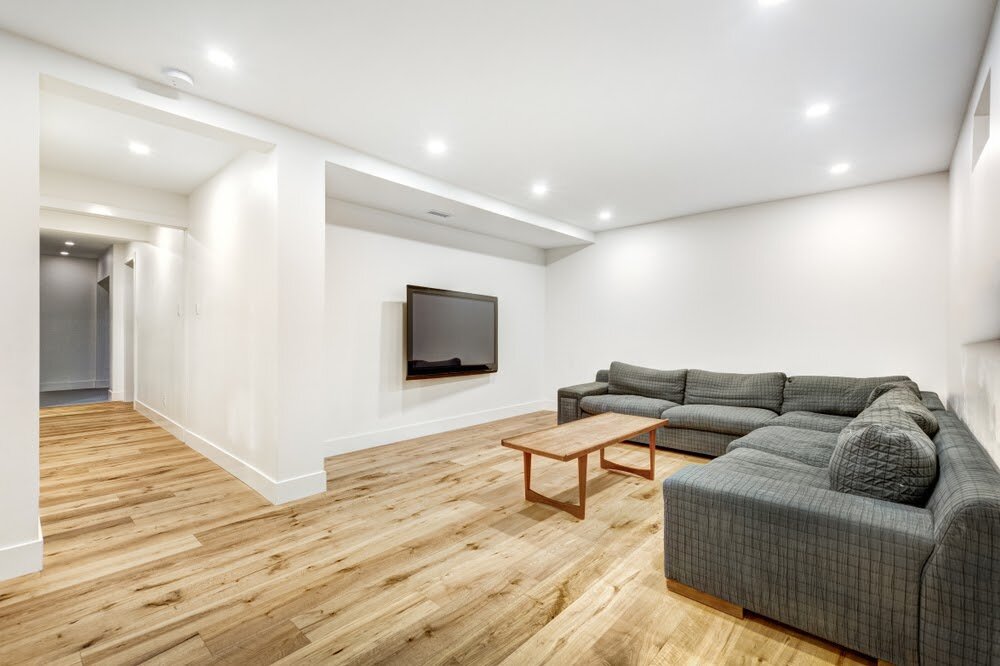
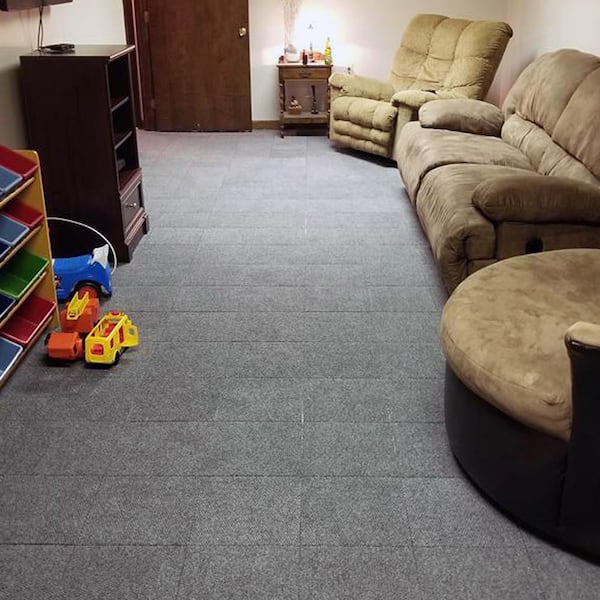
When I think luxury carpet in a basement, I don’t mean wall-to-wall broadloom. I mean high-end modular carpet tiles in premium wool or nylon blends that create a sophisticated, customizable floor with practical advantages that standard carpet doesn’t offer. I used premium carpet tiles in my basement home theater zone, and the combination of comfort, sound absorption, and visual warmth they provide is something hard flooring simply can’t match in that context.
Luxury carpet tiles differ from budget versions in pile quality, pattern sophistication, and how well they hold their shape over time. I chose a charcoal herringbone wool-blend tile that looks genuinely tailored and intentional rather than utilitarian. The modular format means individual tiles can be removed and replaced if damaged or stained, which gives you the practical resilience that a basement demands while maintaining a high-end appearance.
The sound benefits of quality carpet tile in a basement media or entertainment space are worth highlighting. My home theater feels acoustically much better than it did before the carpet tiles went in, with noticeably less echo and a more controlled sound environment. Combined with the visual coziness and the underfoot warmth, the carpet tile zone has become everyone’s favorite spot in the basement for movie nights and casual hangouts.
Mixing Flooring Materials for a Truly Custom Luxury Look
One of the best decisions I made in my basement was using different luxury flooring materials in different zones rather than a single material throughout. This approach creates a custom, designed feel that immediately signals intentionality and sophistication. It’s what high-end designers do in above-grade spaces, and there’s no reason not to apply the same thinking below grade.
The key to making mixed flooring work is creating clear zones that justify the transition and choosing materials that complement each other in color and tone. In my basement, the luxury vinyl plank flows through the main family room and hallway, the porcelain tile defines the bar area with a distinct material shift, and the carpet tiles create a clearly designated home theater zone. Each material suits its specific use while the cohesive color palette ties everything together.
Transition strips between materials deserve as much attention as the floors themselves. I invested in quality brushed brass transitions that feel like a design detail rather than a necessary evil. When the transitions are handled beautifully, the mixed-material approach looks intentional and polished. When they’re done cheaply, they undermine the entire effect. Treat every detail of your basement floor as part of the luxury experience and the whole space rises to match that standard.

What is the most waterproof luxury flooring option for a basement?
Luxury vinyl plank and large-format porcelain tile are the most waterproof luxury options available. Both are completely impervious to moisture through their full thickness. I’d recommend luxury vinyl plank for most finished basements because it’s warmer underfoot and easier to install. Porcelain is ideal for bar areas or bathrooms where a stone aesthetic suits the space and radiant heating can address the cold feel.
How much should I expect to spend on luxury basement flooring?
Budget varies widely by material. Premium luxury vinyl plank runs four to eight dollars per square foot for materials, with professional installation adding two to four dollars more. High-end porcelain tile with installation can run twelve to twenty dollars per square foot or more. Engineered hardwood sits in a similar range to porcelain. I spent around ten dollars per square foot all in for my luxury vinyl plank installation and felt it was excellent value.

Can I install luxury flooring myself to save money?
Click-lock luxury vinyl plank is genuinely DIY-friendly and the installation savings can be significant. I’ve done it myself in other parts of my home, though I hired a professional for my basement because of the moisture prep complexity. Porcelain tile and engineered hardwood are better left to professionals, especially in a basement where subfloor prep and moisture management require experience and precision to get right.
How do I handle moisture before installing luxury basement flooring?
Always test before you install anything. I taped plastic sheeting to several spots on my concrete floor and left it for 48 hours. Any condensation underneath signals active moisture that needs addressing first. A penetrating concrete sealer handles mild moisture vapor, while more significant issues need professional waterproofing solutions. Skipping this step is the most common and most costly mistake in basement flooring projects.
Is luxury basement flooring a good investment for home resale value?
In my experience and from what I’ve heard from real estate contacts, a beautifully finished basement with quality flooring adds meaningful value to a home. Buyers notice the difference between a space that feels finished and one that feels improvised. A luxury basement floor signals that the entire project was done with care, which builds confidence in the overall quality of the renovation and typically supports a higher asking price.
What flooring works best for a basement home gym area?
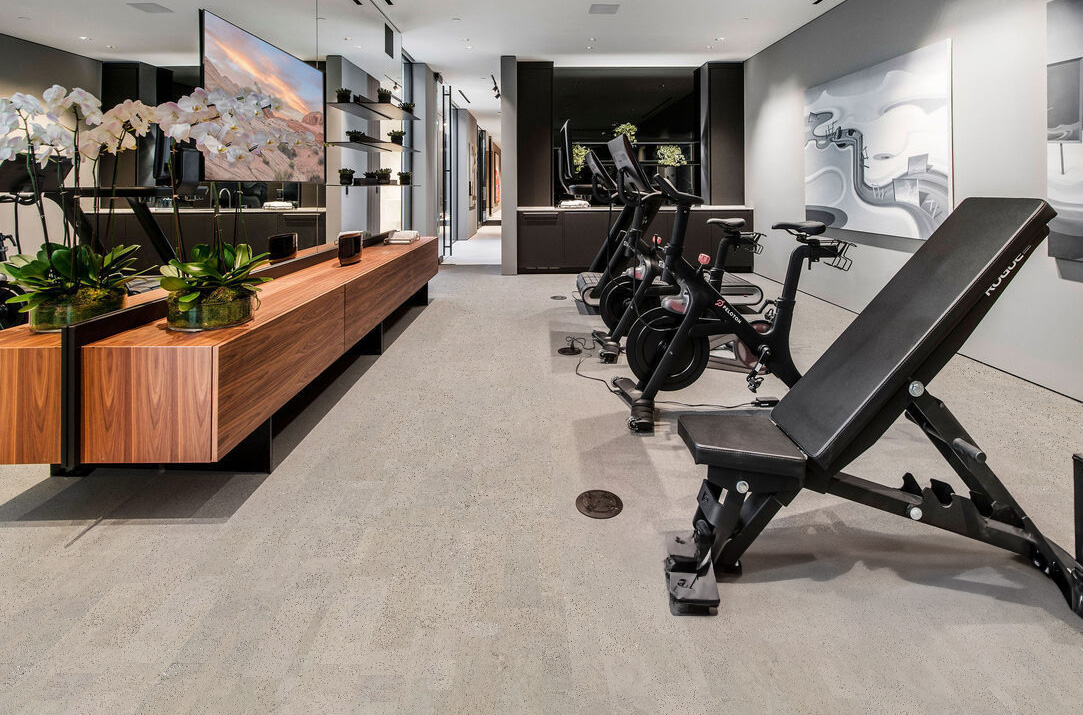
For gym zones, I’d combine luxury vinyl plank or porcelain in the main areas with rubber flooring tiles or rolls in the actual workout footprint. Rubber handles heavy equipment, dropped weights, and high-impact activity without damage, and it protects the luxury floor underneath. I keep my gym corner on interlocking rubber tiles and transition to the luxury vinyl plank outside that zone. It’s practical, durable, and looks intentional when done neatly.
Related Posts: