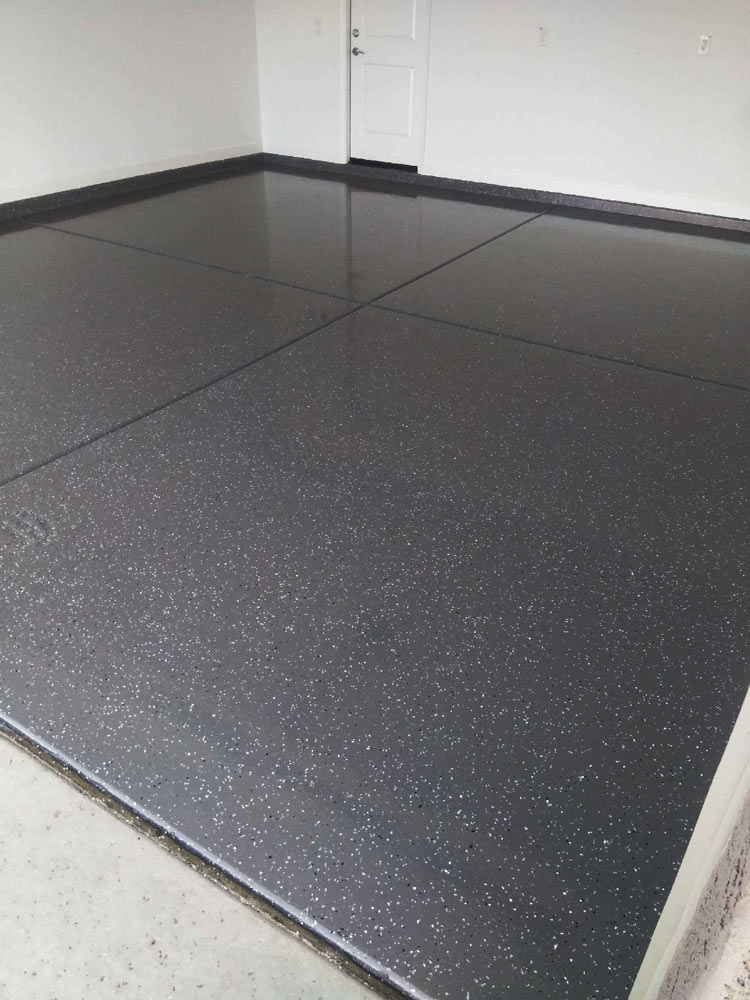
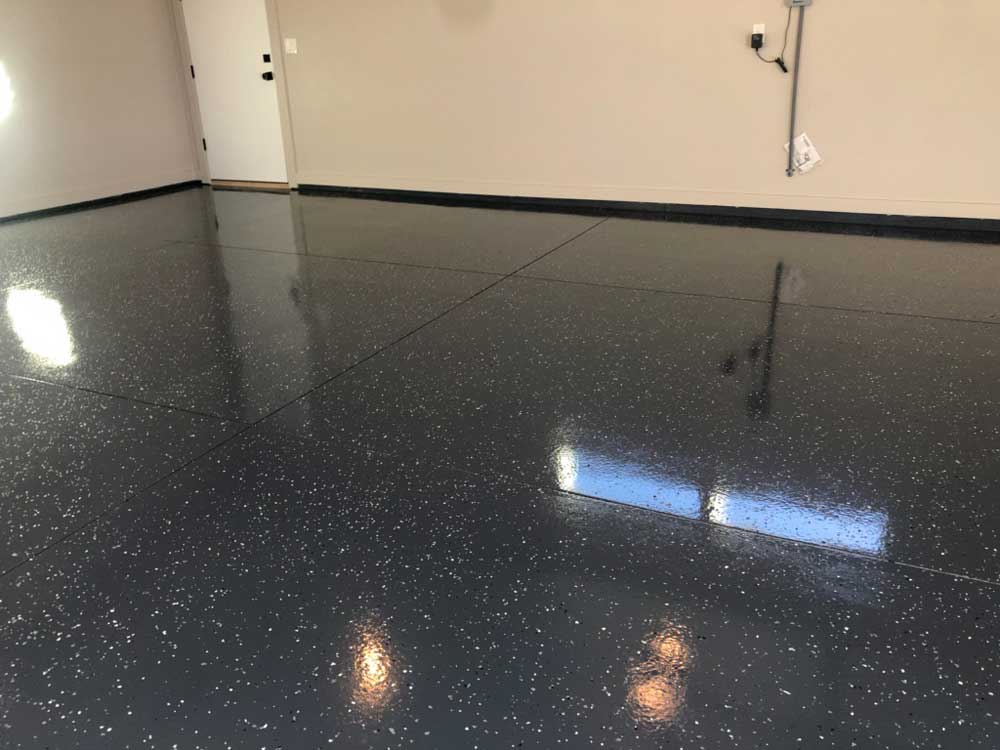
When I decided to coat my garage floor with black epoxy two years ago, everyone thought I was crazy. “Black will show every speck of dust,” they said. “It’ll look like a bowling alley,” others warned. But I was tired of my stained, cracked concrete and wanted something dramatic and modern. After living with my glossy black garage floor for over two years now, I can honestly say it was one of the best home improvement decisions I’ve ever made. Yes, it shows dust more than lighter colors, but the sleek, sophisticated look it gives my garage is absolutely worth the extra few minutes of maintenance. The way it makes my red sports car pop when parked inside is like having a showroom in my own home.
Why I Chose Black Over Traditional Gray Options
My decision to go with black epoxy instead of the typical gray or beige colors was purely about creating a dramatic visual impact. I wanted my garage to feel more like an extension of my home rather than just a utilitarian storage space. Black creates an incredibly sophisticated backdrop that makes everything in the garage look more intentional and organized. My tool storage, workbench, and even basic storage items look more premium against the deep black surface.
The psychological effect of the black floor surprised me more than I expected. Walking into my garage now feels like entering a high-end showroom or professional workshop rather than a typical suburban garage. Visitors consistently comment on how clean and organized everything looks, even when it’s not particularly tidy. The black creates a sense of depth and makes the space feel larger, which is especially noticeable in my relatively small two-car garage.
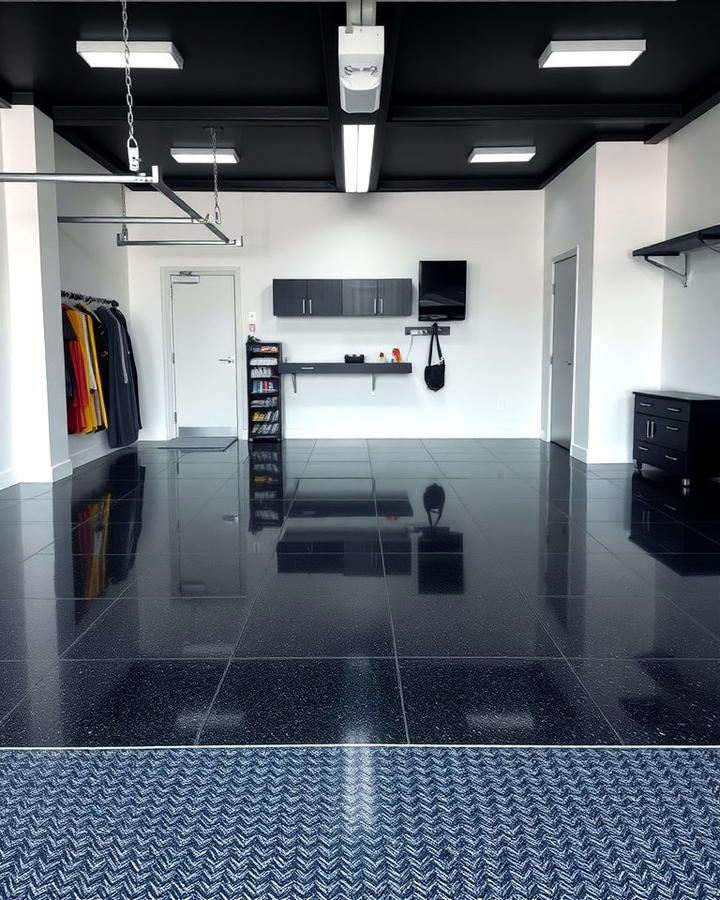
I also considered how black would complement my existing garage elements. My gray metal storage cabinets and red toolbox create a striking contrast against the black floor that wouldn’t have been nearly as dramatic with a standard gray coating. The black serves as a neutral backdrop that allows other colors in the space to really pop, whether it’s my bright orange safety equipment or the various colors of my stored seasonal items.
Surface Preparation Challenges with Dark Coatings
Preparing the concrete for a black epoxy coating required much more attention to detail than lighter colors would have demanded. Every imperfection, crack, and stain becomes dramatically visible under the glossy black finish, so I spent considerably more time on surface preparation than I initially planned. I rented a concrete grinder and spent three full days working in sections to achieve a uniform surface profile that would accept the coating evenly.
Oil stains that were barely visible on the raw concrete became major focal points once I started testing the coating in small areas. I had to use a specialized concrete degreaser and multiple applications of etching solution to completely remove years of automotive fluid contamination. In several spots, I had to mechanically grind out deep stains that chemical treatments couldn’t eliminate. This extra prep work added significant time to the project, but was essential for achieving professional results.
The concrete moisture testing phase revealed issues that would have been less critical with lighter-colored coatings. Black epoxy shows any cloudiness or inconsistency in the coating much more readily than gray alternatives. I had to wait nearly two weeks for optimal moisture conditions and applied a specialized moisture-blocking primer in areas where readings were borderline acceptable. This attention to detail during prep made all the difference in achieving that mirror-like black finish I wanted.
Application Techniques for Achieving Perfect Coverage
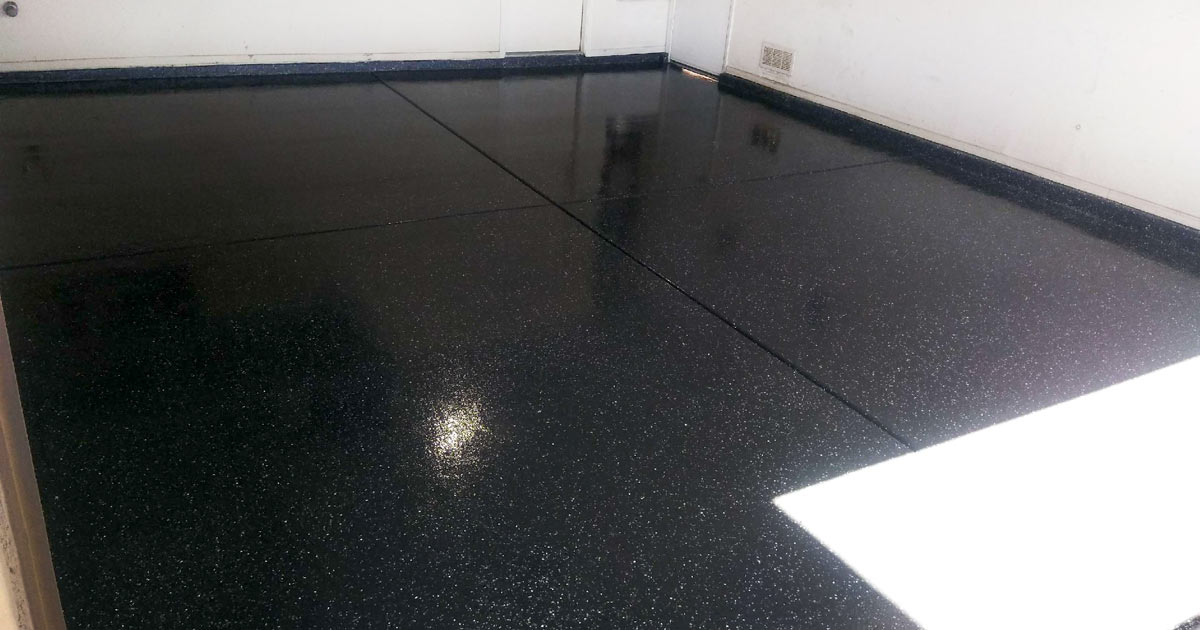
Applying black epoxy requires a completely different approach than working with lighter colors, as every roller mark, brush stroke, and imperfection becomes visible under the high-gloss finish. I practiced my application technique extensively on test sections, learning to maintain wet edges and work in smaller sections to prevent visible lap marks. The key was working quickly but deliberately, never rushing to the point where I compromised the smooth, even coverage that black demands.
Temperature control during application became critical for achieving the flawless finish that black epoxy requires. I installed temporary heating and ventilation to maintain optimal conditions throughout the three-day application process. Even small temperature variations affected the flow and leveling characteristics of the coating, potentially creating visible texture differences that would be glaringly obvious in the final black surface. Consistency in environmental conditions was essential.
The multiple coat process required patience and precision that tested my DIY skills. Each coat had to be applied at exactly the right thickness to avoid streaking or color variations that would show in the final finish. I used cross-rolling techniques, working in overlapping sections while maintaining wet edges throughout each area. The basecoat, color coats, and topcoat each required different application techniques, and there was no room for error with the unforgiving black color showing every mistake.
Lighting Considerations and Visual Impact
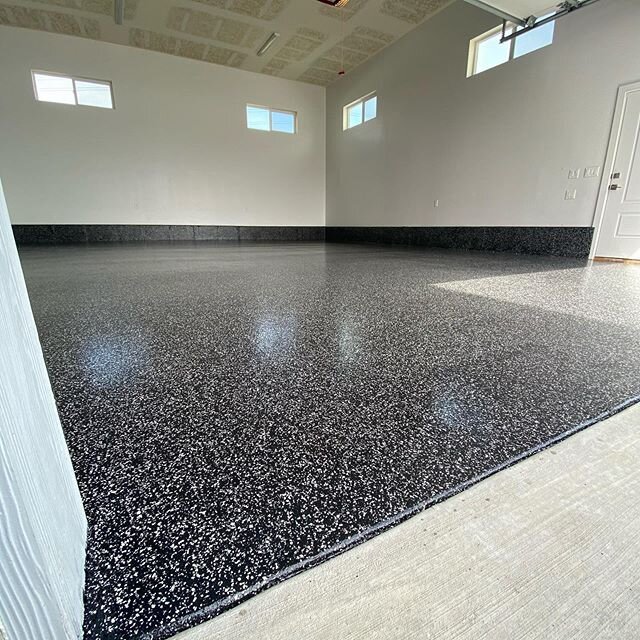
Lighting became a crucial factor I hadn’t fully considered when choosing black epoxy for my garage floor. The dark surface absorbs light rather than reflecting it like lighter colors, so I had to upgrade my garage lighting significantly to maintain good visibility for working and parking. I installed additional LED fixtures and increased the overall light output by about 60% to compensate for the light absorption of the black surface.
The reflective properties of the high-gloss black coating create interesting visual effects throughout the day. Direct sunlight streaming through the garage door creates dramatic reflections that make the floor look almost liquid. Under my LED work lights, the surface becomes mirror-like, creating depth and visual interest that constantly surprises visitors. These reflective qualities make the space feel more dynamic and visually engaging than a traditional concrete floor.
Shadows and contrast became much more pronounced with the black flooring, which has both positive and negative effects. Dropped tools and small parts become more visible against the dark background, making cleanup easier during projects. However, dust and debris are also more noticeable, requiring more frequent maintenance to keep the dramatic appearance looking its best. The high contrast helps with organization and cleanliness, but demands consistent upkeep.

Daily Maintenance and Cleaning Reality
Living with a black epoxy garage floor has taught me that maintenance requirements are higher than lighter alternatives, but the cleaning process is actually quite satisfying. Dust, dirt, and debris show up immediately against the dark background, which means I can’t let cleaning slide for weeks like I did with my old concrete floor. Daily sweeping or dust mopping takes about five minutes but is essential for maintaining the stunning appearance that makes this flooring worthwhile.
The high-gloss finish makes cleaning surprisingly easy despite showing every speck of dust. Spills, oil drips, and dirt wipe up effortlessly with just water or mild detergent. The smooth, non-porous surface means nothing penetrates or stains, unlike concrete, which would permanently absorb automotive fluids. Weekly wet mopping with a microfiber mop keeps the floor looking showroom-perfect and takes less time than scrubbing stained concrete ever did.
Seasonal maintenance has become part of my routine to keep the black finish looking its best. During winter, road salt and snow tracked in on vehicles create more visible residue than they would on lighter floors. I keep a good doormat at the entry and do a quick mop of high-traffic areas after snowy days. Spring cleaning involves a thorough wash and application of floor wax to restore maximum gloss and protection for the coming year.

Long-Term Durability and Performance Assessment
After two years of daily use, my black epoxy floor continues to look stunning despite heavy automotive use and workshop activities. The coating has proven incredibly durable, with no chips, scratches, or wear patterns visible even in high-traffic areas where I park and maneuver vehicles daily. Hot tire pickup, which I worried about with the dark color, hasn’t been an issue even during summer heat when I park immediately after highway driving.
Chemical resistance has exceeded my expectations throughout real-world use. Battery acid, brake fluid, motor oil, and various solvents have spilled on the floor without causing any etching or discoloration. The thick, high-quality coating I chose has maintained its chemical resistance properties perfectly. Even aggressive cleaners and degreasers I use for automotive projects haven’t affected the finish or gloss level of the black surface.
The color stability has been remarkable considering my concerns about UV exposure and potential fading. Large areas of the floor receive direct sunlight for several hours daily when the garage door is open, but there’s been no noticeable color change or gloss reduction. The quality of the pigments and UV-resistant topcoat have maintained that deep, rich black appearance that makes the space feel so sophisticated and intentional.
Cost Analysis and Value Considerations
The total investment in my black epoxy garage floor project came to about $1,200 for materials to cover 400 square feet, which was roughly 30% more expensive than standard gray alternatives. The premium came from using higher-quality base coats and topcoats necessary to achieve the flawless finish that black demands, plus additional surface preparation materials needed for the perfect substrate. Professional installation would have added another $2,000-3,000, making DIY the clear choice for my budget.
Comparing the cost to other garage flooring options, the black epoxy fell in the middle range of alternatives I considered. Interlocking tiles would have been cheaper upfront, but wouldn’t provide the seamless, easy-to-clean surface I wanted. Polished concrete would have cost more and taken longer, while still not achieving the dramatic visual impact of the glossy black finish. The value proposition became clear when I considered both aesthetics and long-term functionality.
The return on investment has been excellent from both practical and enjoyment perspectives. Property value increase is difficult to quantify, but the garage now feels like a premium space that adds to the overall home experience. The ease of maintenance and chemical resistance save time and effort compared to maintaining bare concrete. Most importantly, I genuinely enjoy spending time in my garage now, which has encouraged me to be more organized and take better care of my vehicles and equipment.
Does black epoxy really show dust and dirt more than lighter colors?
Yes, absolutely, but it’s not as problematic as I expected. Dust is immediately visible, which actually helps me stay on top of cleaning. Daily sweeping takes 5 minutes and keeps it looking perfect. The trade-off is worth it for the dramatic appearance, and cleaning is actually easier than maintaining bare concrete because nothing soaks in or stains the smooth surface.
How slippery is black epoxy when wet, and is this a safety concern?
The high-gloss finish can be slippery when wet, especially with oil or water. I added anti-slip aggregate to the topcoat near the garage door where snow and rain might track in. In dry conditions, traction is excellent. The key is immediate cleanup of any spills and using proper entrance mats to minimize moisture on the floor surface.

What’s the realistic total cost for a DIY black epoxy garage floor project?
My 400 sq ft garage cost $1,200 in materials, including surface prep, primer, base coat, color coats, and topcoat. Tool rental for grinding and prep added $300. Professional installation would have been $4,000-5,000 total. The materials cost about 30% more than standard gray due to the premium coatings needed for a flawless black finish, but DIY saves thousands.
How does black epoxy handle hot tire pickup and thermal cycling?
I haven’t experienced any hot tire pickup issues in two years, even parking immediately after highway driving in summer. The high-quality topcoat handles thermal cycling well. I did invest in premium materials specifically for thermal resistance, which costs more but provides peace of mind. Cheap epoxy might have issues, but quality products handle temperature extremes fine.

Can black epoxy be repaired if damaged, or does the whole floor need redoing?
Small scratches can be polished out, and minor damage can be spot-repaired with touch-up kits. However, matching the exact color and gloss is challenging with black. Major damage would require sanding and recoating sections. This is why proper surface prep and quality materials are crucial upfront. Prevention through good maintenance practices is much easier than repairs.
How much extra lighting did you need for the black garage floor?
I increased my lighting by about 60% to compensate for light absorption. Added four extra LED fixtures and upgraded existing ones to higher output models. This added about $400 to the project cost but was essential for maintaining good visibility. The dramatic reflections under proper lighting actually enhance the visual impact, making the investment worthwhile for both function and aesthetics.

Residential and Commercial Floor Coatings
Black Epoxy Garage Flooring Ideas

Garage Floor Epoxy Boise, Eagle, Meridian Idaho Epoxy Pros Boise
BEHR PREMIUM 1 Gal. #ECC-10-2 Jet Black Self-Priming 1-Part Epoxy
Related Posts: