When I finally decided to do something about my garage floor, it had seen years of oil drips, tire marks, salt stains from winter boots, and one memorable incident involving a burst bag of concrete mix. It was rough, stained, and honestly a little embarrassing. I had no idea there were so many treatment options available until I started researching, and I quickly realized that choosing the right one depends a lot on how you use your garage and what you want to get out of it. Here’s everything I learned from my own experience.
Why Bare Concrete Is Working Against You
Most people don’t think twice about leaving their garage floor as raw concrete, and I was one of them for years. The problem is that bare concrete is incredibly porous. It soaks up every oil spill, chemical drip, and water puddle like a sponge. Once those stains are in there, they’re genuinely hard to get out, and over time the surface starts to look permanently grimy no matter how much you clean it.
Raw concrete also produces a fine dust that you might notice on your shoes or on items stored near the floor. That dust comes from the surface slowly degrading over time. It coats your car, your tools, and anything else you keep in the garage. Treating the floor stops that process and gives you a surface that actually stays cleaner with less effort.
There’s also the moisture issue. Concrete naturally wicks moisture up from the ground beneath it, which can make your garage feel damp and contribute to rust on tools and equipment. A proper floor treatment creates a barrier that slows that moisture transfer significantly. Once I treated my floor, the garage just felt drier and more like a usable space than a storage cave.
Epoxy Coatings, The Gold Standard for Most Garages
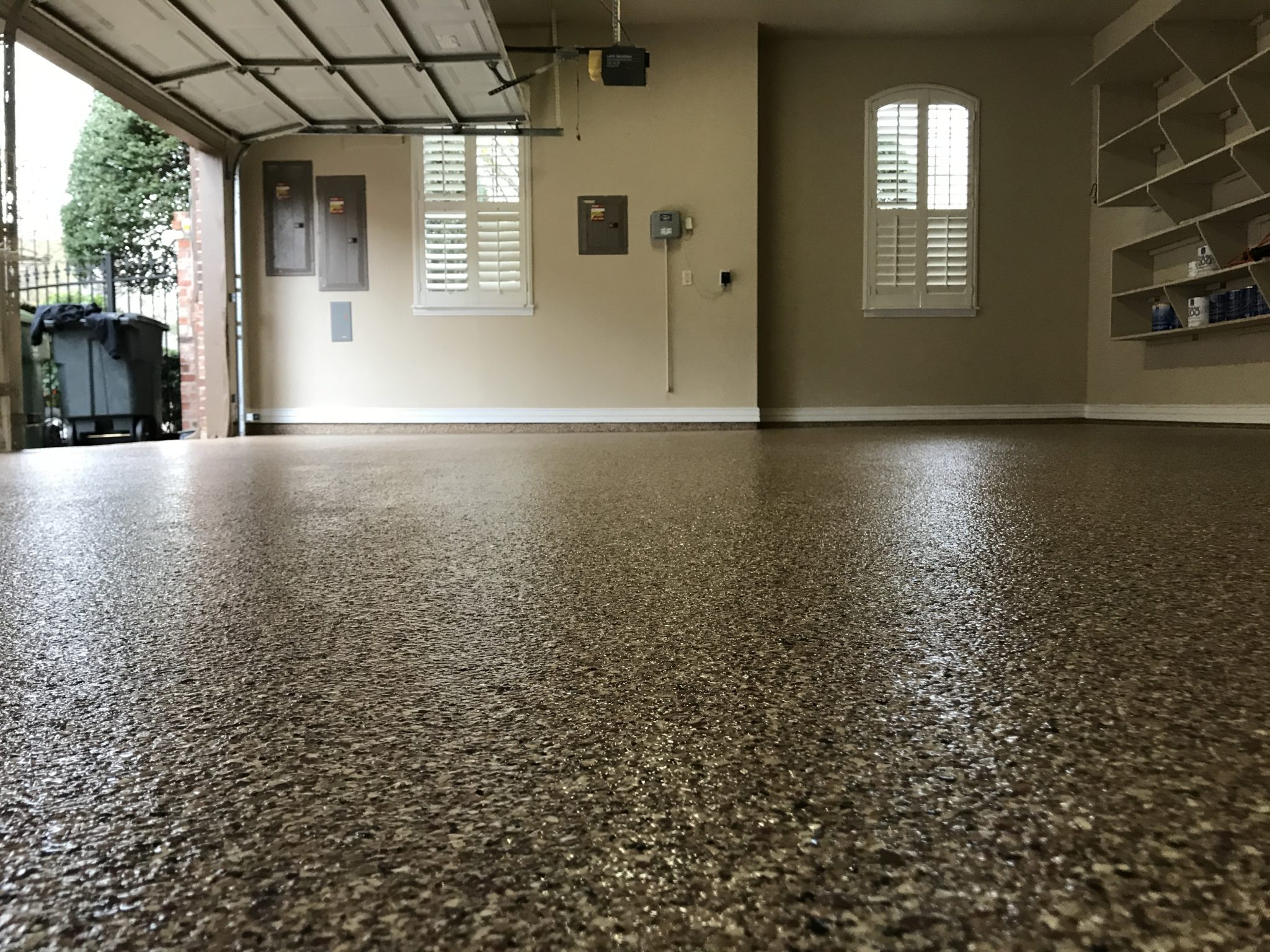
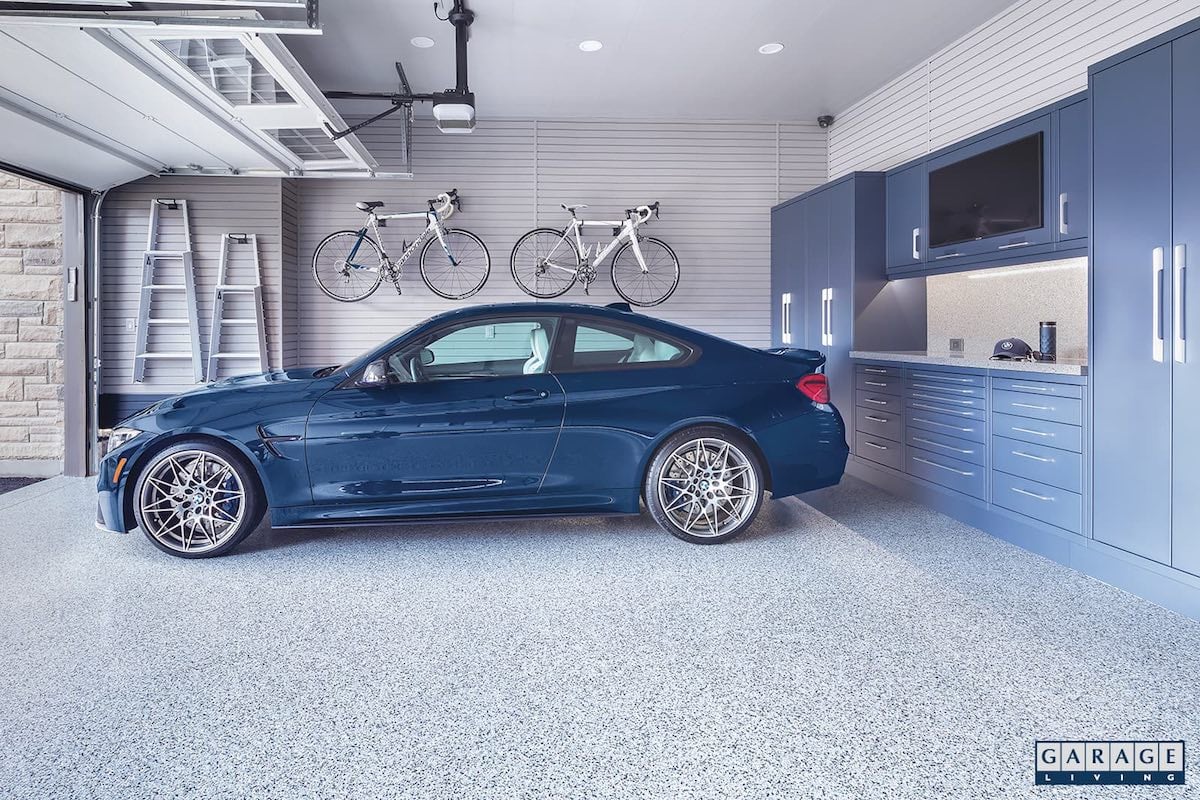
When most people picture a treated garage floor, they’re picturing epoxy. That glossy, speckled finish you see in showrooms and well-organized garages almost always comes from an epoxy coating. I went with a two-part epoxy kit for my own garage, and the transformation was genuinely dramatic. The floor went from dingy gray to bright and polished-looking in one weekend.
The application process requires patience. You have to etch the concrete first with an acid wash or mechanical grinder to open up the surface so the epoxy bonds properly. I skipped a thorough etch on my first attempt years ago in a rental property and the epoxy peeled up within months. Don’t make that mistake. Prep is everything with epoxy.
Once cured, epoxy is tough, chemical resistant, and easy to sweep and mop. The decorative flakes you can broadcast into the wet coating add grip and hide minor imperfections beautifully. My garage floor has held up through three winters, regular car traffic, and plenty of spills without showing significant wear. For durability and looks combined, epoxy is hard to beat.
Polyurea and Polyaspartic Coatings for Faster Results
After talking to a neighbor who had professionals coat his garage, I learned about polyurea and polyaspartic coatings. These are similar to epoxy in concept but cure much faster, sometimes within hours rather than days. Professional garage floor companies often use these because they can complete a job in a single day and the coating is ready for traffic almost immediately.
The durability on polyurea is actually superior to standard epoxy in many ways. It’s more flexible, which means it handles temperature fluctuations better without cracking or peeling. For garages in climates with extreme hot and cold swings, that flexibility matters a lot. I’ve spoken with homeowners in very cold regions who switched from epoxy to polyurea specifically because of winter peeling issues.
The tradeoff is cost. Professional polyurea applications run significantly higher than a DIY epoxy kit. If budget is your top concern, epoxy still makes great sense. But if you want the best possible result and don’t want to spend a weekend on your hands and knees grinding concrete, hiring a professional polyurea application is worth getting quotes for. Sometimes the peace of mind is worth the price difference.

Concrete Sealers for a Lower-Key Treatment
Not everyone needs a full epoxy makeover. When I treated the floor in my detached workshop, I went with a penetrating concrete sealer instead, and for that space it was the perfect choice. Sealers soak into the concrete and harden it from within, repelling moisture and stains without dramatically changing the appearance of the floor.
There are two main types worth knowing about: penetrating sealers and topical sealers. Penetrating sealers go below the surface and provide long-lasting protection without leaving a visible film. Topical sealers sit on top and can give a slight sheen. I prefer penetrating for garages because there’s no surface layer to peel or wear off with tire traffic.
Application is straightforward. You clean the floor, let it dry completely, then roll or spray the sealer on. Most penetrating sealers need to be reapplied every few years depending on traffic, but the process is quick and inexpensive. For someone who just wants basic protection without committing to a full coating project, a quality penetrating sealer is a smart and underrated option.

Garage Floor Tiles and Mats as Flexible Alternatives
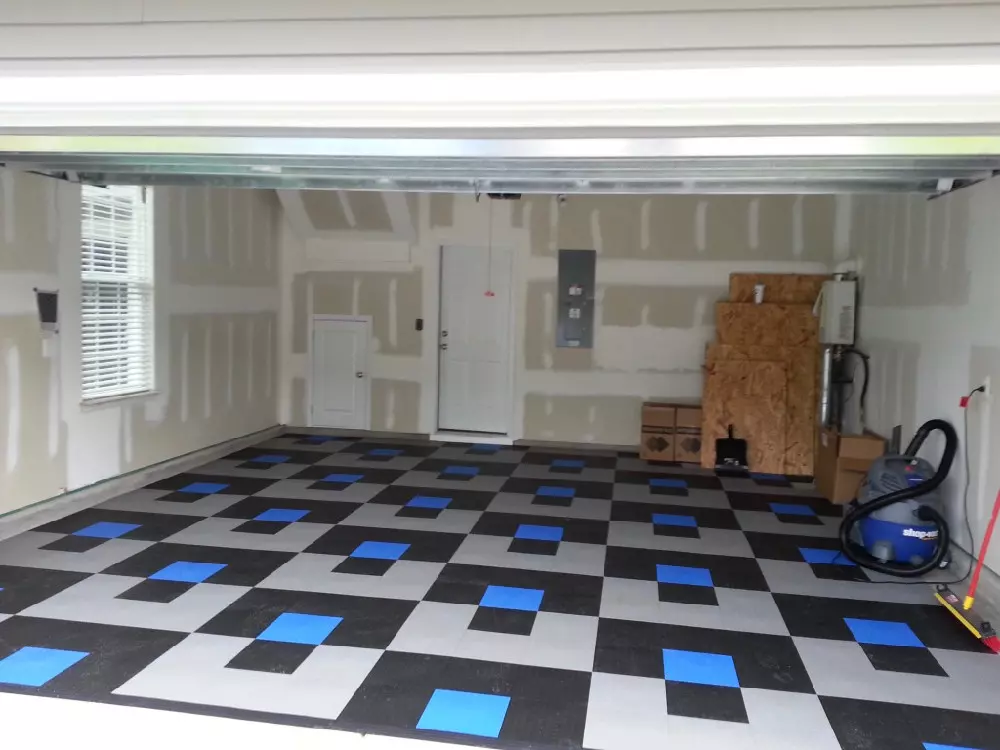
When I set up a corner of my garage as a home gym, I didn’t want to coat the entire floor just for that section. That’s when I discovered interlocking garage floor tiles, and they became one of my favorite flooring discoveries. These thick polypropylene tiles snap together like puzzle pieces with no adhesive needed, and you can lift them up and reconfigure anytime.
The tiles come in different thicknesses and surface patterns, including coin top and diamond plate textures. They’re comfortable to stand on for long periods, which matters a lot in a gym or workshop setting. They also drain well if water or oil gets underneath, which is something coatings can’t claim. In a space where you’re washing equipment or working with liquids, that drainage is genuinely useful.
For parking areas, heavier-duty tiles designed specifically for vehicle traffic hold up well under the weight of a car. I’ve had a set under my wife’s car for over a year with no cracking or deforming. The only downside is that debris can collect between tiles over time, so I lift them and sweep underneath every few months. It takes twenty minutes and keeps everything looking tidy.
Acid Staining for a Decorative Concrete Finish
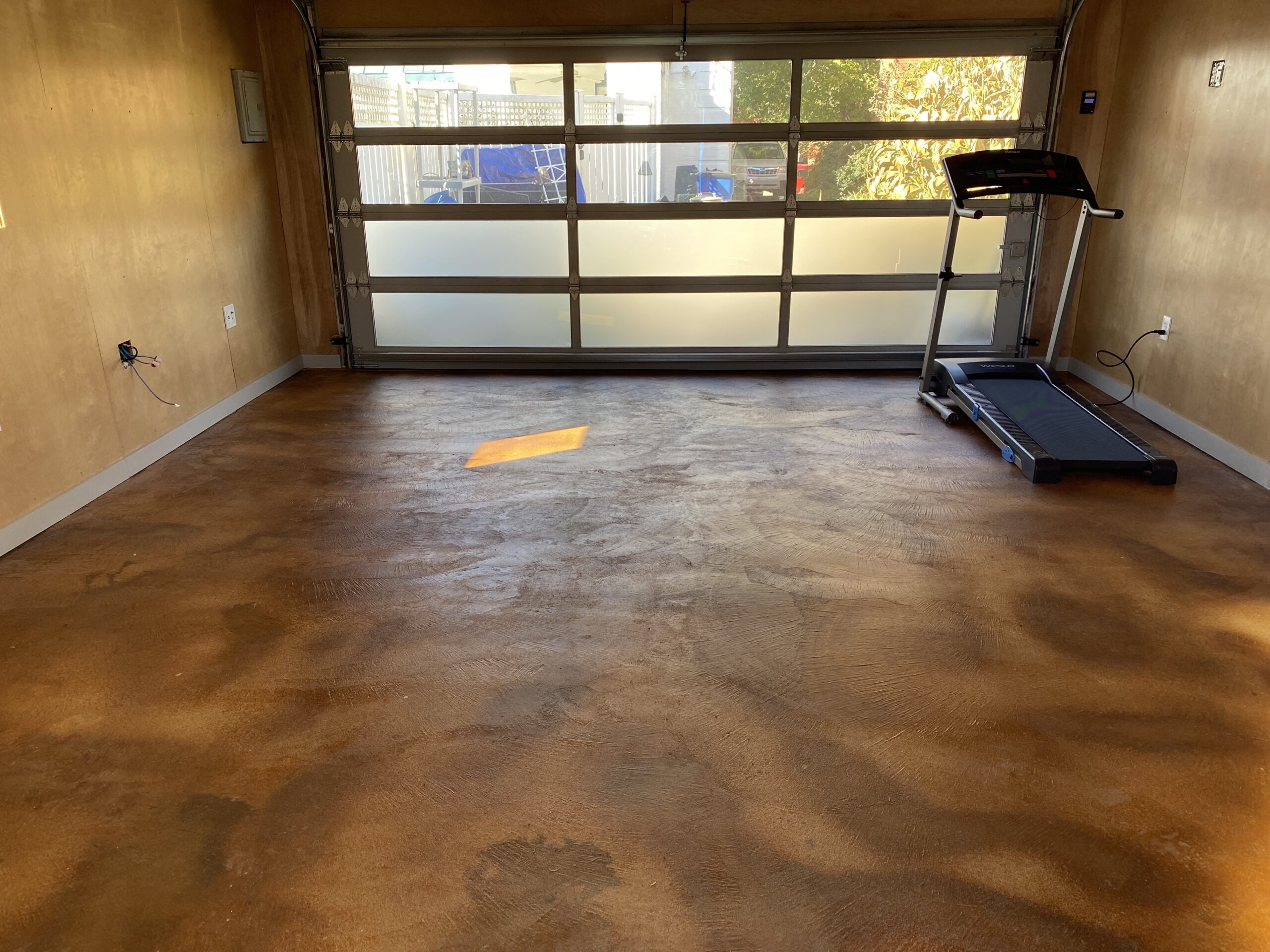
If you want your garage floor to look like actual art, acid staining is worth considering. I saw a neighbor’s acid-stained garage and was completely blown away. The process uses an acid solution to react chemically with the minerals in the concrete, creating rich, variegated tones that look like marble or aged stone. No two floors turn out exactly the same.
The colors available with acid staining tend toward earthy, organic tones, warm browns, terracottas, greens, and blues. It’s not for everyone, but if you appreciate that kind of aesthetic and want a garage that looks like a luxury showroom, the results are stunning. After staining, the floor needs to be sealed to protect the finish and make it easy to clean.
I haven’t done acid staining myself, but I watched several tutorials and spoke with a decorative concrete contractor about the process. It’s more involved than rolling on a sealer, and mistakes are hard to reverse since you’re chemically altering the concrete itself. If you’re interested, I’d recommend hiring a professional for your first time or at least doing a small test patch in an inconspicuous corner before committing to the whole floor.
How long does an epoxy garage floor coating last?
A properly applied epoxy coating typically lasts five to ten years in a residential garage. The key factors are surface prep before application and the quality of product used. High-traffic areas near entry doors may show wear sooner. Recoating is possible when it starts to dull, and it’s much easier than the original application since the surface is already prepped and bonded.
Can I apply a garage floor coating myself or should I hire someone?
I did my own epoxy coating and it turned out great, but I put in the prep work. If you’re comfortable with physical labor and following instructions carefully, DIY epoxy is very doable over a weekend. For polyurea or polyaspartic coatings, I’d lean toward hiring a professional since those materials cure fast and require experience to apply evenly without mistakes.
What’s the best garage floor treatment for a cold climate?
In cold climates with significant freeze-thaw cycles, flexibility matters. Standard epoxy can crack and peel when concrete expands and contracts with temperature changes. Polyurea and polyaspartic coatings handle temperature swings much better. A quality penetrating sealer is also a solid choice for cold climates since there’s no surface layer to delaminate. Always check product temperature ratings before buying.
How do I prepare my garage floor before applying any treatment?
Start by cleaning the floor thoroughly and removing all oil stains. Then acid-etch or mechanically grind the surface to open the concrete’s pores. Check for moisture by taping a plastic sheet to the floor overnight, if condensation forms underneath, you have a moisture issue to address first. Proper prep is the single biggest factor in whether a coating bonds well and lasts.
Will garage floor tiles hold up under car weight?
Yes, tiles rated for vehicle traffic absolutely hold up under car weight. Look for tiles with load ratings listed in the product specs and make sure you’re buying the heavy-duty version, not lighter gym or workshop tiles. I’ve had vehicle-rated tiles under a sedan for over a year with zero cracking. They distribute weight well and the raised design allows air circulation underneath, which helps with moisture.
How much does it cost to treat a two-car garage floor?
Costs vary widely by method. A DIY epoxy kit for a two-car garage runs roughly one hundred to three hundred dollars in materials. Professional polyurea coatings typically run one thousand to three thousand dollars depending on your region and the contractor. Penetrating sealers are the most affordable at fifty to one hundred fifty dollars DIY. Interlocking tiles fall somewhere in the middle depending on coverage area and tile quality.
Best garage floor coating Archives
Related Posts: