When I started planning my bathroom renovation two years ago, everyone told me to use ceramic tile or vinyl. But I’d walked on cork flooring at a spa and loved how warm and comfortable it felt underfoot. After extensive research and some skepticism from my contractor, I installed cork tiles in my main bathroom. I won’t lie, I was nervous about moisture issues, but with proper installation and sealing, my cork bathroom floor has exceeded all expectations and transformed my daily routine into something more spa-like.
Selecting the Right Cork Tiles for Bathroom Conditions
I learned quickly that not all cork tiles are suitable for bathrooms. I chose engineered cork tiles specifically rated for moisture-prone areas rather than solid cork. These tiles have a cork veneer over an HDF core that’s more dimensionally stable when humidity fluctuates. The engineered construction provides better resistance to the constant humidity changes bathrooms experience, from steamy showers to dry winters with the heat running.
The tile size decision was important for both aesthetics and water management. I selected 12×12 inch tiles rather than larger formats because smaller tiles mean more grout lines, which actually helps water drain away from the cork surface faster. The tiles came pre-finished with multiple coats of water-resistant polyurethane, which saved me time and ensured professional-grade protection right out of the box.
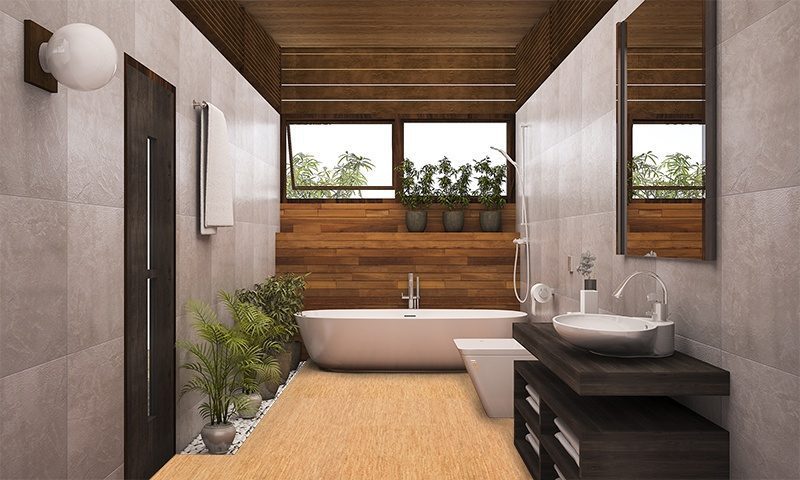
Color selection was crucial for creating the right atmosphere. I chose a medium natural cork tone with subtle grain variations that adds warmth to the otherwise white and gray bathroom. I considered darker stained options, but the lighter natural cork helps the small 5×8 bathroom feel more spacious and airy. The honey tones also hide water spots better than very light or very dark colors would, making maintenance easier between cleanings.
Waterproofing: The Critical Steps I Took
The waterproofing process was more involved than I expected, but absolutely essential. Before installing cork tiles, my contractor applied a waterproof membrane to the entire bathroom floor, paying special attention to corners and around the toilet and tub. This barrier prevents moisture from reaching the subfloor if water ever seeps through the cork, providing crucial protection for the underlying structure.
We used a waterproof adhesive specifically formulated for wet areas when gluing down the cork tiles. Standard construction adhesive wouldn’t provide adequate moisture resistance. The specialized adhesive cost more but creates a water-resistant bond that prevents moisture from migrating between the tile and subfloor. My contractor stressed that skimping on adhesive quality would be a costly mistake in a bathroom environment.
After installation, I applied two additional coats of water-based polyurethane sealer on top of the factory finish. This extra protection creates multiple barriers against water penetration. I sealed the edges where tiles meet walls with a flexible bathroom caulk that allows slight movement while preventing water intrusion. Every penetration point, around the toilet flange, shower threshold, had to be carefully sealed to prevent moisture problems.

Living with Cork in a High-Moisture Environment
After two years, I can honestly say my cork bathroom floor has handled moisture better than I anticipated. The key is wiping up standing water promptly. After showers, I use a squeegee on the floor just like I do on the glass doors, taking maybe 30 seconds to push water toward the drain. This simple habit prevents prolonged water exposure that could eventually compromise even the best sealing job.
The natural antimicrobial properties of cork have been a pleasant surprise. Cork contains suberin, a waxy substance that naturally resists mold and mildew. Despite high humidity from daily showers, I’ve never seen mold growth on the cork itself. My previous bathroom had ceramic tile with grout that constantly battled mildew, requiring weekly scrubbing with bleach. The cork has been remarkably cleaner and easier to maintain in this respect.
Temperature comfort is where cork truly shines in a bathroom setting. Stepping out of the shower onto warm cork instead of ice-cold tile has transformed my morning routine. The cork stays comfortably warm even in winter, eliminating the need for bath mats that would stay perpetually damp. This thermal comfort alone makes the unconventional choice worthwhile, creating a more pleasant daily experience.
Maintenance Routines for Bathroom Cork
My daily maintenance is minimal but consistent. After morning showers, I wipe the floor with a dry microfiber cloth to absorb residual moisture and prevent water spots. This takes less than a minute and has become automatic, like brushing my teeth. Evening routines are similar after baths. This simple habit keeps water from sitting on the surface for extended periods.
Weekly deep cleaning involves a damp mop with pH-neutral cleaner designed for sealed cork or wood floors. I avoid harsh bathroom cleaners with bleach or ammonia that could damage the protective seal over time. The entire bathroom floor takes maybe five minutes to clean thoroughly. I make sure the mop is barely damp, not soaking wet, wringing it out completely before touching the cork surface.
Every six months, I apply a fresh coat of water-based polyurethane sealer. This maintenance sealing is critical for bathrooms, more so than in dry areas of the home. I clear everything out of the bathroom, clean the floor thoroughly, let it dry completely, then apply the sealer with a lambswool applicator. It dries in a few hours, and I can use the bathroom again by evening. This semi-annual ritual maintains the water-resistant barrier that keeps my cork floor protected.
Design Impact and Aesthetic Choices
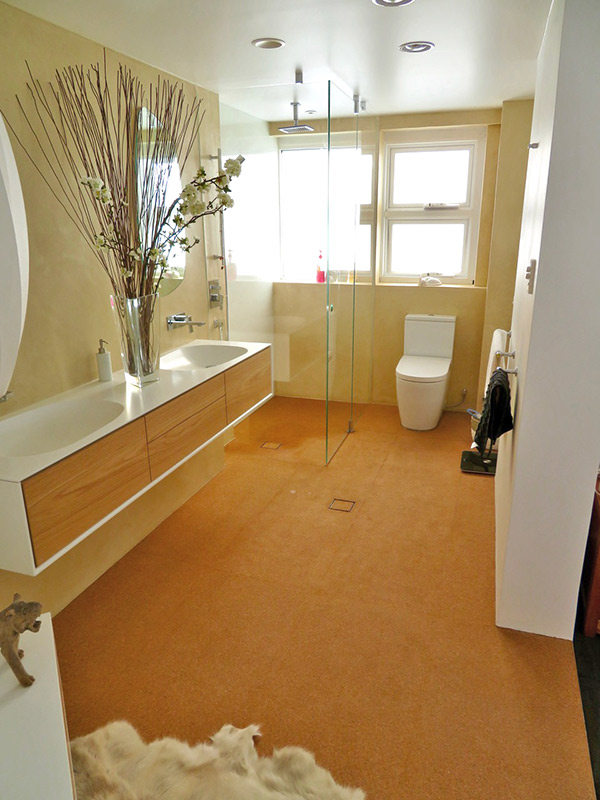
The warm tones of cork completely changed my bathroom’s atmosphere from cold and clinical to warm and spa-like. I paired the honey-colored cork with white subway tiles, matte black fixtures, and live plants, creating a natural, organic aesthetic. The cork grounds the design and prevents the white surfaces from feeling sterile. Friends who visit comment on how relaxing and different the space feels compared to typical bathrooms.
I created a border design using darker stained cork tiles around the bathroom perimeter with lighter natural cork filling the center. This simple pattern adds visual interest without overwhelming the small space. The border also serves a practical purpose, defining the wet zone near the tub and shower where I’m most vigilant about water management. This visual delineation helps me remember to be extra careful about moisture in those areas.
Texture adds another dimension to the bathroom experience. The slight give of cork underfoot creates a softer, more comfortable surface than hard tile. This cushioning effect is especially appreciated when standing at the sink during lengthy grooming routines. The natural grain pattern of cork provides subtle visual texture that adds warmth without being busy or distracting, complementing rather than competing with other design elements.
What I’d Do Differently and Lessons Learned
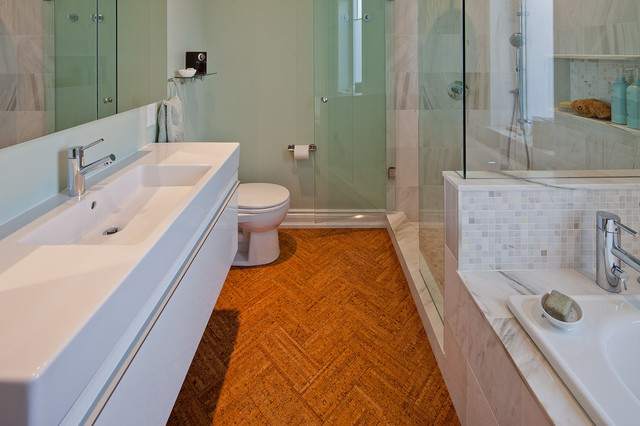
If I were starting over, I’d upgrade to an even higher grade of pre-finished cork tiles with thicker factory sealing. The mid-grade tiles I chose have performed well, but premium options with more protective layers would provide additional peace of mind in high-moisture areas. The price difference was only about $2 per square foot, which would have been worth it for extra durability.
I wish I’d installed a better bathroom ventilation fan before the cork flooring. My builder-grade fan doesn’t move enough air, so humidity lingers longer than ideal. I’m planning to upgrade to a higher CFM fan that will clear moisture faster, reducing the humidity exposure the cork experiences. Proper ventilation is crucial for any bathroom flooring but especially important with natural materials like cork.
I’d also have been more strategic about bath mat placement from day one. I now use only quick-drying microfiber mats that I hang to dry after each use rather than leaving them on the floor. Initially, I left a regular bath mat down constantly, which trapped moisture underneath. Learning to manage bath mats properly would have saved some early anxiety about whether I’d made the right flooring choice.

Is cork flooring really suitable for bathrooms?
Yes, with proper installation and maintenance. My cork bathroom floor has performed excellently for two years. The keys are using engineered cork rated for wet areas, waterproof membrane underneath, quality sealing, and diligent maintenance. It’s not as foolproof as ceramic tile, but the comfort and warmth benefits outweigh the extra care required for me.
How does cork handle water splashes and humidity?
Properly sealed cork handles splashes and humidity well. I wipe up standing water after showers, but normal splashing and humidity haven’t caused any problems. The natural antimicrobial properties prevent mold growth. The factory finish plus my additional sealing coats create a water-resistant barrier that’s held up to daily bathroom use without issues.

Will cork flooring get moldy in a bathroom?
Not in my experience. Cork’s natural suberin content resists mold and mildew. After two years in a frequently used bathroom, I’ve seen zero mold on the cork itself, unlike my previous ceramic tile grout. Good ventilation and prompt water cleanup are important, but the cork’s natural properties provide inherent mold resistance that’s been impressive.
How much does cork bathroom flooring cost?
I paid about $5-7 per square foot for quality engineered cork tiles rated for bathrooms, plus professional installation at $3-4 per square foot. My 40-square-foot bathroom cost roughly $400-450 total. This is comparable to mid-range ceramic tile but significantly less than natural stone. The comfort benefits justify the cost for me.

Can I install cork tiles in a bathroom myself?
Possibly, but I hired a professional for the critical waterproofing steps. The membrane installation, specialized adhesives, and proper sealing require experience to do correctly. Mistakes in a bathroom can lead to expensive water damage. If you’re very handy and detail-oriented, DIY is possible, but professional installation provides important peace of mind.
How long will cork flooring last in a bathroom?
With proper care, cork can last 15-20 years in bathrooms. Mine is only two years old but shows minimal wear. The key is maintaining the protective seal with semi-annual resealing and managing moisture properly. Cork won’t last as long as ceramic tile, but the lifespan is respectable for the comfort and aesthetic benefits it provides.
Related Posts: