When I first came across engineered cork flooring while researching options for my home office renovation, I honestly didn’t know much about it beyond wine bottle stoppers. But the more I read and the more samples I held in my hands, the more intrigued I became. It was soft underfoot, surprisingly stylish, and came with a list of practical benefits that kept growing the more I looked into it. After installing it in two rooms now, I can tell you it’s one of those flooring choices that genuinely surprises people in the best possible way.
What Engineered Cork Flooring Actually Is and How It’s Made
I had to do some homework before I fully understood what made engineered cork different from traditional cork tiles. Engineered cork flooring is typically constructed with a real cork layer on top, bonded to a high-density fiberboard or cork composite core. The result is a plank or tile that’s more dimensionally stable than pure cork and easier to install in a variety of spaces.
The cork used in production is harvested from the bark of cork oak trees, which regrow their bark every nine years without harming the tree at all. When I learned that, it genuinely changed how I felt about the purchase. Choosing cork felt less like buying a floor and more like participating in something sustainable that I could feel good about long after the installer left.
The surface of engineered cork planks usually comes pre-finished with a protective urethane or UV-cured coating that guards against scratches and daily wear. Some products also come with a click-lock installation system, which made the whole process feel much less intimidating when I was weighing whether to hire a professional or attempt it myself. That user-friendly construction is one of the things I appreciate most about it.
The Comfort Factor: Why My Feet Noticed the Difference Immediately
I work from home, so I spend a significant part of my day standing or walking around my home office. Before cork, I had laminate in that room and my feet and lower back ached by late afternoon on long days. The moment I walked across my newly installed cork floor for the first time, the difference was immediate and almost startling in how noticeable it was.
Cork has a natural cellular structure that makes it slightly compressible underfoot, giving it a cushioned quality that hard flooring materials simply can’t replicate. It’s not spongy in a cheap or unstable way, it just has a gentle give that absorbs the impact of each step. Physical therapists and ergonomics experts often recommend softer floor surfaces for people who stand for extended periods, and now I completely understand why.
That same cushioning quality also makes engineered cork an excellent choice for homes with young kids or older adults. I’ve watched my young niece tumble on my cork floor with far less drama than she would have experienced on hardwood or tile. It won’t prevent every bump and bruise, but there’s a meaningful difference in how it absorbs impact, and that matters in a family home more than most flooring specs will ever tell you.

Sound and Thermal Insulation: The Benefits Nobody Talks About Enough
One thing I didn’t fully anticipate before installing cork was how much quieter my home office would feel afterward. Cork is a natural sound absorber because of those millions of tiny air-filled cells within its structure. Footsteps, chair movement, even typing noise, all felt noticeably muffled compared to the hard laminate I’d replaced. My spouse immediately commented on how the room sounded different from the hallway.
The thermal insulation properties surprised me even more. Cork naturally resists heat transfer, which means the floor stays closer to room temperature rather than feeling cold underfoot during winter months. My old laminate felt like stepping on ice on January mornings, but the cork floor in my office feels comfortable even in bare feet first thing in the morning, which is a small luxury I didn’t know I was missing.
These properties also contribute to energy efficiency in a modest but real way. A floor that helps retain warmth means your heating system works slightly less hard to maintain a comfortable temperature. I can’t point to a dramatic drop in my utility bills, but my space feels consistently more comfortable throughout the year, and I believe the cork flooring plays a real role in that.

Moisture Resistance and Where Cork Flooring Works Best
Moisture was the first concern I raised when I started talking to flooring specialists about cork. Natural cork actually has some inherent moisture resistance because its cellular walls contain a waxy substance called suberin, which repels water to a degree. The engineered construction and factory-applied finish add another layer of protection that raw cork tiles wouldn’t have on their own.
That said, engineered cork is not waterproof, and I want to be upfront about that because I’ve seen some overly optimistic claims online. It can handle everyday spills and normal humidity fluctuations very well as long as you wipe things up promptly. I wouldn’t install it in a bathroom or laundry room where water pooling is a regular possibility, and most manufacturers will tell you the same thing in their warranty documentation.
For kitchens, my installer and I had a long conversation before I decided not to use cork in that space despite loving it elsewhere. A high-traffic area with a sink, dishwasher, and the occasional dropped glass felt like too much risk for a material that still has moisture limitations. My kitchen got luxury vinyl plank instead. But in my home office and the upstairs hallway, the cork has performed beautifully through two full years without a single moisture-related issue.

Installation Tips and What I Learned From My Own Experience
My first cork installation was in my home office, and I chose a floating click-lock plank format to keep things manageable. I acclimated the planks in the room for 48 hours before starting, which my installer emphasized was non-negotiable. Cork is sensitive to temperature and humidity, and skipping that step can lead to expansion or gaps after installation that are frustrating and expensive to fix.
The subfloor preparation mattered more than I expected. Cork planks require a very flat subfloor, even more so than some other floating floor types, because the material is soft enough to telegraph any dips or bumps through the surface over time. I rented a floor sander to smooth out a couple of high spots in my plywood subfloor before anything else happened, and that extra effort paid off in how solid and seamless the finished floor felt.
One practical tip I’d pass along is to use a soft pull bar rather than a hammer and tapping block when clicking planks together. Cork can compress and dent at the edges if you’re too forceful during installation, and I learned that lesson with a couple of planks in the first row before adjusting my technique. Go slow, be gentle, and check your alignment constantly. The click-lock system is forgiving but cork rewards patience more than most flooring materials I’ve worked with.
Styling and Design Options in Engineered Cork
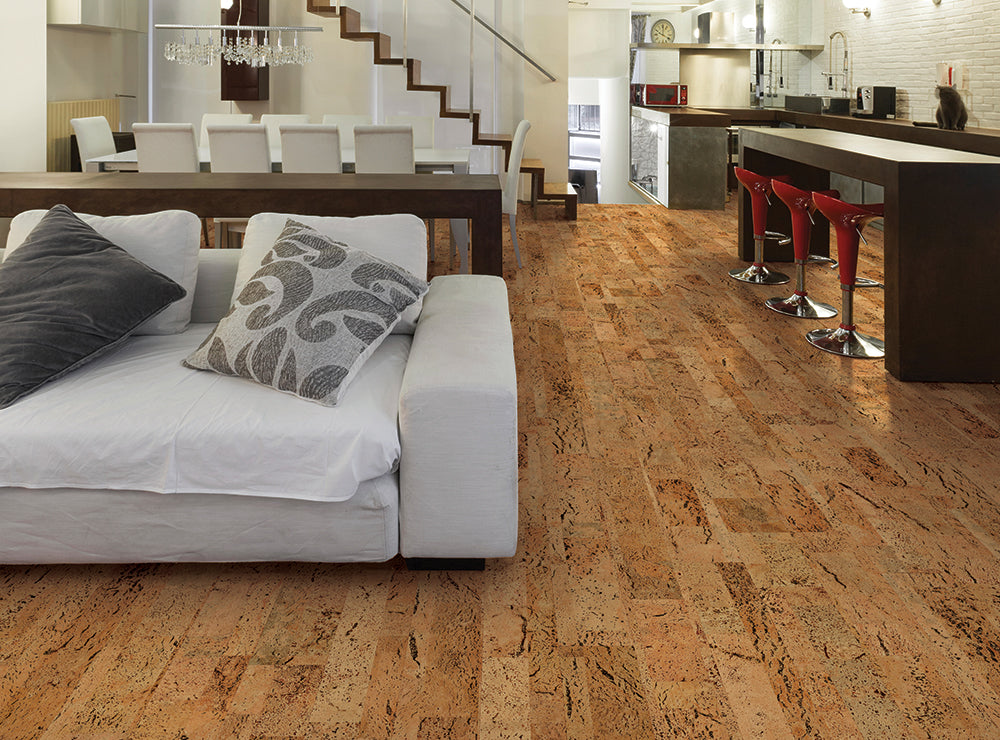
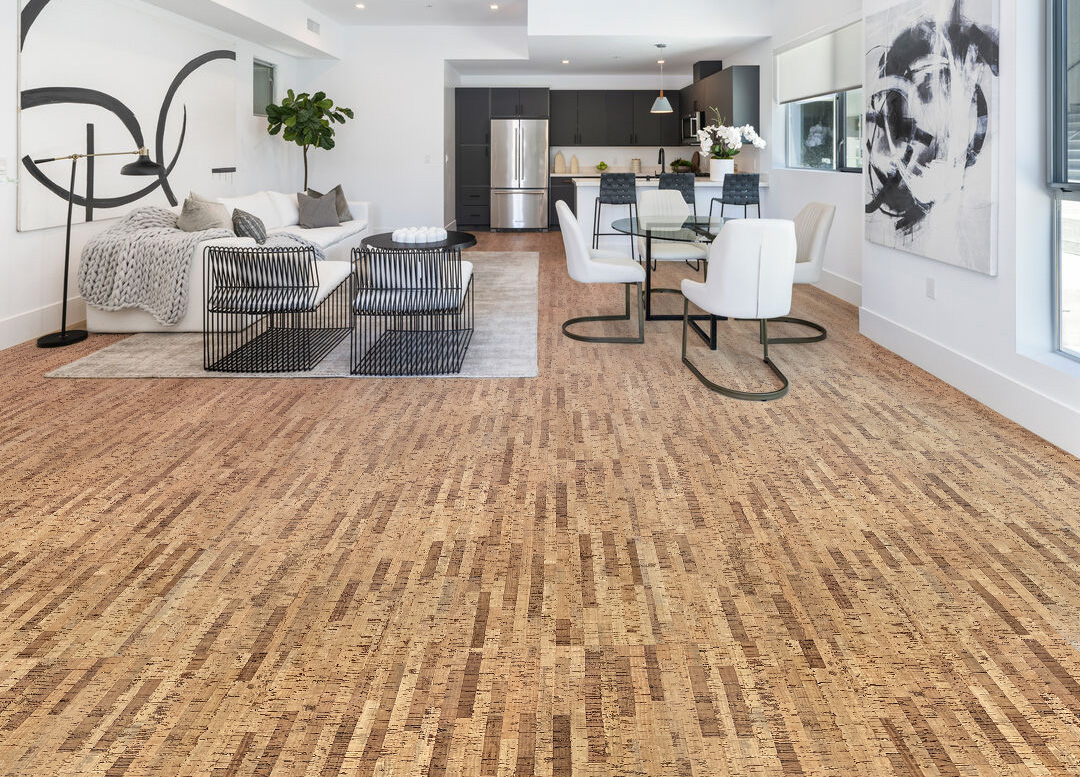
When most people picture cork flooring, they imagine that familiar speckled tan pattern from old wine corks. Modern engineered cork has moved so far beyond that. I was genuinely impressed by the range of colors, patterns, and textures available when I started sampling. I found options in deep charcoal, warm walnut tones, soft gray, and even a pale ivory that looked almost like white oak at first glance.
Some engineered cork products mimic the look of wood or stone through printed or embossed surface layers, while others celebrate the natural cork texture in updated color palettes. I chose a medium warm tone for my office that reads as organic and natural without looking dated or too rustic. It paired beautifully with my white walls and dark furniture in a way I hadn’t quite visualized when ordering samples but loved the moment it was installed.
The texture of cork flooring also adds something that printed surfaces can’t fully replicate. Running a hand or bare foot across it has a distinctive softness that feels intentional and interesting rather than generic. In a space where I spend a lot of hours, that tactile quality matters. It’s one of those details that makes a room feel considered rather than just furnished, and after two years, I still notice and appreciate it every single day.

Is engineered cork flooring durable enough for everyday use?
It holds up well in moderate-traffic areas with proper care. The factory-applied finish resists everyday scratches and scuffs reasonably well, though it’s not as hard as tile or luxury vinyl. I’ve had mine for two years in a home office and it still looks great. Avoid dragging heavy furniture and use felt pads on chair legs to protect the surface over time.
How does engineered cork handle pet traffic?
It does reasonably well with pets, though sharp claws can leave light scratches over time. My sister has cork floors with two medium-sized dogs and keeps them looking good by trimming nails regularly and using area rugs in the highest-traffic zones. The softness that makes cork comfortable underfoot also makes it slightly more vulnerable to scratching than harder surfaces, so managing pet nails matters here.
Can engineered cork be refinished if it gets damaged?
Some engineered cork products with a thick enough cork layer can be lightly sanded and refinished once, similar to engineered hardwood. It depends heavily on the specific product and the thickness of the cork wear layer. I’d check with your manufacturer before assuming this is possible for your floor. In my experience, keeping up with the finish coat every several years is a better long-term strategy than waiting for full refinishing.
How much does engineered cork flooring cost?
Materials typically run $3 to $8 per square foot depending on the brand, thickness, and finish quality. Installation adds roughly $2 to $4 per square foot if you hire a professional. It’s competitively priced compared to hardwood and many premium vinyl products. Factor in underlayment, acclimation time, and subfloor prep when budgeting, since those steps add to the overall cost but are essential for a good result.

Is engineered cork flooring a good choice for allergy sufferers?
It can be a great option. Cork naturally resists mold, mildew, and dust mites because of its suberin content, which makes it more hypoallergenic than carpet and easier to keep clean than textured surfaces that trap allergens. I have mild allergies and noticed my office felt fresher after switching from carpet. Regular dry mopping keeps allergens from settling into the surface, which is simple to maintain.
How long does engineered cork flooring last?
With proper care and maintenance, engineered cork can last 20 to 30 years or more. Keeping humidity between 40 and 60 percent, wiping spills promptly, using furniture pads, and refreshing the surface finish periodically all contribute to a longer lifespan. Mine is still performing beautifully after two years, and based on what I’ve read and heard from others, I’m confident it will continue to look good for many years ahead.

Related Posts: