When I remodeled my bathroom a couple of years ago, cork flooring was not even on my radar at first. I was looking at tile, maybe some vinyl, the usual suspects. But a friend mentioned she had put cork in her bathroom and loved it, and once I started researching it seriously, I couldn’t stop thinking about it. It’s warm underfoot, naturally resistant to mold and mildew, and has this soft, cushioned feel that makes stepping out of the shower genuinely pleasant. Here’s what I’ve learned from choosing cork for one of the most moisture-heavy rooms in my home.
What Makes Cork a Surprisingly Smart Choice for Bathrooms
When most people think of cork, they picture a wine bottle stopper or a bulletin board, not a bathroom floor. That was my first reaction too. But cork is actually a remarkably functional material that brings a lot of practical benefits to a space that demands durability and moisture tolerance above almost anything else.
Cork comes from the bark of the cork oak tree, and its natural cellular structure is what makes it so uniquely suited to wet environments. Those tiny air-filled cells give cork its famous cushiony feel underfoot, but they also make it naturally resistant to moisture absorption when properly sealed. That combination of comfort and practicality is honestly what won me over after weeks of comparing options.
What I didn’t expect going in was how much I’d appreciate the thermal qualities. Cork is a natural insulator, which means the floor stays noticeably warmer than tile in the morning. Getting out of a hot shower and stepping onto a floor that doesn’t feel like ice is one of those small daily pleasures that I genuinely look forward to now that I’ve experienced it firsthand.
Choosing the Right Type of Cork Flooring for a Wet Space
Not all cork flooring is created equal, and this is something I really wish I’d understood better before I started shopping. There are two main types to consider: cork tiles and floating cork planks. Each has different installation requirements and different levels of moisture resistance depending on how they’re sealed and finished.
Cork tiles are glued directly to the subfloor, which creates a tight seal but also means any moisture that gets underneath can cause real problems over time. Floating cork planks, on the other hand, click together and sit above the subfloor without adhesive, making them somewhat easier to install and replace if damage occurs. I went with floating planks and have been happy with that choice in my bathroom setting.
The finish and sealing on whatever product you choose is arguably even more important than the installation method itself. I specifically looked for cork flooring with a factory-applied polyurethane finish rated for high-moisture environments. Thicker wear layers and multiple finish coats give you so much more protection and longevity, especially in a bathroom where water hits the floor every single day without exception.
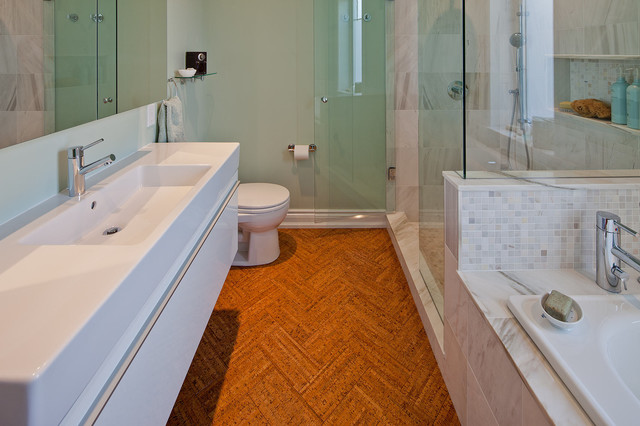
Sealing and Waterproofing: The Step You Can’t Skip
I cannot stress this enough: sealing your cork floor properly is the single most important thing you can do to make it last in a bathroom. Cork in its natural state is not waterproof. It’s moisture-resistant, yes, but without a thorough seal, standing water and daily humidity will eventually work their way in and cause the cork to swell, warp, or grow mold underneath the surface.
I applied two additional coats of water-based polyurethane sealer on top of my floor’s factory finish after installation, and I let each coat cure fully before using the bathroom again. My installer actually recommended this extra step specifically for bathroom applications, and I’m glad I listened. It added a day to the project but gave me a lot more confidence in the floor’s longevity.
Beyond the initial seal, I also do a light reapplication of sealer every two to three years as part of my regular maintenance routine. It sounds like more work than it actually is. The process takes a few hours, requires the bathroom to be out of commission for a day, and makes a meaningful difference in how well the cork holds up against the constant moisture and humidity that a bathroom produces year-round.
The Look and Feel of Cork in a Bathroom Setting
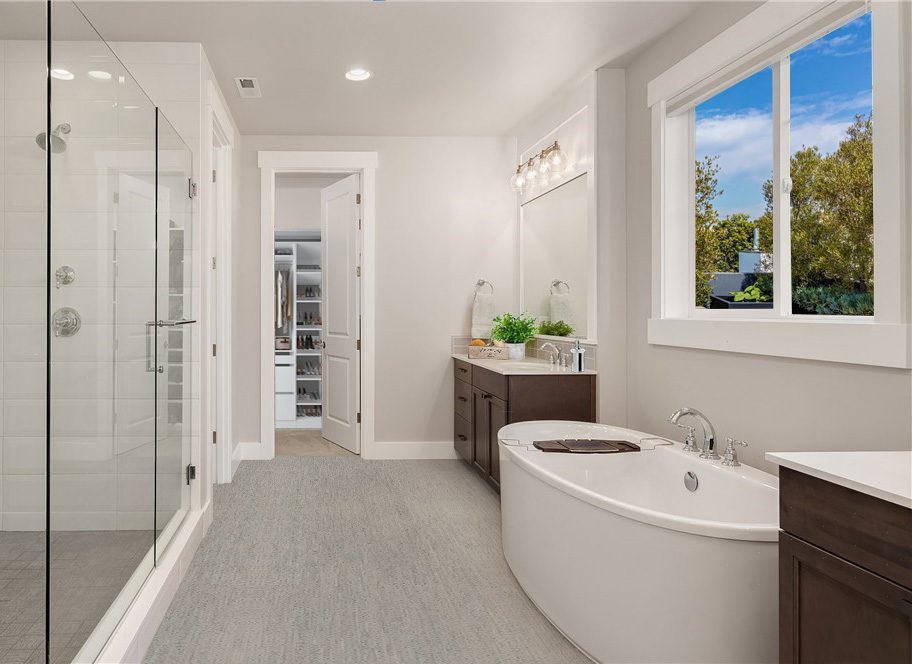
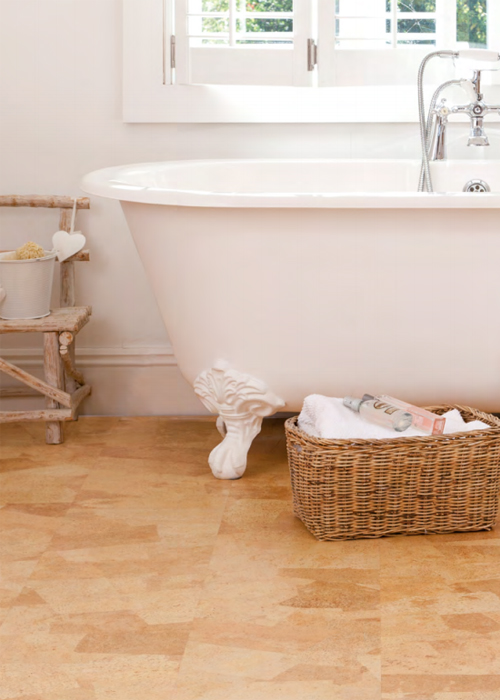
One of the things that surprised me most after installation was how beautiful the cork actually looked in my bathroom. I had expected it to look a little rustic or earthy in a dated way, but the warm honey tones and subtle natural texture gave the whole space a calm, spa-like atmosphere that I absolutely love walking into every morning and evening.
Cork comes in a wider range of colors and patterns than most people realize. You can find options that have been stained darker for a richer, more contemporary look, or lighter natural tones that feel airy and organic. I went with a medium natural tone that complements my white fixtures and light gray walls without feeling too matchy or too contrasting, and the result feels cohesive and intentional.
The underfoot sensation is genuinely something you have to experience to fully appreciate. After years of stepping onto cold ceramic tile in various bathrooms, the slight give and warmth of cork felt almost luxurious by comparison. It’s easier on your feet, easier on your joints if you spend any time standing at the vanity, and it just feels considered in a way that harder flooring options simply don’t.

Installation: What I Did Myself and What I Left to the Pros
I went back and forth a lot on whether to install the cork myself or hire someone. I’m reasonably handy, and floating click-lock floors are generally considered DIY-friendly. But because this was a bathroom, with its trickier cuts around a toilet, vanity, and tub surround, I ultimately decided to bring in a professional for the actual installation and do the prep work myself.
The prep work I handled included pulling up the old flooring, checking the subfloor for any soft spots or moisture damage, and making sure everything was level and clean before the installer arrived. Cork is less forgiving than vinyl when it comes to subfloor imperfections, so this step genuinely mattered and was worth the extra time I put into it before anyone showed up with planks.
My installer made cuts around the toilet base and tub that I honestly would have struggled with on my own, and the finished edges looked clean and tight as a result. If you’re confident with a jigsaw and have tiled a bathroom before, DIY is totally achievable. But if this is your first time working around plumbing fixtures, having a professional handle at least the tricky cuts is money well spent and stress well avoided.
Caring for Cork Bathroom Floors Day to Day
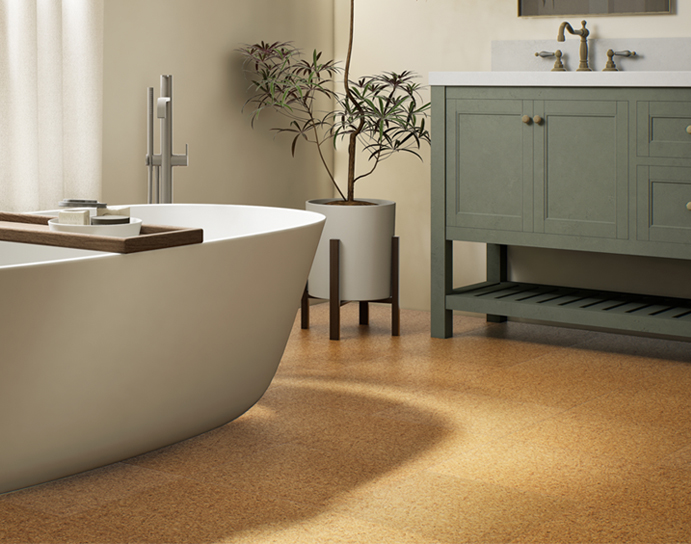
Living with cork floors in the bathroom has been much easier than I anticipated going in. My main daily habit is simply making sure wet towels and bath mats don’t sit directly on the floor for extended periods. A good absorbent bath mat in front of the shower and sink catches most of the water before it ever reaches the cork, and that small habit has made a big difference over time.
For regular cleaning, I use a slightly damp mop with a pH-neutral cleaner and avoid anything too harsh or acidic that could break down the finish over time. I also steer completely clear of steam mops on cork, which I’ve seen recommended in some places online. Steam can force moisture into the seams and underneath the finish, and that’s exactly the kind of damage that’s difficult and expensive to fix after the fact.
Every few months I do a more thorough inspection of the floor, paying close attention to the seams, edges, and the area right around the toilet base and tub, where water is most likely to pool or splash consistently. Catching any areas where the finish looks worn or dull early and touching them up with a light coat of sealer prevents small vulnerabilities from turning into bigger, more costly problems down the line.
Is cork flooring actually waterproof enough for a bathroom?
Cork is moisture-resistant, not fully waterproof on its own, but with proper sealing it performs really well in bathrooms. I sealed mine with extra polyurethane coats after installation and reapply every few years. As long as you wipe up standing water quickly and use bath mats, sealed cork holds up beautifully in everyday bathroom conditions without warping or swelling.
How long will cork flooring last in a high-moisture bathroom?
With good sealing and regular care, cork bathroom floors can last 15 to 25 years. Mine are going on two years and still look and feel like new. Longevity depends heavily on how well the floor is sealed initially and how consistently you maintain the finish over time. Buying a quality product and not skipping the sealing step makes all the difference.
Is cork flooring comfortable and safe underfoot in the bathroom?
Yes, and this is honestly one of my favorite things about it. Cork has a natural cushion and warmth that makes stepping out of the shower so much more pleasant than cold tile. It also has a slight grip to it that I find reassuring on wet feet. It’s not a substitute for a bath mat, but the texture and softness make it one of the more slip-resistant natural flooring options available.
Can cork flooring handle a busy bathroom used by kids and pets?
It holds up pretty well, though it’s not indestructible. Pet nails can scratch the surface over time if they’re not kept trimmed, and heavy impacts can dent cork more easily than harder flooring materials. That said, the sealed finish protects against daily splashing and humidity just fine. For a high-traffic family bathroom, I’d recommend going with a thicker wear layer and resealing a bit more frequently.

How much does cork bathroom flooring cost compared to tile or vinyl?
Cork falls somewhere in the middle range price-wise. It’s generally more affordable than quality ceramic or porcelain tile once you factor in installation, but comparable to or slightly more than mid-range luxury vinyl. The long-term value is strong if you maintain it well. I felt good about my investment knowing the floor could last decades with proper care and the occasional resealing.
What’s the biggest mistake people make with cork bathroom floors?
Skipping or underestimating the sealing process, without question. I’ve read plenty of stories from people whose cork floors warped or molded within a year or two, and in almost every case it came down to inadequate sealing or letting standing water sit too long. Seal it properly from the start, keep bath mats in place, wipe up puddles quickly, and maintain the finish regularly, and cork will reward you with years of beautiful, comfortable flooring.

Related Posts: