I’ll be honest, when a designer friend first suggested cork flooring for my home office renovation, I laughed a little. I associated cork with bulletin boards and wine bottles, not stylish modern interiors. But after seeing a few current installations and doing serious research, I completely changed my tune. Modern cork flooring has evolved far beyond the dated, yellowish tiles of the 1970s. It’s warm, quiet, sustainable, and genuinely beautiful in contemporary spaces. Here’s everything I’ve learned after living with it and wishing I had discovered it sooner.
How Modern Cork Flooring Has Changed From Its Dated Past
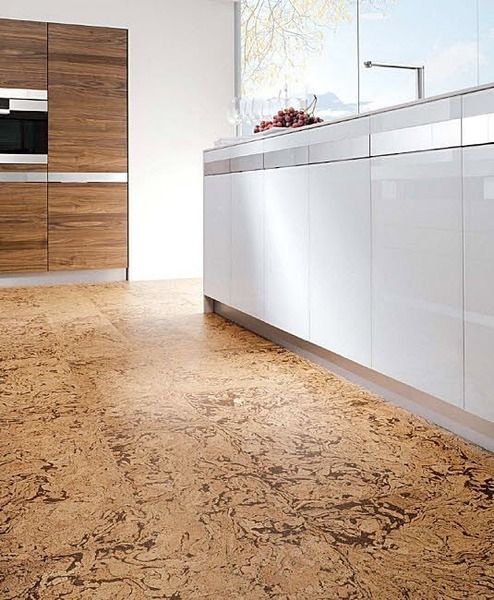
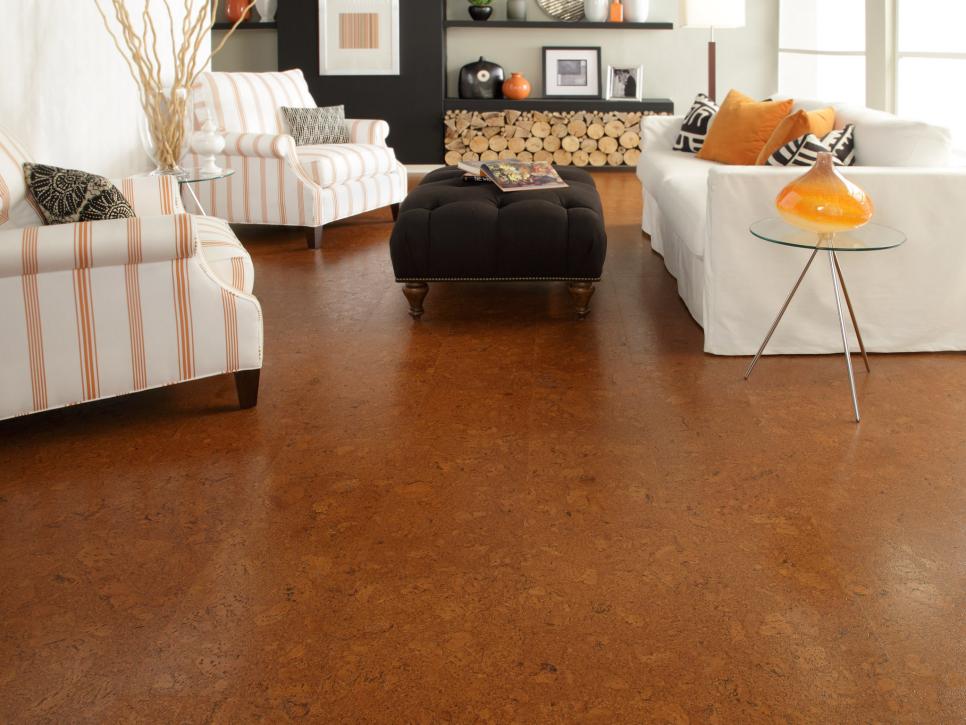
The cork floors I remembered from old homes looked thick, bumpy, and almost spongy in an unappealing way. Today’s cork flooring is a completely different product. Manufacturers now offer cork in sleek, large-format tiles and floating plank systems with photographic top layers that mimic wood, stone, or abstract patterns convincingly.
When I visited a flooring showroom and saw the modern cork options displayed, I genuinely couldn’t identify several of them as cork at first glance. The surface printing and texture technology has improved so dramatically that cork can now complement minimalist, Scandinavian, or even industrial design styles without looking out of place.
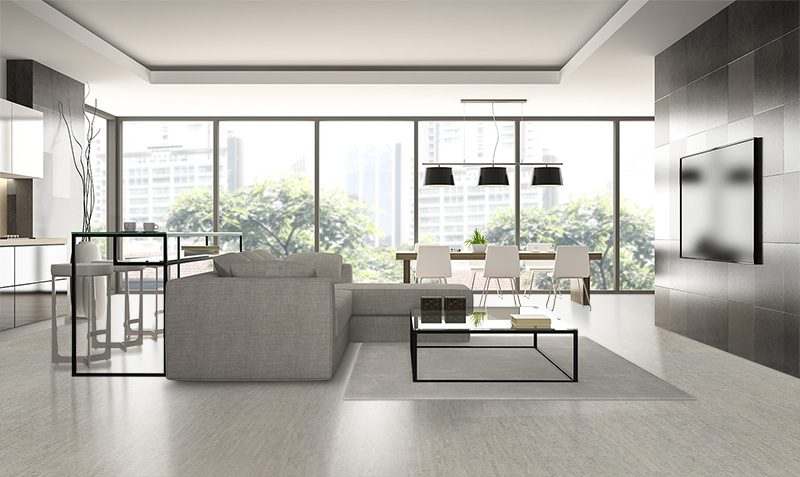
The color range has also expanded significantly. Beyond the natural honey and brown tones, I found cork tiles in soft grays, warm whites, and even deep charcoals. This variety made it easy to find an option that worked with my existing furniture and paint palette rather than forcing me to redesign around the floor.
The Real Comfort and Acoustic Benefits I Noticed Immediately
The first time I walked across my newly installed cork floor in bare feet, I genuinely stopped and looked down in surprise. The cushioning underfoot is unlike any other hard flooring I’ve tried. Cork has millions of tiny air pockets in its cellular structure that compress slightly under foot pressure and spring back, making it feel softer and warmer than wood, laminate, or tile.
For my home office, the acoustic benefit turned out to be just as important as the comfort. Cork absorbs sound rather than reflecting it, which reduced the hollow, echoey quality my room had with the previous hardwood. I noticed fewer distractions during video calls and less fatigue after long days sitting and working at my desk.
If you have kids, a home gym, or a space above rooms where noise travels down through the floor, cork is worth serious consideration for that reason alone. It dampens both impact noise and airborne sound better than most flooring options at a comparable price point. I only wish I had put it in my children’s playroom upstairs years earlier.

Sustainability and Why Cork Appealed to My Environmental Values
I’ve always tried to make environmentally conscious choices where I can, and cork genuinely impressed me in this area. Cork is harvested by stripping the bark from cork oak trees without cutting them down. The trees continue to live, regenerate their bark, and are harvested again roughly every nine years throughout a lifespan that can exceed 200 years.
Compared to the environmental footprint of hardwood logging, vinyl production, or laminate manufacturing, cork’s impact is remarkably low. The forests where cork is harvested also support significant biodiversity and absorb meaningful amounts of carbon dioxide during the regrowth cycle, making cork one of the few flooring materials that can genuinely claim environmental benefit.
I found this aspect of cork genuinely motivating rather than just a marketing claim. When I looked into the certifications available, I chose a product with verified sustainable sourcing credentials. Knowing my floor contributed to rather than detracted from forest health made the purchase feel meaningfully different from my previous flooring decisions.
Choosing the Right Cork Flooring Format for Your Space
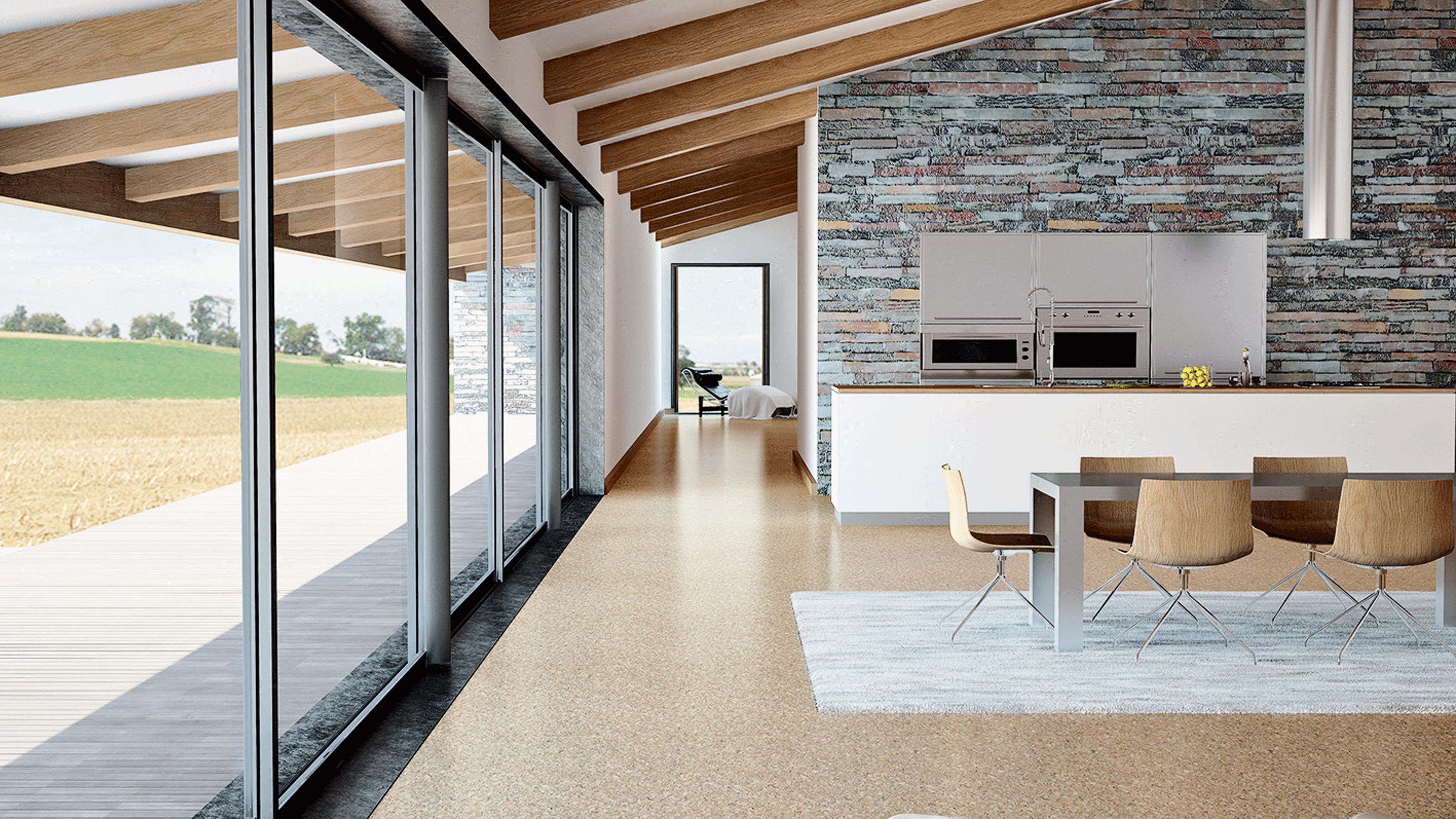
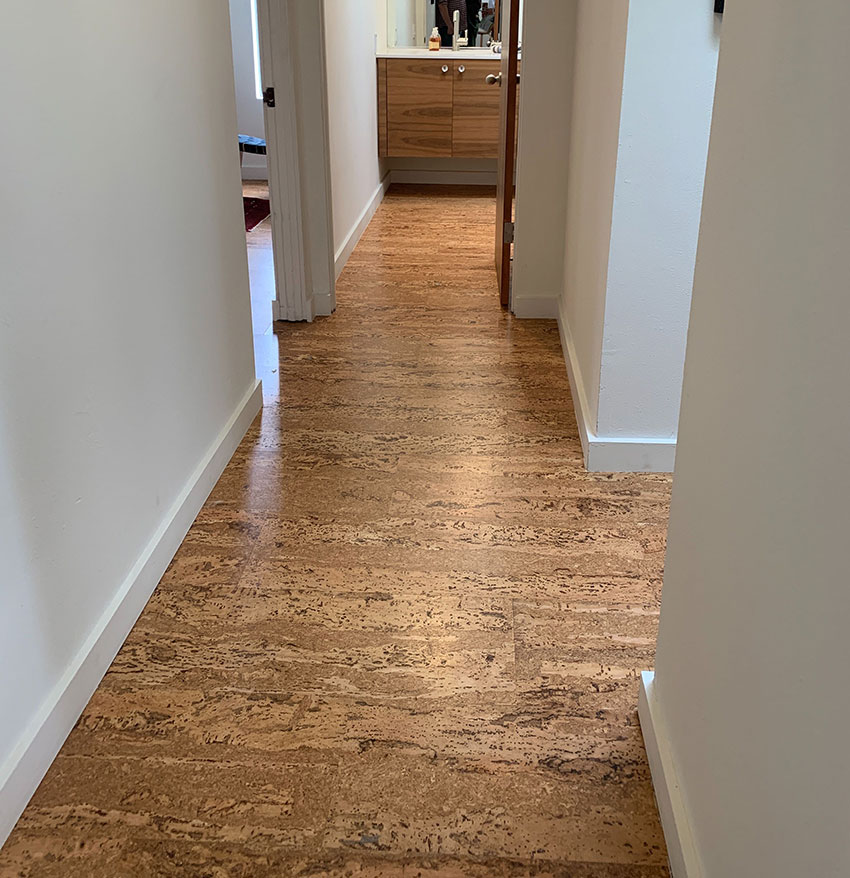
Cork flooring comes in a few different formats and understanding which one suits your situation matters before you commit. Floating cork planks are the most popular modern option and the format I chose for my office. They click together like laminate, sit over an underlayment, and don’t require glue or nails, making installation much more approachable for a DIYer.
Glue-down cork tiles are the more traditional format and offer a very stable, low-profile installation. They’re great for rooms where you want a flush, seamless feel or where a floating floor might shift underfoot due to heavy furniture. The tradeoff is that removal and replacement is considerably harder if tiles get damaged later.
There are also cork-backed floating planks that have a wood or stone appearance on the top layer with a cork core underneath. These gave me the wood look I wanted while keeping all the comfort and acoustic benefits of cork underneath. I found them to be the best of both options, especially for a space where I cared equally about appearance and function.
Installing Cork Flooring Yourself Without Major Headaches
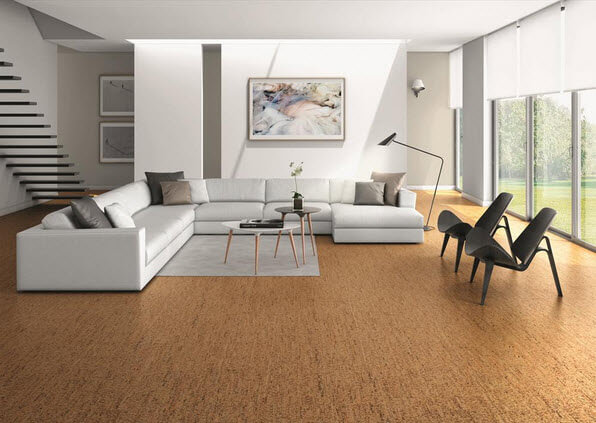
I installed my cork floating planks myself over a weekend, and it went smoothly enough that I’d confidently recommend it as a DIY project for anyone comfortable with basic home improvement tasks. The click-lock system is similar to laminate installation, so if you’ve done that before, cork will feel very familiar.
The most important preparation step is acclimating the cork. I let my boxes sit open in the room for at least 48 hours before installation, which allows the material to adjust to the room’s temperature and humidity. Cork is more sensitive to environmental conditions than harder flooring materials, so skipping this step can lead to gaps or buckling after installation.
I also made sure my subfloor was clean, dry, and level before starting. Cork will telegraph subfloor imperfections more than harder materials, so I filled low spots with floor leveling compound and let it cure before laying a single plank. Taking that extra prep time on day one meant I never had to deal with squeaky spots or uneven areas after the floor was down.
Caring for Cork Floors and Making Them Last for Years
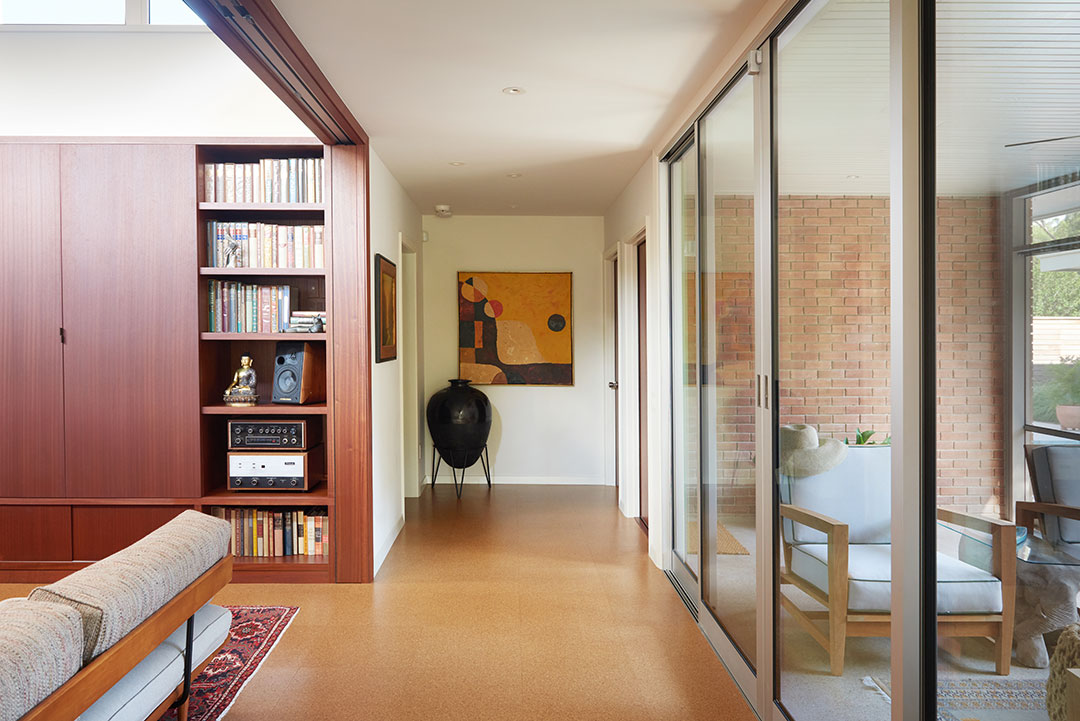
Cork is more vulnerable to certain kinds of damage than harder flooring options, and knowing this upfront helped me put the right habits in place from day one. The biggest threats are standing water, heavy point loads like high heels or furniture legs without pads, and prolonged direct sunlight which can fade the surface over time.
For daily cleaning, I use a dry microfiber mop to capture dust and debris, followed by a barely damp mop with a pH-neutral cleaner when needed. I never saturate the floor with water. Even though my cork has a polyurethane finish, moisture can still work its way into seams over time and compromise the material underneath if cleaning is too aggressive.
I put felt pads under every piece of furniture and added a UV-filtering window film to the large windows in my office to protect against sun fading. I also keep a small area rug under my desk chair to prevent the repeated rolling motion from wearing down the finish in that spot. With these simple precautions in place, my cork floor has stayed in excellent condition and continues to be one of my favorite things about my home office.
Is modern cork flooring durable enough for everyday family use?
Yes, with realistic expectations. Cork with a quality polyurethane finish handles everyday foot traffic well. It’s softer than hardwood, which means heavy dragging or sharp point loads can leave marks. Felt pads under furniture and area rugs in high-traffic spots go a long way. I’ve had mine for over two years with kids occasionally running through and it still looks great with basic care.
Can cork flooring handle moisture in kitchens or bathrooms?
Cork can work in kitchens if you’re diligent about wiping spills immediately and never wet mopping heavily. I wouldn’t recommend it for bathrooms or laundry rooms where standing water is common. The seams in floating cork planks are a vulnerability point for moisture. If you love cork but need it near water, look for glue-down tiles with a waterproof finish and well-sealed seams throughout.
How much does modern cork flooring cost compared to other options?
Quality cork flooring runs roughly $3 to $8 per square foot for the material, putting it in a similar range to mid-grade laminate or entry-level hardwood. Installation adds $1.50 to $3 per square foot if you hire out. I did mine DIY and came in well under $1,000 for my 200-square-foot office. For the comfort and acoustic benefits included, I consider it excellent value overall.
Does cork flooring work well with underfloor radiant heating?
Yes, cork is actually a good companion for radiant heating systems. Its natural insulating properties help retain heat efficiently, and it warms up pleasantly underfoot when the system is running. Keep the floor temperature under 85 degrees Fahrenheit to avoid drying out the cork over time. Always check the specific product’s compatibility with radiant heat before purchasing, as some formats handle it better than others.
How long does cork flooring last before needing replacement?
Well-maintained cork flooring can last 20 to 30 years. The finish may need refreshing every 5 to 10 years depending on traffic, but the cork itself is remarkably resilient. I plan to screen and recoat mine around the 7-year mark as a preventive measure. The key factors in longevity are keeping moisture away, protecting against furniture damage, and limiting prolonged direct sunlight exposure that can fade and dry the surface.
Is cork flooring a good choice for people with allergies?
Cork is naturally resistant to mold, mildew, and dust mites, which makes it a genuinely good option for allergy sufferers. Unlike carpet, it doesn’t trap allergens in fibers, and its smooth sealed surface is easy to clean thoroughly. I noticed an improvement in my own seasonal allergy symptoms after switching from carpet to cork in my office. Just make sure the adhesives and finishes used are low-VOC to keep indoor air quality healthy.
Cork Flooring for Every Room
5 Different Types of Cork Flooring – Home Stratosphere

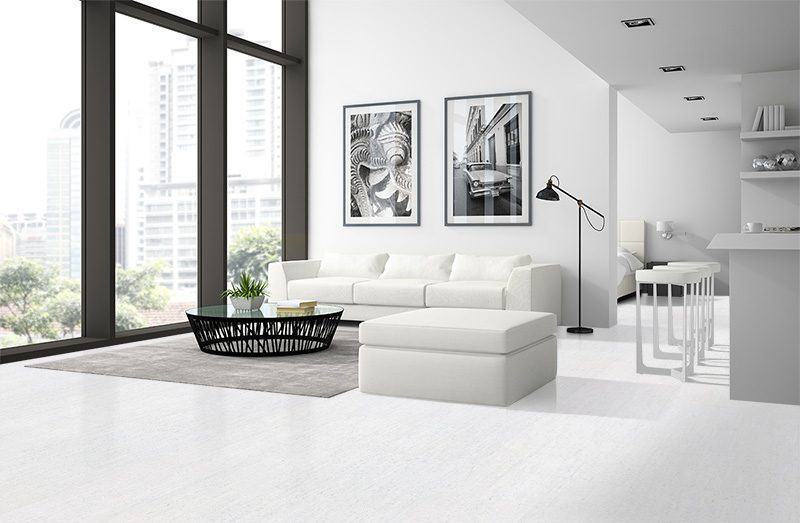
White Bamboo – 1/4 Inch (6mm) – Cork Tile Glue Down (Floor and Wall)
Related Posts: