When I started planning my home renovation, I knew I wanted the rich, classic look of dark oak floors but couldn’t stomach the cost of real hardwood throughout an entire house. Dark oak laminate turned out to be the answer I hadn’t fully considered yet.
The technology behind today’s laminate has come so far that my floors have fooled more than a few visitors into thinking they’re standing on genuine oak. If you’re weighing this option for your own home, let me share what I’ve learned from living with dark oak laminate every single day for the past four years.
Why Dark Oak Laminate Caught My Attention Over Other Options
My flooring search started with real hardwood, moved briefly through engineered wood, and landed on laminate when I ran the numbers seriously. For the square footage I needed to cover, real dark oak hardwood would have cost me nearly three times what I ended up spending on premium laminate. That difference funded an entirely separate room renovation, which made the choice feel obvious.
Beyond cost, I was genuinely impressed by how realistic the oak grain printing had become. I visited several showrooms and specifically tested myself by trying to identify which samples were laminate versus real wood from standing height.
On the better quality products, I genuinely struggled to tell the difference, which told me the technology had matured to a point where laminate was a legitimate aesthetic choice, not just a budget compromise.
I also appreciated the consistency laminate offers. Real oak floors have natural variation that many people love, but I wanted a uniform, cohesive look across my open-plan living and dining areas.
Dark oak laminate gave me that controlled, intentional appearance that I couldn’t guarantee with natural wood, where color and grain variation between batches can sometimes be dramatic.

Picking the Right Shade of Dark Oak for Your Home
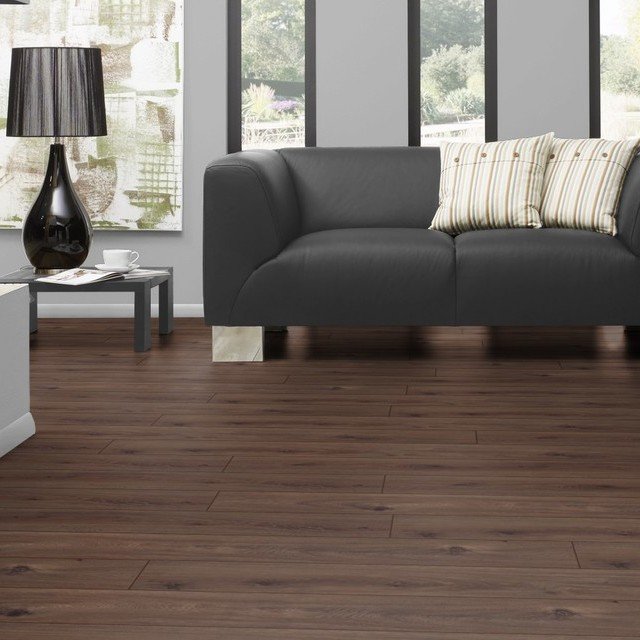
Dark oak laminate is not a single color, and I learned this quickly once I started pulling samples. Some products lean toward warm chocolate browns with reddish undertones, others read more as cool, ashy charcoal with gray mixed into the base tone. The difference between these two camps is significant when you’re trying to match existing furniture and wall colors.
My living room furniture has warm, caramel leather tones, so I steered toward a dark oak with warm brown undertones rather than anything cool or gray-leaning. The result felt harmonious rather than like the floor and furniture were competing with each other. If your space has cooler or more contemporary furnishings, the gray-toned dark oak options might suit you better.
Lighting is the other major factor I tested carefully. I took four different samples home and taped them to my floor in the actual rooms where they’d be installed. I checked them in morning light, afternoon sun, and evening artificial lighting. Two samples I loved in the store looked flat and lifeless in my evening lighting, which is when I use those rooms most. Always test samples at home before ordering, it genuinely changes your decision.
Understanding Laminate Thickness and Surface Texture for Oak Realism
When I first started comparing laminate products, thickness felt like a minor spec I could skim past. After talking to a flooring specialist and testing products in person, I understood it matters enormously for both feel and sound. Thinner laminate, around 6 to 8mm, has a hollow, slightly tinny quality underfoot that immediately signals synthetic to anyone paying attention.
I chose 12mm thick planks with a generous attached underlayment, and the difference in how they feel and sound underfoot is significant. They have a solidity that much thinner products simply can’t replicate. When guests walk across my floors, nobody shifts their weight and says it feels like laminate, which was my real benchmark for success.
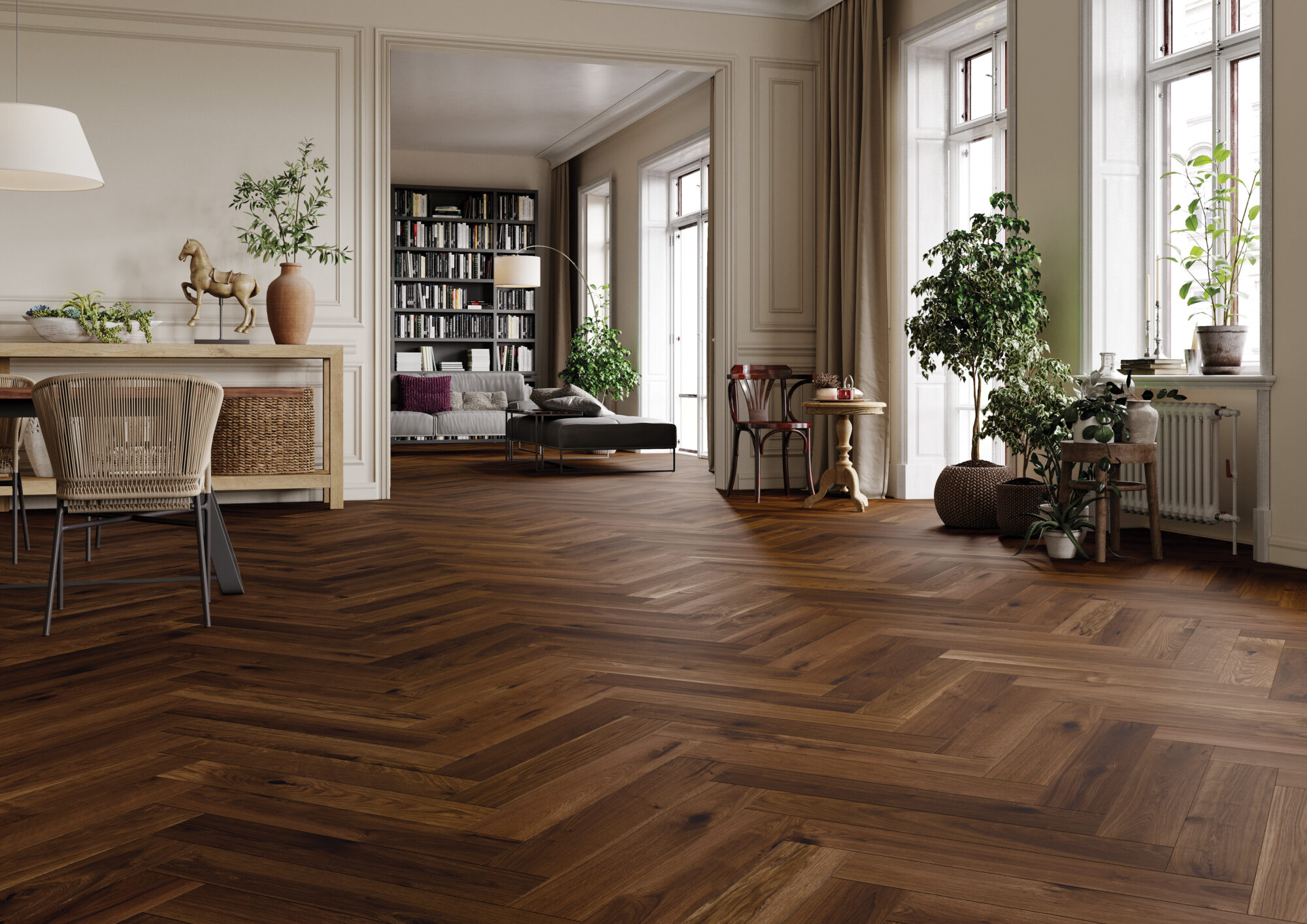
Surface texture is equally important for oak realism. The best dark oak laminate products use what’s called embossed-in-register texture, where the surface grain texture is physically aligned with the printed grain image beneath it. Running your hand across it actually feels like wood grain rather than a flat surface with a wood picture on it. I paid more for this feature and have never questioned that decision.

Installing Dark Oak Laminate: What I Did Right and What I’d Change
I hired a professional installer for my main living areas and watched closely enough to feel confident tackling two smaller rooms myself afterward. The click-lock installation system most modern laminate uses is genuinely approachable for a careful DIYer, but the preparation work before a single plank goes down is where most people cut corners and regret it later.
Acclimating the laminate was the step I almost skipped the first time. Letting the boxes sit open in the installation room for 48 hours allows the planks to adjust to the ambient temperature and humidity. My installer insisted on it and I’ve followed that rule in every room since. It prevents the gaps and buckling that can develop when laminate expands or contracts after installation in an environment it wasn’t adjusted to.
If I could go back and change one thing, I would have been more meticulous about subfloor leveling in one corner of my dining room. There’s a very slight unevenness there that creates a subtle flex in one plank, something I notice because I know where it is but that nobody else has ever detected. Still, a perfectly flat subfloor is worth the extra prep time and any leveling compound needed to achieve it.
How Dark Oak Laminate Shows Wear and How I Manage It Daily
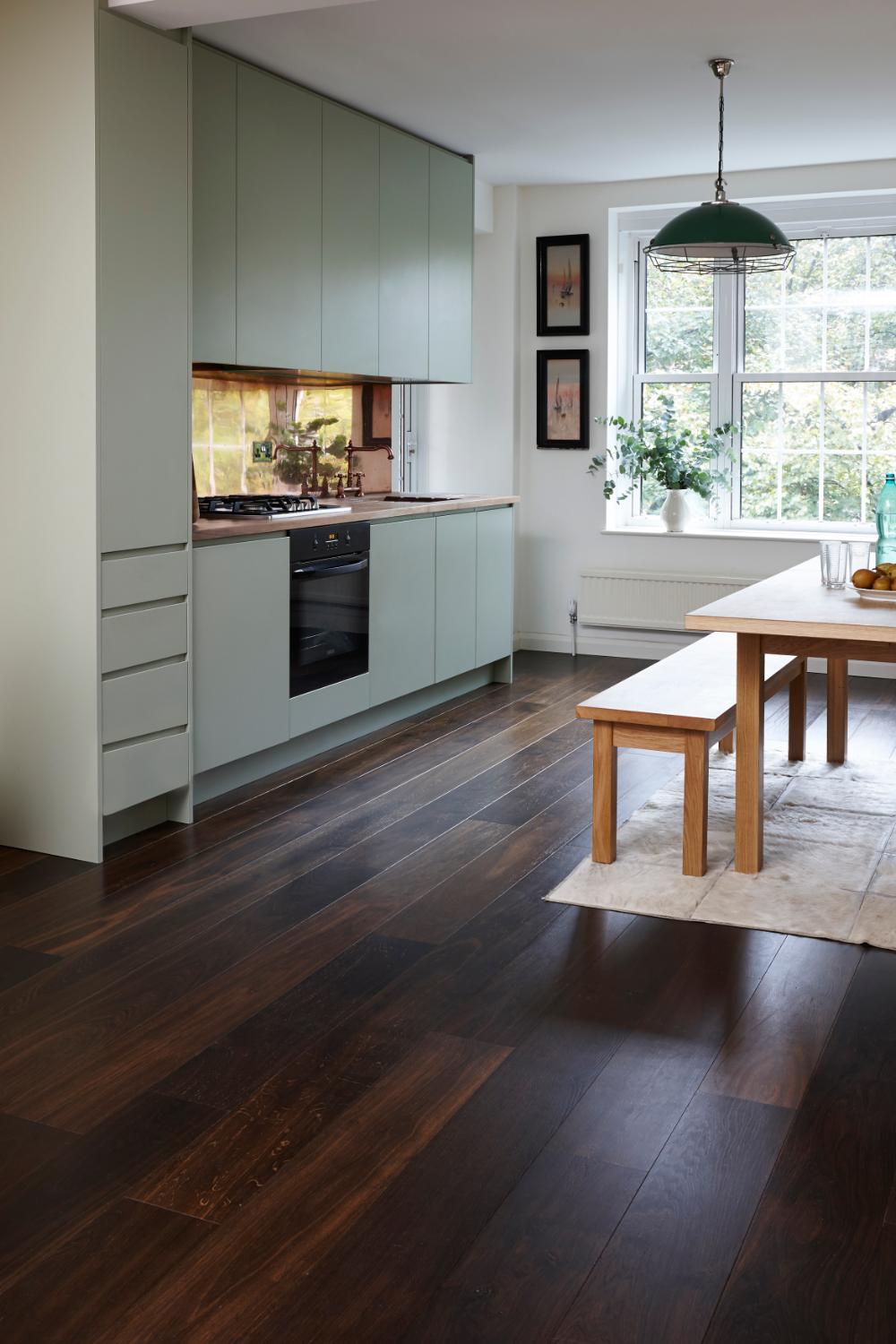
Dark floors show everything, and I want anyone considering dark oak laminate to go in clear-eyed about this reality. Dust, pet hair, footprints, and dried water droplets are all highly visible against a dark surface. For the first few weeks after installation, I was surprised by how often I felt compelled to sweep or mop.
My routine settled into something manageable after I adjusted my habits. A dry microfiber mop every second day handles dust and pet hair efficiently. A lightly damp mop with a laminate-safe cleaner once a week keeps the surface looking polished and clean. The key word there is lightly, because laminate and standing water are genuinely incompatible and excess moisture at the seams causes swelling and damage over time.
Large area rugs in the main living and dining spaces were one of the best decisions I made for reducing daily cleaning demands. They catch the majority of dust and debris before it spreads across the floor, and they add warmth and softness to a space that dark flooring can sometimes make feel slightly austere. I think of rugs as essential accessories for dark floors rather than optional decorating choices.

Cost, Longevity, and Whether Dark Oak Laminate Is Worth It Long-Term
The numbers on my project came out well. I paid around $3.50 to $5 per square foot for premium 12mm dark oak laminate, plus approximately $2 per square foot for professional installation in the main areas. Compared to real dark oak hardwood quotes that started at $10 per square foot installed, the savings were substantial enough to make the decision straightforward.
Longevity is the honest limitation of laminate versus real wood. Quality laminate carries a 25 to 30 year warranty from reputable manufacturers, and the wear layer on premium products is genuinely tough against scratches and daily use. My floors are four years in with no meaningful surface wear visible. The realistic lifespan with good maintenance is easily 15 to 20 years of looking excellent.
The one trade-off I accepted is that laminate cannot be sanded and refinished when it eventually shows its age. A deeply worn or damaged plank needs replacement rather than restoration. This is why I always buy 10 percent extra from the same production lot and store it carefully. Having matching planks on hand for future spot repairs is a simple step that protects my investment and keeps the floor looking consistent for the long term.

Does dark oak laminate look realistic compared to real hardwood?
Premium dark oak laminate is remarkably convincing from normal standing height. The embossed-in-register texture and high-definition grain printing on quality products fool most visitors. I’ve had guests compliment my hardwood floors without realizing they’re laminate. Cheaper options are easier to identify as synthetic, so investing in a quality product with realistic texture makes a real difference in how convincing the final result looks.
How well does dark oak laminate hold up with kids and pets?
Better than I expected, honestly. The wear layer resists scratches from daily activity well, and my kids and dog haven’t caused any visible surface damage in four years. The bigger challenge is that dark floors show dirt, hair, and footprints more than light floors do. Keep pet nails trimmed, use felt pads under furniture, and put rugs in high-traffic zones. Those three habits make a significant difference in how well the floor maintains its appearance over time.

Is dark oak laminate hard to keep clean?
It requires consistent attention because dark surfaces show dust and footprints clearly. My routine is a dry microfiber mop every couple of days and a barely damp mop with a laminate-specific cleaner weekly. Never use excess water, steam mops, or oil-based soaps since these damage the surface and seams over time. Once the routine becomes habit, it’s very manageable. Large area rugs dramatically reduce how much debris reaches the open floor between cleaning sessions.
Can I install dark oak laminate in a kitchen or bathroom?
Standard laminate is risky in bathrooms where standing water and high humidity are regular factors. In kitchens, it can work if you’re careful and wipe spills immediately before moisture reaches the seams. Look specifically for waterproof or water-resistant laminate products if you want it in moisture-prone areas. For bathrooms, I’d genuinely recommend luxury vinyl plank instead since its waterproof core handles moisture exposure far more reliably than any laminate product.
How much does dark oak laminate flooring cost to install?
Quality dark oak laminate material runs roughly $3 to $6 per square foot. Professional installation adds $1.50 to $3 per square foot depending on your location and the complexity of the layout. Don’t forget to budget for underlayment, transition strips, and baseboards, which add up. My total project came in around $5.50 per square foot all-in, which was significantly less than hardwood quotes I received for the same rooms and square footage overall.
How long does dark oak laminate flooring typically last?
With good care, premium dark oak laminate easily lasts 15 to 25 years. Quality products carry manufacturer warranties of 25 to 30 years, though real-world longevity depends heavily on maintenance habits and traffic levels. The key factors are keeping moisture away from seams, cleaning with appropriate products, and protecting high-traffic areas with rugs. Unlike hardwood, laminate can’t be refinished, so surface protection from day one is the most important investment you can make in its lifespan.
Related Posts: