When I first thought about giving my garage a facelift, I didn’t expect the floor to be the star of the show. For years, I’d walked over dull, stained concrete without giving it much thought, but the cracks, oil spots, and general wear were starting to bother me every time I stepped inside. I wanted the space to feel more like an extension of my home rather than a dusty storage area. After looking into different options, I decided to try an epoxy coat, and it turned out to be one of the most satisfying home upgrades I’ve ever done. Not only did it make the space look cleaner and brighter, but it also gave me a surface that’s tough enough to handle my car, tools, and weekend projects without showing wear.
Why I Chose Epoxy for My Garage Floor
I’d been researching different garage flooring options for months, comparing everything from rubber mats to interlocking tiles, but epoxy kept coming up as the most durable and cost-effective choice. I wanted something that could handle heavy use without chipping or peeling, especially since my garage doubles as a workspace. The idea of a glossy, easy-to-clean surface was appealing too, and I liked that epoxy could be customized with colors and flakes, so it didn’t have to look like plain concrete anymore.
Another reason epoxy stood out was its resistance to chemicals and stains. I’ve spilled everything from brake fluid to paint thinner in my garage over the years, and the thought of those stains setting in was frustrating. Epoxy creates a sealed surface that doesn’t absorb liquids, making cleanup as simple as a quick wipe. That alone felt like a game-changer for me, especially since I’m not always the neatest when working on projects.
Finally, I appreciated that epoxy could actually strengthen the floor itself. Once cured, it bonds tightly to the concrete, filling in small cracks and imperfections so the surface feels more solid. It’s not just a cosmetic upgrade; it’s a functional improvement that extends the life of the floor. Knowing I was investing in something that would last for years made the decision even easier.
Prepping the Floor the Right Way
I learned quickly that the success of an epoxy coat depends heavily on preparation. I started by clearing out the garage completely, which was a project in itself since I had to move years’ worth of tools, boxes, and random odds and ends. Then I scrubbed the floor with a degreaser to remove years of oil and dirt. This step was messy and time-consuming, but it’s essential for getting the epoxy to stick properly.
After cleaning, I patched any cracks with a concrete filler. I didn’t want those imperfections showing through the final coat, and filling them also helps prevent further damage. Once the filler dried, I used a rented floor grinder to lightly roughen the surface. This gave the epoxy something to grip onto, which helps prevent peeling later. It was loud, dusty work, but worth it for the long-term results.
The last step before coating was vacuuming and wiping down the floor to remove all dust and debris. I even ran a damp mop over it to make sure nothing was left behind. Skipping this step can lead to bubbles or uneven spots, so I took my time to get it right. By the time I was done, the floor was cleaner than it had been in years and ready for its transformation.

Applying the Epoxy Coat
When it came time to apply the epoxy, I followed the instructions to the letter. I mixed the resin and hardener in small batches so it wouldn’t start curing before I could spread it. Using a roller, I worked in sections, starting at the back of the garage and moving toward the door so I wouldn’t paint myself into a corner. The smell was strong, so I kept the space well-ventilated.
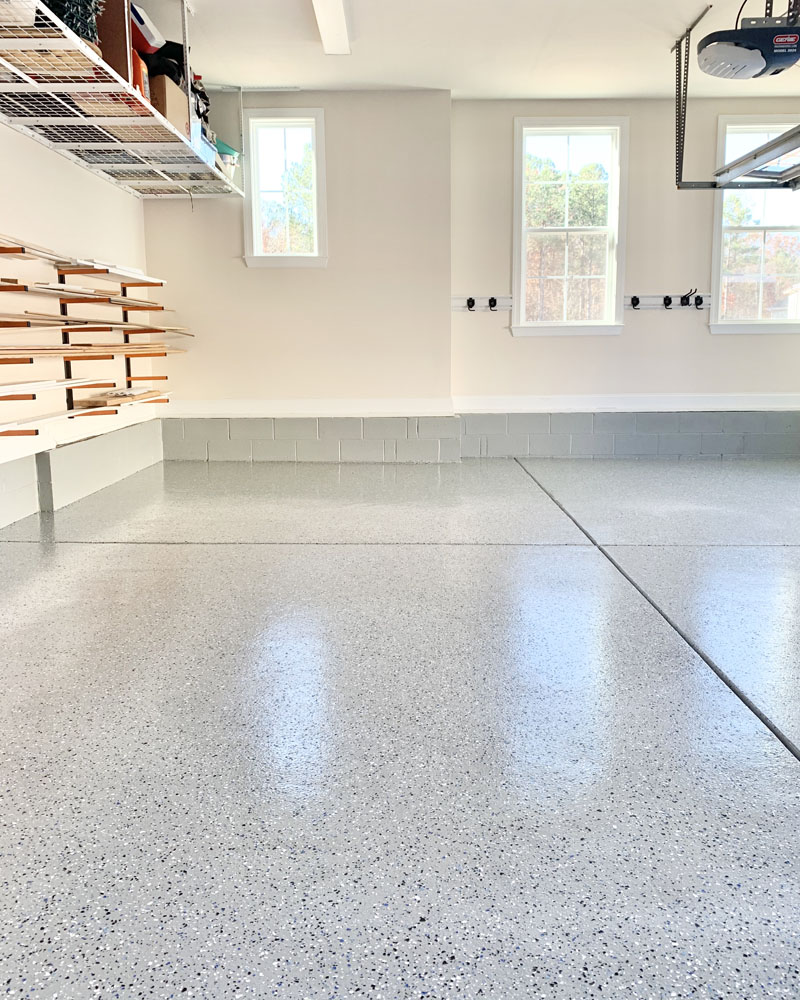
I also added decorative flakes while the epoxy was still wet. This not only gave the floor a nice speckled look but also added a bit of texture for slip resistance. I tossed them by hand, trying to keep the coverage even without overdoing it. The flakes made the floor look more like a showroom than a workshop, which was a pleasant surprise.
After the first coat cured, I applied a clear topcoat for extra protection. This step made the surface even glossier and more resistant to scratches. It also sealed in the flakes so they wouldn’t loosen over time. The topcoat gave the floor a depth and shine that made the whole garage feel brand new.
The Benefits I’ve Noticed Since
The most obvious benefit is how much brighter the garage feels. The glossy finish reflects light, making it easier to see when I’m working on projects, even at night. It’s also incredibly easy to clean. A quick sweep and occasional mop keep it looking fresh, even after messy jobs like woodworking or oil changes.
I’ve also noticed that the floor feels more solid underfoot. The epoxy has filled in small imperfections, so there’s no more dust from crumbling concrete. That’s been a big plus for keeping the rest of the house cleaner, too, since I’m not tracking in fine dust every time I walk inside.
And honestly, it just looks great. Friends and neighbors have commented on how professional it appears, and I’ve caught myself admiring it more than once. It’s amazing how a simple change can make the whole space feel more inviting and functional at the same time.

Maintenance Tips I Follow
To keep the floor looking its best, I avoid dragging heavy objects across it. Even though epoxy is tough, sharp edges can still scratch the surface. I use furniture sliders or lift items when moving them, which has saved me from unnecessary damage.
I also clean up spills right away. While epoxy resists staining, letting chemicals sit too long can dull the finish. A quick wipe with a damp cloth is usually all it takes. For tougher messes, I use a mild cleaner instead of harsh abrasives, which could scratch the glossy surface.
Every few months, I give the floor a deeper clean with warm water and a gentle detergent. This helps remove any buildup from car tires or foot traffic. It’s a small effort that keeps the floor looking like new and ensures it will last for years to come.

Would I Do It Again? Absolutely
Looking back, applying an epoxy coat was one of the most rewarding DIY projects I’ve tackled. It wasn’t the easiest job, but the results have been worth every bit of effort. The floor is functional, attractive, and low-maintenance, which checks all my boxes for a home improvement project.
If I ever move, I’d definitely consider doing it again in a new garage. It’s a relatively affordable upgrade that adds value to the home and makes the space more enjoyable to use. I’ve even had friends ask me for tips so they can try it themselves.
Plus, there’s a certain satisfaction in knowing I did it myself. Every time I walk into the garage, I’m reminded of the work I put in and the payoff it brought. It’s a daily reminder that sometimes the most impactful changes start from the ground up.

How long does a garage floor epoxy coat last?
In my experience, a well-applied epoxy coat can last 10 years or more with proper care. The key is good surface preparation and avoiding harsh treatment. Regular cleaning, quick spill cleanup, and protecting it from deep scratches go a long way in preserving the finish for the long haul.
Is epoxy flooring slippery?
It can be, especially when wet, but adding decorative flakes or a non-slip additive helps. I used flakes, and they’ve made a noticeable difference in traction without affecting the look. It’s a simple step that makes the floor safer without sacrificing style.

How much does it cost to epoxy a garage floor?
When I did mine, the materials cost around $300 for a two-car garage. If you hire a professional, expect to pay more for labor, but you’ll save time and effort. For me, the DIY route was worth it for the savings and the satisfaction of doing it myself.
Can epoxy handle heavy vehicles and tools?
Yes, that’s one of the reasons I chose it. My epoxy floor has handled my SUV, tool chests, and even the occasional dropped wrench without damage. It’s built to withstand the weight and wear of a busy garage.

Is epoxy safe for homes with kids and pets?
Once cured, epoxy is safe and non-toxic. I let it cure fully before bringing anything back into the garage, and I’ve had no issues with my pets walking on it. It’s a solid choice for families who want durability without safety concerns.
Can I apply epoxy myself or should I hire a pro?
If you’re comfortable with DIY projects and can follow instructions closely, you can do it yourself. Just be prepared for the prep work, which is the most time-consuming part. Hiring a pro is faster, but doing it yourself can be very rewarding.

Myths about Garage Floor Coatings
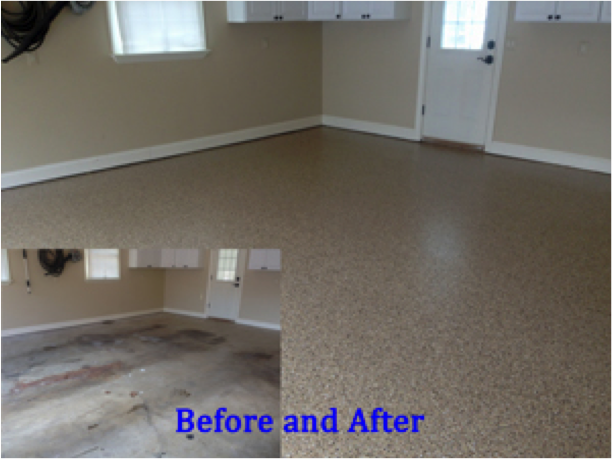
Epoxy Garage Floor Coatings CT u0026 NY Shoreline Painting
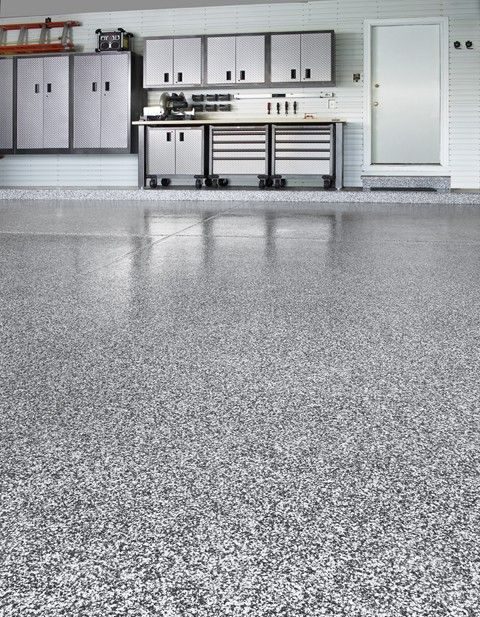
Stronger than Epoxy Garage Force – A Concrete Force to be
Related Posts: