When I initially moved into my house, the immaculate concrete garage floor appeared impregnable. I had no idea that engine oil, transmission fluid, and other automotive substances would soon cause an unattractive patchwork of stains. After years of studying options and trying numerous products, I’ve developed a strong interest in garage floor protection. Let me share my experiences, blunders, and discoveries to help you keep your garage floor clean and safe for years.
Understanding What’s At Stake
I recall the first oil stain that emerged on my garage floor. It was small at first, but more people joined within months. What I didn’t comprehend was that oil penetrates into the concrete rather than simply sitting on top of it. Although concrete appears to be solid, it is quite porous. The microscopic capillaries within the concrete behave as straws, pulling in fluids by capillary action. This makes oil stains especially irritating since they can penetrate deep into the concrete structure.
The damage is not merely cosmetic. Oil and other pollutants can degrade concrete over time, resulting in cracking, spalling, and degradation. I discovered this the hard way when a portion of my floor began to deteriorate after years of exposure to various vehicle fluids. The repair costs were significantly higher than what preventative measures would have cost. That’s when I learned that protecting my garage floor wasn’t just about aesthetics, it was important preserving the integrity of my home’s foundation.
Beyond structural difficulties, oil-stained concrete causes environmental hazards. Rainwater can carry these toxins into storm drains, eventually poisoning local waterways. Furthermore, oil-soaked concrete becomes slippery, posing a safety risk to everyone utilizing the garage. After nearly slipping while carrying groceries, I decided to prioritize garage floor protection not just for the value of my property, but also for the safety of my family members. This triple danger of aesthetic, structural, and safety concerns convinced me that investing in effective floor protection was not an option; it was required.
Types of Garage Floor Protectors Available
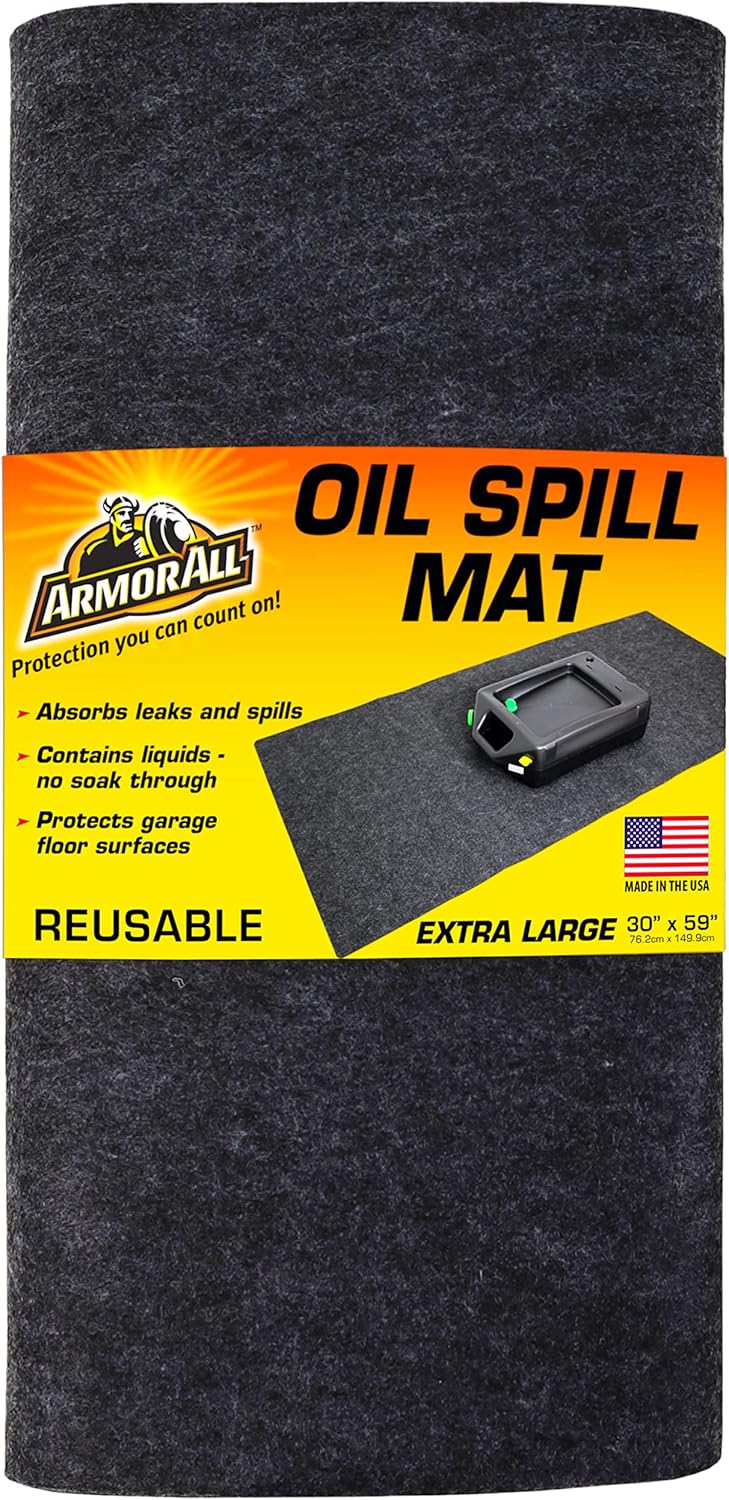
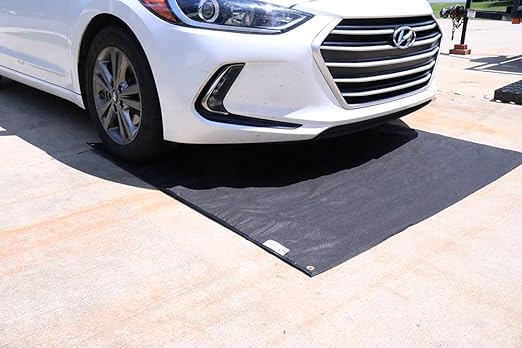
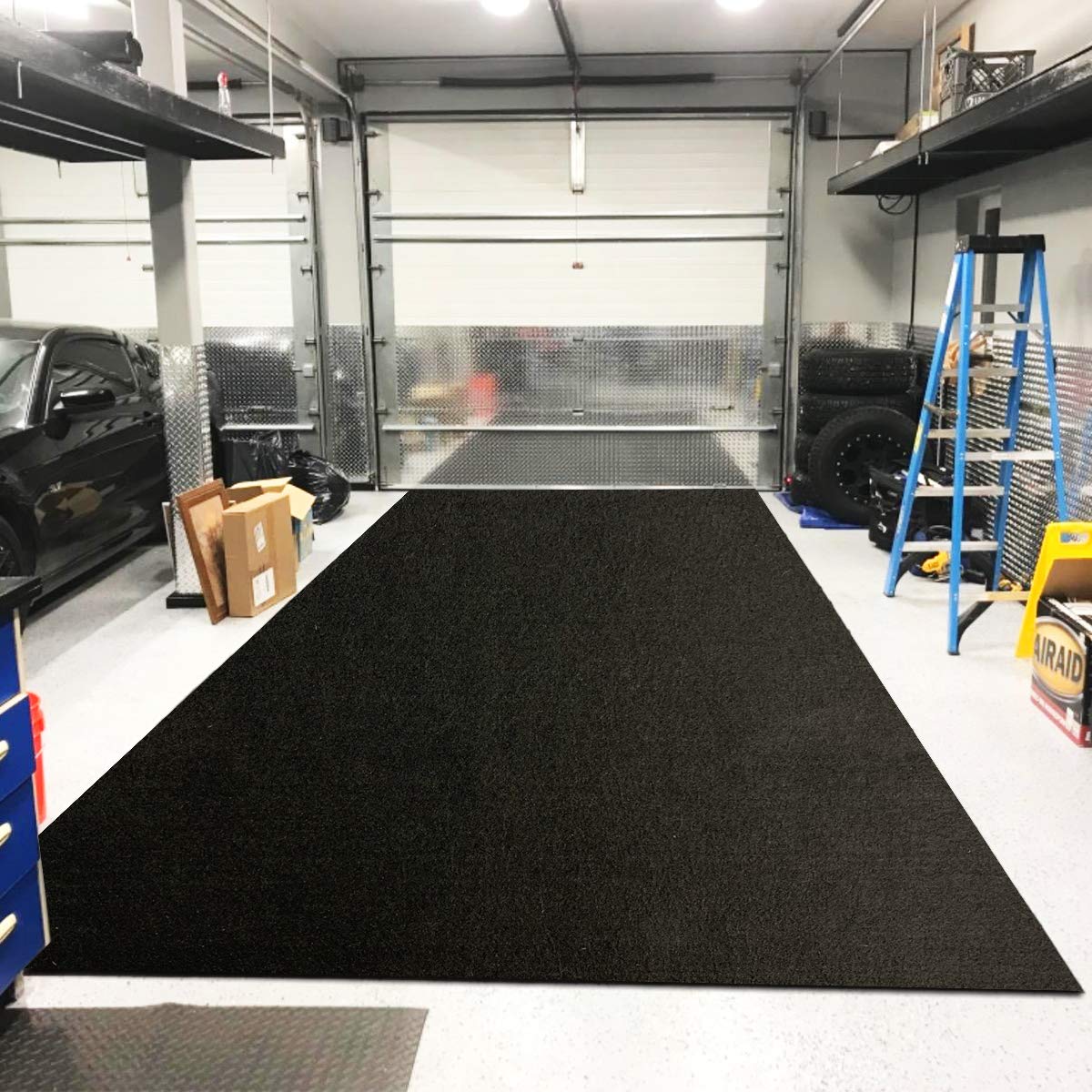
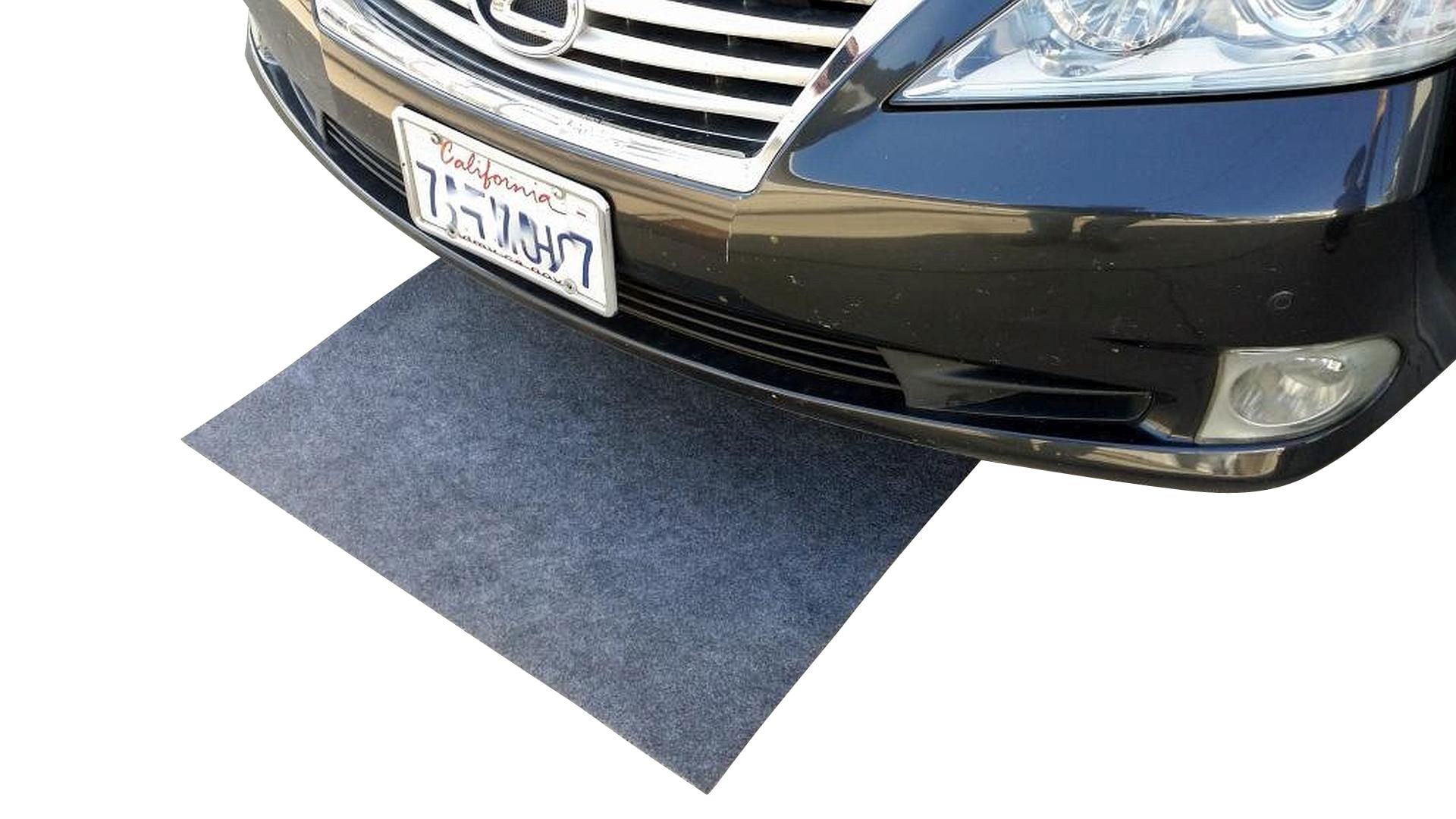
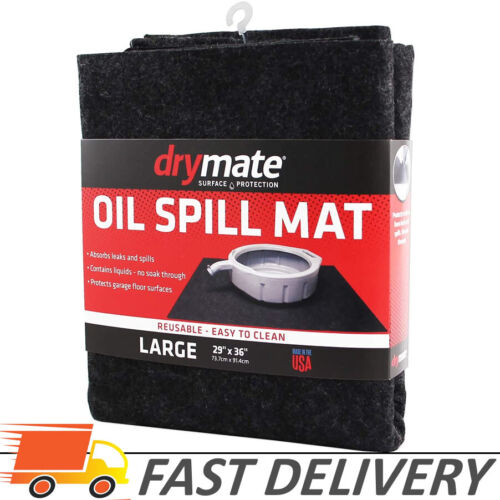
My adventure started with absorbent mats, the simplest solution available. These mats are intended to catch drips and spills before they hit the pavement. They range from simple cardboard-like materials to advanced polymer-based goods capable of holding large amounts of liquid without spilling. I began with low-cost choices, which were adequate for little drips but rapidly became saturated and required frequent replacement. The higher-end models survived longer, but they still required frequent maintenance and finally ended up in landfills.
Next, I looked into containment mats, which have raised edges and create a basin to hold fluids. Unlike absorbent mats, these do not absorb liquid but instead trap it until it can be cleaned up. I found these especially beneficial under my motorcycle, which had a minor oil leak that I couldn’t immediately repair. The convenience factor was excellent because I could just empty and rinse the mat as needed rather than constantly replacing saturated absorbent materials. However, they take up a definite area and are less adaptable to changing garage layouts.
Finally, I discovered protective coatings, which completely modify the floor surface rather than merely protecting specific sections. Options include epoxy coatings, polyurea, polyaspartic solutions, and penetrating sealers. My first try with a DIY epoxy kit taught me that preparation is essential, as poor floor cleaning caused adhesion issues. After hiring professionals for my second effort at a polyaspartic coating, the results were revolutionary. Not only did it protect against oil, but it also repelled other chemicals, improved light reflection, and made cleaning much easier.
Installation Considerations I Learned the Hard Way
Temperature and humidity are critical factors in successful installs, as I sadly realized during my first DIY attempt. I applied an epoxy coating during a humid summer week, which resulted in a hazy finish and adhesion issues that began peeling after several months. Concrete must be entirely dry, and ambient conditions must be within the product’s specified range. I later discovered that expert installers evaluate concrete moisture content before application, as even invisible moisture can wreak havoc on certain coatings.
Surface preparation cannot be stressed. My second attempt was unsuccessful because I did not adequately etch the concrete. Most concrete has a smooth texture that inhibits the appropriate adhesion of protective coatings. Acid etching or diamond grinding provide a profile that permits the coating to adhere to the surface. I spent hours sanding my floor before my successful application, eliminating all previous coating attempts, oil stains, and achieving the required rough texture. The dust was oppressive, but the end product was worth the effort. Proper preparation means the difference between a coating that lasts a decade and one that fails after a year.
The time investment varies substantially depending on the protection strategy you choose. Absorbent mats need little installation time but require regular maintenance. Coatings need extensive upfront time but little long-term effort. My polyaspartic installation took three full days, including preparation and drying time, leaving my garage absolutely unusable. However, five years later, I’m still reaping the benefits with little more than periodic cleaning. When choosing a security strategy, keep your tolerance for immediate disruption in mind as well as your long-term maintenance needs.

Cost Analysis and Value Proposition
Initial investments vary greatly amongst protection alternatives. Absorbent mats are the cheapest starting point, often costing $15 to $100 depending on quality and size. Containment systems cost substantially more, typically between $100 and $400 for quality alternatives that cover conventional parking spaces. Coatings have the biggest initial outlay, with DIY kits starting about $200 for a one-car garage and professional installs costing over $1,500 for the same space. My professional polyaspartic coating cost $2,200 for a two-car garage, which originally caused me to reconsider my decision.
However, long-term economic analysis paints a different picture. I estimated that I spent around $350 on replacement absorbent mats in just two years before switching techniques. Containment systems last longer, although they eventually crack or break, particularly under high temperature variations. My professional coating, while pricey initially, has a 15-year warranty and shows no indications of damage after 5 years. When the expenditures are broken down annually, the professional coating really provides the best value at around $146 per year, providing it lasts its intended lifetime, vs $175 per year for regularly replacing absorbent mats.
Property value considerations ultimately influenced my decision. Real estate agents have repeatedly advised me that a protected, clean garage floor increases home appeal and value. One agent predicted that my garage floor coating will recover 80-100% of its expense in increased property value. Preventing concrete deterioration also saves money on repairs, which can cost thousands of dollars. When I consider the increased safety, greater aesthetics, and protection of my vehicles from concrete dust, the value proposition for more long-term solutions such as premium coatings becomes overwhelming.
Maintenance Secrets I Discovered
Regular cleaning methods make a significant difference in longevity. For coated floors, I’ve developed a monthly cleaning routine that includes a microfiber mop and pH-neutral solution. Harsh chemicals can destroy protective coatings over time, as I discovered after using a strong degreaser to dull a portion of my floor. I drain and clean containment mats quarterly, checking for cracks and tears. Absorbent mats require the most attention because they must be replaced once soaked to prevent the leaking that they are intended to stop. Whatever your method of protection, adopting a regular maintenance routine keeps minor concerns from becoming major problems.
The majority of long-term damage can be avoided by responding to spills immediately. I have a spill kit in my garage that includes absorbent materials, gloves, and proper cleansers. When my son’s first automobile project resulted in a huge oil spill, we were able to contain it in minutes, avoiding a major stain. Prompt cleaning protects coated surfaces from chemical etching. To prevent fluid transfer, absorbent mats should be replaced immediately after saturation. The five-minute rule has worked me well, keeping me in the cleanest minority at neighborhood garage sales.
Seasonal inspections aid in detecting potential issues before they worsen. In the spring and fall, I thoroughly inspect my garage floor protection measures. I’m looking for coating wear, especially at tire areas where hot rubber and road chemicals cause the most stress. I inspect seams and edges in containment systems to ensure their integrity. These inspections have repeatedly identified minor faults before they become severe concerns. Last year, I observed minor coating deterioration at my garage entry and treated it using a touch-up kit, avoiding what might have turned into a larger repair requiring expert assistance.
Environmental and Safety Benefits Go Beyond Protection
Reduced groundwater contamination is a frequently ignored benefit of good garage floor protection. According to EPA studies, home automotive fluid leaks cause severe water pollution. A single quart of oil can pollute 250,000 gallons of drinking water. My containment measures and sealed floor have prevented a large number of fluid leaks from entering the environment. During big rainstorms, I’ve noticed that the water coming off my driveway is clear, unlike on some of my neighbors’ houses, where faint oil slicks may be seen in runoff. This environmental impact, while impossible to quantify personally, brings a great deal of happiness.
Following the installation of a sealed coating, I was surprised by the improved air quality within the garage. Concrete naturally produces dust as it ages, and this dust frequently contains absorbed toxins from spills. After sealing my floor, I observed a considerable reduction in dust on garage surfaces. My allergies improved with spring cleaning, and stored objects remained cleaner. Furthermore, the removal of oil scents made the environment more comfortable. This became especially significant when I eventually turned a portion of my garage into a home gym, where deeper breathing during workouts made air quality a bigger concern than it had been before.
Fire danger reduction provides another significant safety advantage. Oil-soaked rags and absorbent materials provide a major fire risk due to spontaneous combustion. By correctly confining fluids with quality protection devices, I’ve minimized the requirement for these potentially hazardous absorbents. My containment systems direct fluids into non-combustible reservoirs, and my coated floor enables for thorough cleansing with no absorbent residues. A clean, light-reflecting floor also provides great visibility, making it easier to recognize possible hazards. During a minor electrical issue last winter, I noticed a little spark that may have ignited hazardous things in a dark, congested atmosphere.
How long does a professionally placed garage floor coating last?
The durability of professional garage floor coatings varies depending on the product and the quality of installation. In my experience, a well put polyaspartic or high-quality epoxy coating can last 10-20 years before requiring considerable care. Preparedness quality, coating thickness, vehicle traffic volume, chemical exposure, and maintenance methods all have an impact on lifetime. My five-year-old professional coating shows little deterioration despite everyday use. The essential aspect appears to be appropriate installation, namely comprehensive concrete preparation and moisture testing. I’ve seen neighbor installs fail in 2-3 years due to inadequate prep work, whereas professionally prepared surfaces last decades.
Can I apply a garage floor coating myself, or should I call a professional?
DIY installation is probably doable, since I’ve tried it myself, however success is dependent on your planning and technical skills. Self-installation provides significant cost savings, often 50-70% less than professional services. However, proper concrete preparation necessitates the use of specialist equipment such as diamond grinders or shot blasters, which can be costly to rent and difficult to operate. Temperature and humidity management during application is also critical. My initial DIY attempt failed owing to inadequate preparation and humidity difficulties, whereas my professional installation went smoothly. If you appreciate technical undertakings and can devote several days to appropriate preparation, DIY can be enjoyable; but, professional installation provides peace of mind.
How can I remove oil marks from my concrete prior to putting protection?
Removing existing oil stains takes time and work, but it is necessary for any coating to adhere properly. I’ve had success using a multistage technique. First, I use an oil-based concrete cleanser or degreaser and let it soak in for the amount of time recommended by the manufacturer. Next, I scrub firmly with a stiff brush and thoroughly rinse. To remove stubborn stains, I make a poultice of baking soda and water and wrap it with plastic overnight to pull out deeper oil. As a final step before painting, I remove the top layer of contaminated concrete with a concrete grinder or etcher. The most important insight I’ve learnt is that visual disappearance does not imply that the oil is gone, as residual oils can linger and interfere with coating adhesion.
What are the differences between epoxy, polyurea, and polyaspartic garage floor coatings?
The primary differences between these coatings are in their application qualities, cure time, durability, and cost. Epoxy has great adhesion and chemical resistance, but it cures slowly (24-72 hours) and can discolor with UV exposure. My first professional price was for epoxy, which would require me to vacate my garage for three days. Polyurea cures incredibly quickly (often within hours) and has excellent flexibility, although it can be difficult to apply properly due to its rapid set time. Polyaspartic, which I ultimately chose, has moderate cure periods (often within 24 hours), great UV stability, superior flexibility, and outstanding chemical resistance. Costs rise proportionally, with basic epoxy being the most economical and polyaspartic commanding premium rates, which are typically 30-40% more than normal epoxy systems.
How do containment mats compare to floor coverings in terms of garage protection?
Containment mats have various advantages and limits as compared to permanent coverings. Their key advantages include portability, quick deployment without preparation, and the ability to contain large volumes of fluid. I’ve utilized both at the same time, laying containment mats on top of my coated floor in high-risk locations for added protection. Mats are ideal for temporary applications such as short-term car repairs or seasonal equipment storage. However, they only cover a small area, crack in extreme temperatures, and must be emptied regularly. Coatings cover the entire surface consistently, greatly improve appearance, and require little care after installation. Coatings are the clear winner for comprehensive, long-term protection with aesthetic benefits. Quality containment mats are ideal for targeted, transportable, quick protection without commitment.
Are there any environmentally friendly choices for garage floor protection?
Eco-friendly garage floor protection has grown dramatically in recent years. Throughout my sustainability journey, I have considered a variety of possibilities. Water-based coatings have far lower VOC emissions than solvent-based coatings, making them safer for installers and occupants while reducing air pollution. Recycled rubber containment mats recycle tire material that would otherwise end up in landfills. Absorbent products made from corn, hemp, or recycled paper are biodegradable alternatives to petroleum-based absorbents. When I chose my current system, I focused on components with environmental certifications such as GreenGuard or LEED contribution potential. The most ecologically responsible strategy combines pollution prevention with items made sustainably from renewable or recycled resources, reducing installation and maintenance emissions.
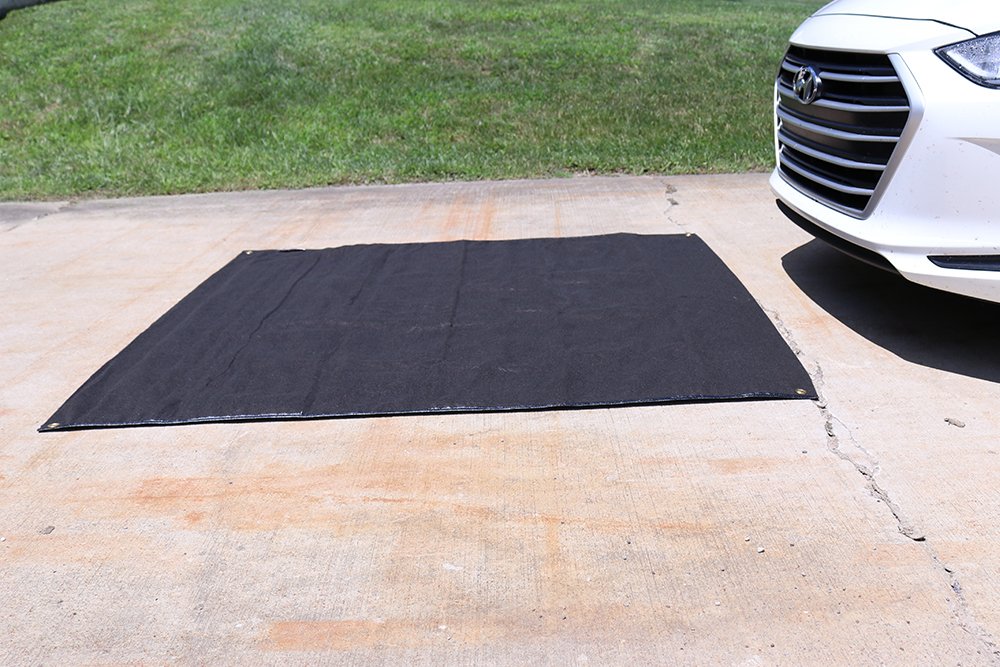
Armor All Oil Spill Mat (30″ x 59″), Premium Absorbent Oil Pad u2013 Reusable/Durable/Waterproof u2013 Contains Liquids, Protects Garage Floor Surface (USA

Cleanup Stuff Garage Mats 3u0027x5u0027, Gray, Oil Absorbent Garage Floor
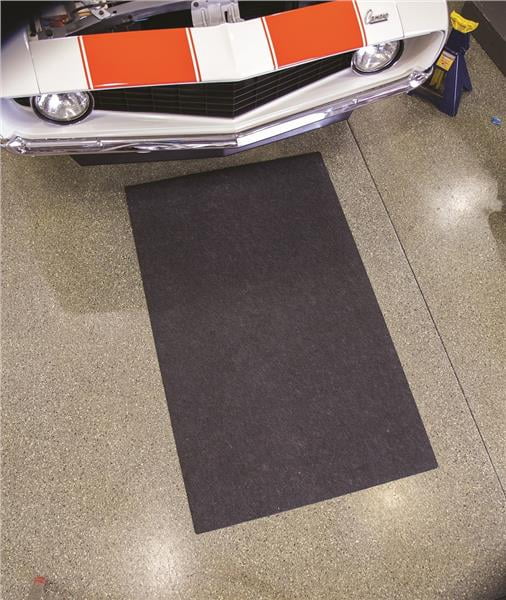
Large Absorbent Oil Spill Mat Reusable Floor Garage Pad Protector Waterproof eBay
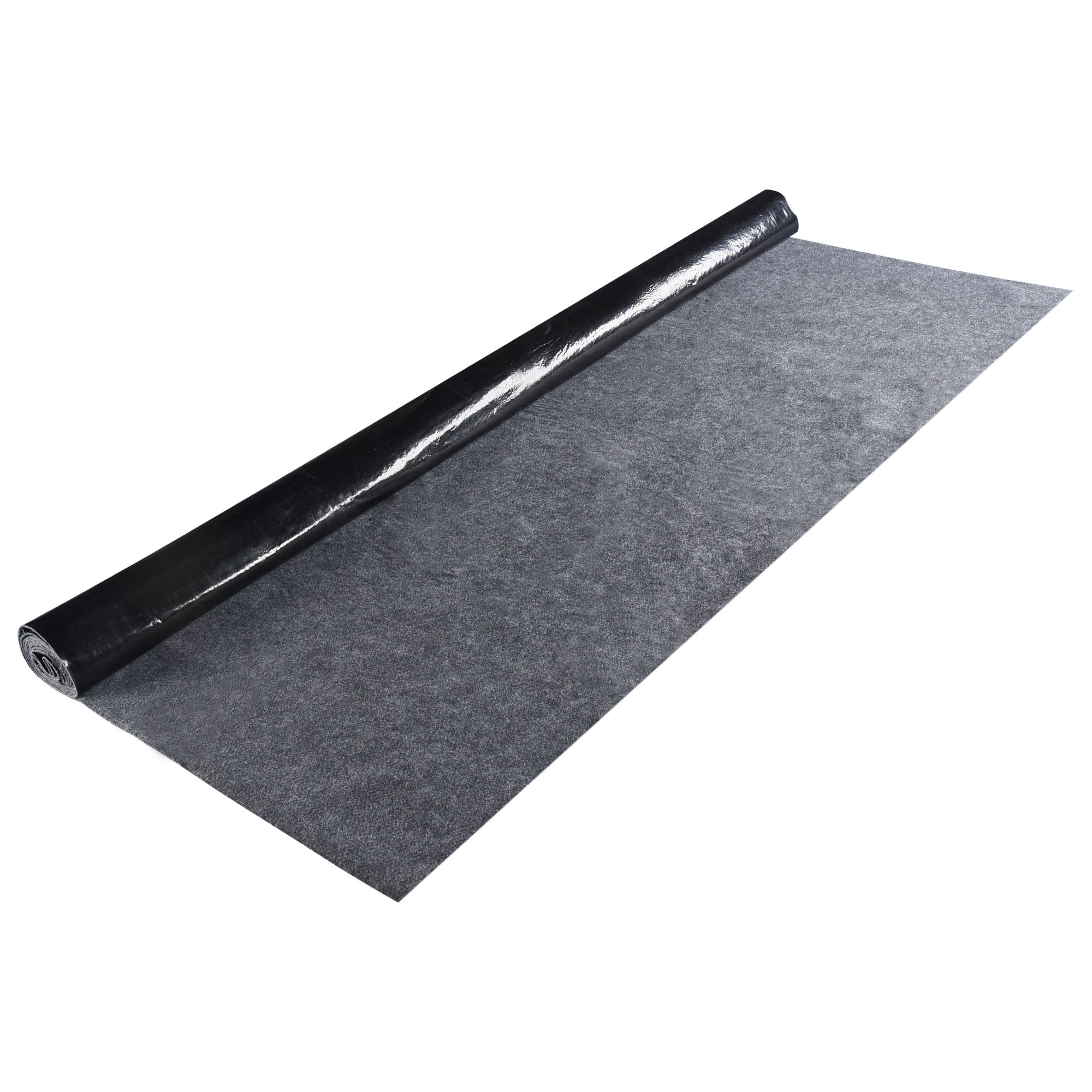
Shield Family Floor Protector – Premium Absorbent Oil Mat
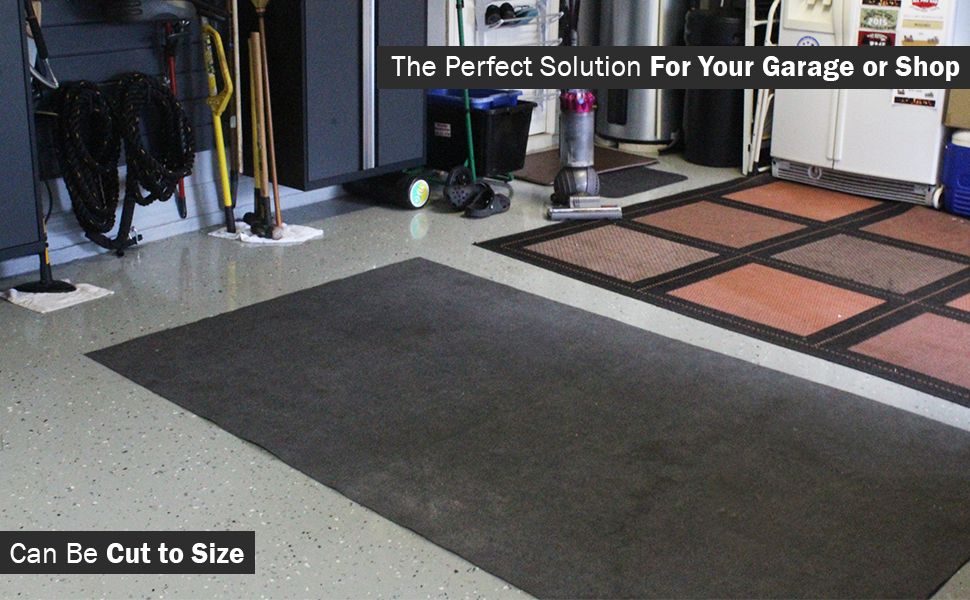
Mats Inc . Black Garage Floor Protection Utility Mat
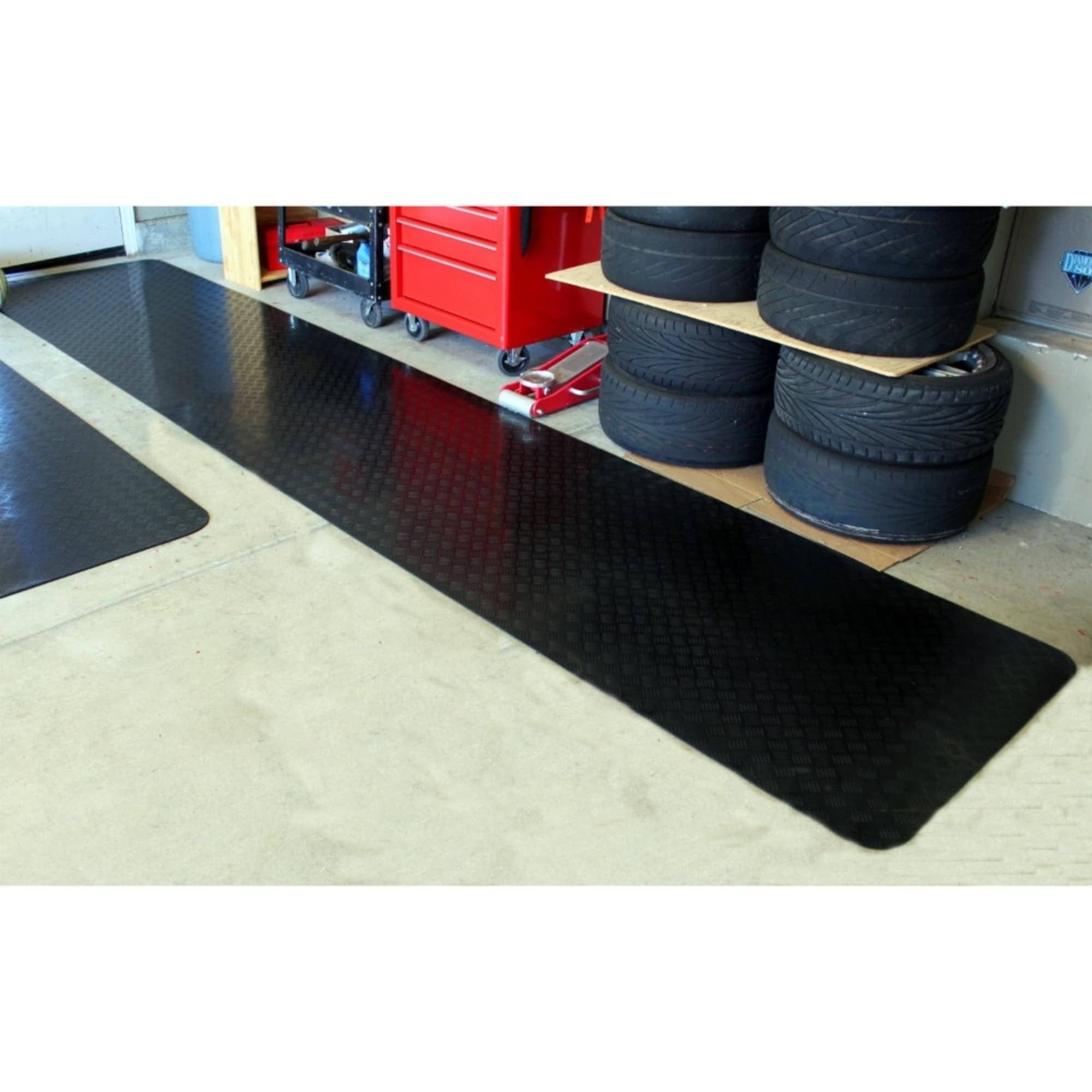
Shield Family Floor Protector – Premium Absorbent Oil Mat

Related Posts: