When I finally decided to tackle my garage floor two years ago, I was tired of looking at stained, cracked concrete that made my entire garage feel like an abandoned warehouse. After researching every option from epoxy coatings to rubber mats, I landed on interlocking garage floor tiles, and honestly, it was the best home improvement decision I’ve made. The transformation was immediate and dramatic, turning my garage from a space I avoided into one that impresses visitors and makes me proud to pull into every evening.
Interlocking PVC Tiles: My Top Choice for Durability
I went with high-quality PVC interlocking tiles after seeing them in a neighbor’s garage that had withstood three years of heavy use. The installation was surprisingly straightforward, like putting together a giant puzzle that makes sense. Each 12×12-inch tile simply clicks into the next one, and I was able to cover my entire two-car garage in a weekend without any special tools or adhesives.
The durability has exceeded every expectation I had. My garage sees everything from oil changes to woodworking projects, and these tiles have handled spilled motor oil, dropped tools, and even the occasional car jack mishap without showing permanent damage. The textured surface provides excellent traction even when wet, which was a huge improvement over the slippery concrete I dealt with during rainy seasons.
What impressed me most was how the tiles handle temperature changes. Living in a climate with extreme seasonal variations, I was concerned about expansion and contraction issues. After two full years, including a particularly harsh winter and blazing summer, the tiles have remained perfectly flat and securely interlocked. The slight flexibility in the material seems to accommodate temperature shifts without any buckling or separation.
Rubber Tiles for Comfort and Functionality
Before settling on PVC, I seriously considered rubber tiles for their superior cushioning properties. A friend had installed them in his workshop area, and standing on them for extended periods was noticeably more comfortable than on concrete. The shock absorption would have been perfect for my workout corner, where I do basic exercises and stretching routines between car maintenance sessions.
The chemical resistance of rubber tiles is genuinely impressive. During my research, I tested samples with various automotive fluids, and they wiped clean without any staining or degradation. This made them particularly appealing for areas where I do oil changes or other maintenance work. The only downside I discovered was that rubber tiles can retain odors more than other materials, particularly if exposed to petroleum products repeatedly.
Installation complexity was another factor in my decision. While rubber tiles aren’t difficult to install, they’re heavier than PVC and require more precise cutting around obstacles like support posts or utility connections. The weight provides stability once installed, but moving and positioning individual tiles during installation requires more physical effort than I initially anticipated.
Polypropylene Tiles: Budget-Friendly Excellence
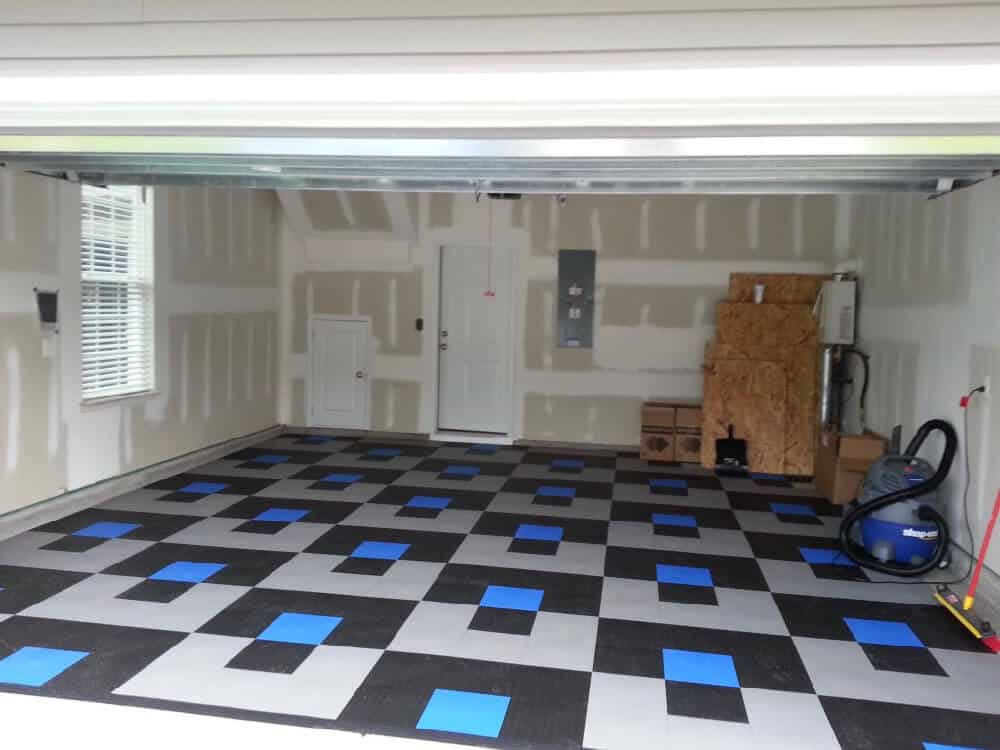
Polypropylene tiles caught my attention as a cost-effective middle ground between basic rubber mats and premium PVC options. At roughly half the cost of high-end alternatives, they offered many of the same benefits with only minor compromises in durability and appearance. For someone working within a strict budget, they represented an excellent entry point into garage floor improvement.
The chemical resistance properties impressed me during testing. I deliberately spilled various garage fluids on sample tiles and found that cleanup was easy and staining minimal. The surface texture provided good traction without being so aggressive that it made cleaning difficult. However, I did notice that the color options were more limited compared to PVC tiles, which mattered since I wanted a specific aesthetic for my space.
Installation was straightforward, though I found that polypropylene tiles required more attention to ensure tight connections between pieces. The interlocking mechanism wasn’t quite as precise as premium options, and I had to be more careful about alignment to avoid gaps or uneven surfaces. Despite this minor inconvenience, the final result looked professional and has held up well under normal garage use over the past year.
Diamond Plate and Textured Surface Options
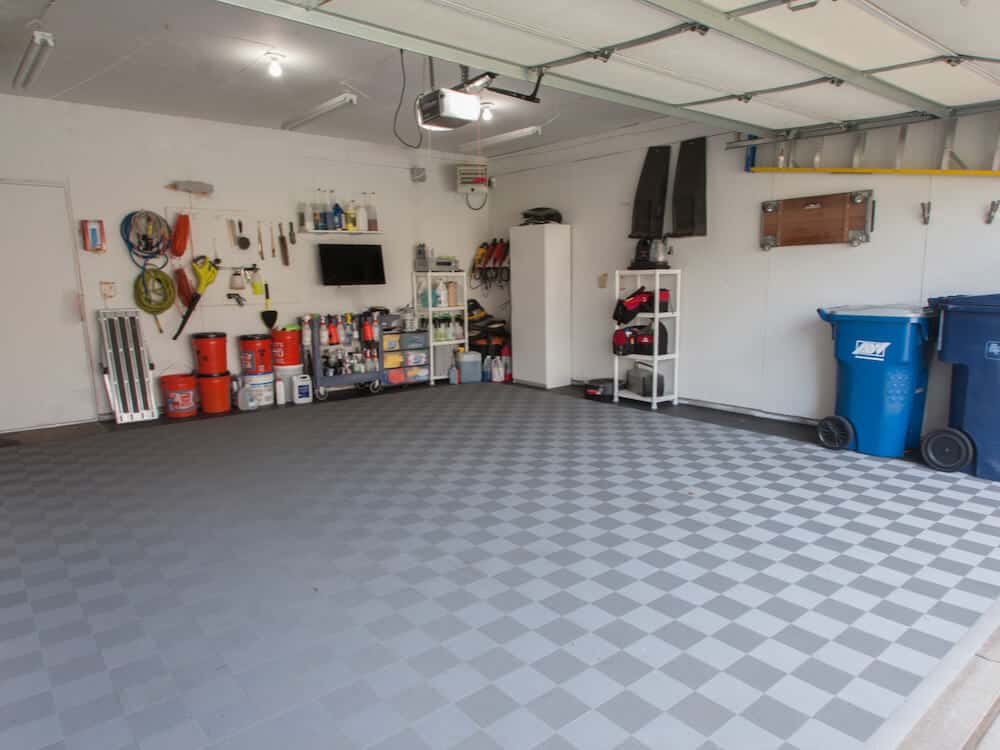
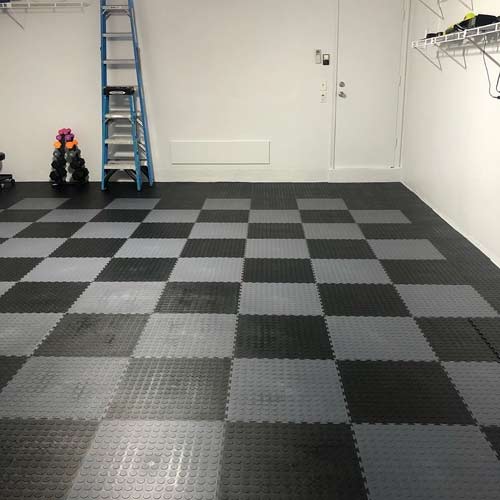
The industrial look of diamond plate tiles appealed to my desire for a garage that looked more like a professional shop than a storage space. The raised diamond pattern provides exceptional traction and gives the space a serious, no-nonsense appearance that matches the functional nature of garage work. Installation was identical to flat tiles, but the visual impact was dramatically different.
Cleaning textured surfaces requires slightly more effort than smooth alternatives, but the trade-off in appearance and functionality is worthwhile. The diamond pattern naturally hides small scratches and scuffs that would be obvious on flat surfaces. When friends visit, they consistently comment on the professional appearance, and several have asked for installation advice for their garages.
The texture does create some challenges when working with small parts or tools. Nuts, bolts, and similar items can occasionally lodge in the diamond pattern recesses, requiring more careful cleanup after projects. However, this minor inconvenience is offset by the superior grip the textured surface provides when walking on wet or oily surfaces, which is a significant safety improvement over smooth concrete.
Color Combinations and Design Patterns
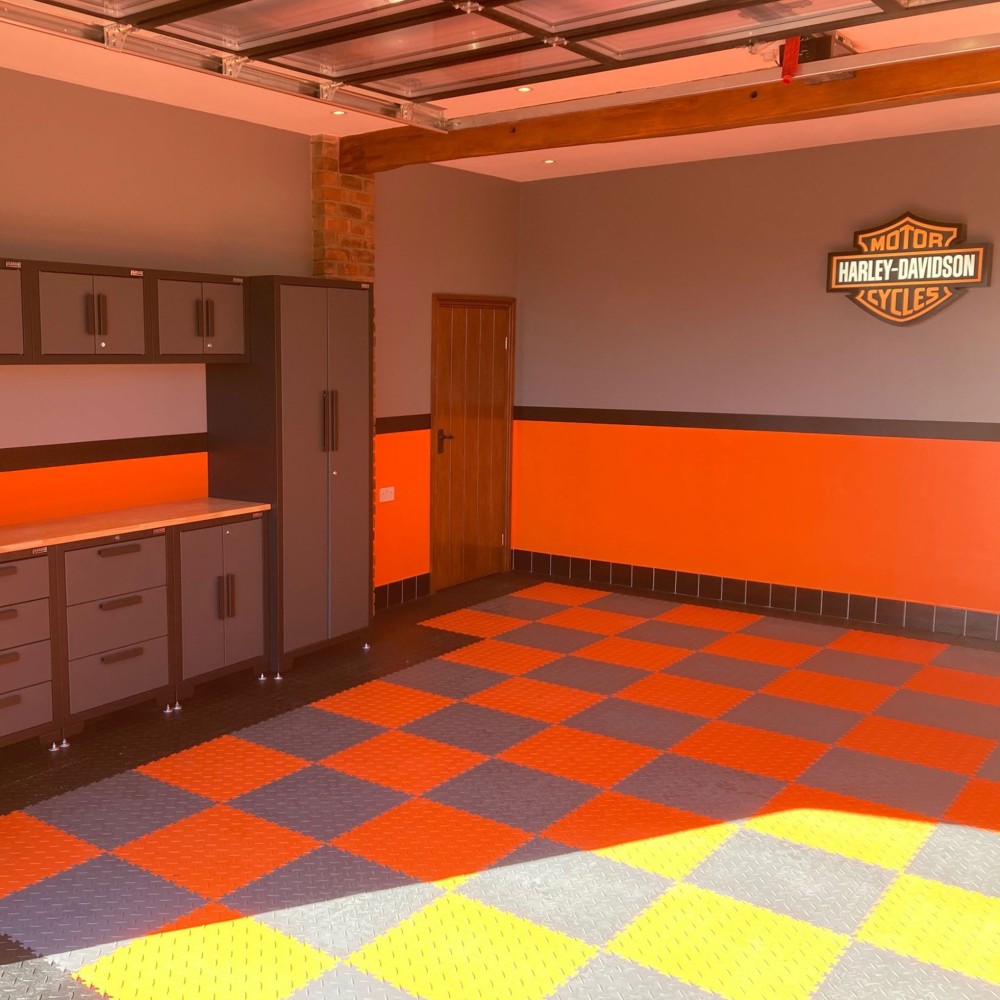
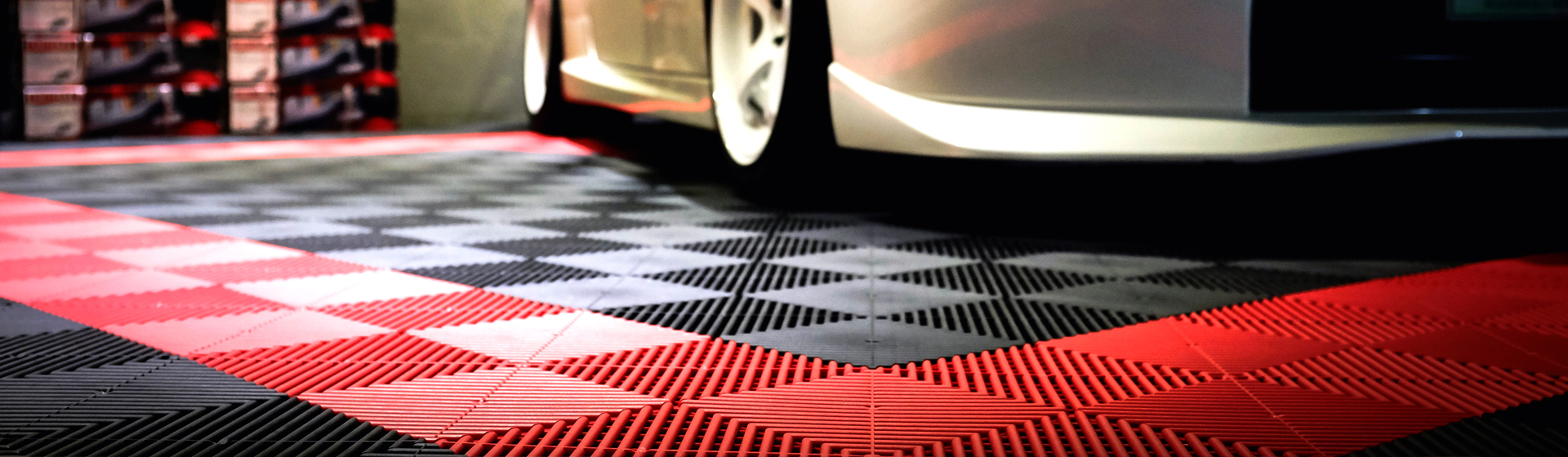
Creating visual interest with different colored tiles transformed my garage from purely functional to genuinely attractive. I used a checkerboard pattern with charcoal gray and slate blue tiles, which creates definition without being overwhelming. The pattern also helps disguise minor imperfections in tile alignment and adds a custom, intentional look to the space.
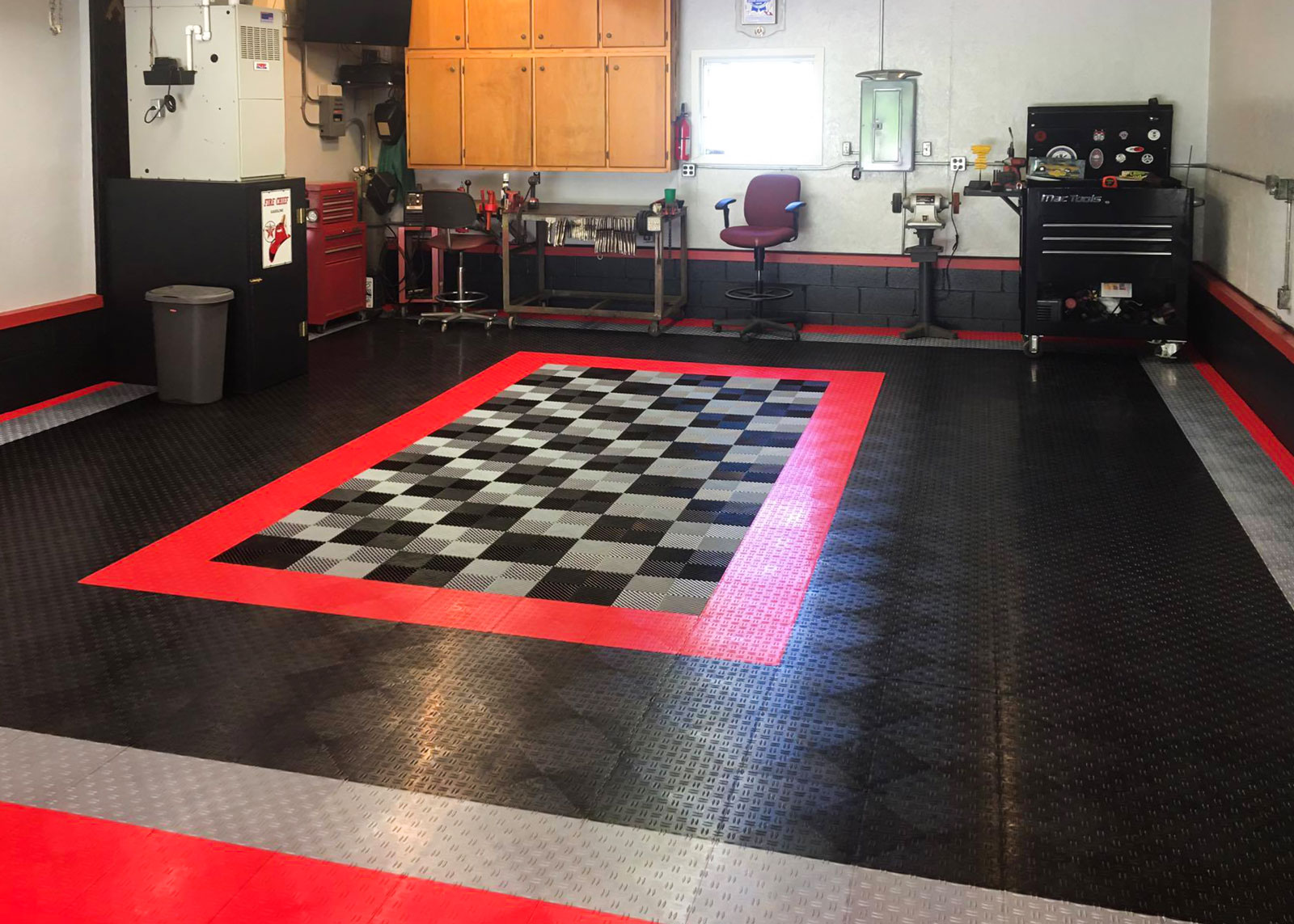
Border treatments can dramatically enhance the overall appearance of a tiled garage floor. I used a contrasting color around the perimeter, which creates a finished, professional look similar to commercial installations. This border also serves a practical purpose by defining the workspace area and creating visual separation between different functional zones within the garage.
Color selection proved more important than I initially realized. Darker colors hide stains and wear better but can make the space feel smaller and show dust more readily. Lighter colors brighten the space and create an open feeling but require more frequent cleaning to maintain their appearance. I found that medium-toned colors with slight texture patterns offer the best balance of practicality and aesthetics for most garage applications.
Installation Tips and Common Mistakes to Avoid
Starting with proper floor preparation made all the difference in my installation success. I spent an entire day cleaning and degreasing the concrete, filling significant cracks, and ensuring the surface was completely level. Skipping this step would have resulted in tiles that didn’t lay flat and potentially created trip hazards or premature wear in high spots.
Measuring and planning the layout before starting installation saved me hours of frustration and wasted materials. I created a scaled drawing of my garage and experimented with different starting points to minimize the number of partial tiles needed around the perimeter. Starting from the center and working outward ensured that any cut pieces would be evenly distributed rather than creating one wall with all the small pieces.
Temperature conditions during installation matter more than most people realize. I learned this the hard way during my first attempt on a cold winter day when the tiles were more rigid and difficult to connect properly. Installing during moderate temperatures allows the materials to be more flexible and easier to work with. I also discovered that letting tiles acclimate to the garage temperature for a few hours before installation improves the ease and quality of connections.

How long do garage floor tiles typically last under heavy use?
In my experience with quality PVC tiles, they’ve shown no significant wear after two years of heavy use, including car maintenance, woodworking, and general storage. Manufacturers typically warranty them for 10-15 years, and based on the durability I’ve observed, this seems realistic for residential use.
Can garage floor tiles handle hot tires and automotive fluids?
Absolutely. I’ve parked hot cars directly on my PVC tiles after highway driving with no issues. Oil spills, brake fluid, and other automotive chemicals wipe up easily without staining or damage. The tiles are specifically designed to handle typical garage conditions, including temperature extremes and chemical exposure.

Are interlocking garage tiles difficult to replace if damaged?
Not at all, which is one of their best features. Individual damaged tiles can be removed and replaced without disturbing surrounding tiles. I keep a few spare tiles on hand for this purpose. The process takes minutes and doesn’t require any tools or adhesives, unlike permanent flooring options.
How do garage floor tiles compare cost-wise to epoxy coatings?
Initial cost is higher, but tiles offer better long-term value in my opinion. I spent about $4 per square foot for quality PVC tiles versus $2-3 for DIY epoxy. However, tiles are instantly usable, easily repairable, and can be removed if I move. Epoxy requires curing time and is permanent once applied.

Do garage floor tiles work well in unheated garages with temperature extremes?
Yes, though material choice matters. My PVC tiles have handled temperatures from below zero to over 100°F without issues. They contract and expand slightly but remain securely interlocked. Rubber tiles also work well in temperature extremes, while cheaper plastic options might become brittle in extreme cold.
Can I install garage floor tiles over existing cracks in concrete?
Minor cracks aren’t a problem, but significant ones should be filled first. I used concrete crack filler on anything wider than a hairline before installation. The tiles conform somewhat to surface irregularities, but major imperfections will telegraph through and create uneven spots that could lead to premature wear or trip hazards.

Garage Flooring Tips

Premium Garage Flooring Garage Floor Tiles Swisstrax
Choosing Garage Floor Tiles – Best Options to the Cheapest All

Budget Garage Flooring Ideas
Related Posts: