I’ve spent over a decade working with industrial flooring systems, and I can tell you that choosing the right garage floor is one of the most critical decisions you’ll make for your workspace. After installing hundreds of systems across manufacturing facilities, automotive shops, and commercial garages, I’ve learned what separates exceptional flooring from mediocre solutions. The difference between success and costly mistakes often comes down to understanding your specific needs and matching them with the right materials and installation techniques.
Understanding Different Flooring Materials
Through my experience, I’ve found that epoxy coatings remain the most popular choice for good reason. They provide excellent chemical resistance, are relatively affordable, and can withstand moderate to heavy traffic. However, I’ve seen many installations fail because people underestimate the preparation required. The concrete must be properly cleaned, etched, and completely dry before application, or you’ll face peeling and bubbling within months.
Polyurethane systems offer superior flexibility and UV resistance compared to standard epoxy. I’ve installed these in facilities where thermal cycling is a concern, and they perform exceptionally well. The material costs more upfront, but I’ve rarely seen premature failures when properly installed. These systems also maintain their appearance longer, which matters in customer-facing environments like showrooms or service bays.
Polished concrete has gained popularity in recent years, and I understand why. When done correctly, it creates a stunning, low-maintenance surface that can last decades. I’ve worked on polished floors that still look pristine after ten years of heavy industrial use. The key is starting with quality concrete and using experienced operators; the grinding and polishing process requires skill to achieve consistent results.
Preparation Requirements and Surface Conditions
I cannot stress enough how critical proper surface preparation is to your flooring success. I’ve been called to repair countless failed installations where contractors skipped or rushed this phase. Concrete must be at least 28 days old, have proper moisture levels below 4%, and be free from oils, sealers, and other contaminants. Testing is essential; shortcuts here will cost you thousands later in repairs and downtime.
Concrete grinding or shot blasting creates the mechanical bond necessary for coating adhesion. I prefer shot blasting for most industrial applications because it opens the concrete pores more effectively and removes surface laitance simultaneously. The profile should match your coating manufacturer’s specifications, typically between CSP 2 and CSP 4 for most systems. Proper dust collection during this process protects both workers and equipment.
Crack repair and joint sealing require careful attention before any coating application. I evaluate each crack individually; some need routing and filling with flexible sealants, while others may require structural repair. Expansion joints must remain functional, so I use appropriate flexible fillers that won’t crack under movement. Ignoring these details leads to coating failure at stress concentration points, creating maintenance headaches down the road.
Installation Process and Best Practices
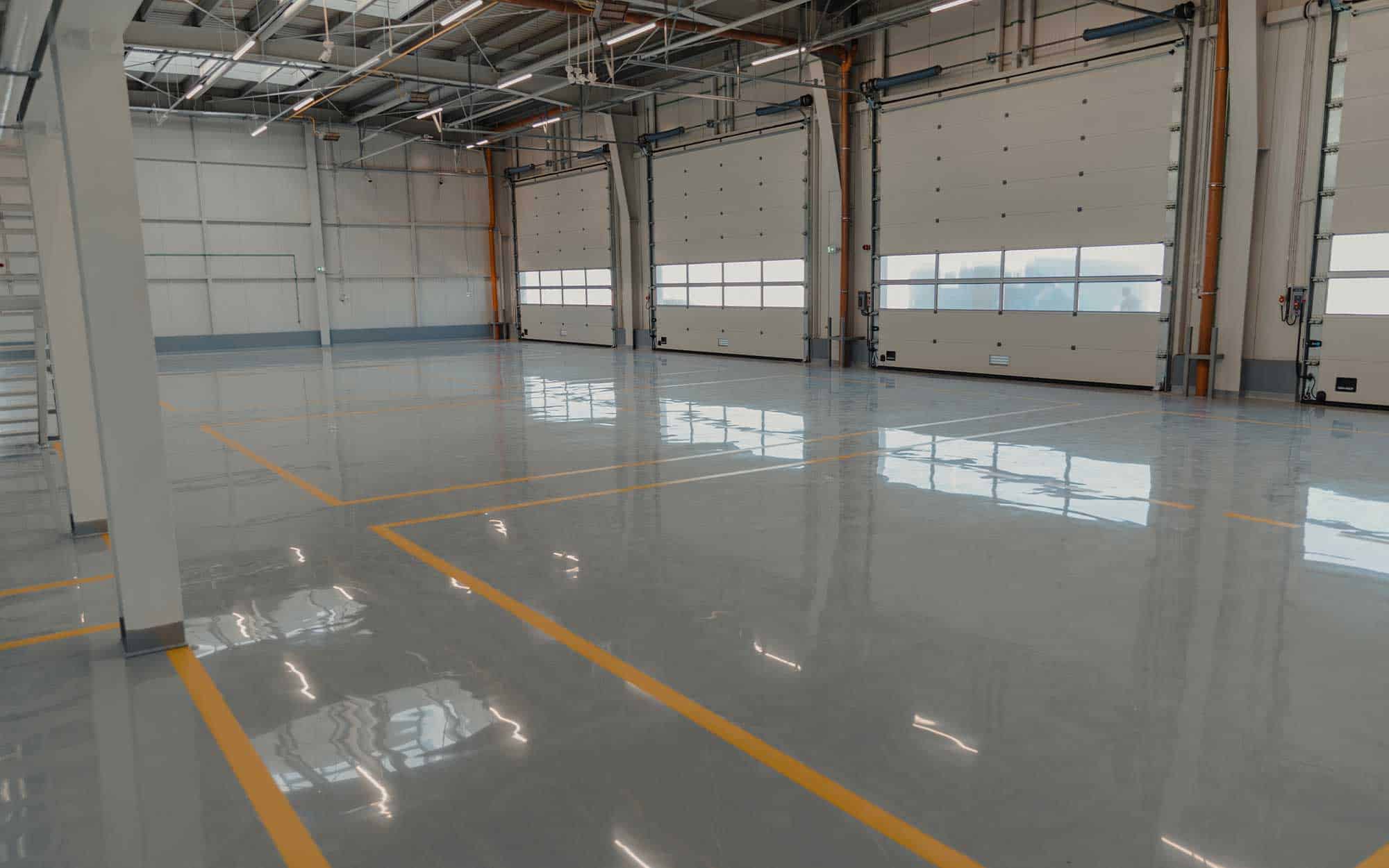
Temperature and humidity control during installation can make or break your project. I’ve learned to monitor conditions constantly and adjust application techniques accordingly. Most coating systems require temperatures between 50-85°F with relative humidity below 85%. I use dehumidifiers and heaters when necessary; the investment in proper environmental control pays dividends in coating performance and longevity.
Mixing ratios must be exact, and I always use calibrated equipment to ensure consistency. Hand mixing simply doesn’t provide adequate dispersion for two-component systems. I’ve seen beautiful installations ruined by improper mixing that led to soft spots, discoloration, or premature wear. Professional-grade mixers and consistent technique are non-negotiable for quality results.
Application timing windows are critical, especially with fast-cure systems. I plan each phase carefully and ensure adequate crew size to complete sections within pot life limitations. Back-rolling immediately after squeegee application eliminates bubbles and ensures uniform thickness. I’ve developed systematic approaches that minimize waste while maintaining quality. Efficiency comes with experience, but never at the expense of proper technique.

Maintenance and Longevity Considerations
Daily cleaning practices significantly impact your flooring’s lifespan. I recommend dry dust mopping followed by damp mopping with pH-neutral cleaners. Harsh chemicals, especially acids and strong alkalis, can damage most coating systems over time. I’ve seen floors prematurely worn by maintenance crews using inappropriate cleaning products. Training your staff on proper cleaning techniques is as important as the initial installation quality.
Preventive maintenance catches small problems before they become major headaches. I conduct quarterly inspections looking for worn areas, small cracks, or coating delamination. Early intervention with touch-up coats or crack sealing prevents water intrusion and substrate damage. Most coating systems can be spot-repaired if caught early; full recoating becomes necessary only when maintenance is neglected for years.
Traffic patterns create predictable wear zones that require attention. I often recommend applying additional topcoat layers in high-traffic areas during initial installation. Heavy equipment paths, door swing areas, and workstation zones experience accelerated wear. Strategic placement of walk-off mats and equipment pads distributes loads and protects the flooring investment; these simple measures can double your floor’s service life.

Cost Analysis and Budget Planning
Material costs vary significantly based on system type and performance requirements. Basic epoxy systems start around $2-4 per square foot, while high-performance polyurethane or polyaspartic systems can cost $6-12 per square foot. I help clients understand that the cheapest option rarely provides the best value. Factoring in expected service life, maintenance costs, and downtime for repairs reveals the true cost of ownership over time.
Labor represents 40-60% of total project costs in most installations. Experienced contractors charge premium rates, but I’ve seen too many bargain installations that required complete removal and reinstallation within two years. Quality workmanship includes proper surface preparation, environmental control, and systematic application techniques. Investing in skilled contractors protects your flooring investment and minimizes long-term costs.
Hidden costs often surprise facility managers during budget planning. Substrate repairs, moisture mitigation, and equipment relocation can add 20-30% to base estimates. I conduct thorough assessments before providing quotes, identifying potential issues that could impact costs. Proper planning prevents budget overruns and ensures project success; transparency upfront builds trust and prevents disputes later.

Troubleshooting Common Problems
Coating adhesion failures typically manifest as blisters, peeling, or delamination, often resulting from inadequate surface preparation or moisture-related issues. I diagnose these problems by examining failure patterns and conducting pull-off tests. Localized failures frequently indicate contamination or surface defects, while widespread problems suggest systemic preparation issues. Complete removal and reinstallation are usually necessary for adhesion failures.
Color inconsistencies and mottling can result from mixing problems, application issues, or substrate variations. I prevent these problems through consistent mixing procedures, uniform application techniques, and proper primer selection. When problems occur, I evaluate whether spot repairs are feasible or if full recoating is necessary. Prevention is always more cost-effective than correction.
Premature wear patterns often indicate inadequate coating thickness, improper material selection, or unexpected loading conditions. I analyze traffic patterns and loading requirements to determine if the original specification was appropriate. Sometimes simple changes in maintenance practices can extend service life; other situations require upgrading to more robust systems. Honest assessment prevents recurring problems and customer dissatisfaction.
How long should I expect my industrial garage flooring to last?
The lifespan varies significantly based on coating type, traffic levels, and maintenance quality. Basic epoxy systems typically last 3-7 years in moderate industrial environments, while high-performance polyurethane systems can provide 10-15 years of service. I’ve seen polished concrete floors perform excellently for 20+ years with minimal maintenance. Heavy chemical exposure, abrasive traffic, and poor maintenance practices reduce service life considerably. Proper system selection and installation are critical for longevity.
Can I install industrial flooring over existing coatings?
Installing over existing coatings is risky and generally not recommended without proper evaluation. I assess adhesion, coating type, and condition before making recommendations. Most situations require the complete removal of existing materials to ensure proper bonding. Attempting to save money by coating over failed systems usually results in quick failure and higher total costs. When existing coatings are in excellent condition, some systems can be applied with proper preparation and compatible primers.
What’s the difference between industrial and residential garage flooring?
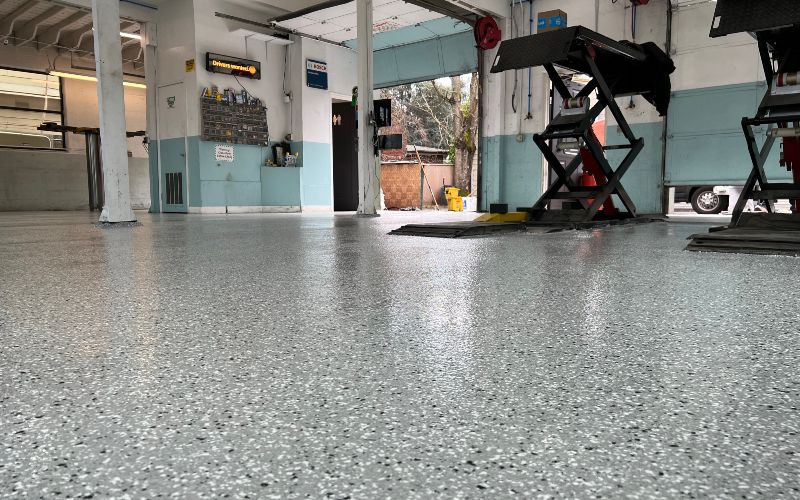
Industrial systems are designed for heavy loads, chemical resistance, and continuous use. They typically use thicker applications, more durable resins, and specialized additives for enhanced performance. Residential systems prioritize appearance and cost over ultimate durability. I specify industrial systems for commercial garages, manufacturing facilities, and heavy-duty applications. The investment in industrial-grade materials pays off through extended service life and reduced maintenance requirements in demanding environments.
How do I choose between epoxy, polyurethane, and polished concrete?
System selection depends on your specific requirements for chemical resistance, thermal cycling, appearance, and budget. Epoxy provides good overall performance at moderate cost but can yellow under UV exposure. Polyurethane offers superior flexibility and UV stability, but costs more. Polished concrete provides exceptional durability and unique aesthetics but requires a quality substrate and skilled installation. I evaluate each application individually to recommend the optimal solution for your needs and budget.
What preparation is required before installation?
Proper preparation is absolutely critical and often underestimated. Concrete must be clean, dry, and properly profiled for coating adhesion. This typically involves degreasing, shot blasting or grinding, crack repair, and moisture testing. Environmental conditions must be controlled during installation. I’ve seen more failures from inadequate preparation than from any other cause. The surface preparation phase typically represents 60-70% of installation time but determines long-term performance success.
How much downtime should I expect during installation?
Downtime varies based on system type, area size, and curing requirements. Fast-cure systems can return to service in 24-48 hours, while some epoxy systems require 3-7 days for full cure. Temperature and humidity affect curing times significantly. I plan installations to minimize business disruption, often working nights or weekends. Proper planning and system selection can reduce downtime, but rushing cure times leads to performance problems. Quality installation requires patience for optimal results.

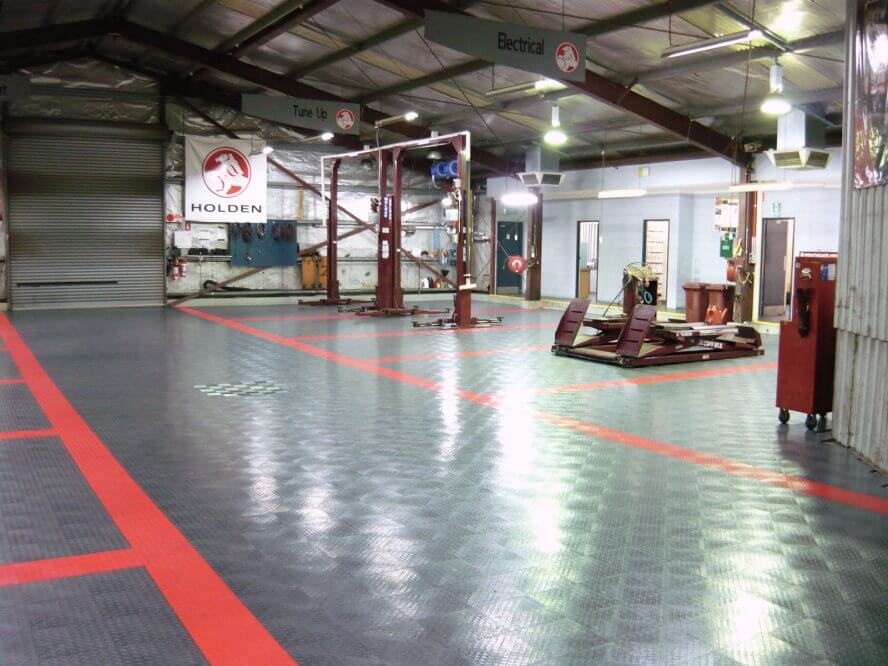
Commercial Garage Flooring Tiles RaceDeck Garage Floors
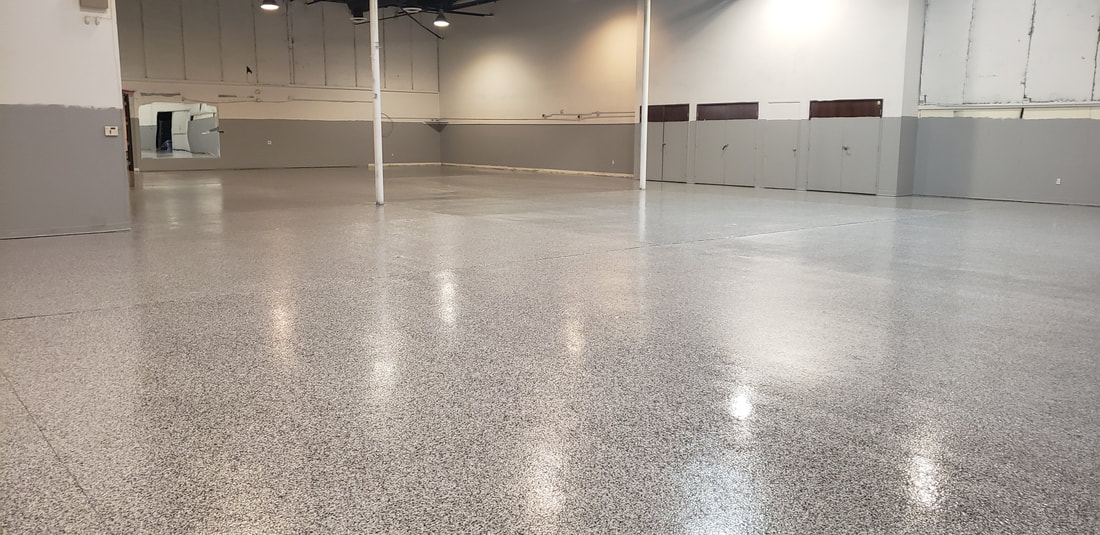
Commercial Epoxy Flooring Orange County – GARAGE FLOORS 1 DAY
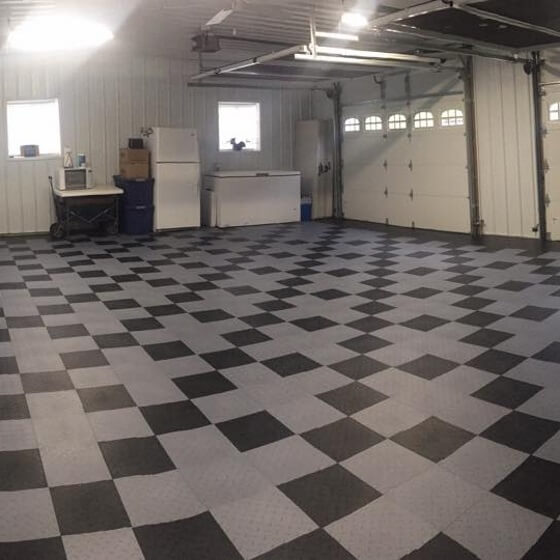
Garage Flooring – Tiles, Mats, Rolls, Coatings and Storage
Related Posts: