When I inherited my grandmother’s house two years ago, the basement was a damp, uninviting concrete tunnel used to store forgotten holiday decorations and old furniture. The idea of converting this space into usable square footage seemed unachievable until I discovered premium vinyl plank flooring made specifically for harsh situations. My basement restoration with vinyl wood flooring has been spectacular, transforming a useless space into my family’s favorite meeting place while resolving moisture issues that had plagued the house for decades.
Moisture Management That Does Work
My main concern about finishing the basement was moisture control, as I’d heard horror stories of flooring problems caused by humidity and occasional water incursion. Luxury vinyl plank flooring turned out to be entirely waterproof, not simply water-resistant, unlike other materials I had researched. I personally tested this by placing water puddles on sample pieces for 24 hours with no absorption or harm occurring.
The installation over my concrete subfloor necessitated suitable moisture barrier underlayment, but the vinyl planks themselves provide an impermeable covering that prevents moisture from accessing the subfloor from above. I no longer have to worry about condensation during the humid summer months, which used to cause musty odors and mold worries. The flooring is entirely stable despite seasonal humidity swings.
After a little water leak from an upstairs bathroom, I was amazed to see how the vinyl flooring shed the water completely without any penetration or damage. I easily wiped up the water and proceeded to use the space as usual, which would have been difficult with standard hardwood or laminate flooring. This peace of mind transforms the basement into a truly usable living place, rather than a source of constant concern.
Installation Challenges I Successfully Overcame
Installing vinyl plank flooring in my basement posed unique issues that normal above-grade installations do not, specifically coping with uneven concrete surfaces and moisture vapor transmission. I spent a long time sanding down high places and filling low sections to get the flat surface required for proper board installation. This preparation proved critical for avoiding future issues with locking mechanisms and visual appearance.
Before installing the moisture barrier underlayment, which guards against vapor transmission from below, the porosity of the concrete needed to be sealed with a specialist primer. I discovered that omitting this procedure could result in adhesive failures and warranty voidance, even with waterproof flooring products. The additional preparatory time and money were well worth it for guaranteeing long-term performance and keeping manufacturer warranties.
Working in the cramped basement space with little natural light made precision cutting and fitting more difficult than in standard room installations. I built temporary lights and used laser levels to keep the installation lines straight over the big open area. The click-lock installation mechanism worked flawlessly after I mastered the right techniques, but the learning curve for producing professional-looking results was harder than expected.
Design Aesthetics that Surprised Everyone
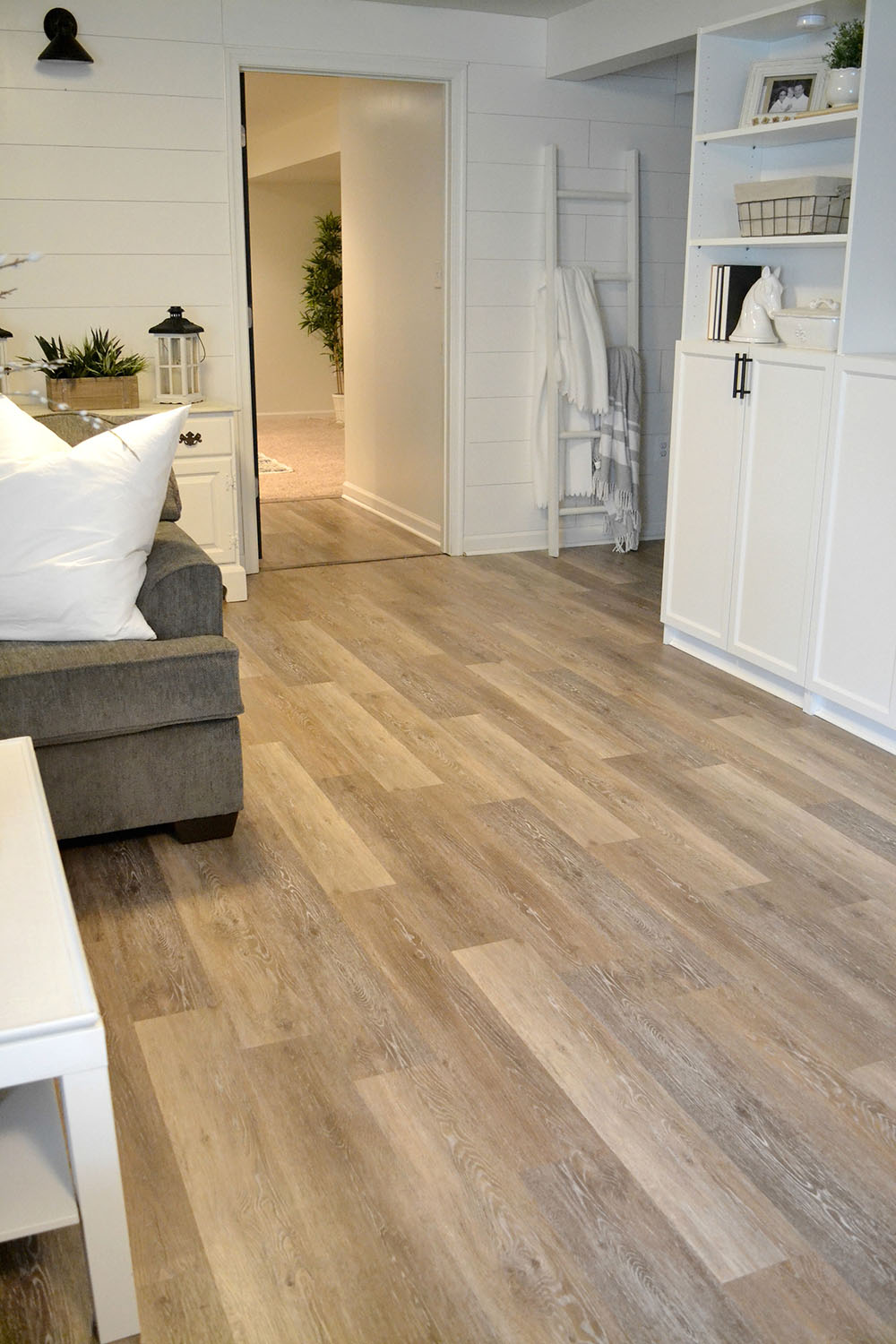
My selection of wide-plank luxury vinyl in a distressed wood finish changed the basement from an industrial concrete cave to a warm, inviting family room. Everyone who enters is taken aback by the authentic wood grain textures and natural color variations, with the majority believing I installed pricey hardwood floors. The genuine appearance offers the comfortable atmosphere I want without the moisture sensitivity of real wood.
The planks’ embossed textures create tactile realism, which improves the visual deception of genuine hardwood flooring while also providing practical slide resistance in situations where wetness may be present. I like how the different plank lengths produce random patterns that precisely replicate genuine wood installations. The attention to detail in modern premium vinyl goods continues to astound visitors who cannot realize it is not real hardwood.
The neutral wood tones that complement diverse color schemes made it easier than imagined to coordinate the flooring with painted walls, ceiling treatments, and furniture selections. The constant appearance avoids the inherent variety issues associated with real hardwood, allowing for confident design selections without fear of individual plank features clashing with the overall aesthetic vision I had for the restored area.

Cost Benefits That Made the Project Possible
The low cost of luxury vinyl plank flooring made my basement makeover financially viable, when hardwood or tile options would have cost substantially more. I completed 1,200 square feet for less than half the cost of comparable hardwood installation, freeing up funds for further renovations such as lighting, paint, and furniture. This cost savings enabled me to accomplish a full overhaul rather than simply basic flooring installation.
The do-it-yourself installation saved thousands of dollars on professional labor while delivering a rewarding hands-on activity that I could accomplish over several weekends. The click-lock technique does not require any special equipment or adhesives, making it suitable for homes with basic construction abilities and regular household tools. I leased a few specialist instruments, such as a miter saw and a tapping block, to achieve professional-level results at a low cost.
Long-term maintenance expenditures are low compared to other flooring solutions that require regular refinishing, sealing, or replacement due to moisture damage. My vinyl floors just require regular sweeping and mopping with ordinary cleansers, eliminating the need for special treatments or expert maintenance services. A lifetime warranty on quality products adds peace of mind and protection against unforeseen replacement costs.

Performance in Real Family Life Conditions
My renovated basement is now the primary family entertainment space, hosting everything from kids’ birthday parties to adult game evenings and movie marathons. The flooring can withstand dropped snacks, spilled drinks, and general commotion without exhibiting wear or requiring special cleaning procedures. The scratch and dent resistance exceeds my expectations, and it retains its look despite heavy furniture and regular foot activity.
The flooring’s temperature comfort shocked me, as I had imagined frigid surfaces in basements. The vinyl planks feel warmer underfoot than concrete or tile, making barefoot activities enjoyable year-round. The slight cushioning effect decreases weariness during long-term standing activities such as handicraft or fitness routines, which now take place in the remodeled basement.
Noise reduction features serve to keep sound contained in the basement, preventing upstairs activities from being disrupted while we listen to music, watch TV, or play games. The flooring absorbs impact noises more effectively than hard surfaces while keeping the easy cleanup properties required for active family use. This acoustic performance transforms the basement into a really separate living zone, rather than just an extension of the home.

Maintenance Simplicity Keeps Me Happy
Daily care for my vinyl basement flooring consists of sweeping to remove tracked-in dirt and debris, followed by weekly damp mopping with basic floor cleaners. The non-porous surface prevents stains from penetrating, allowing for simple cleanup of everything from pet mishaps to craft supply spills that might permanently ruin other flooring materials. I’m no longer concerned about mishaps or messes in our major gathering room.
Because the flooring is resistant to fading, scratching, and moisture damage, I don’t need to worry about adding area rugs in high-traffic areas or using window treatments to avoid sun damage. This relaxed maintenance approach allows me to enjoy the place instead of continually preserving it. The durability minimizes anxiety about routine family activities that could cause costly damage.
Professional deep cleaning is only required on occasion, and even then, it uses regular equipment and techniques rather than the specific services required for other flooring kinds. I’ve discovered that most difficult stains and deposits respond to mild cleaning with basic household cleansers, preserving the flooring’s beauty without using strong chemicals or abrasive treatments that could harm the protective wear layer.
Can luxury vinyl plank flooring be placed straight onto concrete basement floors?
Yes, luxury vinyl planks can be laid over concrete basement floors with adequate preparation, which includes moisture testing, surface leveling, and the installation of a suitable underlayment. To avoid installation problems, the concrete must be clean, dry, and level per the manufacturer’s standards. To ensure best performance and warranty compliance, I recommend professional moisture testing and sealing, as well as premium underlayment made specifically for concrete subfloors.
How does vinyl wood flooring withstand temperature variations in basements?
Luxury vinyl flooring performs admirably in basement temperature fluctuations, retaining stability and comfort better than many other options. The material does not expand and compress as much as hardwood, minimizing gaps and buckling that are frequent in natural woods. I’ve seen seasonal temperature fluctuations ranging from 55 to 75°F with no flooring movement or damage, making it excellent for basement locations with variable climate management.

What’s the difference between luxury vinyl plank and normal vinyl flooring in basements?
When compared to traditional sheet vinyl or basic vinyl tiles, luxury vinyl plank provides enhanced durability, a more realistic appearance, and improved moisture protection. LVP has numerous layers, including wear layers, printed designs, and backing materials, which improves performance and durability. The plank format with locking devices produces more genuine wood looks while being easier to install and maintain than glued-down typical vinyl goods.
How long does vinyl wood flooring usually last in basement applications?
Quality luxury vinyl plank flooring often lasts 15-25 years in basement installations with proper maintenance, outlasting other flooring options in difficult below-grade conditions. Its waterproof design and increased endurance make it ideal for basement environments that could damage other materials. Many manufacturers provide longer warranties for basement applications, demonstrating their confidence in the product’s durability in moisture-prone locations.

Is expert installation required for basement vinyl plank flooring?
Professional installation is not necessarily required for vinyl plank flooring because the click-lock systems are intended for DIY installation by qualified homeowners. Professional experience in moisture management, subfloor preparation, and suitable underlayment selection may be beneficial for basement installations. I successfully completed my own installation but sought professional help with moisture testing and surface preparation to ensure best long-term performance.
Can furniture be placed directly on vinyl wood flooring in the basement?
Yes, furniture can be placed directly on luxury vinyl flooring with necessary protective padding to avoid indentation and scratching from the legs. The robust construction can withstand the weight of furniture, although heavy things should be protected with furniture pads or area rugs. I use felt pads under all furniture legs and have had no permanent indentation or damage after two years of regular use with conventional household furniture.

Related Posts: