When I first heard about using cork flooring in bathrooms, I was skeptical. The idea of putting what I thought was a fragile material in a wet environment seemed counterintuitive. However, after extensive research and a leap of faith in my guest bathroom renovation, I discovered that quality cork flooring can be an excellent choice for bathroom applications. My two-year experience has taught me valuable lessons about this unique material that I’m eager to share with fellow homeowners.
Understanding Cork as a Bathroom Flooring Material
My initial research revealed that cork flooring possesses natural properties that make it surprisingly suitable for bathroom environments when properly manufactured and installed. Cork’s cellular structure contains suberin, a waxy substance that naturally repels water and resists mold growth. I learned that high-quality cork tiles undergo special treatments that enhance these inherent moisture-resistant qualities significantly.
The antimicrobial properties of cork impressed me during my investigation into bathroom flooring options that promote healthier indoor environments. Natural cork contains compounds that inhibit bacterial and fungal growth, making it an excellent choice for humid spaces. I discovered that cork flooring doesn’t harbor allergens like carpet or require harsh chemical cleaners that traditional bathroom materials often need.
Thermal comfort became an unexpected benefit that I only fully appreciated after installation in my guest bathroom during winter months. Cork’s insulating properties keep floors warm underfoot, unlike cold ceramic tiles that make early morning bathroom visits uncomfortable. The cushioned feel reduces fatigue when standing for extended periods during grooming routines, adding comfort I hadn’t anticipated.
Installation Challenges and Solutions I Encountered
Installing cork flooring in my bathroom presented unique challenges that required careful planning and specialized techniques I hadn’t used before. Moisture barriers became critical for preventing water infiltration from below, so I installed a high-quality vapor barrier before laying the cork tiles. Proper acclimation of cork materials to bathroom humidity levels prevented expansion problems later.
Adhesive selection proved more important than I initially realized for ensuring long-term performance in high-moisture bathroom environments successfully. I used moisture-curing urethane adhesive specifically designed for cork installations in wet areas. Standard flooring adhesives would have failed within months due to humidity exposure. Professional-grade adhesives cost more but prevent costly reinstallation projects.
Cutting cork tiles around bathroom fixtures required patience and sharp tools that I learned to use through trial and error. Dull blades tear cork fibers instead of creating clean cuts, resulting in ragged edges that look unprofessional. I invested in high-quality utility knives and replaced blades frequently. Template making helped achieve precise fits around toilets and vanities.
Maintenance Routines That Keep Cork Looking Great
Daily maintenance of cork bathroom flooring involves simple routines that preserve its appearance and extend its lifespan significantly when followed consistently. I sweep or vacuum regularly to remove dirt and debris that could scratch the protective finish over time. Damp mopping with pH-neutral cleaners designed for cork removes soap residue without damaging the natural material or protective coatings.
Sealing maintenance became my most important responsibility for protecting cork flooring from moisture damage in the bathroom environment effectively. I apply polyurethane sealer annually to maintain water resistance and prevent staining from cosmetics or cleaning products. Quality sealers enhance the natural beauty of cork while providing essential protection against bathroom humidity and occasional water splashes.
Addressing spills immediately prevents permanent damage to cork flooring that could require expensive repairs or replacement in bathroom applications. I keep absorbent towels readily available and blot rather than wipe liquid spills to prevent spreading. Deep cleaning quarterly with specialized cork cleaners removes built-up residue and maintains the natural luster that makes this flooring so attractive.
Design Possibilities That Surprised Me
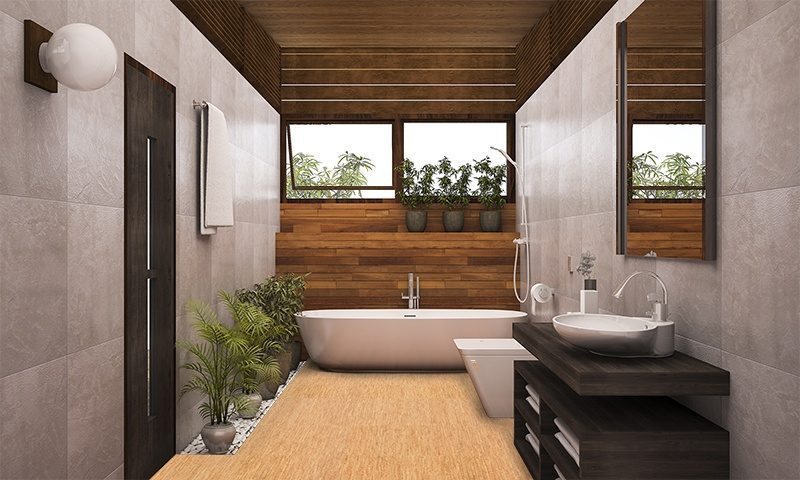
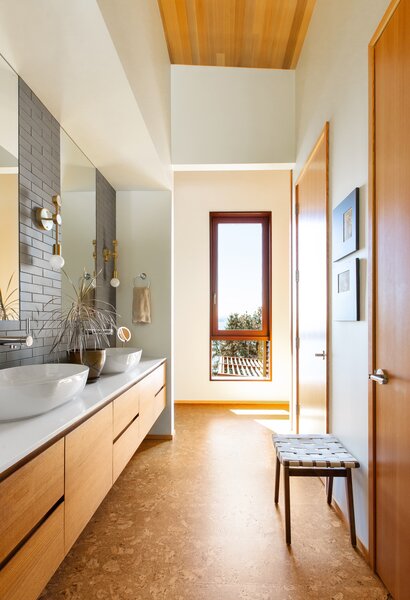
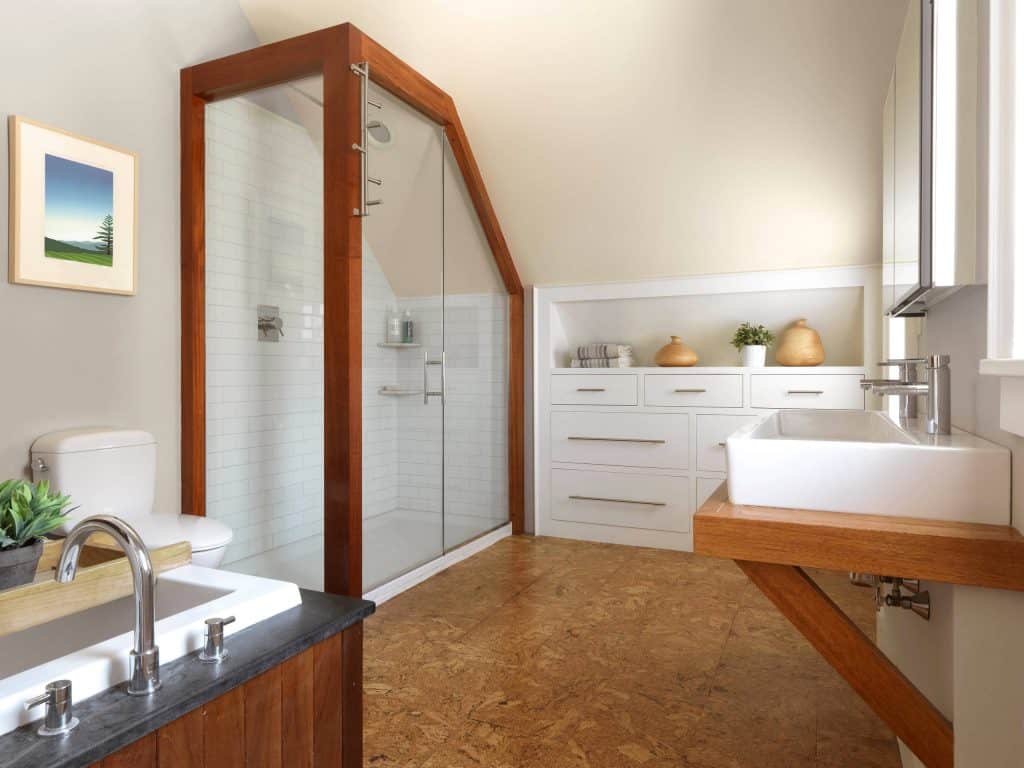
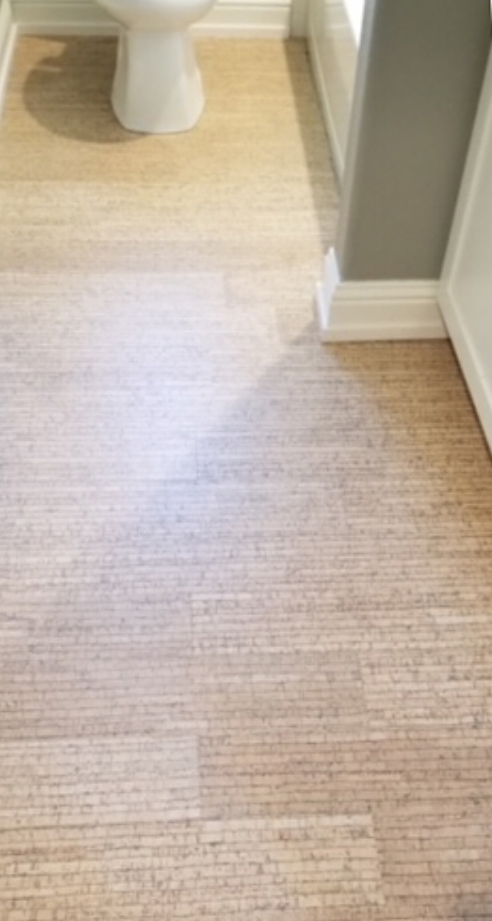
Cork flooring opened unexpected design opportunities in my bathroom that I hadn’t considered with traditional materials like ceramic or vinyl. Natural color variations in cork tiles create organic patterns that add warmth and visual interest without appearing busy or overwhelming. I chose medium-toned cork that complements both light and dark bathroom fixtures beautifully while hiding minor dirt between cleanings.
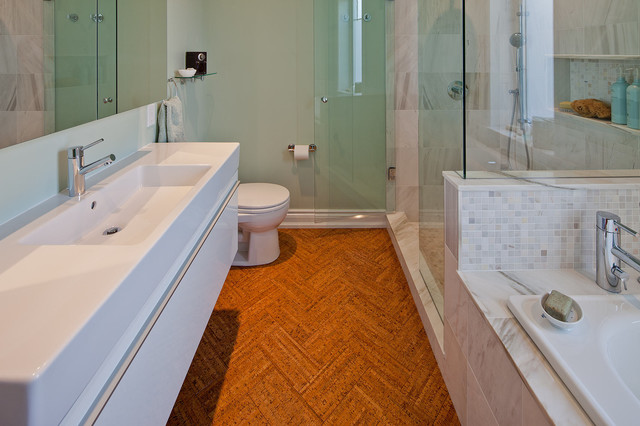
Pattern layouts using different cork tile sizes allowed me to create custom designs that reflect my personal style preferences effectively. Mixing standard tiles with accent borders created visual zones within my small guest bathroom space. Diagonal installations make narrow bathrooms appear wider while straight patterns emphasize length. Creative layouts transform ordinary spaces into unique design statements.
Texture combinations became possible by selecting cork tiles with different surface finishes that provide both aesthetic appeal and functional benefits. Smooth cork works well in dry areas, while textured surfaces offer better slip resistance near tubs and showers. Combining finishes creates visual interest while addressing practical safety concerns that every bathroom design must consider carefully.
Durability Testing Through Real-World Use
My cork bathroom flooring has endured two years of regular use including daily showers, occasional flooding from my grandchildren’s bath time, and normal bathroom activities. The material shows minimal wear despite my initial concerns about durability in high-moisture environments. Proper sealing and maintenance have prevented the damage I worried about when first considering this unconventional flooring choice.
Water resistance exceeded my expectations after several accidental flooding incidents from overflowing bathtubs and shower door leaks in my guest bathroom. Quality cork flooring with proper sealing repelled water long enough for cleanup without permanent damage. I learned that immediate attention to water incidents prevents problems while delayed response can cause issues with any flooring material.
Scratch resistance proved adequate for normal bathroom use though heavy objects dropped on cork can cause dents that are difficult to repair. I use protective mats under heavy items and exercise care when moving furniture or appliances. The natural resilience of cork allows minor surface damage to recover over time, though deep gouges remain permanently visible.
Cost Analysis and Long-Term Value
Initial investment in quality cork bathroom flooring cost more than basic vinyl but less than premium ceramic or natural stone options. My guest bathroom project totaled approximately fifteen dollars per square foot including materials, adhesives, and protective finishes. Professional installation would have doubled costs, but I chose DIY installation to control expenses while gaining valuable experience.
Long-term value analysis shows cork flooring provides excellent return on investment through durability, comfort, and unique aesthetic appeal in bathroom applications. Reduced heating costs from cork’s insulating properties offset some installation expenses over time. The natural antimicrobial properties eliminate needs for harsh cleaning chemicals, reducing ongoing maintenance costs compared to other flooring materials.
Replacement timeline estimates suggest properly maintained cork bathroom flooring should last fifteen to twenty years under normal residential use conditions. This lifespan compares favorably with other flooring options while providing unique benefits unavailable elsewhere. Increased home value from distinctive, high-quality flooring often exceeds installation costs when selling homes to discerning buyers.
Is cork flooring truly waterproof enough for bathroom use, especially around showers and tubs?
Quality cork flooring with proper sealing provides excellent water resistance for bathroom applications, though it’s technically water-resistant rather than completely waterproof like ceramic tiles. My installation has handled daily shower use and occasional flooding without damage for two years. Proper sealing every year maintains water resistance effectively. Areas receiving direct water spray require extra attention during sealing applications. Professional installation ensures proper moisture barriers that prevent subfloor damage from humidity.
How does cork flooring feel underfoot compared to traditional bathroom flooring materials?
Cork flooring feels remarkably warm and cushioned compared to cold ceramic tiles, providing superior comfort during barefoot bathroom use year-round. The natural cellular structure creates a slight give that reduces fatigue when standing for extended periods. Temperature regulation keeps floors comfortable even in winter months without radiant heating systems. The textured surface provides good traction when dry while remaining comfortable for bare feet. This comfort advantage makes early morning bathroom visits much more pleasant.
What maintenance schedule should I follow to keep cork bathroom flooring in optimal condition?
Daily sweeping and weekly damp mopping with pH-neutral cleaners maintain cork flooring appearance while preventing damage from accumulated dirt and soap residue. Annual sealing applications preserve water resistance and protect against staining from cosmetics and cleaning products. Quarterly deep cleaning removes built-up residue that regular mopping cannot eliminate. Immediate attention to spills prevents permanent staining. I inspect caulking around fixtures monthly and reseal as needed to prevent water infiltration behind flooring.
Can I install cork flooring myself, or should I hire professional installers for bathroom applications?
DIY cork flooring installation is achievable with proper tools, patience, and attention to moisture barrier requirements that bathroom environments demand. I successfully installed my guest bathroom cork flooring using online tutorials and manufacturer instructions. However, professional installation ensures proper moisture protection and warranty coverage for challenging bathroom conditions. Complex layouts around multiple fixtures may justify professional installation costs. Mistakes in bathroom installations can cause expensive water damage to subfloors and adjacent rooms.

How does cork flooring handle humidity changes and temperature fluctuations common in bathrooms?
Cork naturally accommodates humidity and temperature changes better than many flooring materials due to its cellular structure and inherent flexibility. My bathroom cork flooring has shown minimal expansion or contraction despite significant humidity variations from shower use. Proper acclimation before installation prevents most dimensional stability problems. Quality cork products undergo manufacturing processes that enhance stability in challenging environments. Expansion joints around perimeters accommodate any movement while maintaining attractive appearance.
What are the best cork flooring products specifically designed for bathroom installations?
Engineered cork tiles with factory-applied polyurethane finishes provide the best performance for bathroom applications in my experience and research. Look for products specifically rated for wet areas with enhanced water resistance treatments. Floating floor systems work well for DIY installation while glue-down tiles offer superior moisture protection. Avoid basic cork tiles without proper moisture barriers. I recommend purchasing from established manufacturers offering bathroom-specific warranties. Professional consultation helps select appropriate products for specific bathroom conditions and usage patterns.
Can Cork Flooring Be Installed in A Bathroom?
Related Posts: