When I started planning my basement renovation four years ago, cork flooring wasn’t even on my radar. I assumed basements needed tile or vinyl, something explicitly waterproof for that below-grade environment.
A friend who’d recently finished her own basement insisted I at least look at cork, and I’m so glad she pushed me. After extensive research, moisture testing, and careful installation, my cork basement floor has become one of my favorite features of the entire house. It’s warm, comfortable, surprisingly resilient, and has handled everything I’ve thrown at it.
Why Cork Actually Makes Sense in a Basement Environment
Cork flooring in a basement sounds counterintuitive at first because we think of basements as damp, cold spaces where only the toughest waterproof materials survive. But modern cork flooring, when installed correctly over a properly prepared basement, offers benefits that actually suit the space remarkably well. The natural thermal insulation cork provides makes a basement feel dramatically warmer underfoot than concrete, tile, or even luxury vinyl. That warmth factor alone transformed how my family uses our finished basement.
Cork’s cellular structure gives it inherent cushioning properties that make it far more comfortable for extended periods. My basement functions as a playroom, home gym, and media space, meaning people spend hours down there standing, sitting on the floor, or exercising.
The slight give cork provides is noticeably easier on joints and backs compared to hard surfaces. My knees thank me every time I do a workout down there versus on the tile floor in my main-level kitchen.
The acoustic benefits of cork in a basement are something I didn’t fully anticipate but have grown to genuinely appreciate. Cork naturally absorbs sound rather than amplifying it, which means footsteps don’t echo, dropped toys don’t clatter loudly, and the overall noise level stays more contained.
This matters tremendously when the basement is directly below main living spaces. My kids can play energetically downstairs without it sounding like a stampede to anyone upstairs, which has been a game-changer for household harmony.

Addressing the Moisture Question Head-On
Let me tackle the biggest concern right away because it’s valid and critical: basement moisture and cork flooring absolutely require careful attention. Cork itself has some natural moisture resistance thanks to its waxy substance called suberin, but it’s not waterproof on its own. Before I installed cork in my basement, I spent several months monitoring moisture levels and addressing every potential water issue proactively. This preparation phase matters more than the actual installation.
I conducted a calcium chloride moisture test on my concrete basement slab, which measures the moisture vapor emission rate from below. My results came back at 2.8 pounds per 1,000 square feet per 24 hours, well below the 3-pound threshold recommended for cork installation. If your basement tests higher than 3 pounds, cork isn’t appropriate without first installing a vapor barrier or moisture mitigation system. This testing cost me about $50 and saved me from a potentially expensive mistake.
My basement had minor historical water intrusion issues that I addressed completely before any flooring went down. I regraded the soil around my foundation to slope away from the house, installed new gutters with proper downspout extensions, sealed foundation cracks with hydraulic cement, and applied a waterproofing membrane to the interior basement walls. These steps weren’t specifically for cork flooring, they’re best practices for any finished basement, but they were non-negotiable prerequisites before I felt comfortable installing cork. Four years later with zero moisture problems, that investment in proper preparation has proven absolutely worthwhile.
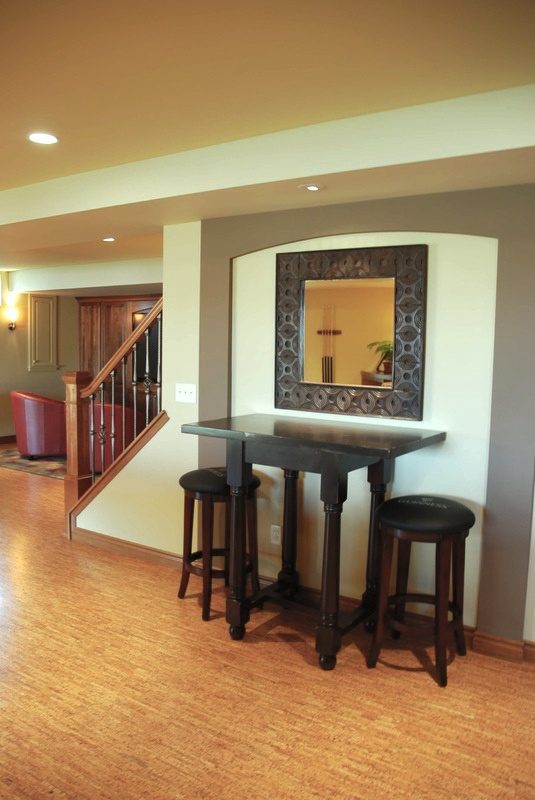
Choosing the Right Cork Product for Below-Grade Installation
Not all cork flooring is suitable for basement installation, and understanding the differences between products saved me from making a costly error. Cork flooring comes in three main formats: glue-down tiles, floating floor planks with click-lock systems, and cork underlayment with a veneer top layer. For basements, I strongly recommend either glue-down tiles or engineered floating planks specifically rated for below-grade installation.
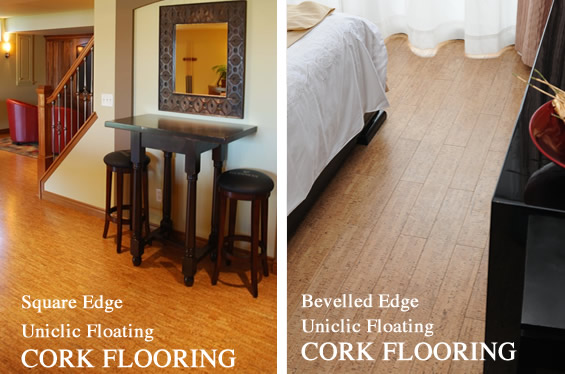
I chose floating cork planks with a cork core, HDF middle layer, and cork veneer top, all held together with a click-lock system. This engineered construction is more dimensionally stable than solid cork tiles and less vulnerable to the minor humidity fluctuations that naturally occur in basements. The click-lock floating installation also meant I didn’t have to use adhesive directly on the concrete slab, which can trap moisture if the slab hasn’t fully cured or if unexpected moisture appears later.
Thickness matters significantly in basement applications. I went with 12mm cork planks rather than thinner 6mm options, and that extra thickness provides better insulation from the cold concrete below and improved sound absorption. The thicker planks also bridge minor imperfections in the concrete subfloor more effectively. They cost about 30% more than the thinner options, but in a basement environment where thermal and acoustic performance really matter, that premium felt entirely justified by the improved comfort and durability.
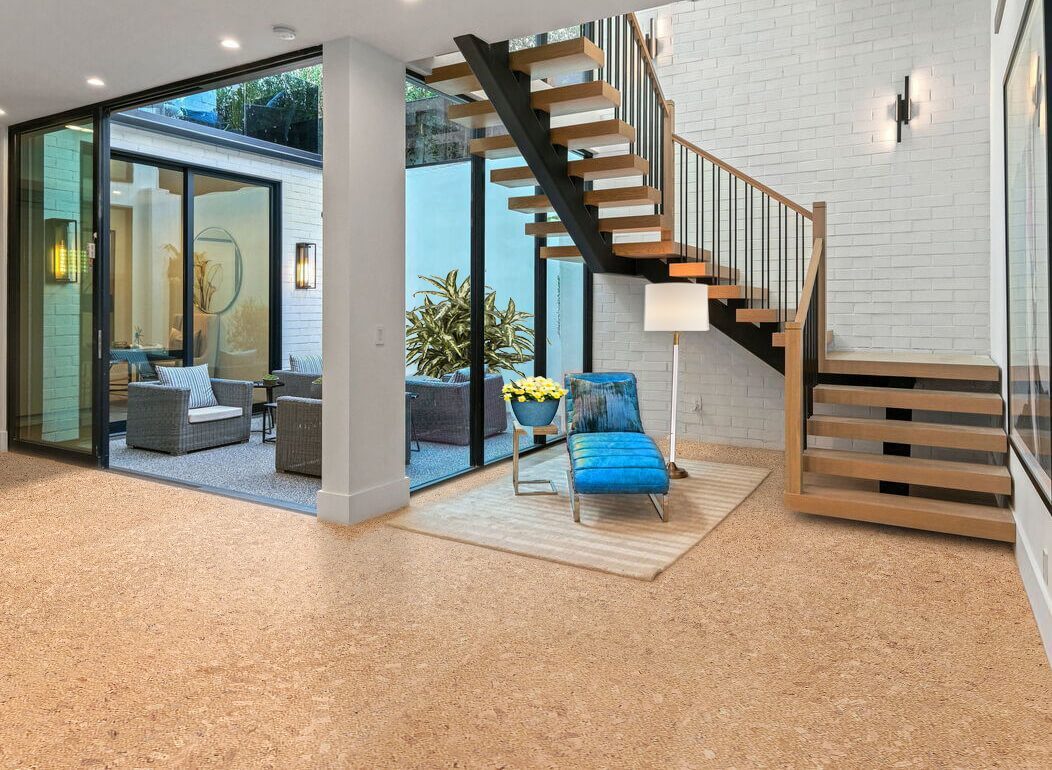
My Installation Experience and Lessons Learned
I hired a professional installer for my cork basement floor despite having done DIY flooring projects before. Basements present unique installation challenges, irregular shapes, support posts, utility access points, and the critical importance of proper moisture barriers, that make professional expertise valuable. My installer’s experience with below-grade cork installations gave me confidence that every detail would be handled correctly, which mattered tremendously for my peace of mind.
The preparation phase consumed more time than the actual cork installation. My installer spent an entire day grinding down high spots on my concrete slab, filling low areas with self-leveling compound, and ensuring the surface was perfectly clean and dry. We installed a 6-mil polyethylene vapor barrier over the entire concrete slab, overlapping seams by 12 inches and taping them thoroughly. Over that went a foam underlayment with additional moisture-blocking properties. These layers created a comprehensive moisture management system beneath the cork.
The cork plank installation itself moved quickly once preparation was complete. My 600-square-foot basement took just under two days to install. The floating floor requires that crucial quarter-inch expansion gap around all perimeter walls and obstacles, which gets hidden by baseboards and transitions afterward. My installer was meticulous about maintaining those gaps because cork does expand and contract slightly with humidity changes, and constraining that movement can cause buckling. Watching him work taught me that successful cork basement flooring is 80% preparation and moisture management, 20% actual installation.

Living With Cork Flooring in a Multi-Purpose Basement
Four years into this experiment, I can report honestly on how cork basement flooring performs with real daily use. My basement sees heavy traffic as a playroom where my two kids spend hours daily, a home gym where I work out five days a week, and a media room for movie nights. The cork has held up to all of this surprisingly well. Surface wear is minimal, with only very slight dulling in the highest-traffic path from the stairs to the play area, and that’s only noticeable when I’m specifically looking for it.
Temperature comfort has been the most impactful quality-of-life improvement. Before finishing the basement, the concrete floor was uncomfortably cold year-round, making the space unusable in winter without thick rugs everywhere. The cork maintains a neutral temperature that feels warm to bare feet even in winter, completely transforming the basement from a space we avoided to one we actively choose. My kids regularly play on the floor in shorts and bare feet, something that would have been impossible on the old concrete.
Maintenance has been straightforward and minimal. I sweep or vacuum twice a week to remove grit that could scratch the finish, and mop monthly with a cork-specific pH-neutral cleaner using a barely-damp microfiber mop. I reseal the floor annually with a water-based polyurethane sealer, which takes about two hours and costs roughly $40 in materials. That yearly resealing is critical for maintaining moisture resistance in a basement environment. The entire care routine requires less effort than maintaining the area rugs that used to cover my concrete floor, and the results look infinitely better.
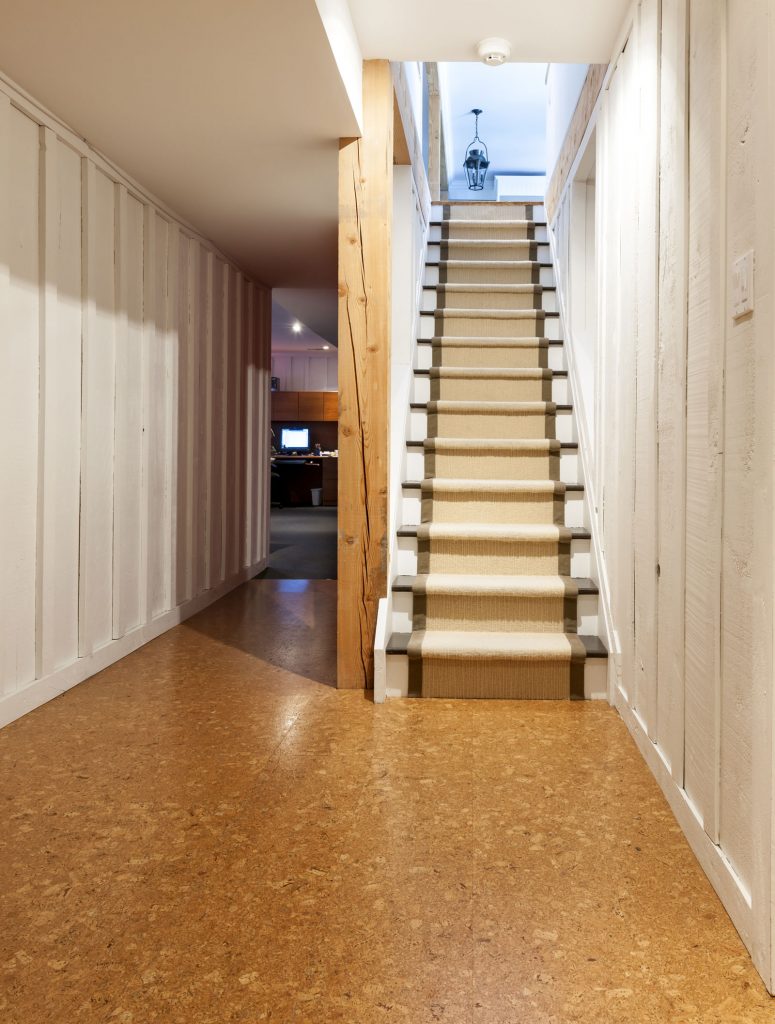
Cost Analysis and Long-Term Value Considerations
Cork flooring for my 600-square-foot basement cost approximately $4 per square foot for materials, landing in the mid-range between budget vinyl and premium tile options. Professional installation added another $3 per square foot, bringing my total material and labor cost to around $4,200. Add in the vapor barrier, underlayment, baseboards, and transitions, and my all-in cost hit roughly $5,000. That’s more than basic vinyl would have cost but significantly less than ceramic tile or engineered hardwood.
The value calculation becomes more favorable when I factor in the functional improvements cork delivered. The warmth and comfort underfoot eliminated any need for the expensive radiant heating system I’d been considering, which would have added $8,000 to $12,000 to the renovation. The acoustic dampening reduced noise transmission upstairs enough that I didn’t need to invest in additional soundproofing in the ceiling. Cork essentially solved multiple basement challenges simultaneously, making the upfront cost feel like smart money spent.
Long-term durability projections suggest cork basement flooring should last 20 to 30 years with proper maintenance, comparable to quality vinyl and significantly longer than carpet. The renewable nature of cork as a material also aligned with my preference for more sustainable building choices where practical. Cork is harvested from bark without harming the trees, which regenerate and can be harvested again in nine years. For a basement renovation I wanted to last decades, the combination of durability, comfort, and environmental consideration made cork feel like the right long-term investment.

Is cork flooring safe in a basement that occasionally has minor moisture or humidity issues?
Minor humidity fluctuations are fine with properly sealed cork, but any actual water intrusion is a serious problem. My basement humidity runs 40-60% year-round with a dehumidifier, and the cork handles that perfectly. If your basement gets standing water even occasionally, cork isn’t appropriate until you resolve those moisture issues completely. The vapor barrier and annual sealing I do are essential protective measures that make cork viable.
How cold does cork flooring feel in an unheated basement?
Cork’s thermal insulation properties mean it stays much warmer than tile, vinyl, or concrete. My basement isn’t separately heated, relying only on heat that drifts down from upstairs, and the cork floor feels neutral to slightly warm even in winter. It never has that shock-your-feet-cold feeling that concrete or tile produce. If your basement gets genuinely cold, cork is still significantly more comfortable than any other flooring option besides carpet.
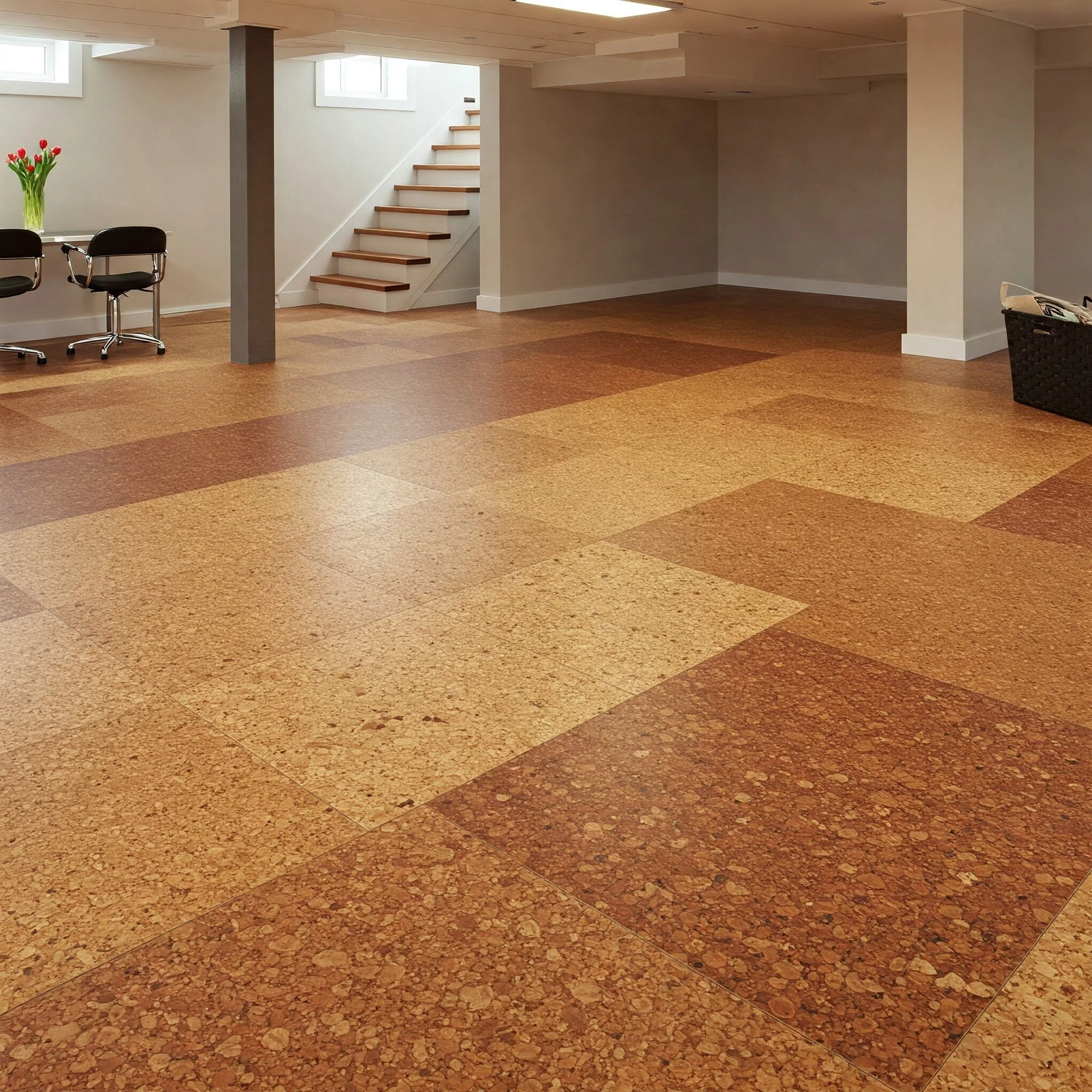
Can heavy furniture or exercise equipment damage cork basement flooring?
Cork can indent under concentrated heavy loads if you’re not careful. I use furniture coasters under my heavy storage shelves and equipment pads under my treadmill and weight bench. These distribute weight across a larger surface area and prevent permanent indentation. For my squat rack and deadlift platform, I placed rubber mats over the cork for both floor protection and added cushioning. With basic precautions, cork handles home gym use very well.
Does cork flooring in a basement develop mold or mildew problems over time?
Cork has natural antimicrobial properties from suberin that resist mold and mildew growth, which actually makes it a good basement choice. In four years I’ve had zero mold issues. The key is maintaining proper basement humidity levels below 60% with a dehumidifier and ensuring your vapor barrier and sealing are intact. Cork itself isn’t the vulnerability, moisture management in the overall basement environment is what matters for preventing mold regardless of flooring type.
How difficult is it to replace damaged cork flooring sections in a basement if needed?
With floating click-lock cork planks like mine, individual damaged planks can be replaced by carefully disassembling the floor back to the damaged section, removing the bad plank, and clicking in a new one. It’s tedious but doable. Glue-down cork tiles are harder to replace cleanly without damage to adjacent tiles. I keep extra planks stored specifically for future repairs. In four years I haven’t needed to replace anything, but knowing replacement is possible gives me peace of mind.
Will cork flooring make my basement feel warmer in summer when I want it cool?
Cork’s insulation works both directions, meaning it also helps keep cool air in during summer. My basement stays naturally cooler than upstairs in summer, and the cork doesn’t change that. It just prevents the floor itself from feeling uncomfortably cold when you’re barefoot. The insulating properties are about maintaining a comfortable neutral temperature on the floor surface, not about heating the entire space. My basement remains my preferred retreat during hot summer days precisely because it stays pleasantly cool.
Cork Works: Installing Cork Flooring – Mother Earth Living

Related Posts: